






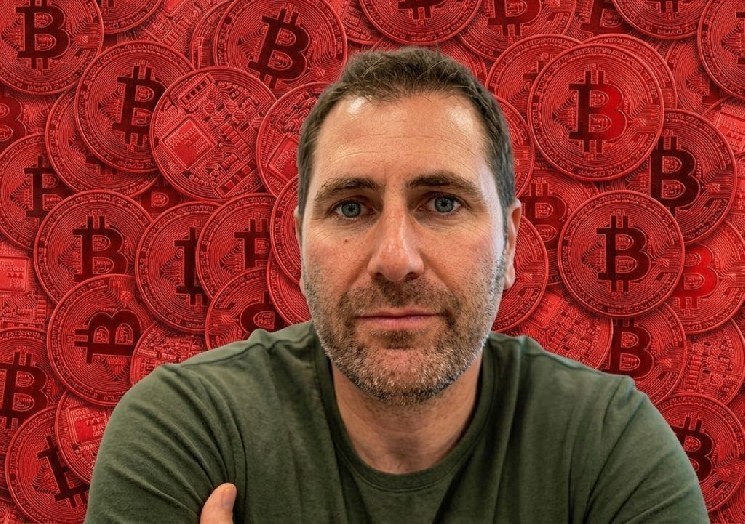
Jeff Dorman’s Stark Critique: How Bitcoin, Ethereum, Solana, and XRP Are Dragging Down the Crypto Market
In the ever-tumultuous world of cryptocurrency, where fortunes can swivel on a tweet or a regulatory whisper, voices of reason often cut through the hype. Jeff Dorman, the Chief Investment Officer of Arca—a prominent crypto asset management firm—has emerged as one such voice. In a detailed analysis that’s been making waves in financial circles, Dorman pinpointed Bitcoin (BTC), Ethereum (ETH), Solana (SOL), and Ripple’s XRP as major stumbling blocks to the crypto market’s potential. His argument: these heavyweights, despite their storied reputations, are failing to deliver sustainable value, creating a significant disconnect between rapid technological adoption and stagnant prices. As an industry veteran, Dorman’s perspective is grounded in years of navigating the volatile seas of digital assets, and his insights challenge investors to rethink what’s truly driving market growth.
The Growing Disconnect: Adoption Booming, Yet Prices Lag Behind
Dorman doesn’t mince words when describing the paradox at the heart of the crypto sector. While blockchain technology and cryptocurrency adoption are accelerating at unprecedented speeds—think decentralized finance protocols flourishing, global remittances going digital, and entire countries experimenting with central bank digital currencies—the market valuations simply aren’t mirroring this progress. “It’s a classic case of fundamentals outpacing perception,” Dorman explains, echoing sentiments from countless investor forums. In the past week alone, digital assets like Bitcoin have shown resilience against traditional benchmarks, outperforming gold, stocks, and bonds. Institutional players have flooded in, buoyed by ETF approvals that treat crypto as a legitimate asset class. Ethereum, meanwhile, has even eclipsed Bitcoin in short-term gains, sparking optimism among traders. Yet, Dorman cautions, these upticks are fleeting. Projects like Hyperliquid (HYPE) and Bittensor (TAO) have notched double-digit rallies, but in a market notorious for 50% plunges and euphoric pumps, such movements feel more like noise than signal. The core issue, he argues, is that despite record-breaking adoption—from gaming guilds integrating NFTs to corporations tokenizing supply chains—token prices remain stubbornly decoupled. This lag isn’t just a timing hiccup; it’s symptomatic of a deeper malaise where growth doesn’t translate into holder wealth.
Bitcoin’s Lost Aura: From Digital Gold to a Diminished Giant
Zooming in on Bitcoin, the cryptocurrency that ignited this revolution back in 2009, Dorman paints a picture of an asset in crisis. Once heralded as “digital gold”—a scarce, inflation-resistant hedge against fiat currencies and economic turmoil—Bitcoin has shed those defining characteristics, he contends. Its role as a store of value has eroded as inflation worries have ebbed globally, and even its supply cap of 21 million, once a cornerstone of its deflationary allure, has been diluted by a proliferation of derivatives and synthetic exposure. Stablecoins, those pegged to real-world currencies like the dollar, now dominate as payment tools, relegating Bitcoin to a static, high-volatility holding. Dorman’s critique extends to Bitcoin’s institutional embrace: yes, it’s become more regulated, with exchange-traded funds opening doors to Wall Street whales, but this hasn’t fostered a compelling long-term narrative. Without a fresh value proposition—be it energy-efficient mining or novel use cases—Bitcoin struggles to justify its $1 trillion market cap. Investors who rode the 2020-2021 bull run, only to watch it plummet, know this pain all too well. Dorman’s message is clear: Bitcoin’s evolution has outgrown its roots, leaving it vulnerable in a crypto landscape hungry for relevance.
Ethereum and Solana: Technical Triumphs Falling Short on Value
Turning to Layer-1 networks that power most decentralized applications, Dorman extends his scrutiny to Ethereum and Solana. These platforms are feats of engineering, he acknowledges—Ethereum’s smart contracts revolutionized defi, enabling everything from automated savings accounts to complex trading strategies, while Solana’s blazing speed and low fees have attracted high-volume dApps like serum-based exchanges. But success on the technical front doesn’t equate to prosperity for token holders. Ethereum’s energy-guzzling proof-of-work roots are giving way to proof-of-stake, yet its high inflation through staking rewards and a commoditized block space—where transaction real estate is auctioned rather than innovated—means value isn’t captured effectively. Solana, despite its efficiency, grapples with uptimes issues and developer drain-offs, echoing Ethereum’s early challenges. Both networks, Dorman argues, need exponential uptake—think mass adoption across governments or enterprises—to validate their lofty valuations. Without it, they’re like powerful engines idling, generating buzz but little net gain for investors. This criticism resonates in a market where memecoins often outshine these titans, underscoring the gap between innovation and investor returns.
XRP’s Troubled Existence: A Token Untethered from Utility
Dorman’s toughest barbs are reserved for XRP, the token tied to Ripple’s payment network. Unlike Bitcoin or Ethereum, which evolved organically, XRP’s utility is tethered to its creator’s fortunes, and Dorman sees no compelling link. Ripple uses XRP for cross-border transfers, reducing friction in global remittances—a noble goal in a $600 billion remittance industry—but the token itself offers slim direct benefits to holders. Its market mechanics are antithetical to investor interests, with Ripple’s consistent token dumps creating overhang and volatility. “It’s not designed for long-term holding; it’s a tool for facilitation, not appreciation,” Dorman says, highlighting how XRP’s ecosystem feels disjointed. Legal battles with the SEC over securities classifications have only muddied the waters, deterring mainstream adoption. In essence, XRP embodies the pitfalls of company-controlled tokens, where innovation serves corporate needs over community value. This critique is especially poignant ahead of potential regulatory clarity, reminding crypto enthusiasts that not all tokens are created equal.
Rethinking the Crypto Landscape: Toward Sustainable, Holistic Growth
In wrapping up his assessment, Dorman ties it all together: the crypto market’s heavy reliance on these four assets is stifling progress, turning it into a haven for day traders and speculators rather than a bedrock for serious, fundamental investing. This dynamic, he warns, leaves long-term players sidelined, contributing to the sector’s cyclical crashes and recoveries. Fortunately, Dorman sees glimmers of true expansion elsewhere. Stablecoins are underpinning a robust payments infrastructure, DeFi is democratizing lending and borrowing beyond bank walls, and the tokenization of real-world assets—like real estate or art—is bridging digital and physical economies. If the sector pivots focus here, Dorman’s bullish on prices finally syncing with adoption. But that requires the big names to either reinvent or cede ground. As Arca’s CIO, Dorman’s call to action is a wake-up for the industry: embrace breadth over bigness, or risk stagnation. In the grand narrative of finance, crypto isn’t just a fad—it’s a paradigm shift. But as Dorman illustrates, it’s one that demands vigilance and evolution to fulfill its promise.
*This is not investment advice. Cryptocurrency investments carry significant risks, and individuals should conduct their own research before making decisions. Always consult with financial professionals for personalized guidance.