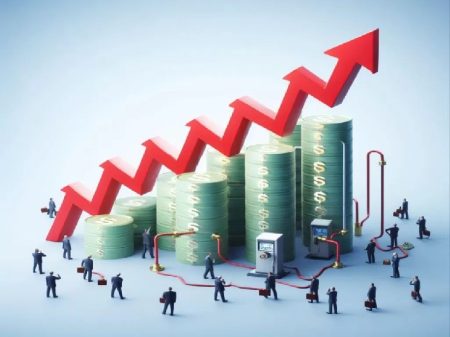





The Data Center Boom: Reshaping America’s Energy Landscape
In the sprawling digital age, where cloud computing and artificial intelligence dominate headlines, a quieter revolution is underway beneath our feet—quite literally in the form of massive data centers devouring electricity. Andy DeVries, a seasoned expert in the utilities and power sectors, sits at the intersection of this transformation. As co-head of investment grade credit and head of utilities and power at CreditSights, with over 18 years dissecting the natural gas and power industries, DeVries offers a prescient view on how data centers are not just powering the tech giants but fundamentally altering the utilities industry. His latest analyses reveal that these behemoths are driving unprecedented growth, pushing some utility companies to annual growth rates as high as 8%. But as with any boom, shadows of overcapacity and policy dilemmas loom large. DeVries warns that while utilities boast a robust near-term supply of nearly 140 gigawatts, the demand forecasts tell a story of potential imbalance. The conversation around data centers isn’t just about infrastructure—it’s about the future of energy consumption in America, from Texas to LNG export terminals. Through DeVries’ lens, we unpack the dynamics that could lower consumer bills or spike gas prices, while questioning whether the sector is building out twice the capacity needed by 2030.
Fueling Utility Expansion: The Data Center Surge
At the heart of this shift lies the symbiotic relationship between data centers and utilities, a partnership that’s turbocharging growth in the sector. Traditionally plodding along at rates of 4% to 6% annually, utilities have seen their trajectories accelerate, now hitting 5% to 8% in some cases, thanks to the voracious appetite of data centers. DeVries points out that these facilities already gulp down about 45 gigawatts of power, and by 2035, that figure is slated to balloon to nearly 95 gigawatts—an additional 50 gigawatts that utilities are gearing up to supply. “Utilities have generally grown around four, five, 6% a year and then that’s moved to five to 7% a year and now certain names are up to 8% a year,” DeVries notes, underscoring how this influx boosts earnings. Far from a burden, the near-term supply capacity positions utilities as enablers of this digital expansion, incentivizing billions in infrastructure investments. Imagine vast server farms humming in the suburbs of major cities, where rows of machines process the internet’s endless data streams. For utilities, it’s a financial windfall; for the broader economy, it’s a catalyst for jobs and innovation. Yet, DeVries cautions that understanding these supply-side strengths requires peering into demand forecasts, ensuring that infrastructure builds align with real needs rather than speculative hype. As data centers evolve from niche tech hubs to cornerstones of modern life, utilities are not merely reacting—they’re strategically investing to capitalize on what promises to be a sustained uptick in energy consumption.
Navigating the Perils of Oversupply in Data Centers
However, this rapid ascent isn’t without its pitfalls. DeVries sounds a note of caution about the looming specter of oversupply, where an abundance of data centers could outpace genuine demand, leading to market saturation and financial strain. “There is a lot of supply of data centers coming and it’s very unclear if there’s gonna be demand for this,” he observes, painting a picture of warehouses filled with idle servers—a costly misstep in an industry where competition is fierce. Forecasts suggest that while capacity is burgeoning, the question remains: Will cloud services, AI applications, and digital transformations fuel sufficient uptake? In a sector where overbuilding has historically led to sluggish returns, stakeholders are urged to scrutinize projections meticulously. Oversupply doesn’t just threaten operators; it could ripple outward, affecting pricing and innovation. Consider the tech titans racing to bottle lightning for their facilities—yet, if demand lags, those investments might turn into white elephants. DeVries’ insights highlight the delicate balance required, where overenthusiastic expansions risk derailing growth. For investors and policymakers alike, this means fostering analyses that dissect current trends, from hyperscaler expansions to regional variances, to avoid a scenario where supply drowns out sustainable statistics demand. In essence, the data center boom’s success hinges on tempering ambition with prudent planning, ensuring the industry’s ascent doesn’t crash into a wall of excess.
Rising Tides: Energy Projections in Texas
No discussion of American energy dynamics is complete without spotlighting Texas, a state where energy demand was once an afterthought but now stands poised for a dramatic upswing. DeVries, drawing from candid exchanges with industry insiders, estimates that energy requirements there could soar to roughly 30 gigawatts—far from negligible and a far cry from zero. During a conversation with Encore’s CFO, he challenged the notion of minimal growth, emphasizing that projections lean heavily toward substantial need. “I said to the CFO of Encore, I said there’s just no way he said it might not be 30 but it’s gonna be closer to 30 than it is zero,” DeVries recalls, capturing the urgency in forecasting that will shape infrastructure in the Lone Star State. Texas, with its deregulated markets and booming tech scene, exemplifies how data center proliferation intersects with regional energy planning. Stakeholders must grapple with these variances, as oversights could lead to shortages or exorbitant costs in a market that’s already volatile. Amid wildfires and hurricanes that test the grid, accurate demand modeling becomes paramount, informing decisions on everything from transmission lines to renewable integrations. For DeVries, it’s a microcosm of broader trends: energy isn’t uniform; it’s shaped by economic tides, technological shifts, and policy directions. As Texas transitions from oil-dominated landscapes to digital powerhouses, these projections signal opportunities for growth—but only if backed by strategic foresight that anticipates the gigawatts ahead.
LNG Exports: Weighing Gains and Price Tags for Americans
Shifting gears to the global arena, the expansion of liquefied natural gas (LNG) exports introduces a complex policy debate that could reverberate in American kitchens. DeVries argues that ramping up LNG terminals to serve international markets might drive domestic gas prices higher, as U.S. supplies compete fiercely with European demand. “One of the sort of policy debates around the whole question of building out LNG terminals is it’s gonna make gas more expensive for American consumers,” he explains, highlighting how exporting surplus gas pits domestic users against global buyers in a zero-sum game. Evidence of robust interest is mounting, with significant cash collateral postings from major players signaling strong future appetite for LNG. This dynamic isn’t isolated; it intertwines with data center fuel needs, where natural gas often powers turbines alongside renewables. For consumers, the math is stark: more exports mean less domestic availability, potentially inflating bills at a time when energy costs are already scrutinized. Yet, opponents counter that exports diversify revenue streams for producers and enhance energy security abroad. DeVries’ perspective urges a balanced view, where policymakers weigh economic dividends against consumer impacts. In energy diplomacy, LNG exports aren’t merely trade; they’re leverage points in global markets. As the U.S. postures as a LNG powerhouse, the challenge lies in ensuring that this boom lifts all boats—without leaving domestic users adrift in a sea of higher prices.
Charting Utility Futures: Capacity Builds and Economic Ripples
Looking ahead, utilities are charting ambitious paths, committing to expansions that dwarf immediate needs and could redefine the industry landscape. DeVries notes that these entities are gearing up to build out approximately twice the capacity forecasted for 2030, a bold bet on surging energy demands driven by data centers and beyond. “Utilities are already committed to building out I guess twice as much capacity as is forecast to be needed by 2030,” he elaborates, reflecting confidence in projections that align growth with digital proliferation. This isn’t reckless guesswork; it’s strategic positioning, where hyperscalers—tech giants like Amazon and Google—already command a staggering 15 gigawatts, representing over half of data center energy consumption. Their influence underscores how utility planning must adapt to these behemoths, balancing supply with the potential for cost efficiencies. Fascinatingly, DeVries posits that data centers might even alleviate consumer burdens, as their emergence spreads fixed infrastructure costs across more users, potentially trimming electricity bills through economies of scale. “The emergence of a data center can actually lower a consumer’s electricity bill because there’s just that simple math,” he asserts, illuminating an overlooked positive amid the energy maelstrom. As utilities pour resources into this future, the payoffs extend to earnings boosts and societal benefits, provided oversupply doesn’t derail the narrative. In this unfolding saga, capacity planning emerges as the linchpin, demanding collaboration among regulators, investors, and innovators to harness data center growth for equitable, sustainable progress. Ultimately, DeVries’ insights reveal a sector at a crossroads—not just reacting to change, but actively sculpting it.