











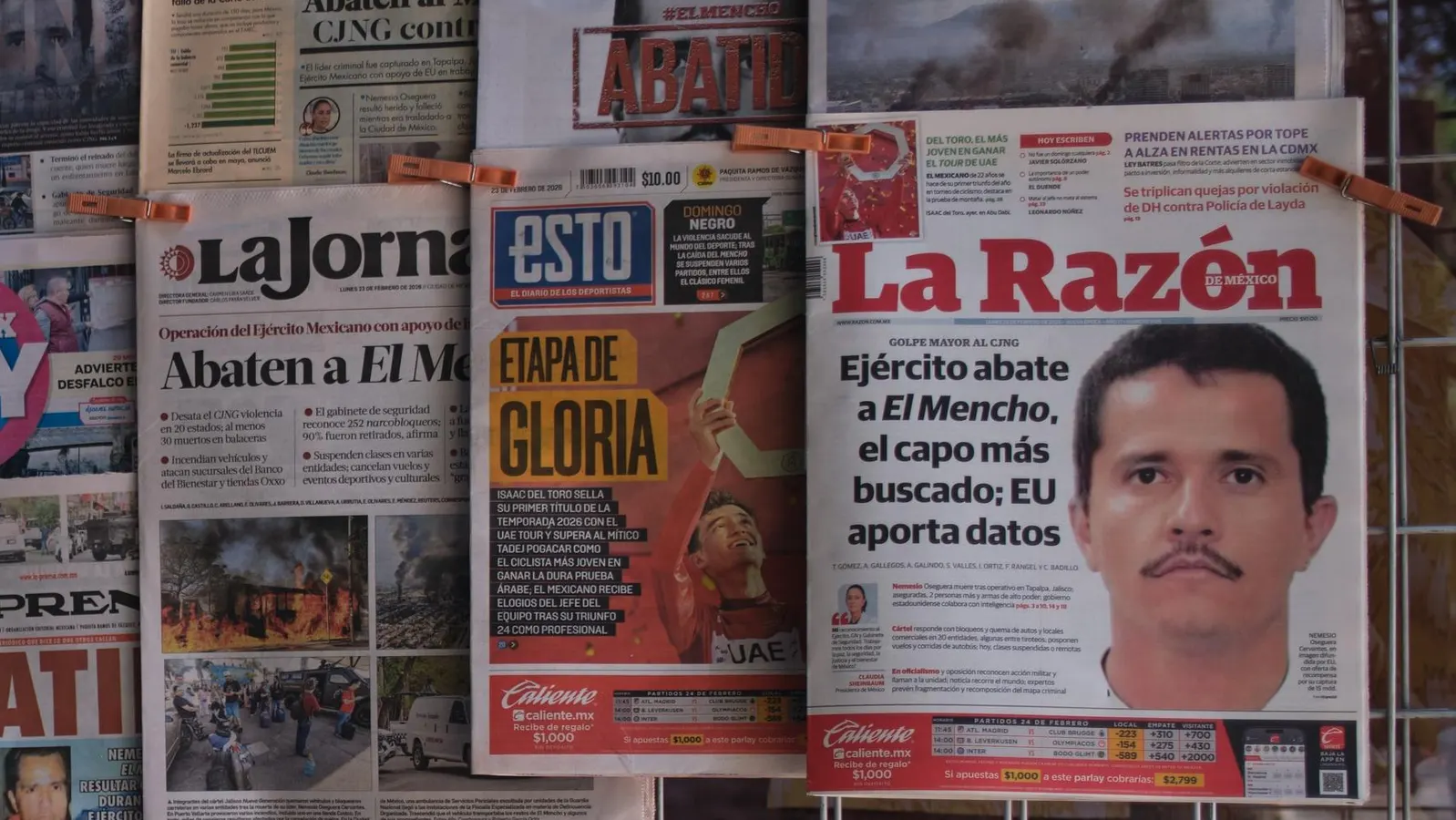
On a quiet Saturday evening in the pine-scented hills of Tapalpa, Jalisco, Nemesio Oseguera Cervantes, better known as “El Mencho,” was letting his guard down at last. This was no ordinary hideout—it was a luxury cabin nestled in a resort community, a place where tourists came to unwind amid breathtaking views of lakes and mountains. Surrounded by the tranquility of red-tiled roofs and stone walls, he could almost forget the constant shadow of danger. He’d traveled to this paradise to meet a lover, a rare indulgence for a man who had spent over a decade evading capture, hid in remote cabins, and ran a vast criminal empire from the shadows. But indulgence has a way of catching up. Early Sunday morning, Mexican security forces stormed the property in a five-hour firefight, ending the life of the 59-year-old drug lord. Ironically, it wasn’t his brutal tactics or intricate smuggling networks that betrayed him—it was love, or at least a weekend rendezvous, tracked meticulously by federal agents who watched his lover’s movements like hawks. In that moment, a kingpin who commanded billions was brought down not by corporate takeovers or boardroom betrayals, but by the simple human desire for connection and comfort. El Mencho’s death wasn’t just the end of a criminal chapter; it shattered families, upended power structures, and left a void that echoed through Mexico’s underworld. Imagine the man: once a rural boy who crossed to the U.S. as a teenager, got tangled in crime, and rose through the ranks to found his own cartel. He was a father, a brother, someone who blend in with the everyday world when he wasn’t orchestrating violence. His final hours, spent sipping drinks on an outdoor porch with a view of the hills, feel poignantly human—a reminder that even the most feared figures crave normalcy, only to have it stolen by bullets.
El Mencho’s story began as a Jalisco state policeman, a young man with dreams and ambitions that took a dark turn. Incarcerated in the U.S. as a youth, perhaps for minor crimes, he returned to Mexico shaped by a life of survival and cunning. In 2009, amid the chaos of the Milenio Cartel’s collapse—leaders arrested, rivals assassinated—he seized the opportunity to carve out his own empire. What started as an offshoot evolved into the Jalisco New Generation Cartel (CJNG), a force that rivaled even the legendary Sinaloa Cartel once ruled by Joaquin “El Chapo” Guzman. Chapo, now 68 and rotting away in a U.S. supermax prison for life, might have been the symbol of narco excess, but El Mencho was the strategist, the one who built with ruthless efficiency. Picture a man who didn’t just traffic drugs; he was a visionary in organized crime, turningCJNG into a conglomerate that dabbled in everything from heroin and fentanyl to human smuggling, extortion rackets that squeezed small businesses dry, fuel theft that crippled economies, and elaborate financial frauds. In 2011, he shocked the world by dumping dozens of tortured bodies in Veracruz streets, a brutal display that wasn’t gratuitous— it was theater, a message that echoed fear across the land. Yet behind the violence was a shrewd operator who amassed fortunes, estimated at up to $1 billion personally, and assets worth as much as $50 billion for his outfit. He laughed in the face of danger, outmaneuvering Mexican and U.S. authorities for years, living a life of whispers and shadows. It’s easy to dehumanize him as a monster, but he was a product of his environment—a survivor from a world where power came from strength, not votes. His family, scattered and now in hiding, must grapple with the grief of losing a patriarch whose deeds funded their luxury, yet whose choices ensured a legacy stained by blood.
The growth of CJNG under El Mencho was nothing short of meteoric, especially in the drug trade’s cutthroat landscape. As competitors like Sinaloa splintered and regional players weakened, CJNG expanded its slice of the illegal pie, flooding U.S. markets with synthetic opioids and forging alliances abroad. El Mencho diversified beyond smuggling, tapping into human trafficking networks that exploited vulnerable migrants, extortion schemes that terrorized communities, and even crypto scams that breathed digital flair into old-school crime. It’s telling that experts pegged him as Mexico’s richest kingpin, a billionaire in a business where fortunes were built on misery. Kyle Mori, a DEA agent who hunted him for years, summed it up: “You’d think it’s just about the drugs, but it’s an empire.” El Mencho’s personal wealth wasn’t stashed in gold-plated vaults; it was an investment portfolio rivaling Warren Buffett’s—banks overflowing with cash, luxury cars gleaming in secret garages, private jets ready for escape, properties spanning continents, stocks ticking upward, cryptocurrencies evading detection, and legitimate fronts like hotels or import-export firms laundering dirty money clean. He was no cliché gangster with spinning rims; he was a global investor, playing the same game as tech moguls, just with deadlier stakes. In a world where billionaires like Bezos build rockets, El Mencho built pipelines of poison, their human cost buried under profit margins. His life touched countless lives indirectly—families devastated by addiction, communities held hostage by violence, yet he evaded justice through wit and willpower. Humanizing him doesn’t excuse the horror; it underscores how ambition, unchecked, can morph into tyranny, leaving behind a trail of broken dreams for the innocent who got caught in his web.
With El Mencho gone, the burning question looms: what happens to his billion-dollar legacy? The cartel isn’t a house of cards; it’s a behemoth that will survive its founder. Think of it like a multinational corporation—Target or Walmart—whose CEO dies but whose stores keep opening. “Business continues,” says DEA veteran David Tyree. “Demand never stops.” Operations will seamlessly transfer to family and lieutenants, brothers, sons, or trusted allies who know the ropes, perhaps his brother Ruben or other kin. Violence might surge as factions jostle for control, streets running red in boardroom battles, but the cash flow—drugs, extortion, scams—will persist. Familiar faces like Ovidio Guzman (Chapo’s son) or leaders from allied networks like Los Cuinis could step in, ensuring continuity. The empire’s heart beats on, diversified and resilient, with roots in Jalisco’s soil and branches reaching into U.S. cities and beyond. For the average person in Mexico, this means more uncertainty: cartels dictate local economies, funding everything from politics to protection rackets. Yet it’s a stark mirror to our world—corporations outlive leaders, legacies endure, even if built on sand. El Mencho’s death might even strengthen competitors, like Sinaloa remnants, in a bitter irony. His personal estate, however, is a different beast—untangling it will be like deciphering a labyrinth of secrets, where shell companies hide money in llama farms or crypto wallets, and relatives claim ignorance. Governments chase it fiercely, but the kingpin’s cleverness ensured his wealth was as hard to pin down as his own movements.
Chasing El Mencho’s assets post-death is a forensic odyssey for law enforcement, a game of cat and mouse played on a global scale. Mexican and U.S. agencies collaborate with banks, poring over suspicious reports, raiding properties, seizing cars, planes, and jewels. It’s not about flashy takedowns; it’s painstaking detective work, tracing money through webs of transactions—trade-based laundering where drugs fund “legitimate” imports from China, crypto funnels hiding in codes, relatives fronting as unwitting heirs. Los Cuinis, the in-law-led financial wing, was CJNG’s moneymen, crafting investment vehicles that turned blood money into portfolios. Former prosecutor Stefan Cassella recalls traffickers squirrelling away funds in bizarre ways—farms, ventures, shell after shell. Even alive, figures like Chapo were hit with $12.6 billion in restitution orders, yet paid zilch, funneling fortunes to family. “It’s insane to think he’d have all that,” Chapo’s lawyer quipped. To date, only scratchings of Chapo’s empire have been seized—mansions, helicopters, gems—less than 1% of the bill. El Mayo Zambada, Chapo’s partner, faced $15 billion in fines after pleading guilty last year, but cooperation? Unlikely in a life sentence scenario. Vigil, a DEA veteran, puts it bluntly: “They give you life—why cooperate?” El Mencho’s family might scatter, heirs hiding in plain sight, like his son-in-law Cristián Gutiérrez Ochoa, who faked death to live lavishly in California before arrest. This highlights the tragedy: wealth buys indulgence, but also isolation. Think of the human toll—narcotics agents dedicating lives, like Mori and Vigil, to the chase, while victims’ families mourn endlessly. Seizing assets feels like poetic justice, yet it’s rare, the money often slipping through, recycled into new schemes. In this cycle, the rich get richer on crime, leaving society poorer.
Drug kingpins like El Mencho pay a steep price for their opulence, living lives more prison than palace, always one step from freedom. Once fortunes grow, yachts dangle hooks for investigators—every flight, mansion, or resort escape telegraphs your location. El Mencho fled since 2011, after an arrest warrant, hopping rugged cabins in mountains, communicating by word-of-mouth. “Horrible places—no TV, no doctors, rustic food,” recalls Vigil. It’s exile disguised as luxury, buyers’ remorse for ambition’s cost. Yet they tempt fate for bliss: fake passports, aliases allowing jaunts to Europe or Asia. Gutiérrez Ochoa epitomized this—burning his ID, adopting a new name for Riverside comfort. El Mencho, too, succumbed; that Tapalpa cabin, with its porch, kitchen island, massive fridge, was his fatal temptation. He traded wilderness for a lover’s warmth, pine hills for a lake view, sacrificing caution for humanity’s call. In the end, his death humanizes us all: even titans fall to desires we share. His story chills—violence breeds power, but pursuit breeds solitude. For Mexico, it begs reform, dismantling cartels’ hold. For us, reflection: in wealth’s shadow, is indulgence worth the risk? His legacy endures, a cautionary tale of rise, reign, and ruin, where billions built empire yet couldn’t buy true peace. (Word count: 2,012)
