












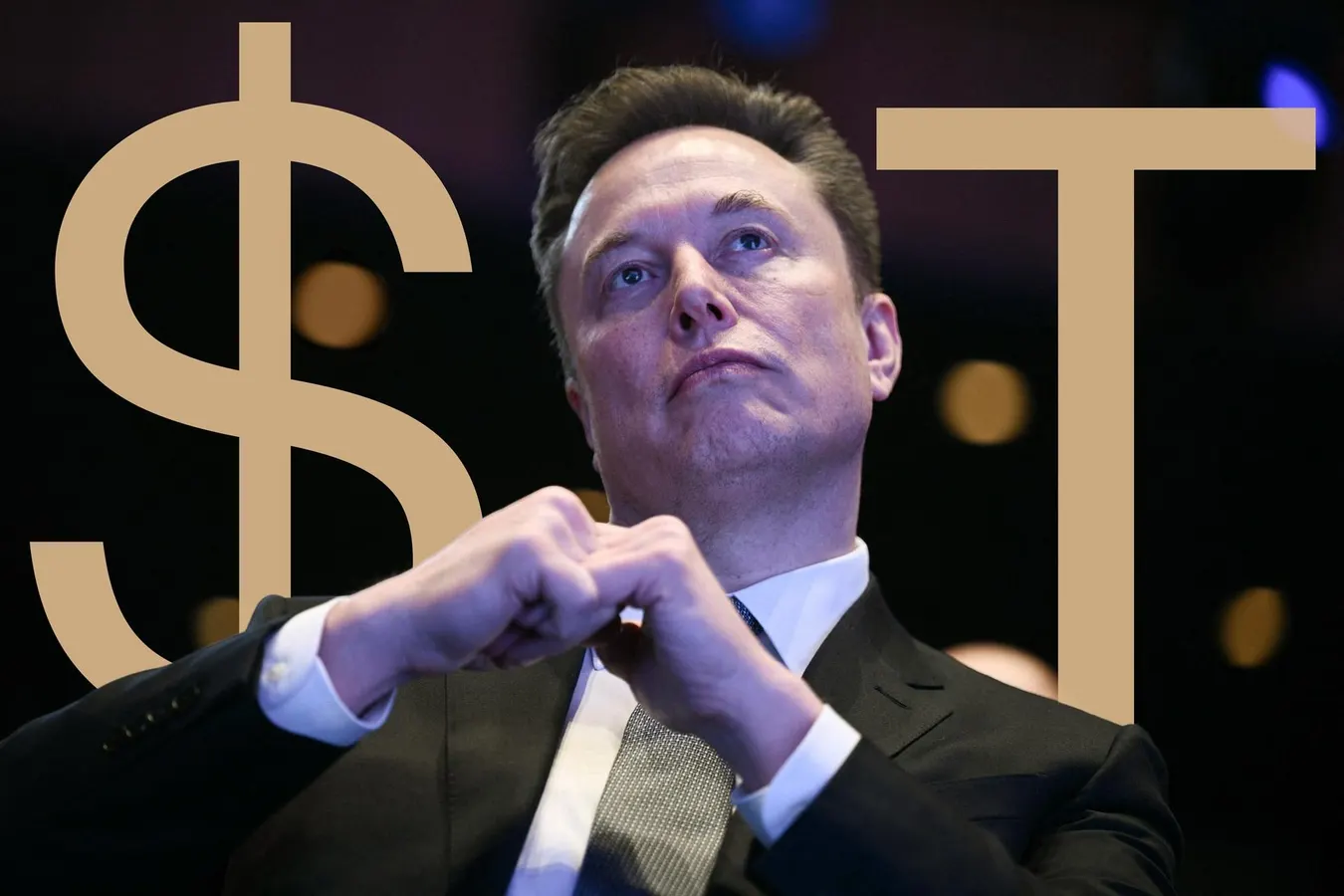
Elon Musk Approaches Unprecedented $800 Billion Net Worth Milestone
In a remarkable financial development that showcases the extreme concentration of wealth in today’s economy, Elon Musk is on the cusp of becoming the first person in history to amass a personal fortune of $800 billion. This extraordinary milestone follows a recent $62 billion boost to his wealth after private investors more than doubled the valuation of his artificial intelligence and social media conglomerate, xAI Holdings, to a staggering $250 billion. The deal, which raised $20 billion from investors, dramatically increased the value of Musk’s 49% stake in the company to $122 billion, pushing his total net worth to approximately $780 billion according to Forbes’ Real-Time Billionaires List. This financial achievement further cements Musk’s position as not just the richest person alive, but as someone operating in an entirely different financial stratosphere than even his closest wealth competitors.
The xAI funding round has created ripple effects for other billionaire stakeholders connected to Musk’s empire as well. Saudi Prince Alwaleed Bin Talal Alsaud, who was among Twitter’s earliest investors, now holds an estimated 1.6% personal stake in xAI Holdings worth about $4 billion, increasing his net worth to $19.4 billion. Similarly, Twitter co-founder Jack Dorsey and Oracle co-founder Larry Ellison each own approximately 0.8% of the company, worth $2.1 billion, which has boosted their respective fortunes to $6 billion and $241 billion. The massive influx of capital comes at a critical time for xAI, which has been aggressively spending in the competitive AI landscape, reportedly burning through $7.8 billion in the first nine months of 2024 alone. The company has also faced recent controversies, including a lawsuit over its Grok chatbot allegedly generating inappropriate fake images of real women, including the mother of one of Musk’s own children.
This latest achievement is just one in a series of remarkable financial milestones Musk has reached over the past year. In October, he became the first person ever to be worth $500 billion, following a surge in Tesla’s stock price after he stepped back from his role in President Trump’s Department of Government Efficiency. By mid-December, Musk’s net worth had climbed to $600 billion after investors valued his space exploration company SpaceX at $800 billion, double its August valuation. Just four days later, Musk crossed the $700 billion threshold when the Delaware Supreme Court overturned a ruling that had previously voided his Tesla stock options package worth $126 billion. The pace at which Musk is accumulating wealth is unprecedented in human history, with each new milestone being achieved in increasingly shorter time frames.
Despite his diverse business portfolio, the foundation of Musk’s extraordinary wealth remains heavily concentrated in two companies. His 42% ownership stake in SpaceX represents his most valuable asset at approximately $336 billion, while his combined Tesla holdings – including both common stock and options – amount to roughly $307 billion. These two companies alone account for the majority of his fortune, although his xAI Holdings stake is rapidly becoming a third major pillar of his wealth. Even more remarkable is the potential for further growth, as Tesla recently awarded Musk a new compensation package that could potentially add up to $1 trillion in additional stock if the company achieves ambitious performance goals over the next decade, including growing its market capitalization more than eightfold.
The gap between Musk and other billionaires has become so vast that it represents a fundamental shift in the dynamics of global wealth distribution. At $780 billion, Musk’s fortune now exceeds that of Google co-founder Larry Page, the world’s second-wealthiest individual, by an astonishing $510 billion. To put this in perspective, the difference between Musk’s wealth and Page’s is greater than the entire net worth of most other billionaires on the planet. Larry Ellison briefly crossed the $400 billion threshold in September, coming within $40 billion of Musk’s fortune at the time, but has since seen his wealth decline by $159 billion, dropping him to fifth place on Forbes’ wealth rankings. Perhaps most telling of all, Musk’s stake in xAI Holdings alone – just one piece of his financial empire – is worth more than the entire estimated $109 billion fortune of Michael Bloomberg, the sixteenth richest person in the world.
Musk’s financial ascendancy reflects broader trends in wealth concentration during the technology and AI boom, raising important questions about economic power and its implications for society. His companies span critical future-focused industries including electric vehicles, space exploration, social media, and artificial intelligence – sectors that investors clearly believe will shape humanity’s future. While Musk’s supporters point to his companies’ technological innovations and vision as justification for his unprecedented wealth, critics question whether any single individual should control resources equivalent to the GDP of entire nations. As Musk approaches the $800 billion mark, his financial journey has moved beyond mere business success into uncharted territory that challenges our understanding of wealth accumulation in the modern era. Whatever one’s perspective on Musk himself, his financial trajectory represents a singular phenomenon in economic history, one whose full implications may not be fully understood for generations to come.
