



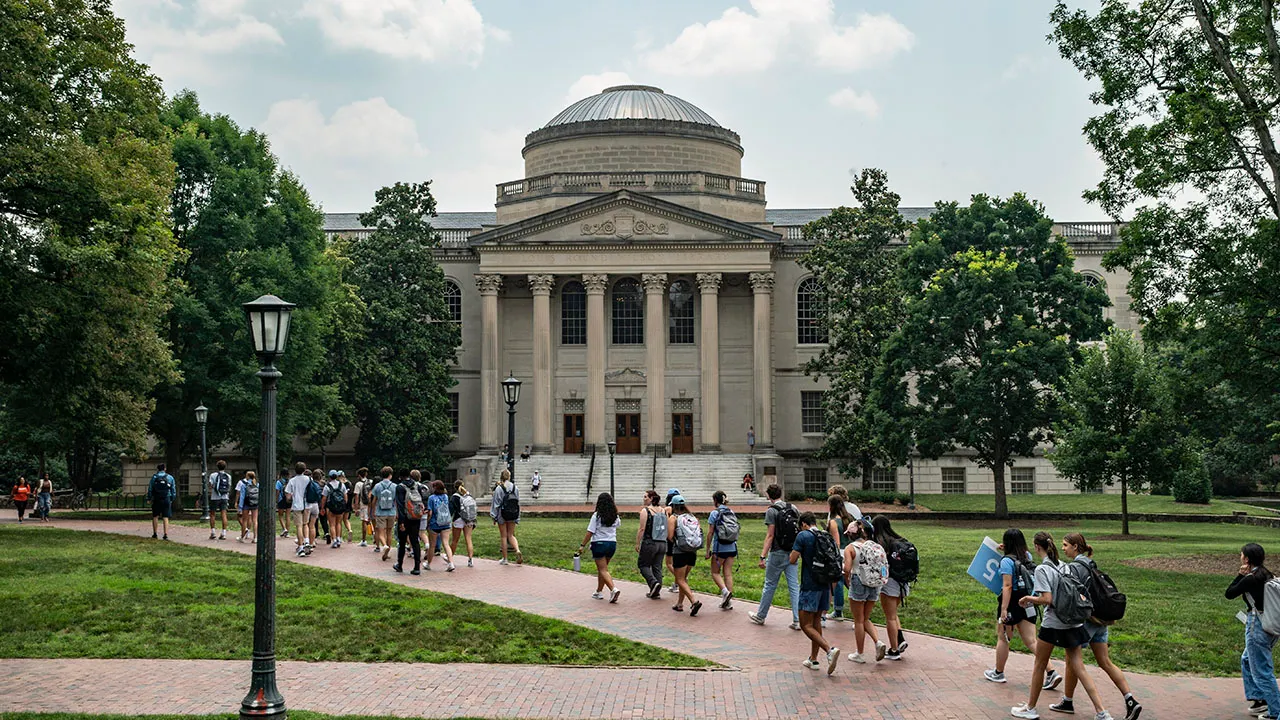
In a move that could redefine how the federal government and American universities navigate the stormy intersection of civil rights, campus protest and national politics, the Trump administration has reached a settlement with the University of North Carolina at Chapel Hill. The agreement closes 18 active federal investigations and a separate Justice Department compliance review that were centered on allegations of antisemitism and race discrimination at the university. Perhaps most remarkably, the settlement involves no monetary payment, and UNC does not admit to any wrongdoing or liability. It is effectively a peace treaty that allows the university to keep its federal funding while committing to a set of structural and policy changes designed to satisfy federal civil rights obligations. Set to remain in effect through the end of 2028, the deal resolves a period of intense uncertainty for one of the nation’s oldest public universities, which had been caught in the broader crossfire of Washington’s aggressive crackdown on university policies and protest movements. The resolution suggests that cooperation, rather than confrontation, may offer a path forward for institutions under similar pressure—though the strings attached will likely spark debate for years to come.
At the heart of the settlement is a demand for institutional self-policing, something the university has embraced with what Chancellor Lee H. Roberts called a commitment to “the fair and equal treatment of everyone at Carolina.” To make that commitment concrete, UNC will appoint an internal “Merit & Civil Rights Administrator” and create a “Title VI Coordinator” position within its compliance office. These roles are designed to centralize the university’s handling of discrimination complaints, ensuring that concerns about antisemitism or race-based discrimination are not lost in bureaucratic inertia. The university has named Elizabeth Hall, already the associate vice chancellor for university compliance, to fill both roles while keeping her existing duties. This is a notable choice: rather than bringing in an outside watchdog or federal monitor, the university is relying on an experienced insider who knows the institution’s inner workings. Hall will serve as the primary point of contact for the Justice Department, overseeing the university’s reporting obligations and acting as the bridge between Chapel Hill and federal officials. In human terms, this means that someone at UNC will now have a clearly defined job—actually two jobs—focused on making sure that complaints are taken seriously, documented thoroughly, and addressed promptly. It is a quiet but significant shift, moving civil rights compliance from a vague institutional responsibility to a named individual’s professional mandate.
Beyond the structural changes, the settlement outlines a series of cultural and behavioral expectations that get to the heart of the post-October 7 campus environment. UNC will be required to provide mandatory antisemitism training for students, faculty and staff—a measure that goes beyond voluntary workshops or online modules and makes education about antisemitism a baseline expectation for the campus community. The agreement also takes aim at a symbol that has become deeply controversial in campus protests: the face mask. Under the deal, UNC will prohibit face masks used to conceal an individual’s identity, subject to certain exceptions, presumably for health, safety or religious reasons. This provision directly targets the tactic of masked protesters participating in demonstrations, particularly those associated with pro-Palestinian encampments, and signals that anonymity will no longer shield students from accountability. Additionally, the agreement explicitly states that student groups “shall be subject to discipline for antisemitic discriminatory conduct.” This language is likely to be interpreted as a warning that organizations, not just individuals, can face consequences for behavior that crosses the line from political speech into discrimination. At the same time, the settlement acknowledges the contested nature of the issue: President Donald Trump and his officials have repeatedly characterized pro-Palestinian protests as antisemitic, while protesters—including some Jewish allies—maintain that criticizing Israel’s military operations in Gaza is political speech, not bigotry. The training and conduct requirements therefore operate in a highly charged atmosphere, but they are now part of UNC’s binding obligations.
Perhaps the most consequential part of the agreement concerns admissions and financial aid. The Trump administration has made clear that it intends to dismantle race-conscious policies across higher education, and the UNC settlement reflects that agenda by mandating what the Justice Department calls a “color-blind admissions system.” Under the agreement, the university is barred from using race or altering its admissions process to change the racial composition of its student body. However, the deal includes a nuanced carve-out: UNC can still consider how applicants overcame adversity at a personal level, and it may consider aspects of family background, such as poverty, as long as those considerations are applied consistently and do not function as proxies for race. This attempts to balance the Supreme Court’s 2023 ruling striking down race-based admissions at UNC and Harvard with the recognition that socioeconomic hardship and lived experience remain legal—and perhaps valuable—factors in evaluating applicants. The settlement extends the same principle beyond admissions, requiring UNC to maintain race-blind policies governing student benefits, scholarships, financial aid and programming. For students and families, this means that the financial and academic support available at Carolina will not be awarded or denied based on race, and that the university’s own policies must treat all students equally in the distribution of resources. The message is unmistakable: the federal government considers race-conscious measures not as remedies for historical inequity, but as violations of civil rights law, and any university seeking federal money must align itself with that interpretation.
The enforcement mechanics of the agreement also deserve attention because they show how the federal government intends to hold UNC accountable over the next four years. Under the settlement, UNC will send all antisemitism and race discrimination complaints it receives to both the Justice Department and the Department of Education on a quarterly basis. This creates a regular, predictable flow of information, giving federal officials a window into the university’s internal grievance processes. It also means that any patterns of discrimination, or failures to act, will be visible to Washington rather than hidden within campus administration. In exchange for these commitments, the Education Department’s Office for Civil Rights will close 18 active investigations into UNC, and the Justice Department’s Civil Rights Division will close a separate 18-month compliance review that began in April 2025. Assistant Attorney General for Civil Rights Harmeet Dhillon framed the deal as a vindication of federal law, stating that “Title VI requires that all students—regardless of their ancestry or race—receive equal treatment under the law at federally funded colleges and universities.” She went on to say that policies tolerating antisemitism or favoring certain racial groups “frustrate our color-blind justice system,” and praised UNC for meeting its obligations “without the need for litigation.” Her concluding hope that “other institutions will take note and do the same” makes clear that the settlement is not just a bilateral agreement but a template intended to influence universities nationwide.
Seen in a broader context, the UNC settlement is the latest chapter in an unprecedented federal campaign against higher education. Since the start of the pro-Palestinian student protests, the administration has opened investigations and threatened to pull federal funding from many universities over issues ranging from antisemitism to diversity initiatives to transgender policies. Some institutions have already reached their own settlements, and those deals provide a measure of what this new landscape looks like. Columbia University, for instance, agreed to pay more than $200 million to resolve federal probes, while Brown University committed to providing $50 million over ten years to Rhode Island workforce-development organizations as part of its settlement. Harvard, which has been a primary target of the administration, has not yet made a deal, leaving its future relationship with Washington uncertain. Against that backdrop, UNC’s agreement stands out because it costs the university nothing in direct financial penalties and requires no admission of wrongdoing. But the price is still there: a binding commitment to a color-blind philosophy, mandatory training, a mask ban, and an ongoing federal window into campus operations. The deal is a carefully struck compromise designed to preserve UNC’s federal funding and institutional autonomy while explicitly embracing the administration’s vision of non-discrimination. Whether it will be remembered as a reasonable accommodation or a surrender of principle will likely depend on one’s view of the underlying conflicts. For now, the Tar Heels have found a way forward—and the rest of America’s universities are watching closely.