



Securitize Hits Record $5 Billion in Tokenized Assets, Landmark Quarter Signals New Era for Institutional Digital Finance
Record $5B Average Tokenized Assets Highlight Securitize’s First Public Quarter
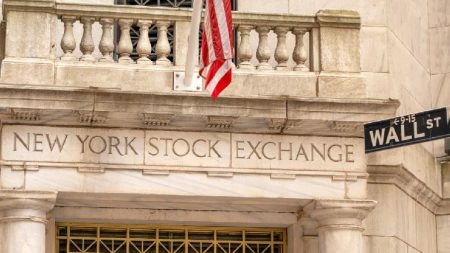
Securitize, one of the most closely watched infrastructure providers in the digital-asset industry, has opened a new chapter as a public company with numbers that underscore how quickly tokenization is moving from pilot projects to core financial services. The company, which completed a business combination that brought it to the New York Stock Exchange, released its first quarterly report as a listed entity. The centerpiece was a record $5 billion in average tokenized assets during the third quarter, a 39% jump. The total value of tokenized assets on the platform rose 9% to $4.8 billion as of September 30, while total transaction volume climbed 20% to $4.3 billion. These figures put Securitize at the center of a rapidly expanding market for digital securities representing real-world assets such as private credit, bonds and investment funds. The report was not uniformly upbeat, however. Securitize Fund Services, the company’s traditional administration arm, oversaw 669 active funds with $25.2 billion in assets under administration, a 29% decline from the prior period. The divergent trends reflect a broader shift inside the company and across the wider industry: the regulated, on-chain infrastructure for tokenized securities is scaling quickly, even as some legacy fee-based services remain under pressure. The record average tokenized assets figure, in particular, will be scrutinized by investors because it captures the platform’s ability to retain assets over time rather than simply point to a favorable end-of-quarter snapshot. Francisco Flores, the company’s chief financial officer, said the report marked a strong first outing as a publicly traded firm. “We are very pleased with our results for the third quarter of 2026, our first reporting period as a public company,” he said.
Tokenization Revenue Surges as Asset Servicing Slips
Those asset-level numbers were supported by a revenue trend that has become increasingly clear: tokenization is the growth engine, and traditional servicing is lagging behind. Tokenization revenue reached $11.5 million in the third quarter, up 28% year over year, while asset servicing brought in $7.2 million, down 6%. Management attributed the asset servicing decline to lower fund administration and accounting fees, explaining that the shift in the product mix was largely responsible for the drag. The nine-month revenue figure tells a similar but more complete story. Securitize generated $52.5 million in revenue during the first three quarters of 2026, a 15% increase over the same stretch in 2025 and the strongest first nine months in the company’s history. The CFO’s comments, along with management’s decision to maintain the full-year revenue guidance of $70 million to $80 million, underline a sense of confidence that the tokenization business can continue to accelerate. There are still open questions about how durable the asset servicing decline will be, especially as the company focuses more heavily on tokenized products. But the latest figures suggest that Securitize’s core customers are increasingly choosing blockchain rails, rather than paper-based processes, to bring financial products to market. The falling assets under administration at Securitize Fund Services, while notable, has not prevented the company from posting record top-line performance. For investors, the revenue mix is one of the most important indicators to watch in the quarters ahead. Tokenization is no longer a side project; it is becoming the financial engine of the company.
BlackRock, ARK Invest and Neuberger Berman Signal End of Institutional Tokenization Experiments
The quarter also provided fresh evidence that tokenization is no longer a niche experiment for institutions. Chief Executive Officer Carlos Domingo said ARK Invest, BlackRock and Neuberger Berman all launched new tokenized products on the platform during the period, describing the wave of launches as “the clearest sign yet that institutions are past the experimenting stage.” That is a significant statement from a company whose business model depends on convincing traditional asset managers to bring real products on-chain. For years, tokenization has been a topic for conferences and pilot programs, often with little to show beyond a proof of concept. Now, some of the most influential asset managers in the world are moving forward with actual products, and Securitize has positioned itself as the regulated infrastructure layer beneath them. The company’s role is not to compete with those asset managers; it is to provide the issuing, administration and transaction infrastructure they need to run tokenized securities at scale. Domingo’s optimism was matched by the company’s outlook. During the earnings call, Securitize restated its full-year 2026 revenue guidance of $70 million to $80 million, a signal that management sees the fourth quarter continuing along the same trajectory. The arrival of established players like BlackRock and ARK Invest also matters beyond Securitize’s own business. It adds credibility to the broader thesis that digital securities can coexist with, and eventually integrate into, traditional capital markets. It also suggests that the conversation has moved from whether tokenized assets will become mainstream to how quickly that transition will happen.
River One Acquisition Adds Stablecoin-Powered Warehouse Financing to Securitize’s Stack
Securitize also used its latest announcement to unveil a strategic acquisition that extends its reach beyond tokenization into the fast-moving world of stablecoin-based credit. The company has agreed to acquire River One, an institutional asset-backed financing platform built around the stablecoin economy. River One was incubated by Framework Ventures and counts Maple Finance among its backers, giving it a strong pedigree in the decentralized-finance world. The deal will add warehouse financing to Securitize’s tokenization stack, a meaningful expansion of its capabilities. Warehouse financing, in simple terms, allows lenders to fund pools of loans or other assets before those assets are packaged into securities and sold to investors. By integrating that layer with its existing tokenization infrastructure, Securitize is trying to offer a more complete lifecycle for institutional credit. The acquisition is expected to close in the fourth quarter of 2026, though financial terms were not disclosed. Management said they do not expect the deal to have a material impact on fourth-quarter results, suggesting that the transaction is relatively modest in size but strategically important. The combination of tokenization and stablecoin-based warehouse finance could prove especially relevant in the private credit market, where borrowers are increasingly looking for faster, cheaper and more transparent ways to bring assets to market. It also signals that Securitize sees stablecoins not just as a speculative corner of the crypto market, but as a growing source of institutional funding that can be integrated with regulated securities. The acquisition is another sign that the line between decentralized finance and traditional capital markets is beginning to blur, and Securitize is making sure it has a foothold on both sides.
Board Approves $50M Buyback as One-Time Charges Pressure Bottom Line
On the capital allocation front, the board authorized a share repurchase program of up to $50 million of common stock on November 6. The program, which runs through December 31, 2027, will be funded from existing cash. Securitize ended the third quarter with approximately $300 million in cash and cash equivalents and no debt, meaning it has more than enough liquidity to finance the buyback and continue investing in acquisitions. The buyback is a sign that management wants to signal confidence in the company’s future cash generation. The bottom line, however, still bears the marks of Securitize’s transition to the public market. The company recorded a net loss of $66.3 million, or $0.41 per diluted share, for the quarter. Of that amount, roughly 90%, or about $60 million, came from largely non-cash charges related to the business combination and NYSE listing, as well as warrant-related expenses. In the same period last year, Securitize reported net income from continuing operations of $8.6 million. Adjusted EBITDA, a metric that strips out some of those one-time effects, came in at a loss of $2 million, a 64% improvement from the second quarter and a larger decline than the positive $3.6 million adjusted EBITDA reported a year earlier. The market response appeared to focus on the underlying business rather than the accounting charges. Securitize’s shares closed at $6.97 on Monday, up 0.1%, and climbed 13.1% to $7.88 in after-hours trading as investors absorbed the record asset figures and the acquisition news.
Cyberattack and Stock Tokenization Debate Test Securitize’s Public Market Debut
No quarterly report from a digital asset company would feel complete without a reminder of the risks that come with the territory. Securitize spent part of the early days of its public life dealing with the aftermath of a cyberattack on its Japanese operation. According to Cryptopolitan, the attack exposed data on customers of Sony Bank, NTT Data and Marui Group. The disruption had immediate consequences. Sony Bank froze trading of its digital securities, and Marui Group said the number of affected applicants for its digital bonds was as high as 9,086. The breach was a troubling episode for a company whose entire value proposition depends on institutional trust and security. It also highlighted the complexity of running tokenized securities infrastructure across borders, with multiple issuers, intermediaries and technology providers connected to the same platform. In addition to cybersecurity, Securitize has found itself at the center of an intensifying debate about the future of stock tokenization. In late October, CEO Carlos Domingo took issue with a full-page advertisement in The Wall Street Journal that argued against tokenizing stocks, calling it “misleading.” The ad is a sign of rising opposition to the idea of moving equity markets onto blockchain rails, and Securitize is likely to remain a key participant in that fight. The company has made no secret of its ambition to build a bridge between traditional capital markets and the digital economy. That role puts it in a difficult position: it must reassure regulators, win over traditional issuers, and prove to the market that its infrastructure can withstand the scrutiny that comes with being a public company. The third quarter showed that the model can produce record growth. The fourth quarter will test whether Securitize can manage the risks that growth creates.