


Paragraph 1
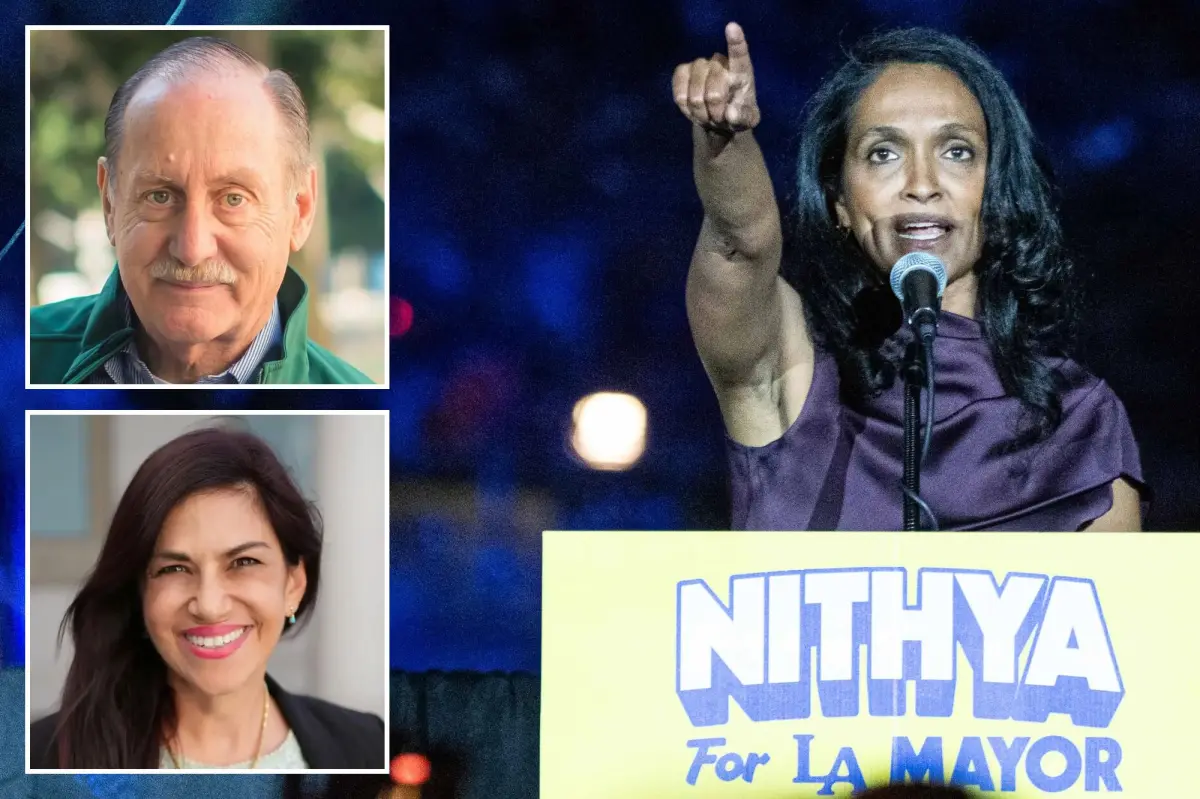
For months, Nithya Raman’s campaign had electrified a new generation of Angelenos with the promise of breaking the status quo, of prying open the often opaque doors of City Hall. Her rhetoric painted a future where the well-connected lobbyists and career political operatives would finally yield the floor to community organizers and fresh-faced idealists. Yet, as the reality of setting up a government hits her transition team just weeks before inauguration, a different picture emerges. The mayor-elect, facing the impossible weight of America’s second-largest city, is now turning to the very establishment she ran against. According to multiple sources familiar with the transition, the architect of her incoming administration is expected to be Rick Cole—a man whose name is practically synonymous with City Hall’s old guard. A former deputy mayor under Eric Garcetti, a city manager for three different municipalities, and a lifelong public servant, Cole represents the institutional memory that so often defines the upper echelons of governance. This is the human pivot from aspirant to administrator—the moment where purity fades before the pragmatic necessity of actually running a machine as complex and intricate as Los Angeles. It is a testament to the unforgiving nature of politics: the same insiders she promised to upend are now the ones she trusts to hold up the roof. But this is not a betrayal burnt in cynicism; rather, it is a recognition that overhauling a city of four million requires a precise knowledge of the wires behind the walls, even if those wires are rusted and old.
Paragraph 2
Cole brings with him a fascinatingly contradictory biography that mirrors Raman’s own dilemma. He is a zealot for governmental efficiency, an outspoken reformer who frequently clashed with unions, elected officials, and entrenched bureaucrats over spending and management. Yet he is also a consummate insider, having navigated the cul-de-sacs of southern California politics for decades. His recent past is riddled with controversy that Raman’s team must quietly weather. In April 2020, he found himself unceremoniously pushed out of his role as Santa Monica’s city manager. The city was staring into the abyss of a $226 million budget shortfall aggravated by the pandemic, and Cole proposed drastic cuts that alienated public employee unions. Over 2,800 residents signed a petition demanding his ouster, painting him as a hammer rather than a surgeon in times of crisis. Despite that rocky ending, he landed in the orbit of the Democratic Socialists of America-backed Controller Kenneth Mejia as a senior adviser, before becoming an unpaid consultant to Raman’s campaign. Throughout the last year, he has served as a vocal critic of Mayor Karen Bass’s homelessness spending, publicly blasting the administration’s oversight. This positions Cole as the axe-wielding fiscal disciplinarian—someone willing to make enemies to save a dollar. For Raman, hiring Cole is a calculated gamble. It signals to fiscal moderates that she will be serious about budgetary accountability, while sending shivers down the spines of progressive activists who feared a rubber-stamp alliance with the unions. The human reality is that Cole, now in his late sixties, sees this as his final magnum opus—a chance to prove that a reformer can actually fix Los Angeles, not just critique it from the sidelines.
Paragraph 3
Working alongside Cole, Raman is placing Andrea Conant in a crucial role, a position steeped in its own delicate complexity. Conant, Raman’s current chief of staff in her council district, arrives with nearly two decades of public relations and lobbying experience. She cut her teeth at Consensus Inc., a powerhouse public affairs firm, representing major projects like the LAX Master Plan and Metro’s Gold Line extension. This is where the narrative of ‘change’ becomes morally gray. Conant’s past work representing the developer of the proposed Mirabel luxury high-rise on Wilshire Boulevard—located squarely within Raman’s own district—caused an immediate firestorm upon her hiring in 2021. Residents cried conflict of interest, accusing Raman of hypocrisy for hiring a lobbyist who had worked against the neighborhood’s interests. Raman’s office brushed off the concerns, asserting that Conant had no financial stake in the project and would recuse herself from any matters related to it. But the optics remain a bitter pill for grassroots supporters. Yet, humanizing Conant reveals a professional who understands the art of resolution. Her skills lie in bridging the enormous canyon between developer ambitions and community resistance, a necessary toxicity in a city where housing is scarce and tempers flare. She is not a caricature of a villain; she is a pragmatic career woman who sees nuanced solutions in stalled projects, who believes that entrenched interests are not enemies but instruments to be tuned. By keeping her at the highest levels of the transition, Raman is effectively wiring that pragmatic DNA directly into the core of her new administration. The ethical tightrope she walks is one that many successful politicians traverse: surrounding oneself with people who know how to get things done, even if it means that their fingerprints are not perfectly clean.
Paragraph 4
The cadre of veteran operatives extends further into Raman’s inner orbit through Jeff Millman, her campaign manager. Millman is a legendary figure in California’s democratic machine, a strategic mastermind who once handled communications and political strategy for Mayor Garcetti, and was instrumental in helping Los Angeles secure its bid for the 2028 Summer Olympics. He also steered Senator Dianne Feinstein’s grueling 2018 reelection and managed Sheriff Robert Luna’s successful county campaign. Millman is the complete political package—a man who knows how to spin a crisis into a narrative and an opponent’s misstep into an advantage. While it remains uncertain if he will take a permanent post inside the mayor’s office, his mere presence in the transition command center speaks volumes about the direction Raman is steering. Even closer to her daily operations is Dae Levine, who previously ran communications for Garcetti and now serves as Raman’s deputy chief of staff for policy and communications. Levine’s jump from the Garcetti administration to Raman’s staff is a literal living bridging of two eras. The list continues with Mashael Majid handling housing and planning, Stella Stahl heading communications, and Patrick Siggins overseeing homelessness services. Each of these individuals shares a common thread: deep institutional anchors within the same bureaucracy Raman pledged to redefine. The human story here is not one of a coup but of a baptism. Raman, a housing activist and urban planner by training, recognizes that she lacks the sheer political horsepower of these seasoned veterans. Rather than compete with them, she is absorbing them, betting that their knowledge of the corruption and inefficiency will actually allow her to navigate the minefield faster than if she tried to usher in an army of novices who could get lost in the intricate corridors of power. It is an admission that the revolution must borrow the king’s armor to storm the castle, even if that armor chafes.
Paragraph 5
Amidst this political teambuilding, the clock is ticking mercilessly. Raman has a scant 39 days remaining before she is sworn in on December 14th, taking the helm of the second-largest city in America. The honeymoon period is non-existent. The city’s 2027 budget cycle is already hurtling forward, with each department scrambling to draft spending proposals due at the mayor’s office by the end of November. Once in power, Raman and her team will have a compressed window of just a few months to review, slash, or augment those requests before presenting a balanced budget to the City Council by April 20th. It is an administrative gauntlet that most seasoned mayors dread, let alone a first-time executive. The fiscal reality is bleak: the city is grappling with acute staffing shortages across police, sanitation, and parks; the cost of homelessness has ballooned into a multi-billion-dollar black hole; and the clamoring demands for basic services reach every desk. For the incoming mayor, this means immediate choices that cannot be postponed. Does she fund the promise of affordable housing or shore up baseline services? Does she sign off on expensive union contracts she campaigned against? The human weight of these decisions is crushing. Raman is stepping into an office where every single choice alienates a powerful constituency. The technocrats around her—the Coles and Millmans—will provide the calculus, but she bears the emotional burden. Sleepless nights will be spent staring at spreadsheets, balancing the moral urgency of social justice against the hard mathematical limit of the city’s tax base. The transition is not merely about hiring staff; it is about triage under fire before the actual surgery even begins, forcing her to accept that governing is often a series of lesser evils in a city that demands perfection.
Paragraph 6
In the end, the story of Raman’s transition team is a deeply human parable about the distance between ideology and implementation. On the campaign trail, promoting a radical new vision is the currency of success. In the mayor’s office, stability and reliability become the true measure of leadership. Raman’s decision to surround herself with Garcetti-era veterans is not a surrender; it is an evolution. She is likely acutely aware that the wild-eyed idealists who helped her win the election are sadly unprepared to navigate the labyrinthine procurement codes, union contracts, and developer entanglements that define Los Angeles governance. By embracing Cole and Levine, she is choosing the path of applied wisdom over unbridled innocence, accepting that the devil she knows inside City Hall is infinitely better positioned to help her than the angel she has yet to meet. This moment captures the existential crisis of every fresh-faced politician: the realization that true change requires a deep engagement with the flawed systems you inherited. It is the ultimate maturity test, one where the promise of sweeping reform is tempered by the exhausting, often thankless grind of balancing a multi-billion-dollar budget. For the residents of Los Angeles, this transition represents a flickering hope that maybe—just maybe—a mayor who genuinely understands the grassroots can pair that passion with the wily expertise of old hands to actually get something done. This is the messy, unglamorous, and deeply human business of building a government, where the only way forward is to admit that to fix the machine, you must first engage with its cogs and levers, however worn or tarnished they may be.