

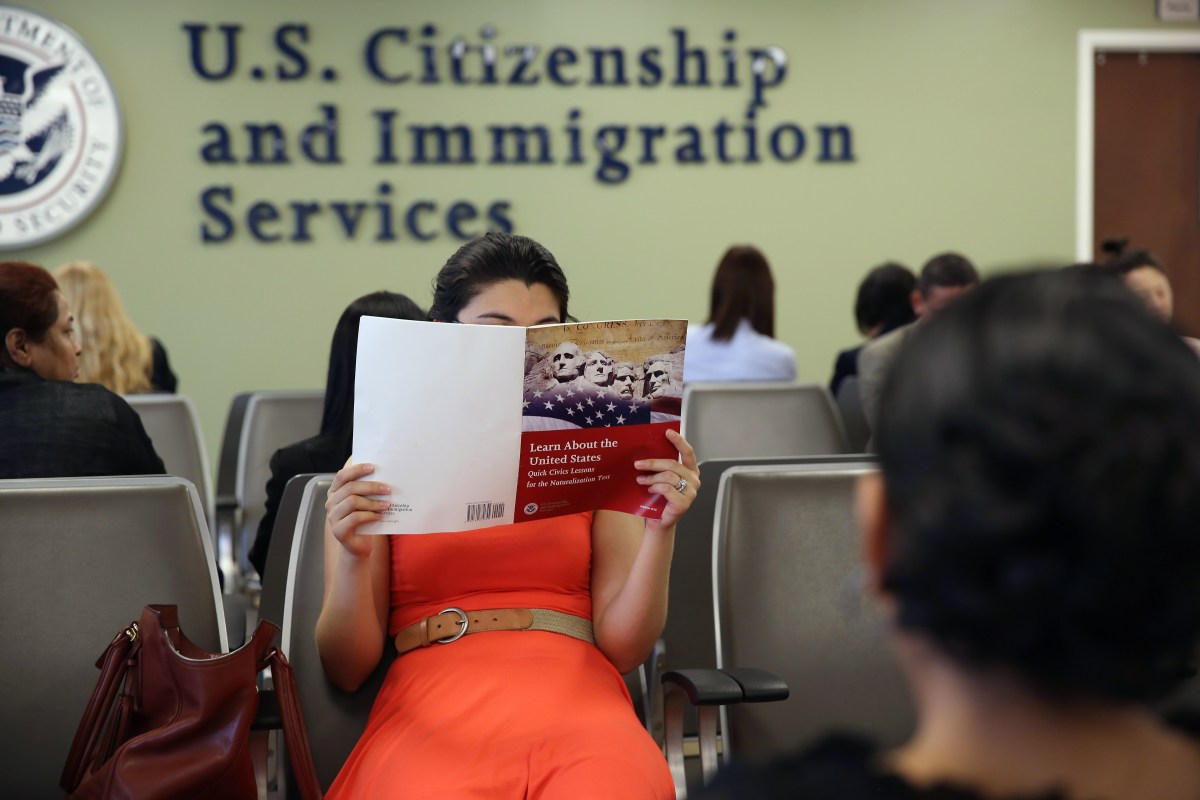
Imagine waiting months, or even years, for a single decision that will determine whether you can keep living in the country you already call home. That is the quiet reality behind the latest government figures on green card applications in the United States. As of June 30, U.S. Citizenship and Immigration Services, or USCIS, reported that 1,560,290 Form I-485 applications were pending nationwide. The I-485 is the crucial application that allows eligible immigrants already in the United States to adjust their status and become lawful permanent residents—the step that leads to what most people know as a green card. A pending application means that USCIS has received the paperwork but has not yet made a decision. Behind each of those numbers is a human story: a parent who cannot safely travel to see family abroad, a spouse trying to build a stable future, a young person who has grown up in American schools and is still waiting for the legal security that lets them fully participate in the only country they truly remember. The backlog is not just an administrative problem; it is a vast holding pattern of lives, where people must put their plans, careers, and reunions on hold while they wait for an answer that will shape everything that comes next.
The backlog is not spread evenly across the country, and the geographic picture reveals where the pressure is most intense. Florida holds one of the largest concentrations of pending green card applications, with 265,495 cases spread across nine USCIS field offices. Within Florida, the Tampa office had 46,609 pending applications, followed closely by Kendall with 45,973 and Hialeah with 43,153. Texas field offices accounted for 140,743 pending cases, with Houston carrying 57,601, Dallas 38,257, and San Antonio 30,622. California’s field offices reported 161,398 pending applications, including 23,633 in San Jose, 20,529 in Los Angeles, and 18,364 in San Francisco. It is important to understand that these figures represent cases assigned to the offices handling them, not necessarily where applicants live. USCIS organizes work by field offices and service centers, and some of the biggest backlogs sit in service centers that process applications from all over the country. The Vermont Service Center, for example, had 246,100 pending cases; Nebraska had 42,805; California had 21,108; and Texas had 13,250. These centers are excluded from maps of local field offices because their locations do not reflect where applicants reside, but they make up a substantial share of the total delay. For the people caught in this system, the distinction between field office and service center matters little. What matters is that a decision is still out of reach, and that thousands of families in some communities are waiting together, often in the same neighborhoods, workplaces, and schools.
The human weight of the backlog becomes even clearer when you look at what kinds of applications are waiting. Humanitarian cases made up the largest share of pending I-485 applications, with 618,097 awaiting a decision as of June 30, 2026—roughly 40 percent of the total. These are people who have often fled violence, persecution, or unimaginable hardship, and who are seeking safety and stability in the United States. Close behind were family-based applications, totaling 611,067 cases, or about 39 percent of the backlog. These are spouses, parents, children, and siblings trying to keep their families together or finally close the distance that has separated them. Employment-based applications accounted for 268,408 cases, about 17 percent of the total, representing doctors, nurses, engineers, farmworkers, and other workers whose labor is woven into the American economy. Another 62,718 cases fell into an other category. When combined, family and humanitarian applications made up almost four out of every five pending green card cases. That means the overwhelming majority of people waiting are not seeking some abstract benefit; they are seeking the basic right to remain with their loved ones or to rebuild lives after trauma. The numbers are a reminder that immigration policy is not an abstract debate. Every percentage point represents real people, many of whom have already been waiting for years, stuck in a system that does not show them how much longer they will have to wait or why their particular case remains unresolved.
This growing backlog is unfolding against a backdrop of dramatic change in the immigration system. According to the Office of Homeland Security Statistics, about 1.36 million people obtained lawful permanent resident status in fiscal 2024, up from 1.17 million in 2023 and the highest annual total recorded between 2015 and 2024. But after President Donald Trump returned to office in January, the administration issued a series of immigration orders aimed at restricting legal immigration. These included measures to limit humanitarian parole and to suspend the U.S. refugee admissions program. The impact can be seen across the entire agency. The Niskanen Center, a think tank that tracks immigration data, reported that more than 12.8 million cases were pending across USCIS as a whole as of June 30, 2026. That is an enormous number, and it comes despite a 34 percent drop in incoming applications compared with the same quarter a year earlier. In other words, even as fewer people were filing new applications, the agency was still falling further behind. The approval rate among decided green card applications also fell by 2.6 percentage points from the previous quarter. For applicants, this feels like moving through a fog: fewer new cases entering the system, but no faster answers for those already waiting, and a growing sense that the rules are being rewritten around them.
In May, USCIS issued new guidance that made the uncertainty even more palpable. The agency emphasized that approving an application to adjust status is discretionary, meaning that even applicants who appear eligible can be denied at an officer’s discretion. It also said that some immigrants in the United States on temporary status who are seeking a green card would generally need to apply through consular processing outside the country, except in extraordinary circumstances. That guidance directed officers to assess applications on a case-by-case basis, which sounds reasonable in theory but, for applicants, introduces a deep sense of unpredictability. A person who has built a life, paid taxes, and contributed to a community may suddenly be told that their path to a green card must go through a U.S. consulate abroad—a process that can require leaving the country, with no guarantee of return. The shift in tone is significant. It tells immigration officers to think of permanent residency not as a benefit that eligible applicants should receive, but as a privilege that can be withheld. These changes to the legal immigration system are happening alongside a wider crackdown focused on arrests and deportations by Immigration and Customs Enforcement, making it harder for some people to obtain benefits while increasing fear in immigrant communities. For those already waiting, every new policy announcement raises the same painful questions: Will my case be affected? Will I have to start over? Will I be separated from the people I love?
Taken together, the data paints a picture of a system under extraordinary strain, and of a moment when the rules of American immigration are being transformed in real time. More than 1.5 million people are waiting for green cards, and while the backlog is measured in applications, it is experienced in birthdays missed, funerals unattended, job offers declined, and children asking when a parent will stop being afraid. The concentration of cases in states like Florida, Texas, and California shows where immigrant communities are strongest, and where the consequences of delay are felt most acutely. The fact that humanitarian and family cases dominate the backlog reminds us that most people are not seeking opportunity in the abstract; they are seeking refuge, reunion, and the simple dignity of being able to plan a future without the threat of separation. The recent policy changes, the falling approval rates, and the new guidance on discretion all suggest that the road ahead may become even harder. For the people caught in this system, the uncertainty is not just a statistic. It is the gnawing feeling of living in a state of suspension, unable to move forward, unable to go back, and forced to wait for a decision that will determine everything. No matter how one feels about immigration policy, the human cost of a backlog this large is impossible to ignore. Behind every pending application is a life waiting to be recognized, a family waiting to be made whole, and a person waiting to finally be allowed to stop proving that they belong.