


There’s a certain rhythm to the morning after an American election, a pulse that beats like clockwork every two years. The winners rise with a spring in their step, eager to claim a mandate from the heavens, as if the voters had delivered a divine endorsement rather than a highly imperfect, often contradictory collection of precinct results. The losers, meanwhile, turn inward, nursing a bitter blend of disappointment and defiance, already rehearsing the arguments that will define the next cycle. And then there are the rest of us—the spectators, the strategists, the just-plain-weary citizens—watching both sides sharpen their knives, ready to resume their favorite pastime: questioning the moral character of anyone who disagrees with them. The question we all keep dancing around, the one that gets buried under landslides of hot takes and cable news shout-fests, is the only one that actually matters: where do we go from here? Not just at the ballot box, but as neighbors, as colleagues, as members of the same sprawling, messy experiment called America. It was into this distinctly unholy, post-election haze that Pope Leo XIV stepped, and he did so with a message so inconvenient, so perfectly and maddeningly fair, that neither party could comfortably claim it as its own.
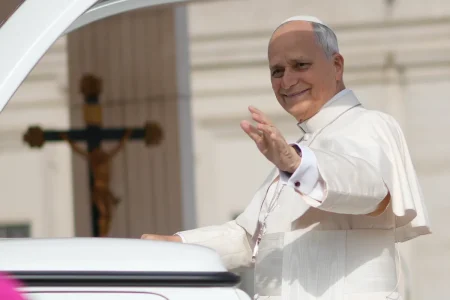
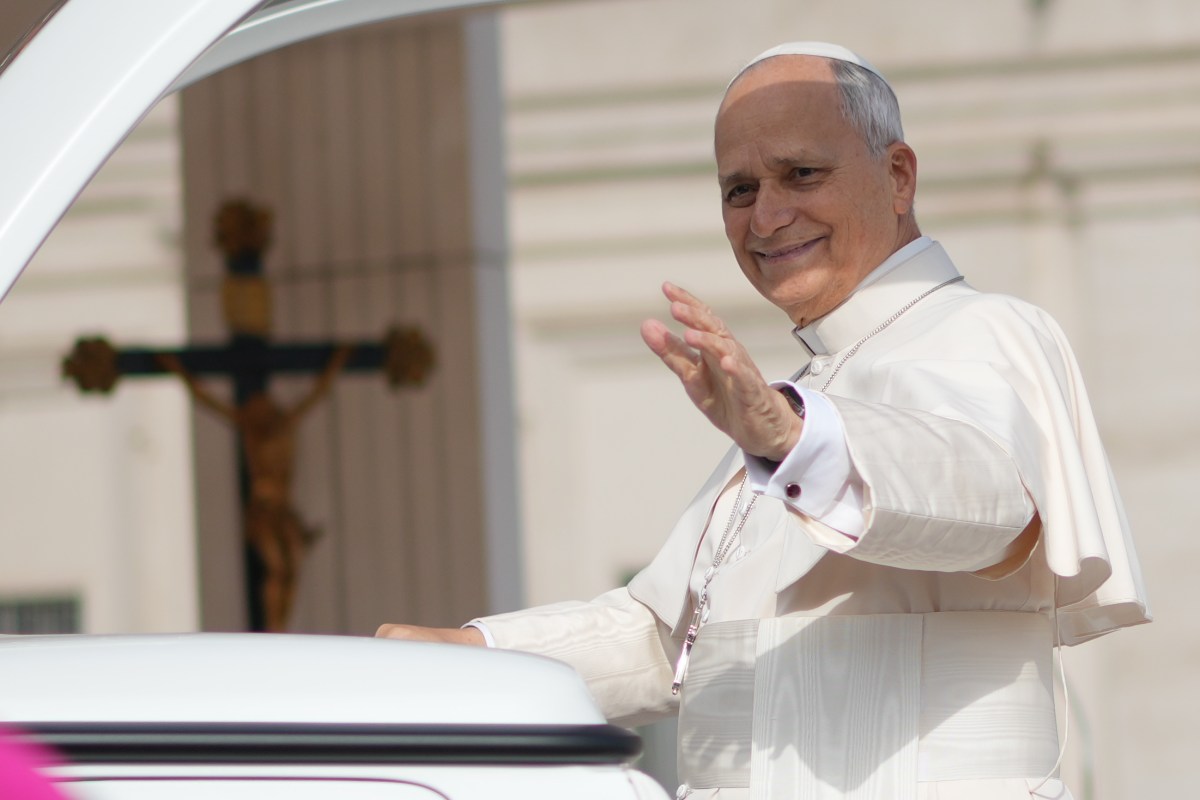
Let’s picture the scene for a moment. The day after the midterms, the newly elected pope—an American himself, the first in history, a man who presumably knows the taste of weak diner coffee and the frustration of a stalled traffic jam on the Beltway—appears in St. Peter’s Square. He isn’t delivering a scorching attack on Donald Trump or a progressive manifesto for the Democratic Party. He’s simply continuing a scheduled series of reflections on the Second Vatican Council, that great mid-20th-century turning point in Catholic thought that reimagined the Church’s place in the modern world. He’s speaking about lofty, theological things—the nature of political authority, the responsibility of the state, the common good. But the calendar, with its stubborn, unblinking truth, gives his words an unmistakable resonance. When a pope who grew up breathing American air says that political authority exists to serve the common good, with the welfare of the entire human family in mind, it lands in a very different way than it might on a quiet Tuesday in Rome. It lands on a country still bleeding from the wounds of a deeply divisive election, a country where “the common good” has become a catchphrase more often used to win arguments than to guide governance. The awkwardness of this message, rather refreshingly, was bipartisan. It was a gift that neither the red bucket nor the blue bucket could catch without spilling, and that’s precisely what made it worth hearing.
For Republicans, especially those who routinely invoke Christianity while championing a hardline immigration crackdown, the Pope’s emphasis on protecting migrants and vulnerable people is a thorn in the side of their political theology. Go to any conservative church on a Sunday morning, and you’ll hear sermons about the sanctity of life, the importance of family, and the need for moral leadership. But then turn on the evening news and you’ll see the same congregation cheering for border walls, detention facilities, and policies that treat human beings fleeing unimaginable horrors as mere statistics to be managed. Pope Leo’s words cut through that cognitive dissonance with the sharpness of a well-honed blade. He doesn’t say that every nation must abandon its borders or that national security is a sin. But he does say that the poor, the displaced, the stranger—these are not optional charitable causes to be addressed after the economy is secured. They are the core of what it means to exercise power. So the uncomfortable question posed to conservative Christians is this: how can a government claim to uphold Christian values while treating some of the very people those values call it to protect with such calculated harshness? It’s not enough to say that the pope doesn’t understand the complexities of immigration law, because he very clearly does. The deeper issue is whether a political movement that wraps itself in the flag and the cross can live with the contradiction of championing a man who would separate families and demonize the outcast, while simultaneously bowing its head to a sermon about the dignity of every person. That question isn’t going away, and it’s not going to be answered by pointing at the other side.
But for Democrats, the Pope’s message is hardly a comfortable embrace. They might find his emphasis on migrants and social justice rather congenial, a nice echo of their own talking points about compassion and equity. Yet his broader message—the call for peace, for listening to one’s enemies, for extending grace even to those whose policies one finds abhorrent—poses a serious challenge to the left’s increasingly tribal and brittle political instincts. Here’s the thing about compassion: it’s easy when it’s flowing toward people whose suffering confirms our existing worldview. Show us a photograph of a grieving mother at the border, and we’ll flood the comments section with heart emojis and demands for reform. But try showing us a photo of an upset, angry voter from rural Ohio who supported the other candidate, the one who scares us, and suddenly our compassion dries up. The Pope asks something far more difficult. He suggests that true Christian—or truly human—charity must extend to those whose beliefs we find not just wrong but morally repugnant. Democrats can reasonably argue that defending vulnerable people demands fierce opposition to harmful policies. That’s true. But Leo’s appeal poses a sharper, more personal question: can they fight those policies without treating the people who support them as enemies unworthy of compassion? Can they challenge an opponent’s views while still acknowledging their common humanity? In today’s hyper-caffeinated, hyper-polarized political culture, that kind of generosity seems almost laughable. We’ve trained ourselves to see the other side as an existential threat, not as fellow citizens who are also scared, also confused, also looking for someone to blame for a world that feels like it’s spinning off its axis.
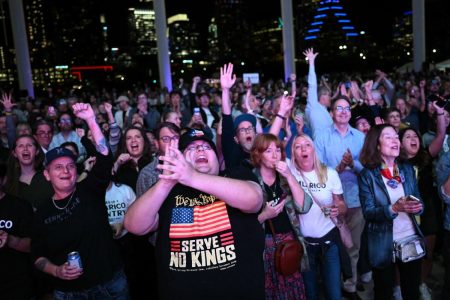
And let’s be honest about the emotional weather of the days after an election. For Democrats savoring their victories, the temptation is almost overwhelming to rub Republican noses in defeat, to send that gloating text to the uncle who voted the wrong way, to post that smug meme declaring “We told you so.” It feels good. It feels righteous. But the Pope suggests that political triumph is not a license for crowing but a call for humility—a recognition that the voice of the people is not the voice of God, and that shortly, the wheel will turn again. For Republicans nursing their losses, the mood is even darker. A lecture on grace and good manners, offered by a man in white robes, is probably about as welcome as another election-night projection showing a blue state flipping. There’s a natural desire to retreat into echo chambers, to blame the media, to tighten the circle of the faithful and prepare for battle. But the Pope’s message cuts through that, too. He calls for dignity in defeat, for the kind of graceful acceptance that doesn’t mean surrendering principles but does mean refusing to demonize the people who voted against you. This is hard. It’s almost unnatural. And yet, there’s something almost mischievous about the timing of Leo’s remarks, as if he knew exactly what he was doing by speaking these words into the first moments of America’s ever-explosive political postmortem. American politics has become exceptionally skilled at turning moral language into partisan ammunition. Both sides claim the higher ground with practiced ease, treating their opponents as unworthy of occupying even the lowest slope. The Pope’s message arrives like an unwelcome sermon at a victory party and an equally unwelcome lecture at a wake. Democrats may want to savor their success; Republicans may prefer to lick their wounds. Meanwhile, the Pope asks both to perform the one political miracle for which neither seems particularly inclined to pray: to remember that the people on the other side of the ballot are human beings, too.
So where does that leave us? It leaves us with a challenge that is far more personal than political. It asks us to look across the table at that relative who voted differently, or the neighbor with the bumper sticker we despise, and to see not a monster but a person—flawed, complicated, motivated by all sorts of things we don’t understand. It doesn’t mean we have to agree, or that we should abandon our convictions. It doesn’t mean we can’t fight fiercely for justice, or push back against policies we believe are harmful. But it does mean that our advocacy shouldn’t require dehumanizing our adversaries to be valid. The Pope’s message, rooted in ancient tradition but spoken into our present chaos, is a reminder that political power, with all its temptations and trappings, is ultimately a means to something greater. It exists to serve the common good, the welfare of the entire human family, not just the tribe that won the latest election. And that is a hard truth for both parties to swallow. It’s hard for Democrats, who are convinced they hold the moral high ground, and hard for Republicans, who are equally convinced they do. But it’s also a liberating truth, because it gives us permission to step back from the brink, to lower the shields, and to speak to one another again as neighbors rather than enemies. Perhaps that’s the real post-election ritual we all keep missing—not the spinning, not the gloating, not the grieving, but the quiet act of remembering that we are all in this together, that the country is bigger than any single election, and that the person across the aisle is not a threat to our existence but a fellow traveler on the same difficult road. It’s a miracle no party can claim, and the one we need most.