


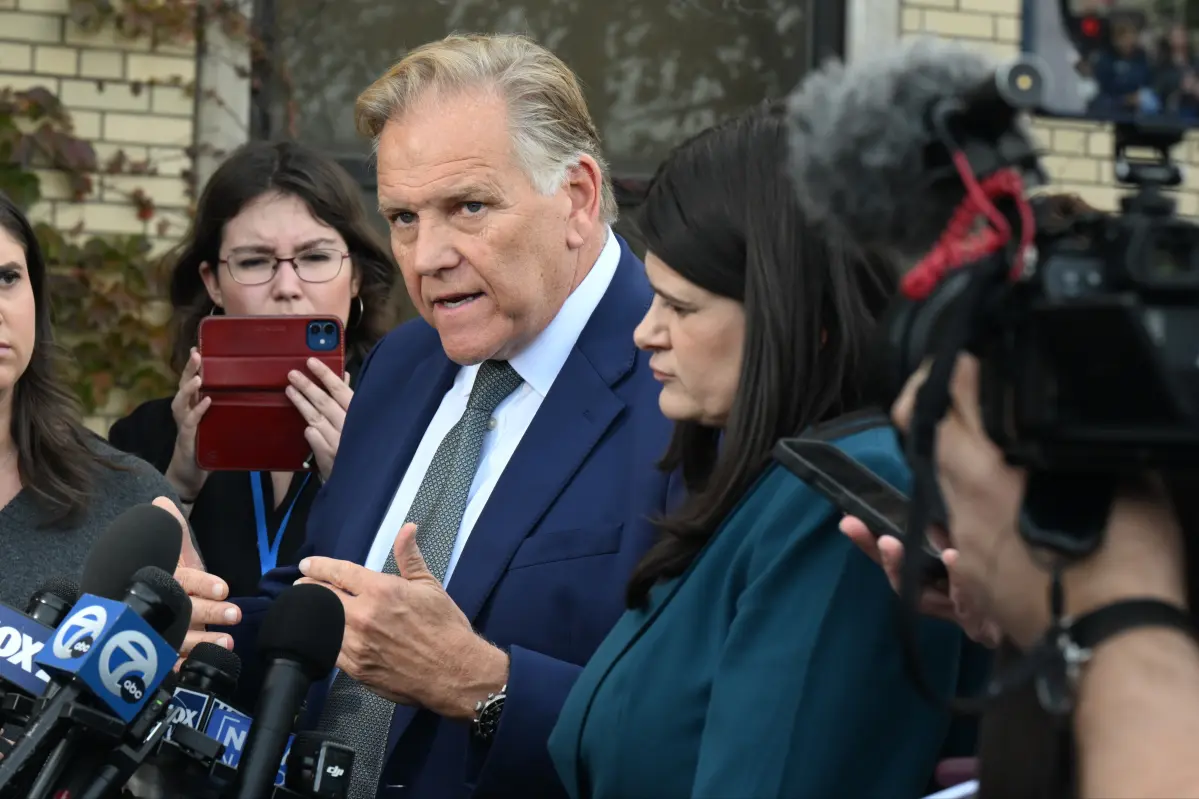
In the closing days of one of Michigan’s most unpredictable Senate races, an unusual and increasingly public rebellion is unfolding inside the Democratic Party. The party’s nominee, Abdul El-Sayed, a progressive physician and former Detroit health official, is fighting not only his Republican opponent but also a growing chorus of Democrats who are openly urging their own voters to abandon him. The endorsements for Republican Mike Rogers are no longer quiet whispers or private frustrations. They have become a coordinated, public campaign, with Democratic City Councilwoman Mary Waters going so far as to remind voters that they can split their ballots in the general election. “There are a number of people that don’t even know that they can split their ballot,” Waters said in an interview, her tone almost playful. She then delivered what amounted to a permission slip to Democratic voters: “Please don’t feel as though you cannot, if you liked Mike Rogers, that you cannot vote for him. You can, if you want to.” When pressed on her own choice, Waters smiled and said, “I won’t say who I’ll be voting for, but I will be splitting my ticket.” The message was unmistakable, and it captures the extraordinary discomfort that El-Sayed has caused within his own coalition.
The most dramatic blow came on a Sunday afternoon when Rep. Haley Stevens, a four-term congresswoman from the Detroit suburbs and a Democrat who had just lost the Senate primary to El-Sayed in August, announced that she was endorsing Rogers. Her defection sent shockwaves through the state party, handing Republicans a powerful talking point as they fight to defend and expand their Senate majority. Stevens framed her decision as a matter of principle, pointing specifically to El-Sayed’s intense and repeated criticism of Israel. El-Sayed is Muslim and has been outspoken in his condemnation of the Israeli government, a position that has made him a hero to some progressives but deeply alienated others. Stevens’ fiancé, Jason Turkish, who is Jewish, endorsed Rogers days before she did, and his influence appeared to weigh heavily on her. But insiders say the primary battle between Stevens and El-Sayed was never just about foreign policy. It was a proxy war between the centrist wing of the Democratic Party and its surging progressive wing, a fight that has been simmering for years and is now boiling over in full public view. Many see Michigan’s Senate race as a harbinger of the 2028 presidential primary, a preview of the internal battle that will decide the future direction of the party. For now, that battle is being fought in real time, with Democratic officials crossing party lines and openly hoping for a Republican victory.
Stevens is not an isolated case. The list of Democrats backing Rogers reads like a roll call of the party’s moderate establishment. Former Sen. Joe Manchin, who left the Democratic Party to become an Independent but still caucuses with them, has been one of the most vocal. “I do support Mike Rogers,” Manchin said on CNBC, calling Rogers a “personal friend” and “a good person” who would “do a great job.” Rogers has also secured endorsements from former Democratic Rep. Hansen Clarke, state Rep. Karen Whitsett, and David Kramer, a prominent fundraiser who served as finance chairman for Sen. Elissa Slotkin, Gov. Gretchen Whitmer, and Stevens herself. That last name is particularly significant, as it shows that even the fundraisers who helped build the Democratic machine in Michigan are now willing to pour their resources into defeating the party’s own nominee. Rogers, who served in the U.S. House for nearly 15 years and has deep roots in the state, has been quick to highlight these endorsements. He praised Stevens for her “courage and bravery” and noted that she is far from the first Democrat to switch sides. “There are elected officials, a Democrat County Sheriff who said this guy’s position on defunding the police is so extreme, they can’t do it,” Rogers said. “The list continues. This is a pattern. When you have that many people out on him, people start to listen.” For Rogers, the endorsements are not just a trophy; they are a strategy to persuade moderate Democrats and independents that it is safe, even honorable, to cross party lines.
Behind the political maneuvering lies a deeper clash of personalities and governing philosophies. Democrats who have crossed over describe Rogers as a pragmatic, approachable figure, a stark contrast to the man they see as El-Sayed: brilliant but uncompromising, idealistic but hard to work with. “He’s not egotistical,” Waters said of Rogers. “He’s the type of person that listens.” El-Sayed, by her account, is “very headstrong.” Waters said she was deeply impressed after meeting with Rogers, describing him as genuinely sensitive to the needs of Detroit. “He has been embraced by people here in this city,” she said. “He wants those relationships. He’s working hard to earn the votes from the people here in the city of Detroit.” That warmth stands in contrast to the way El-Sayed is viewed by many in the political establishment, who see him as an ideologue more interested in making a point than building consensus. El-Sayed is 42 years old and relatively new to statewide politics. His only previous campaign was a failed bid for governor in 2018, and he has never held elected office. Rogers, at 63, is a seasoned operator who spent nearly a decade and a half in Congress, serving as chairman of the House Intelligence Committee. For many Democrats, Rogers is not an enemy to be defeated at all costs; he is a known quantity, a Republican they can work with, and in some cases, a friend.
Despite the wave of high-profile defections, the race remains remarkably close, and the public polling has actually favored El-Sayed. The RealClearPolitics polling average shows El-Sayed leading by almost five points, a margin that would normally make a Democratic nominee feel confident. But those polls were taken before the flood of Democratic endorsements for Rogers, and the ground may be shifting quickly. Early voting in Michigan began on October 24, and by the time Stevens made her announcement, more than 2.3 million Michiganders had already cast their ballots, according to the Election Lab, which tracks early voting across the nation. That means a significant portion of the electorate has already voted, but more than half of the state’s 8.4 million registered voters have not yet made their choice. Rogers’ campaign insiders believe that Stevens’ backing could be the push that sways moderate Democrats and independents who are still on the fence. In a race this tight, even a small shift in support can decide the outcome, and the timing of the endorsements has been carefully orchestrated to maximize their impact. The question is whether the defections reflect a broader sentiment among Democratic voters or merely the anger of a few elites who lost the primary and cannot accept the outcome. El-Sayed’s supporters argue that the endorsements are coming from a entrenched establishment that is out of touch with the grassroots, and that Democratic voters in Michigan will ultimately stand with their party’s nominee.
At its heart, this race is about more than one Senate seat in one state. It has become a national stage for the ideological war within the Democratic Party, a war that has been raging for years but is now being fought with unusual visibility and intensity. The primary battle between Stevens and El-Sayed was a microcosm of that conflict, pitting the party’s center against its left flank, suburban moderates against urban progressives, and those who prioritize coalition building against those who demand purity on issues like Gaza, healthcare, and policing. El-Sayed’s rise has energized young voters and activists who believe the party should move sharply left, while his critics warn that such positions risk alienating the very voters Democrats need to win competitive statewide races. The split-ticket advice from figures like Mary Waters is a rare and striking admission that some Democrats would rather hand a seat to a Republican than see it held by a member of their own party they consider too extreme. Whether that gamble works depends on what voters in Michigan decide in the coming days. If El-Sayed wins despite the defections, it will be a powerful rebuke to the establishment and a sign that the progressive movement has real electoral strength. If Rogers wins, it will be a validation of the centrist strategy and a warning to progressive candidates everywhere that they cannot afford to alienate their own party’s leaders. Either way, this race will be studied for years as a turning point in the ongoing struggle for the soul of the Democratic Party, a struggle that will only intensify as the nation looks toward 2028. For now, the voters of Michigan hold the answer, and the rest of the country is watching.