




FBI Blames North Korea for Record $6 Billion Binance Hack — But President Stops Short of Full Accusation
### A Cyber Heist That Broke All Records
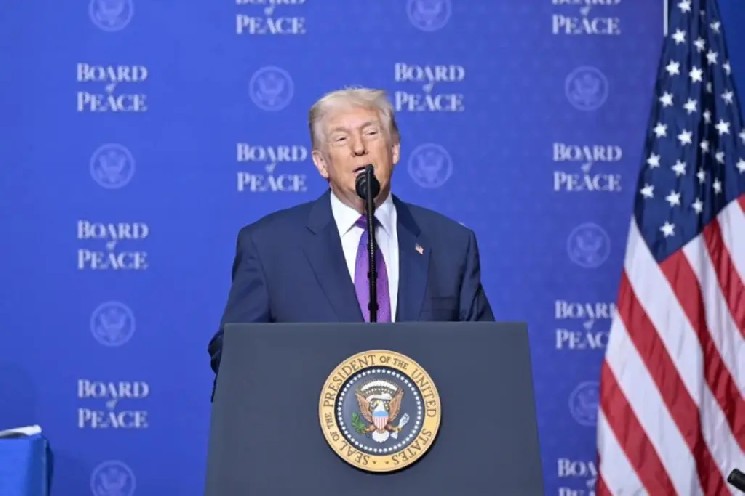
When the Federal Bureau of Investigation announced on October 31 that North Korea was responsible for the theft of more than $6 billion in cryptocurrency from Binance, the announcement sent shockwaves through both the financial world and the corridors of Washington. The attack, which took place on October 29, targeted one of the largest digital asset exchanges on the planet, and it immediately entered the record books as one of the most devastating cryptocurrency thefts ever recorded. Yet in the hours that followed the FBI’s unusually direct statement, one voice remained conspicuously measured: that of President Trump. His public remarks, delivered after the Bureau’s formal attribution, did not explicitly name North Korea. He referred to the attack in broad terms, acknowledged that something serious had occurred, and promised that the full force of the U.S. government would be brought to bear. But he stopped short of saying the words that intelligence officials had already made official: that Pyongyang was behind one of the largest heists in modern financial history. That distinction was not lost on crypto analysts, geopolitical observers, or the broader public, many of whom expected the White House to match the FBI’s clarity with equally pointed presidential language.
The stakes could not have been higher. The attack did not merely constitute another exchange breach; it represented a dangerous collision of national security, emerging technology, and global finance. The FBI’s announcement was notable for its confidence. It did not say “believed” or “suspected.” It said North Korea was responsible. It named a hacking group known as TraderTraitor, a collective with a long and documented history of carrying out cyber operations at the behest of the North Korean state. The Bureau also warned that the stolen funds were being converted into Ethereum, a tactical choice that would make the money far easier to move across decentralized platforms and much harder for law enforcement to freeze. For those who had watched the evolution of crypto-related crime, this was a familiar playbook, but on an almost incomprehensible scale. The president’s hesitation to publicly endorse the FBI’s conclusion raised questions about whether the administration was carefully calibrating its response to avoid escalating tensions with a nuclear-armed adversary, or whether the White House was unprepared for the political and diplomatic implications of openly accusing North Korea of financing itself through digital theft. Either way, the silence was now part of the story.
### TraderTraitor Named as FBI Points to Pyongyang
The FBI’s formal statement, released to the public on October 31, left little room for ambiguity. According to the Bureau, the attack on Binance was carried out by TraderTraitor, a hacker group linked directly to North Korea’s ongoing efforts to generate revenue through cybercrime. The theft, which took place on October 29, saw attackers drain more than $6 billion in cryptocurrency from the exchange’s hot wallets and related infrastructure. The scale of the loss was staggering. It dwarfed many of the most notorious exchange hacks of the past decade and immediately raised urgent questions about how any platform, even one as large and established as Binance, could be compromised so thoroughly. The FBI’s statement also highlighted the group’s methodical approach. Rather than immediately attempting to move the funds through traditional exchanges, where anti-money laundering safeguards might have caught the activity, the attackers had already begun converting the stolen assets into Ethereum. This conversion was seen as a deliberate strategy to enhance liquidity, complicate tracing, and open the door to a wide range of decentralized financial tools that could be used to obscure the money trail.
In the aftermath of the FBI’s announcement, a coordinated law enforcement effort began to take shape. The U.S. Secret Service and the Internal Revenue Service’s Criminal Investigations unit were both involved in the response, working alongside blockchain intelligence firms and cryptocurrency companies. The goal was simple but extraordinarily complex: identify the wallets controlled by the attackers, alert the platforms where those funds might land, and persuade as many crypto businesses as possible to block transactions before the stolen assets could be moved, swapped, or laundered. The FBI’s message to the broader industry was effectively a call to action. Cryptocurrency exchanges, DeFi protocols, and custodial services were asked to scrutinize incoming transactions and freeze any funds linked to the North Korean hacker network. The response reflected a larger truth about modern cybercrime: law enforcement agencies can no longer operate alone. They need the cooperation of the private sector, especially in the decentralized world of digital assets, where a single transaction can cross borders, blockchains, and jurisdictions in seconds.
### Ethereum and DeFi: The New Laundering Playbook
The decision by TraderTraitor to funnel the stolen funds into Ethereum was not a random choice. In the world of cryptocurrency forensics, Ethereum occupies a unique position. It has deep liquidity, a mature ecosystem of exchanges and bridges, and a vast array of decentralized finance applications that allow users to lend, borrow, swap, and move assets with minimal friction. For a criminal enterprise hoping to launder billions of dollars quickly, Ethereum offers something that older blockchains often cannot: speed, flexibility, and a dense web of financial services that can be navigated without ever setting foot in a traditional bank. The FBI’s warning that the funds might be laundered through DeFi platforms highlighted a growing concern among regulators on both sides of the Atlantic. DeFi protocols are often built on open-source code and run by smart contracts. They do not ask users for identification. They do not file suspicious activity reports. And in many cases, they are specifically designed to be resistant to censorship and control.
The possibility that a North Korean hacking group could use these platforms to launder a multi-billion-dollar haul has become one of the most uncomfortable topics in the crypto industry. It is no longer a hypothetical debate about theoretical risks. The Binance attack, as described by the FBI, is a live, real-world example of how a sanctioned state actor can exploit decentralized infrastructure to raise funds. The challenge for investigators is immense. Even with sophisticated tracing tools, following funds across Ethereum, through bridges into other chains, and into decentralized liquidity pools can take weeks or months. In that time, the attackers can continue to fragment and disperse the funds, making recovery increasingly unlikely. But the coordinated response from U.S. agencies, including the Secret Service and the IRS, signals that they are prepared to try. By asking crypto companies to preemptively block known wallet addresses and monitor for suspicious patterns, authorities are attempting to outpace the laundering process rather than chase it. Whether that strategy will succeed remains an open question, but the response has underscored how central the battle against illicit finance has become to the future of digital assets.
### Binance Races to Recover and Reassure Users
For Binance, the priority in the days immediately following the attack was not just securing its systems but proving to its users that their funds were safe. The exchange moved quickly to temporarily suspend withdrawals, a decision that prevented further outflow but also triggered alarm across the crypto community. In times of crisis, the worst thing an exchange can experience is a run on its reserves, and Binance knew that panic could turn a bad situation into a catastrophe. On November 1, the exchange issued a security update designed to calm those fears. Binance announced that 95 percent of the cryptocurrency assets affected by the attack had already been replaced using the company’s own resources. That means the vast majority of customers who lost funds when the hackers struck had their balances restored within days. The exchange also confirmed that its reserves were fully covered for the 10 major cryptocurrencies, including Bitcoin, Ethereum, BNB, Solana, XRP, and a range of stablecoins. These details were not incidental. In a market built on trust, the speed of Binance’s recovery effort was an attempt to demonstrate financial resilience and operational competence in the face of a historic breach.
The announcement was also a signal to regulators and institutional investors who have long questioned whether crypto exchanges are capable of handling the risks that come with massive digital asset holdings. By promising to use company resources to make users whole, Binance was effectively saying that it had the balance sheet to absorb the damage, a crucial statement of confidence in an industry where exchange failures have historically left users footing the bill. Still, the recovery effort is not complete. The exchange acknowledged that the investigation was ongoing and that additional security measures would be needed before full operations could resume. The fact that 95 percent of affected assets had been restored was encouraging, but it also raised an uncomfortable question: what about the remaining 5 percent? For those users, the uncertainty is likely to persist. Binance’s willingness to cover the losses is a remarkable development, but it does not change the broader reality that the stolen funds remain in the hands of a sophisticated, state-linked criminal network.
### Withdrawals Resume as Security Review Continues
In the wake of the attack, Binance adopted a cautious approach to resuming normal operations. The exchange had suspended withdrawals soon after discovering the breach, a move intended to prevent further losses and allow security teams to investigate how the attack had occurred. By November 1, the company said that it would begin gradually restoring withdrawal services. The process would not happen all at once. Instead, Binance planned to reopen access in phases, with additional blockchain networks being made available as security checks were completed. This step-by-step strategy was designed to reassure users that the platform was not returning to full functionality before the underlying vulnerabilities had been addressed. The thin line between speed and security was on full display. If Binance reopened too quickly, it risked exposing itself to another attack. If it waited too long, it risked losing users who had lost confidence in the platform’s ability to safeguard their money.
The security review, while still underway, has become a central part of Binance’s public narrative. The exchange has promised transparency and said it will provide regular updates as the investigation progresses. For an industry that has often been criticized for operating in a legal gray zone, this kind of response is critical. Cybercriminals rarely act alone, and the infrastructure they leave behind can provide valuable intelligence for tracing the movement of stolen funds. Binance has also been cooperating with U.S. law enforcement agencies, including the Secret Service and the IRS Criminal Investigations unit, as part of the joint effort to freeze and recover the stolen assets. The message from the exchange is clear: this is not just an internal problem to be swept under the rug, but a threat that requires collaboration across the public and private sectors. The resumption of withdrawals, though gradual, is an important step toward normalcy. But the broader question of whether Binance can fully restore its reputation after a breach of this magnitude is one that only time will answer.
### A Turning Point for Crypto and National Security
The attack on Binance, and the FBI’s immediate attribution of it to North Korea, marks a turning point in the conversation about cryptocurrency and national security. For years, digital assets have been viewed by many policymakers as a niche concern, a playground for speculators, technologists, and privacy advocates. That perception has now been challenged in the most direct way possible. A state-sponsored hacking group, acting on behalf of a sanctioned regime, reportedly stole more than $6 billion in a single operation, and it appears to have done so with the kind of sophistication that rivals anything seen in the traditional banking sector. The political implications are enormous. If North Korea can use cryptocurrency to fund its weapons programs and bypass international sanctions, then every country with a developed digital asset market has a direct national security interest in preventing similar thefts. The fact that President Trump did not explicitly repeat the FBI’s accusation in his public remarks only adds another layer of complexity. It suggests that the White House is aware of the diplomatic consequences of publicly blaming Pyongyang, even when the evidence is clear.
For the crypto industry, the lesson is stark. Exchanges can no longer treat cyber defense as an afterthought. Security infrastructure, internal controls, and crisis response plans must be as robust as those of any major financial institution. The FBI’s warning about the potential laundering of stolen funds through DeFi platforms also highlights the need for a nuanced regulatory approach. Overly aggressive restrictions could push legitimate users away, but a failure to monitor and police decentralized services could make them a haven for criminal money. The Binance hack is a reminder that the promise of financial freedom and innovation carries real risks. As the company works to restore trust and U.S. authorities continue their investigation, the rest of the world will be watching closely. The ultimate outcome of this case could shape the future of cryptocurrency regulation, law enforcement, and international security for years to come. This article is for informational purposes only and should not be construed as investment advice.