




Paragraph 1
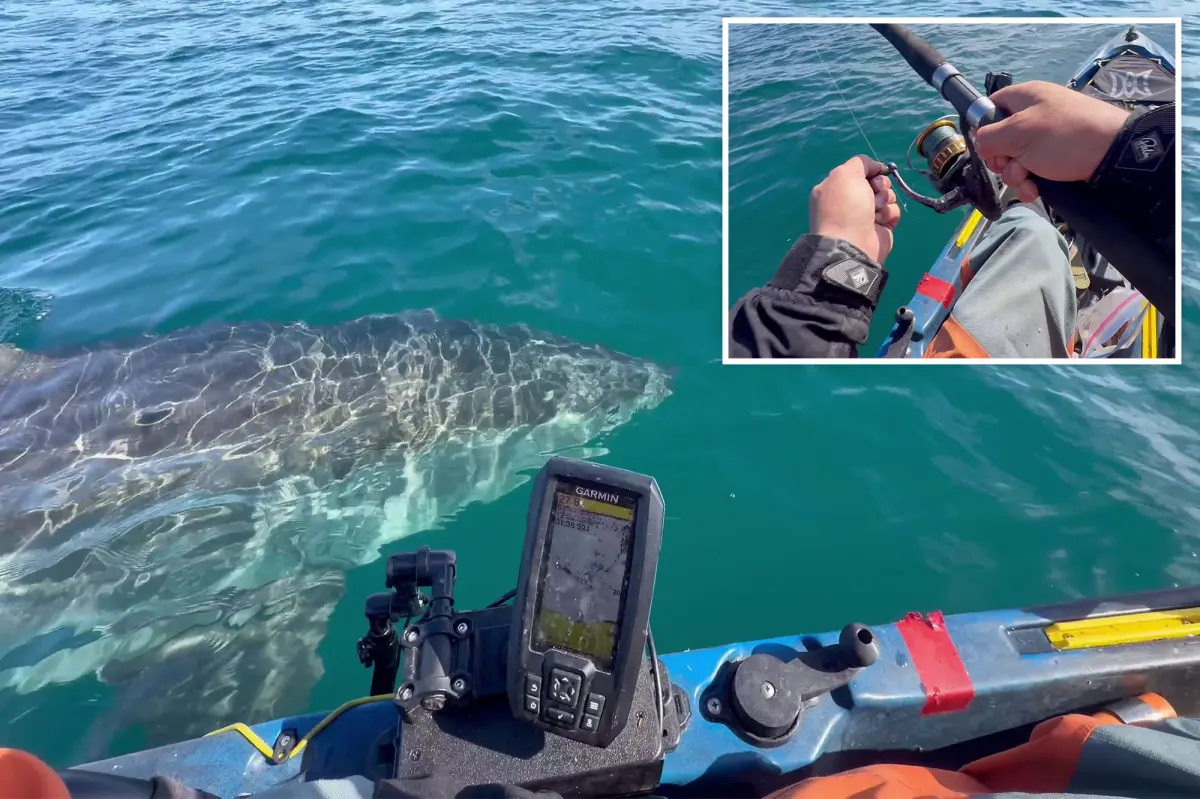
On a sun-drenched Sunday afternoon off the rugged coast of San Mateo County, Northern California, the Pacific Ocean lay deceptively calm, its surface glittering like scattered diamonds under a warm, cloudless sky. David Slavich, an avid kayak fisherman, had set out alone, eager to lose himself in the lulling rhythm of the water. The quiet was broken only by the gentle slap of waves against his kayak and the faint cry of gulls wheeling overhead. It was the kind of day that feels suspended in time—perfect, serene, and utterly ordinary. Slavich had been casting his line for a while, savoring the solitude and the simple pleasure of being afloat. As he turned to film his fishing reel glinting in the sunlight, he was enveloped in a bubble of peaceful monotony. Then, in a heartbeat, that bubble burst. A flicker of motion caught the corner of his eye, and he turned his head to find himself face-to-face with the ocean’s most iconic apex predator: a great white shark. The shock hit him like a cold wave. His breath caught, his heart hammered against his ribs, and the words tumbled out of his mouth in a rush of disbelief. “Oh my god, there’s a great white shark,” he gasped, the camera still rolling. It was a moment that would forever cleave his life into before and after—a serene afternoon suddenly transformed into an encounter with the wild, raw, and untamable.
Paragraph 2
The shark swam alongside his kayak with an eerie, almost leisurely elegance, its dorsal fin slicing through the water only inches from the hull. Slavich’s instincts kicked in immediately. He hurriedly began reeling in his line, fingers fumbling with the fishing pole, his mind racing even as his body moved on autopilot. Every second stretched into an eternity. He could feel the vibrations of the shark’s presence through the kayak’s thin plastic—a subtle, primal thrum that seemed to resonate in his bones. When the pole was finally secured safely beside him, he dared to look again. The shark was so close that he could see the texture of its skin, the subtle patterns of its gray, torpedo-shaped body, and the cold, black, unblinking eye that seemed to fix him with a curious stare. For a fleeting moment, time stood still. Slavich later described that instant with a strange, almost spiritual tenderness: “There was a moment when it seemed like we were looking directly at each other, and I had the distinct feeling that it was just as curious about me as I was about it.” It was a bizarre and humbling sensation—being seen, truly seen, by a creature that has existed for millions of years, a predator of unquestionable power, yet seemingly not driven by hunger or aggression, but by something closer to wonder.
Paragraph 3
Then, as abruptly as it had appeared, the shark dipped its head and dove beneath the surface, vanishing into the blue-black depths without a ripple. Slavich exhaled a breath he hadn’t realized he was holding. The water smoothed over, erasing any trace of the encounter, as if the great white had been a specter conjured by his imagination. But he knew it was real—the adrenaline still thrumming through his veins, the vivid, undeniable memory etched into his mind. Without hesitation, he grabbed his paddle and began stroking away from the spot, his arms pumping with a desperate urgency. “I’m getting out of here,” he muttered, half to himself, half to the empty air. The kayak glided over the water, and he shot glances over his shoulder, half-expecting the fin to reappear. Yet, as the initial terror subsided, a strange calm settled over him. He realized that the feeling that dominated his memory was not fear, but something far more profound. “I felt more awe and fascination than fear,” he reflected later. “It’s an experience I’ll never forget.” He had been granted a rare, privileged glimpse into a world that humans seldom truly witness—a world where we are not the masters, but merely visitors, treading on the edge of an ancient and untamed kingdom.
Paragraph 4
The encounter that Slavich experienced is part of a larger, often misunderstood story of great white sharks. These magnificent creatures are not confined to the waters off California; they roam the open oceans across the globe, from the temperate coasts of Australia to the Mediterranean and South Africa. They are highly migratory animals, guided by an innate compass that leads them seasonally to waters with temperatures between 50 and 80 degrees Fahrenheit, according to NOAA Fisheries. This preference for cooler, productive waters is driven by their need to find abundant prey, such as seals, sea lions, and large fish. Off the California coast, white sharks are particularly prevalent—a fact that has fueled both fear and fascination in the public imagination. Yet, despite their reputation as ruthless killers, the reality is far more nuanced. Scientists and wildlife agencies, including the California Department of Fish and Wildlife, emphasize that the vast majority of human-shark interactions are not predatory attacks. Rather, they are what researchers call “exploratory bites”—an investigative behavior by which a shark assesses unfamiliar objects in its environment. A kayak, from below, might resemble a seal, or at least warrant a thorough inspection. In such cases, the shark is not hunting, but trying to understand, and it almost always moves on, as it did with Slavich.
Paragraph 5
This scientific perspective offers a comforting counterpoint to our instinctive dread, but it also deepens the wonder of what Slavich experienced. The great white shark that swam beside his kayak was not a monster, but a curious, intelligent creature engaged in a moment of reconnaissance. In California, white sharks are responsible for the vast majority of incidents between sharks and humans, but the absolute numbers are tiny—far smaller than the number of people injured by household appliances or dog bites each year. The statistics, however, do little to calm the primal fear that these apex predators evoke. They are, after all, the products of hundreds of millions of years of evolution, perfectly adapted to their role as hunters of the deep. Their power is awe-inspiring, their presence commanding. Slavich’s encounter, therefore, becomes a powerful reminder of our place in the natural order. We are not separate from the wild; we share this planet with creatures that exist beyond our control, beyond our understanding. To be granted a momentary glimpse into their world—to have a great white choose to swim alongside you, rather than away—is a profound and humbling experience. It challenges our assumptions, reshapes our fears, and leaves us with a lasting sense of respect for the mysterious, magnificent ocean that covers so much of our world.
Paragraph 6
In the days and weeks that followed, the memory of that sunlit afternoon stayed with Slavich, a vivid, almost dreamlike echo of a life-defining moment. He found himself replaying the scene in his mind: the shimmering blue water, the sudden, dark silhouette, the mutual gaze that seemed to bridge an impossible divide. It was a lesson in humility, a stark reminder that the ocean is not a place of idyllic calm, but a wild, untamed realm teeming with life and mystery. Slavich had set out that day as an ordinary fisherman, seeking peace and solitude, but he returned as something else—a quiet witness to the majesty of the natural world. He did not feel the need to recount the story to everyone he met, nor did he seek fame. Instead, the experience settled deep within him, transforming his view of the sea from a mere backdrop for recreation into a sacred, living entity. He knew he would return to those waters, though he would always look over his shoulder, not in fear, but in reverence. The great white shark had not been a threat; it had been a messenger, a reminder that we are but tiny passengers on a vast, spinning planet, sharing our home with beings far older and wiser than we. And for that gift, Slavich would be forever grateful—a simple man, a quiet afternoon, and an unforgettable dance with the king of the deep.