


Paragraph 1: The Irony of a Legend
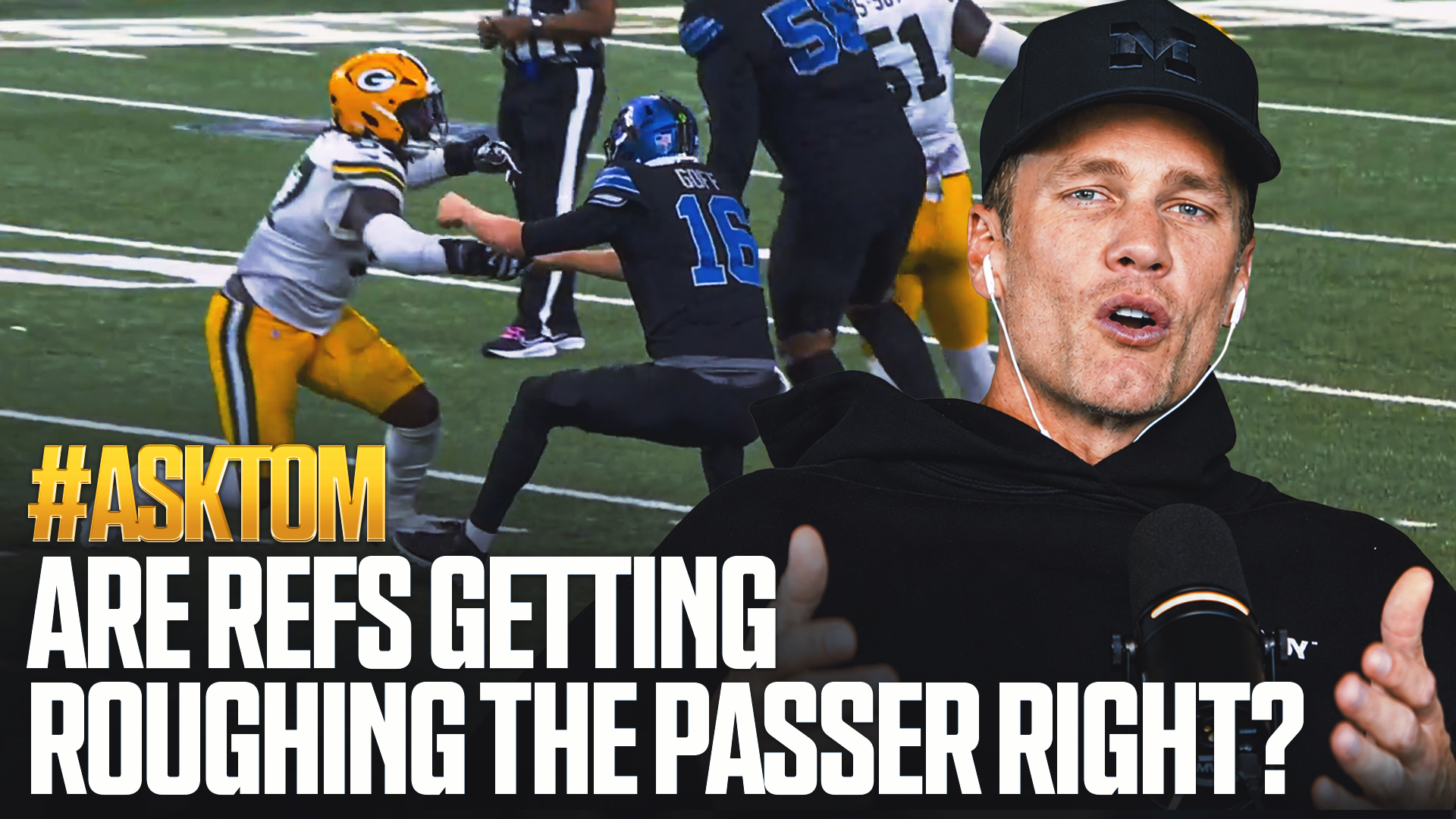
Let’s be honest: there is something genuinely funny about Tom Brady, the man who built a twenty-three-year career on standing in the pocket just a split second longer than anyone else dared, now shouting at the television because a defensive lineman got flagged for breathing on a quarterback. The irony is not lost on him, and he is the first to admit it. During the latest edition of his #AskTom segment, Brady laughed at the idea that he, of all people, has become the voice of reason when it comes to roughing-the-passer penalties. But just because he sees the humor in the situation doesn’t mean he’s going to stay quiet. After watching the Green Bay Packers and Detroit Lions trade blows in a game that came down to the final seconds, Brady found himself genuinely frustrated by the officiating. He wasn’t frustrated because he hates referees or because he thinks the game is rigged. He was frustrated because he believes the men in the middle are making it harder for defenders to do their jobs, and that, in turn, is changing the very nature of football. It’s a strange position for a former quarterback to take, especially one who benefited from protective rules for years. But Brady has always been a strange mix of self-awareness and stubbornness. He knows he’s the last person anyone expects to defend a defensive tackle. He knows the memes are coming. He knows that social media is already calling him a hypocrite. And yet, he can’t help himself. Because when he watches a game now, from the broadcast booth, he sees things differently than he did when he was the one holding the ball. He sees the impossible math that defenders are asked to solve every single play. He sees the split-second decisions that can turn a hero into a villain. And he sees a league that, in its quest to protect quarterbacks, might be taking away something essential from the sport.
Paragraph 2: The Quarterback’s Responsibility
Brady’s central argument is simple, and it’s one he has been making for years, even while he was still playing. Quarterbacks, he says, have more control over their own safety than they are often given credit for. The ball is in their hands, literally. They decide when to throw it. They decide when to step up in the pocket. They decide when to get rid of it and live to see another down. If a quarterback holds the ball too long, waiting for a deep route to develop or trying to find the perfect window, he is making a choice. And with that choice comes an understanding: you are going to get hit. That’s not a threat. That’s just football. Brady put it plainly in his #AskTom segment, saying that defenders need to play with a certain level of aggressiveness to do their jobs well. They are rushing the passer, closing on receivers, trying to knock balls loose. They are not trying to injure anyone. They are trying to make a play. And when officials start calling penalties on hits that happen a fraction of a second after the ball leaves the quarterback’s hand, they are essentially telling defenders that no matter how fast they are, no matter how well they time their rush, they are always going to be at fault. That, to Brady, is unfair. He pointed out that the faster a quarterback gets the ball out, the less likely he is to get hit. It’s cause and effect. It’s the oldest truth in football. But somewhere along the way, the league started treating quarterbacks like they were made of glass, and defenders like they were predators. Brady isn’t saying that players should be allowed to take cheap shots. He isn’t saying that quarterbacks deserve to be hurt. He is saying that there has to be a middle ground. There has to be a space where a defender can do everything right and still not be penalized for doing his job. And he believes that space is shrinking.
Paragraph 3: The Calls That Set Him Off
The game in question was a thriller, the kind of back-and-forth battle that makes NFL Sundays so special. But for Brady, the most memorable moments weren’t the touchdowns or the big catches. They were the penalties. The first one that got under his skin came when Detroit Lions linebacker Derrick Barnes hit Packers running back Marshawn Lloyd on a pass play. It was a bang-bang play, the kind that happens dozens of times every Sunday. Barnes was closing in, Lloyd was catching the ball, and the contact was immediate. The officials, though, saw it differently. They threw a flag for unnecessary roughness, and Brady couldn’t contain himself. “Oh, come on, man,” he blurted out on the broadcast. He went on to explain that the hit was allowed ninety-nine times out of a hundred, and that calling it a penalty was a mistake. But the call that really made him angry came later, on the Lions’ final drive. Packers defensive tackle Karl Brooks hit Lions quarterback Jared Goff just as Goff released the ball. It was a clean, powerful rush. Brooks got his hands up, made contact, and rolled off Goff’s body. To Brady, it was a great play. To the officials, it was roughing the passer. The fifteen-yard penalty moved the Lions deep into Green Bay territory and set up the game-winning field goal as time expired. Brady was incredulous. “No, my goodness, what is that? There’s no way,” he said. He pointed out that Brooks made a great play, that the hit was not late, that Goff had already thrown the ball. He even praised Goff for standing in the pocket and making the throw, but he insisted that you cannot tack on fifteen yards for that. FOX Sports NFL rules analyst Dean Blandino agreed with Brady, saying the hit wasn’t late and shouldn’t have been penalized. For Brady, that validation meant something. It wasn’t just an old quarterback complaining about the modern game. It was a former player and a rules expert seeing the same thing he saw.
Paragraph 4: The Self-Awareness of a Broadcaster
Of course, Brady knows that there are people out there who think he has no right to complain. They remember the way he used to argue with referees, the way he would stare down officials after a sack, the way he seemed to demand a penalty on every hit. They remember the Tom Brady who benefited from the very rules he is now questioning. And they are not shy about pointing out the hypocrisy. Brady addressed this head-on in his #AskTom segment, admitting that he is fully aware of how it looks. “Look, I understand. I’m self-aware,” he said. “I’m sitting up in that booth. It’s much easier for me to say it now that I’m sitting up in the booth, but that’s what my job is. I’m a broadcaster now, right? I have these types of opinions.” That honesty is what makes Brady’s commentary so compelling. He isn’t pretending to be objective. He isn’t pretending to be a neutral observer. He is a former player who is seeing the game from a new angle, and he is sharing that perspective with the audience. He knows that the booth changes things. When you are on the field, in the heat of the moment, with adrenaline pumping and defenders bearing down on you, you want every call. You want the referee to protect you. You want the fifteen yards. But when you are upstairs, watching the replay from three different angles, you see the defender’s side of it. You see how fast the play happens. You see how little time there is between the throw and the hit. And you start to wonder if the rules have gone too far. Brady’s willingness to say that out loud, knowing full well that it makes him look like a hypocrite, is exactly what a good broadcaster should do. He is not trying to win a popularity contest. He is trying to tell the truth as he sees it.
Paragraph 5: The Human Side of the Booth
The penalties weren’t the only thing that made Brady go viral on Sunday. There was also the moment when he seemed to forget, just for a second, that millions of people were listening. It happened late in the game, when the Lions were trying to run out the clock. From his vantage point, it looked like Detroit was about to throw the ball, and Brady couldn’t believe it. “Don’t tell me they’re going to throw this? Oh my God, they’re going to throw this,” he said, his voice rising with genuine anxiety. The Lions ended up running the ball, which allowed them to burn more clock before kicking the game-winning field goal. But the moment was telling. It showed that Brady is not just reading a script up there. He is invested. He is reacting. He is feeling the game the way he felt it as a player. When asked about that moment on #AskTom, Brady admitted that he sometimes forgets he is on a broadcast seen by millions. He talked about the anxiety of not knowing what the coaches are thinking, of not being on the headset, of trying to make sense of decisions in real time. He described the feeling of wondering if he is seeing things the wrong way. “Did they just go for it in a tie game on their own twenty-yard line? Is that what happened with the line? And they didn’t get it? Oh my God.” It’s a very human thing, that doubt. It’s the same feeling any fan has when they watch a coach make a baffling decision and then spend the next five minutes trying to figure out what they just saw. Brady is not above that. He is not above the confusion. He is not above the second-guessing. He is just a guy who loves football, sitting in a booth, trying to make sense of it all.
Paragraph 6: The Football Gods and the Road Ahead
In the end, Brady believes the Lions might have gotten a little lucky. He said as much, with a smile, when he was asked about the game. “Look, I know they’re an aggressive fourth-down team, but maybe the football Gods were looking after them a little bit this last Sunday, let’s be honest.” It was a perfect Brady-ism, equal parts respect and skepticism. He respects the Lions for being bold, but he also knows that boldness doesn’t always pay off. Sometimes you need a questionable penalty to go your way. Sometimes you need the ball to bounce just right. Sometimes you need the football Gods to smile on you. And that’s okay. That’s football. What matters, for Brady, is that the game remains fair. He doesn’t want to see defenders punished for playing hard. He doesn’t want to see quarterbacks turned into untouchable figures. He wants to see a sport where the best players can still make the best plays, without fear of a yellow flag changing everything. As he settles into his new role as a broadcaster, Brady is still learning. He is still figuring out the balance between his old instincts as a player and his new responsibilities as a commentator. He is still finding his voice. But one thing is clear: he is not going to be a wallflower. He is not going to shy away from controversy. He is not going to pretend that everything the officials do is right. He is going to speak his mind, even when it makes him look like a hypocrite, even when it makes people angry, even when it would be easier to just stay quiet. That is who Tom Brady has always been. And now, from the booth, he is showing us that same passion, that same intensity, that same refusal to back down. It’s a new chapter for a legendary career, and if the first few weeks are any indication, it’s going to be a lot of fun to watch.