

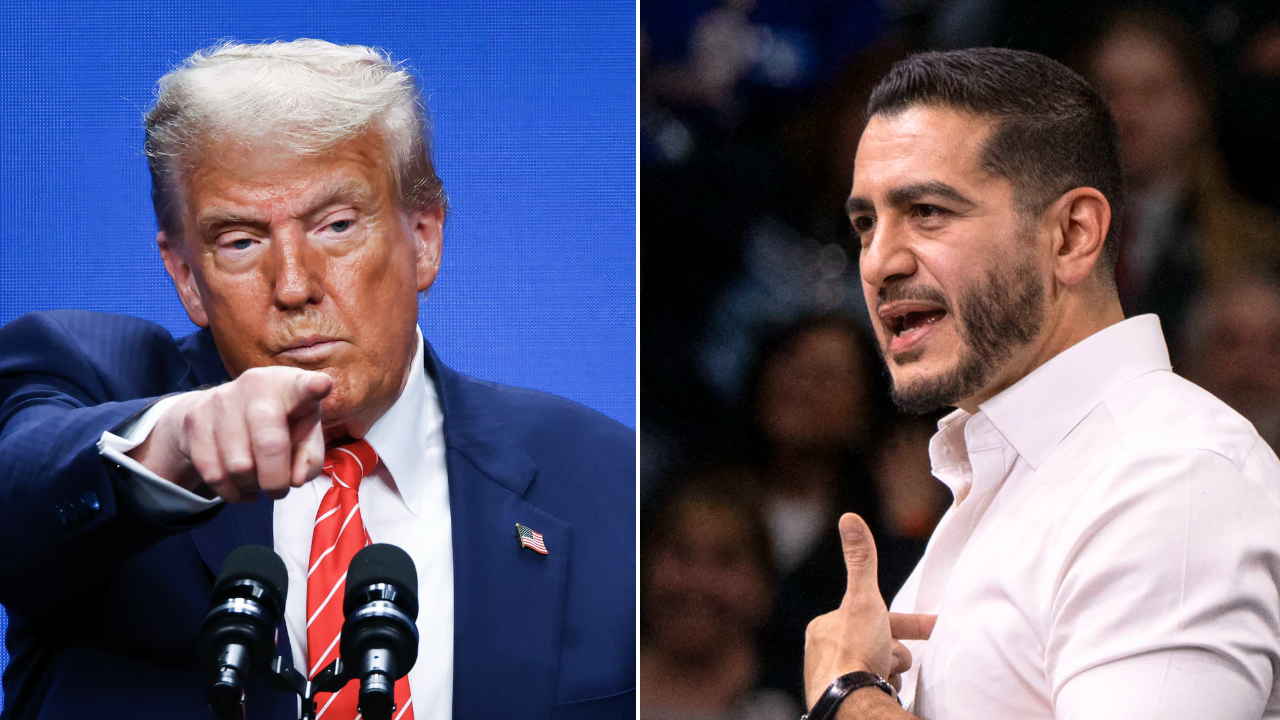
Good morning, and welcome to the kind of briefing that doesn’t just skim the surface—it dives right into the messy, human, and often surprising currents shaping our world. If you’re just waking up with your coffee, here’s what’s already demanding attention. The fight for Michigan’s Senate seat is heating up in a major way, with former President Donald Trump stepping up his attacks on Democrat Abdul El-Sayed as the race tightens. It’s the kind of political friction that feels personal, not just partisan, and Trump’s language is growing sharper as Election Day looms. But politics wasn’t the only spectacle on the campaign trail. In a moment that blended celebrity, music, and grassroots energy, Nicki Minaj made a bold pledge to Trump at a Michigan rally—telling the crowd, and the former president himself, that if he runs again, she’d be right there with him. It’s one of those strange cultural crossovers that makes American politics so unpredictable. Meanwhile, across the ocean, Israel launched a massive military exercise designed to rehearse for a surprise attack, prompting some experts to draw worrying parallels to 1973—the year of the Yom Kippur War, when Israel was caught off guard. The message is clear: in an increasingly volatile world, preparation isn’t just a drill, it’s a survival instinct. The day is also packed with political maneuvering, legal dramas, and cultural flashpoints that will shape the conversations you’ll be having tonight.
The broader landscape of news this morning is a reminder that the midterms aren’t just about one race or one state. The political battleground is widening, with both Trump and top Democrats honing in on key states before Election Day, each trying to tip the balance in their favor. But the cracks in the system are showing in other ways too. In a striking twist, a former aide to Ukrainian President Volodymyr Zelenskyy has come forward with claims about his ties to Moscow, all while pushing for a meeting with Vladimir Putin—a story that complicates the simple narratives we often hear about the war. Closer to home, there’s a disturbing case in New York City: the suspect accused of stabbing a rabbi is now also suspected of attacking another Jewish man just hours earlier, raising serious concerns about hate crimes and public safety in the city. Then there’s the heartbreaking case of a stepsister murdered on a cruise ship, where an attorney warns that there will be “no sweet plea deal” for the suspect, suggesting a long and painful legal process ahead. And in a scene of chaos that feels almost preventable, a college homecoming party turned into a catastrophe when a deck collapsed, leaving at least 28 people injured. These stories aren’t just headlines—they’re real people, real families, and real communities dealing with fear, loss, and the search for justice.
On the political front, the ripples of Trump’s influence are being felt far beyond America’s borders, as neighboring countries confront a new reality shaped by his political revolution. It’s a rightward shift that’s reshaping alliances and provoking fresh conversations about identity, power, and the future of governance. Back home, there’s a quieter but no less significant economic story churning: candy prices are surging at twice the rate of inflation, yet Americans are still expected to spend billions on Halloween. There’s something wonderfully stubborn about that—people holding on to traditions even when the price tag hurts. But not every economic pressure point is sweet. In an explosive legal fight, an investigative reporter is being threatened with an $800-a-day penalty that could drain the publication dry—a bold test of press freedom that has journalists watching closely. Meanwhile, in a more theatrical political spat, Bruce Blakeman has fired off a mocking critique of Kathy Hochul, calling her a “puppet” of socialist academic Mamdani. It’s the kind of rhetoric that feels both dated and dangerously alive, a sign that the culture wars are not cooling down anytime soon. These stories, taken together, show a country wrestling with its identity—caught between economic anxieties, media battles, and the endless renegotiation of what it means to lead.
The media world is having its own reckoning this morning, and it’s just as messy as the political arena. In one standout moment, a heated election clash unfolded on air when a correspondent named Blanche challenged Dana Bash for only citing part of the Constitution during a debate about the issues. It’s a reminder that even in the smallest details, the truth can get bent, and holding powerful voices accountable is becoming a daily job. Meanwhile, in the race to 2028, there’s already jockeying happening behind the scenes. A notable voice, Hilton, countered Kentucky Governor Andy Beshear’s presidential pitch with a pointed reminder about Newsom’s rail record—suggesting that past performance might be the biggest hurdle in future ambitions. Then there’s the ongoing frustration over coverage of El-Sayed, with Rogers accusing a journalist of giving him a pass when he should be scrutinized more heavily. It’s a debate about fairness in journalism, about who gets grilled and who gets grace. And over in Hollywood, the cultural battle lines are drawn as “Nobody Wants This” creator defended the show after one of its stars accused Israel of “genocide.” That kind of tension—between art, politics, and personal beliefs—is creating an uncomfortable rift in the entertainment industry, where actors are increasingly finding themselves in the crosshairs of public opinion. The media, in other words, is no longer just reporting the story. In many cases, it is the story.
Moving into opinion and the human-interest stories that often get lost in the shuffle, two voices stand out this morning. Sean Parnell argues that Trump restored the Department of War, and now it’s up to Congress to finish the job—a provocative take on how military culture and civilian oversight intersect. And Jerry Balentine writes that AI is changing everything, and universities need to step up if Americans are going to keep pace with the rapid evolution of technology. His point is urgent: education is no longer just about facts, it’s about adaptability. On a more somber note, we honor the legacy of a guitarist-turned-firefighter who founded a billion-dollar restaurant empire before passing away at 65. His story is one of reinvention, service, and appetites—both literal and metaphorical. Then there’s Prince Harry, who an expert says is making a “big mistake” that could destroy any chance of royal reconciliation. The family drama continues to fascinate, and the stakes feel personal. In tech news, there’s growing scrutiny over Claude AI accessing voter data “without being asked,” raising big questions just ahead of the midterms. And for those looking for a break from politics, there’s an American culture quiz that promises to test your knowledge on famous feuds and skin secrets—because even in the darkest headlines, we all need a little distraction.
As the day unfolds, there are still more corners of this newsletter to explore. If you’re in the mood for a deep dive, there’s a podcast worth your time—an inside look at Minnesota scandals, GOP turnout, and America’s growing youth health crisis. Each of these stories touches on a different nerve: trust, participation, and the fragile well-being of the next generation. And of course, you can’t start your day without knowing what’s happening outside your window, so the weather folks have you covered with the latest forecast for your neighborhood. The newsletters are expanding too—there are editions for opinion, lifestyle, entertainment, and more, so you can curate your own morning ritual. And if you’re on the go, the Fox News apps bring all of this straight to your phone, whether you’re catching up on business, sports, or just want to watch the latest segments through Fox News Go. The social channels are buzzing as well, with conversations spilling across Facebook, Instagram, Twitter, YouTube, and LinkedIn. So, thank you for making this your first choice in the morning. The world is complicated, the stories are everywhere, and there’s no shortage of things to think about. But we’ll be right here, first thing tomorrow, ready to help you make sense of it all—one headline, one human moment, and one cup of coffee at a time.