

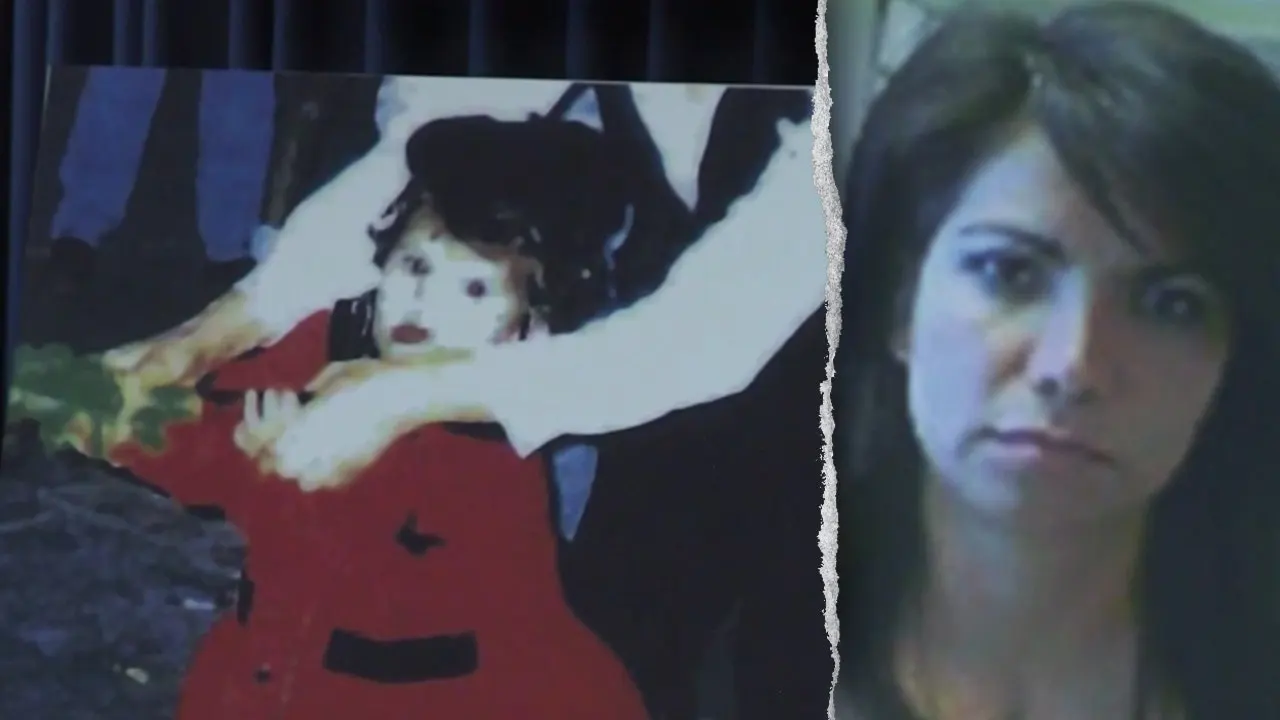
Nearly thirty years after the death of a three-year-old girl, the mother accused of killing her is finally in custody. Anna Marlene Somoza, 60, was arrested in Mexico by U.S. law enforcement officers after more than twelve years as a fugitive. The U.S. Marshals Service said Somoza’s close connections to cartels helped her avoid apprehension, allowing her to disappear into a world where the normal tools of law enforcement had little effect. She now faces extradition to the United States to answer for first-degree murder charges in the death of her daughter, Crystal Reyes. To understand why this arrest matters so much, it is necessary to confront what Crystal endured. According to investigators, before her death, the toddler was subjected to severe abuse, torture, and starvation. She was kept in a small dog kennel, her hands and feet bound, her mouth gagged, left alone for weeks at a time. On January 30, 1997, her life ended when she was bound, a towel taped over her face, and sealed inside a cardboard box to suffocate. It is impossible to imagine the terror a small child would feel in her final moments—or the cruelty required to do such a thing. Crystal was not just a case number; she was a little girl whose short life was marked by pain and whose death went unpunished for decades. While her mother was hiding in Mexico, protected by cartel associates and a shadowy network, Crystal’s remains lay in an Arizona desert, waiting to be found and eventually to be identified. There is no way to undo the harm, but the arrest of Somoza is a moment of accountability, however delayed. It says that even the most vulnerable victims are not forgotten, and that those who commit terrible crimes against children cannot hide forever.
The journey from crime to arrest was extraordinarily long. Crystal’s remains might never have been found if not for a hunter who walked through a deserted part of Arizona in November 1998, nearly two years after the little girl died. The human bone fragments he discovered were a grim mystery. For almost two decades, no one knew whose remains they were. The case sat cold, waiting for technology to catch up with the evidence. Then, in August 2014, forensic DNA analysis identified the bones as those of Crystal Reyes. It was a breakthrough that had been almost twenty years in the making. Detectives then interviewed the child’s biological father, and his DNA confirmed the identification. With that link established, in December 2014 investigators concluded they had enough evidence to charge Somoza and her boyfriend at the time, Avelino Tamala, with first-degree murder. Tamala, a narcotics detective who had been involved in an improper romantic relationship with Somoza, was eventually tried and convicted. In 2016, he was sentenced to life in prison for Crystal’s murder. But Somoza was not there to face the charges. She had been deported to Mexico years earlier, long before the murder case was formally filed. What followed was a frustrating manhunt that would span more than a decade. The investigation involved multiple agencies, but each new lead seemed to dissolve. Somoza knew how to stay hidden, and she had friends in dangerous places who were willing to help her. Yet the case did not die. Investigators held on to the evidence, held on to the DNA, and held on to the memory of Crystal Reyes while they searched for the woman who had walked away from her daughter’s life and death.
To understand how Somoza was able to vanish, one has to understand the world she came from. She was not merely a mother accused of a horrible crime; she had deep roots in criminal networks that operated along the Arizona-Mexico border. The U.S. Marshals Service said she had an extensive criminal history and connections to a major transnational drug trafficking organization that was active in the 1980s and 1990s. In 1993, she was arrested for the sale and transportation of marijuana. Instead of simply facing prosecution, she agreed to become a confidential informant for an Arizona law enforcement agency. It was through that arrangement that she met Avelino Tamala. Tamala was a narcotics detective, and what began as a professional relationship quickly became an improper romantic one. Around that same time, Somoza gave birth to Crystal in Mexico. Before long, the mother and child were living with Tamala in Arizona. Tamala was not Crystal’s father, but he was in a position of trust and authority in the household—and investigators say he participated in the abuse and murder that followed. The question of why no one intervened is painful. Crystal was not attending school, which meant she was invisible to the teachers, counselors, and school administrators who report most suspected child abuse. Stacy Vaughan, vice president of growth and prevention at Childhelp, told Fox News Digital that the majority of child abuse reports in the United States come from the education system. A child who is kept at home, hidden from the world, can be abused for months or years without anyone noticing. Vaughan added that modern legislation might make a difference today; in the past twenty years, many states have expanded mandatory reporting laws, and in some places every adult is now considered a mandated reporter. That is little comfort to Crystal, but it is a reminder that these tragedies can also be prevented when communities and laws work together.
After the murder of her daughter, Somoza’s life caught up with her in other ways. In 1999, the year after Crystal’s remains were found, Somoza and Tamala were arrested on drug- and weapon-related charges. Somoza served eight years in federal prison and was deported to Mexico in 2008. By the time the murder charges were filed in December 2014, she was already out of the country and out of reach. The search for her became a priority for investigators from five state and federal agencies. They knew she was somewhere in Mexico, but she had taken deliberate and extensive measures to evade detection. According to the U.S. Marshals Service, she remained at large by staying connected to people who could warn her and hide her. In October 2022, authorities obtained an extradition warrant, a legal step that would allow her to be returned to the United States once she was caught. But knowing she could be extradited and actually finding her were two different things. In 2026, the search for Somoza was formally designated a major case, which gave investigators additional manpower and resources. The renewed effort quickly paid off. In early September, the U.S. Marshals Service learned that Somoza was in Cuernavaca, Mexico, and that she was actively avoiding capture. On October 18, Mexican law enforcement officers arrested her in Xochitepec, a nearby town. After more than a decade on the run, the woman accused of killing her own child was finally in handcuffs. The arrest was the result of patience, cooperation, and an unwillingness to let the case go cold. It was also a reminder that even the most determined fugitives cannot run forever, especially when investigators refuse to give up on a child who no longer has a voice of her own.
The legal fight, however, is far from over. Somoza must now be extradited to the United States, and international extradition between Mexico and the United States can be a long and uncertain process. The U.S. Marshals Service will work with Mexican authorities to bring her back, but as former federal prosecutor Russell Lorfing explained to Fox News Digital, the logistics are not simple. U.S. officials will likely have diplomatic assurances from Mexico, but Somoza will have to be physically handed over. That could happen by having U.S. marshals fly to Mexico to take her into custody, or through a carefully coordinated handover at the border. If this were an extradition inside the United States, it could be completed in about fourteen days. But because this is an international case, it can take months—and if Somoza challenges the process, it can take years. Under Mexico’s legal system, she has the right to file an amparo, a type of appeal that claims her fundamental constitutional rights are at risk. Lorfing called these amparos “a big deal in Mexico.” He said they “hit the pause button” on extradition, and he warned that a three-month extradition can easily turn into a two-year extradition. For a woman who has already spent more than a decade hiding from justice, delaying is a familiar tactic. She may try every legal avenue to avoid facing a courtroom in the United States. But the charges are not going away. The evidence that identified Crystal’s remains is solid, and Tamala has already been convicted in the same case. Somoza’s lawyers may succeed in slowing down the process, but the weight of the law is now pressing down on her in a way it never did while she was living free in Mexico.
At its heart, this is a story about a child who deserved so much more than she received. Crystal Reyes was only three years old when she was murdered. She should have been learning words and songs, playing outside, feeling safe in her mother’s arms. Instead, she spent her final days in a cage, alone in the dark, with no one to comfort her. The fact that her mother was able to leave that behind—to return to Mexico, build connections with cartels, and live as a free woman for years—adds an almost unbearable layer of sadness. But the arrest of Anna Marlene Somoza is also a reminder that justice, however slow, does not simply disappear. It took advances in DNA science to identify a child whose bones had been scattered in the desert. It took the persistence of investigators who refused to close a case that could easily have been forgotten. It took cooperation between American and Mexican authorities, and it took the simple, stubborn belief that a three-year-old girl mattered enough to pursue her killer across borders and decades. Child abuse experts like Stacy Vaughan note that cases like this one expose the gaps in a system that relies on schools and mandatory reporters to catch the warning signs. Crystal was invisible because she was kept away from the world. Newer laws may help protect other children, but no law can bring Crystal back. What the law can do is hold her abusers accountable. Avelino Tamala is already serving a life sentence. Now his former lover may join him. Somoza faces extradition, first-degree murder charges, and the possibility of spending the rest of her life where her daughter’s murderer already sits. It will not heal the wounds, but it may bring a measure of peace to those who never stopped hoping that Crystal Reyes would get the justice she was denied in life.