


It was a Wednesday evening in the heart of Midtown Manhattan, a time when the city’s lights begin to flicker on and the streets fill with the hurried pace of commuters, tourists, and locals alike. Amid that dense, pulsing anonymity, a 26-year-old man dressed in the traditional clothing of a Hasidic Jew was walking along West 47th Street, likely lost in thought or perhaps simply trying to get home. He soon noticed a woman beginning to follow him. At first, it may have seemed like a coincidence, the kind of random foot-traffic proximity that defines New York sidewalks. But when he tried to cross the street to shake her, she crossed too. Cornered against a parked vehicle, the man suddenly felt a sharp, stinging sensation in his lower back. He had been cut, and the pain was substantial enough that he would later need to be taken to Bellevue Hospital for treatment. It was only the beginning of a strange and terrifying sequence of events that would unfold just minutes apart. The woman, now identified as 32-year-old Anna Mochalova, allegedly continued her path of aggression, turning a simple evening of walking in Manhattan into a nightmare for multiple people. Her arrest on Saturday evening would eventually bring charges that include hate crimes, but the incident left the city, and especially its Jewish community, grappling with the reality of rising antisemitic violence.
The first victim, described as a rabbi by those who later spoke to the press, embodied a particular kind of spiritual courage that stood in stark contrast to the violence he experienced. Despite the cut on his back, the bleeding, and the fear of being followed and attacked for no reason other than his appearance, he returned to the same area the very next day to continue his work: Jewish outreach. His resilience was deeply rooted in his personal history, as he credited his grandparents, Holocaust survivors, with inspiring his commitment to his faith and his community. In an era of heightened intolerance, his response was not to retreat but to double down on his mission, a quiet but powerful testament to the human spirit’s ability to overcome hatred. Yet, the physical and emotional toll of such an attack cannot be overstated. To be targeted simply because of who you are—because of the way you dress, the faith you practice, the history you carry—is a violation that echoes far beyond the initial wound. This man, in his twenties, already bore the weight of a legacy of persecution; now he found himself a statistic in a disturbing trend, yet he chose perseverance over fear, a message that resonated strongly with those who heard his story.
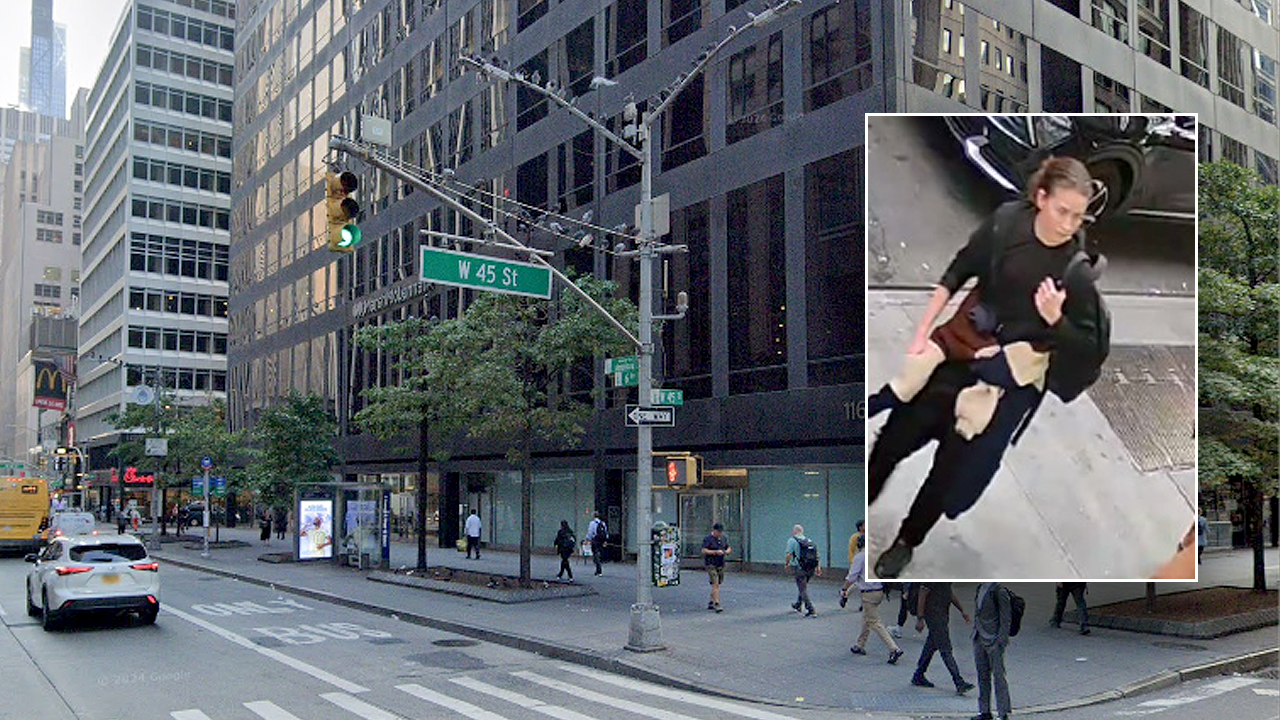
About five minutes later, just across the way at Sixth Avenue and West 45th Street, a 37-year-old man wearing a yarmulke was waiting to cross the intersection. He, too, would become a target. In an instant, he felt someone repeatedly pushing into him from behind, an aggressive intrusion into his personal space that immediately signaled ill intent. Then came the painful sting in his right forearm, a cut that drew blood. When he turned around, he saw a woman matching the description of the first attacker. According to the criminal complaint, she then threatened him in Russian, warning that she had a gun and would shoot him if he did not leave. She reached toward the inside of her jacket, a gesture that led him to believe she was armed, and the fear of being shot on a busy Manhattan street corner became terrifyingly real. Remarkably, he declined medical attention at the scene, perhaps driven by adrenaline or a desire to simply leave the situation. But his ordeal was not yet over. He told investigators that he saw the woman approach another man nearby and ask, in English, whether he was Jewish. When that man replied that he was Muslim, she apologized and walked away. This detail, captured in the complaint, exposed the ugly truth of the attacks: they were not random acts of violence, but deliberate, targeted hostility based on religious identity. The distinction between Jew and Muslim apparently mattered to her, and while the Muslim man was spared, the two Jewish men bore the brunt of her fury.
The swift arrest of Anna Mochalova was a collaborative effort, one that highlighted the vigilance of both community watchdogs and law enforcement. Manhattan Shomrim, a volunteer safety patrol organization, played a crucial role. They had issued a public appeal for witnesses, security camera footage, dashcam video, or cellphone recordings from the Diamond District, the area where the attacks occurred. The group also credited the NYPD’s Hate Crimes Task Force, as well as Shomrim groups in Crown Heights and Queens, and tips from the public, with helping to secure the arrest. “The suspect wanted for Wednesday’s two hate crime assaults in Midtown Manhattan is now in custody,” the group announced on X, a sense of relief evident in the brief message. The criminal complaint, provided by the Manhattan District Attorney’s Office, revealed the investigative trail: a Hate Crimes Task Force detective reviewed surveillance video from West 47th Street and extracted a still image of the suspect, which was then circulated among officers. Another NYPD officer recognized Mochalova based on previous interactions with her, leading to her arrest. She was arraigned on two counts of second-degree assault as a hate crime, one count of second-degree menacing as a hate crime, and two counts each of fourth-degree criminal possession of a weapon and second-degree aggravated harassment. The judge set bail at $50,000 cash or $150,000 bond, half the amounts prosecutors had requested, and her next court appearance was scheduled for Oct. 29. Her attorney, Lila Carpenter of Legal Aid, cast doubt on the identification, stating in court, “These allegations are concerning. Whether they’re my client’s is a different story.” She also noted the odd discrepancy in the initial NYPD statements, which listed police response times two hours apart for incidents that the complaint said occurred just five minutes apart. Furthermore, while the New York Post reported that the attacker used a syringe, neither the police statement nor the complaint identified the sharp object as such. These inconsistencies raised questions, yet the weight of the evidence, including video footage and witness testimony, pointed strongly toward Mochalova’s involvement.
The broader context behind these attacks is sobering. According to NYPD figures, confirmed hate crimes across New York City rose nearly 13% during the first nine months of 2026 compared to the same period last year, with anti-Jewish incidents accounting for more than half of the city’s 463 confirmed hate crimes. Police recorded 245 anti-Jewish hate crimes through September, up from 242 during the same period in 2025. These numbers, while seemingly modest in the abstract, represent real people living in fear, communities feeling besieged, and a city that has long prided itself on tolerance and diversity now grappling with a disturbing tide. Advocacy group StopAntisemitism condemned the reported attack, posting on X: “What has happened to NYC, a once safe haven for Jews?” The question is a painful one, echoing the sentiments of many who feel that the city’s embrace of its Jewish population is being tested. The attacks on the two men were not isolated incidents but parts of a larger pattern of escalating violence that also includes politically charged cases like that of Mamdani, who has been criticized for his ties to antisemitic rhetoric, and other assaults on Shabbat worshippers and subway riders. The NYPD’s Hate Crime Task Force continues to investigate both incidents, but for many, the arrest of one suspect offers only a temporary sense of relief, not a solution to the underlying hatred that fuels such crimes.
In the aftermath of this troubling event, what stands out most is the resilience of the victims and the determination of the community to stand strong. The first victim, the rabbi, chose to return to the streets of Midtown the very next day, not with a weapon or a shield, but with the open hands of someone seeking to connect with others. His grandparents, who survived the Holocaust, likely taught him that the greatest response to persecution is to remain proud of one’s identity and to continue building bridges, even with those who may harbor hostility. That spirit of perseverance is mirrored by organizations like Shomrim, whose volunteers spend their evenings patrolling neighborhoods, watching out for the vulnerable, and coordinating with police to ensure justice is served quickly. While the criminal justice system now moves forward with its processes, and while Mochalova awaits her day in court, the rest of the city watches carefully. Stories like these do far more than fill a news cycle; they serve as a barometer of our collective conscience. The question remains whether a single arrest can undo the fear instilled in two men on a Wednesday evening. For the Jewish community in New York, the hope is that the law will hold the perpetrator accountable, but the deeper hope is that the city itself will reaffirm its commitment to protecting all its citizens, regardless of faith. Until then, the scars—both physical and emotional—will linger, a reminder of how far we still have to go in the fight against hate.