

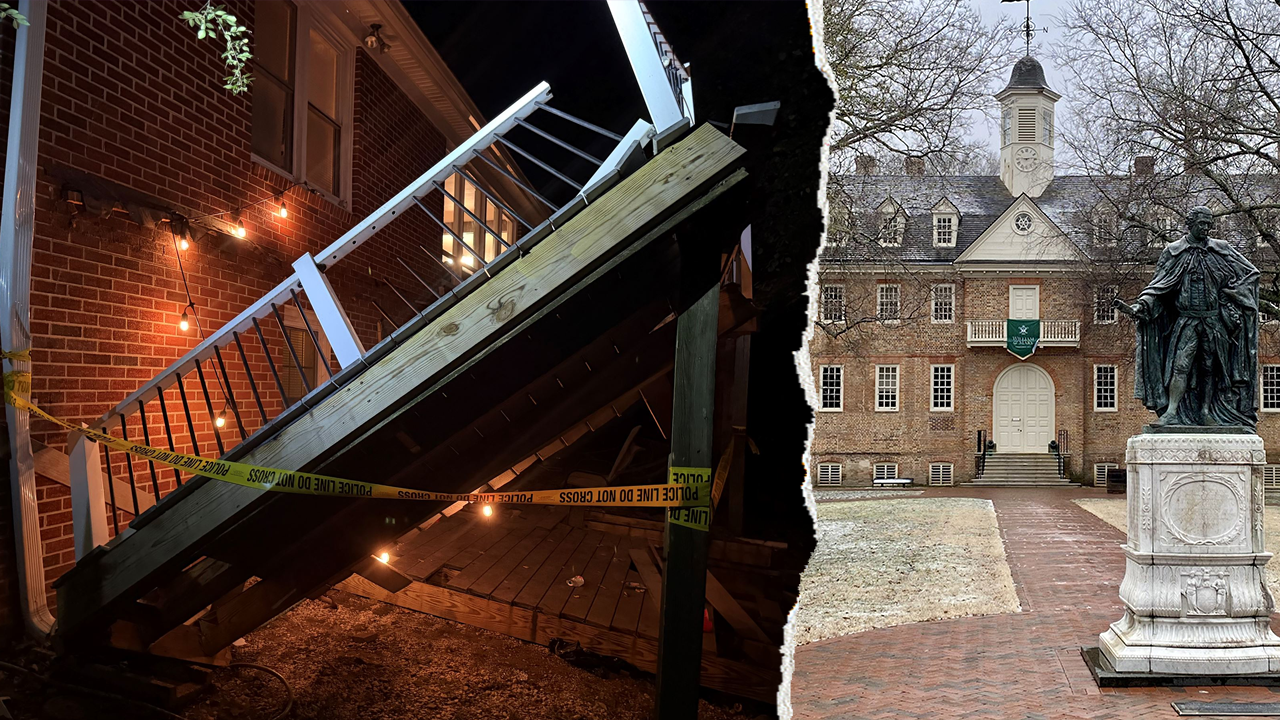
It was supposed to be a night of celebration, the kind of golden autumn homecoming weekend that college students carry with them long after graduation. On Friday evening, a crowd of young people gathered on the back deck of an off-campus house on Matoaka Court in Williamsburg, Virginia, just a short walk from the historic campus of William & Mary. The air was filled with laughter, music, and the easy chatter of old friends catching up; some held drinks, others took photos, and many were simply soaking in the warm glow of being together again for a cherished school tradition. The deck was likely crowded, as decks often are during homecoming parties, with people leaning against railings, sitting on steps, and standing shoulder to shoulder in the cool night air. But in an instant, joy turned to terror. Without warning, the wooden structure gave way beneath the weight of the gathering, groaning and cracking before collapsing in a violent rush of splintered timber, twisted metal, and bodies tumbling into the darkness below. Screams replaced music, and panic rippled through the neighborhood as students and neighbors alike rushed to help those who had fallen. Some were pinned beneath debris; others stumbled away in shock, nursing cuts, bruises, and broken bones. At 10:07 p.m., dispatchers received a report of a structure collapse at the 200 block of Matoaka Court, and emergency crews were dispatched immediately. Police officers and firefighters arrived to find the home’s back deck completely gone, reduced to a pile of wreckage in the yard, with injured young people scattered across the grass. The scene was chaotic, but the response was swift, with first responders working quickly to triage the wounded, stabilize the most seriously injured, and call for additional ambulances. For neighbors who heard the commotion and looked outside to see flashing lights stretching down the street, it was a terrifying reminder of how fragile an ordinary evening can be. What had begun as a carefree homecoming party had become a mass-casualty emergency, and the university community would spend the rest of the night hoping and praying for the students whose lives had been abruptly upended by the failure of a simple wooden deck.
The official toll, released by city officials in a Saturday morning update, brought both relief and heartache. At least 28 people were injured in the collapse, according to the city. Emergency crews transported 13 of them to area hospitals, while another 15 people sought treatment on their own, making their way to emergency rooms and urgent care centers in the aftermath of the chaos. Remarkably, every reported injury was non-life-threatening, a fact that seemed almost miraculous given the sheer violence of a deck giving way under a crowd of young adults. William & Mary officials confirmed that students were among those injured at the off-campus residence, and the university immediately began reaching out to affected individuals and their families. The number of injuries, while not fatal, was staggering: ambulances lined the narrow residential streets, their lights painting the homes in alternating shades of red and blue. One neighbor, who asked not to be named, described the scene to WAVY with a sense of disbelief. “All the way down the street and wrapped around just ambulances and fire trucks,” the neighbor said. “We saw a lot of hospital gurneys coming out of ambulances. At least nine ambulances kind of wrapped around the street.” For those who lived nearby, the sight was overwhelming, a sudden intrusion of emergency vehicles and medical personnel into a quiet neighborhood that had been hosting a joyful gathering just moments before. The fact that no lives were lost did not diminish the terror of the moment, but it offered a thread of hope in the aftermath. Parents who received phone calls in the middle of the night could breathe again, and students who had witnessed their friends falling through the deck could cling to the knowledge that everyone would eventually heal. Still, the emotional scars would take longer to mend, and the university community knew that the true cost of the evening could not be measured in hospital beds alone.
In the aftermath of the collapse, stories of heroism and kindness began to emerge from the chaos. Joshua Wise, a student who lives next door to the home where the deck failed, was not present when the structure gave way, but he returned to find the neighborhood transformed by emergency response. He quickly learned that his housemate had jumped into action, helping injured students get home and making sure no one was left alone in the confusion. “Word was traveling pretty fast,” Wise told WAVY. “By the time I got back here, the emergency response was over, but I had a housemate who was helping people, trying to help out as much as possible, drive people home, get people where they needed to be.” Wise’s voice carried a note of pride as he described the way neighbors and students rallied together in the moments after the collapse. People ran outside in their pajamas, offered blankets and water, and used their phones as flashlights to search for anyone who might have been overlooked in the wreckage. Some helped carry the injured to waiting stretchers; others simply held the hands of frightened students and told them they were going to be okay. “We did everything we could to help each other out and I think that’s beautiful,” Wise said, his words capturing the resilience of a community that refused to be defined by tragedy. In times of crisis, the bonds between neighbors often become stronger, and this was no exception. The sense of togetherness that emerged from the rubble was a reminder that even in the darkest moments, people have an instinct to care for one another. The emergency responders, too, were praised for their speed and professionalism. Wise noted that the ambulances and fire trucks arrived quickly, and the coordinated effort of police, firefighters, and medical personnel likely prevented the situation from becoming even worse. “Thank goodness for the emergency responders,” he said. “They were great. The ambulances and everything got here pretty fast.” It was a small comfort in the wake of a frightening night, but it was a comfort nonetheless.
For William & Mary, the collapse was more than just a news story; it was a direct blow to a close-knit campus community that prides itself on supporting its students. In a Saturday message addressed to the campus community, Ginger Ambler, the university’s senior vice president for student affairs and public safety, acknowledged the shock and concern that rippled through the college after word of the incident spread. Ambler said the university was still gathering information and noted that additional students may have sought care beyond those initially counted, as some injured individuals likely preferred to visit hospitals or clinics privately rather than be transported by ambulance. “We are grateful that none of the injuries were life-threatening,” Ambler wrote, a sentence that carried the collective exhale of an entire campus. But she also recognized that physical injuries were only part of the story. “We recognize that such an experience may affect our students deeply and in different ways,” she continued, signaling that the university would not simply move on once the debris was cleared. Staff from the university’s health services, academic advising offices, and student support programs were mobilized to assist affected students, offering counseling, academic accommodations, and a listening ear to anyone who needed it. Ambler’s message reflected an understanding that trauma does not always announce itself immediately; some students might feel fine in the first few hours, only to be hit by anxiety, flashbacks, or grief in the days and weeks to come. The university’s response was designed to meet those needs, creating a safety net for students who might otherwise struggle in silence. The collapse was an off-campus incident, but for William & Mary, the boundary between campus and community had always been porous. When students are hurt, the university hurts with them, and the institution’s commitment to their well-being extends far beyond the classroom. In the hours following the collapse, administrators, resident advisors, and faculty members reached out to students, checking on their well-being and reminding them that help was available. It was a quiet, behind-the-scenes effort that would not make headlines, but it mattered deeply to the young people trying to process what they had witnessed.
As the community began to catch its breath, attention turned to the practical questions that follow any such disaster: How did this happen, and what can be done to prevent it from happening again? The city’s Codes Compliance Division was on the scene evaluating and inspecting the site, carefully documenting the condition of the collapsed deck and trying to determine whether the failure was the result of age, overcrowding, improper construction, or some combination of factors. Officials did not immediately release a cause, and the investigation would likely take time, as investigators sifted through wood fragments, nails, and support beams to piece together the sequence of events. For many students, the collapse was a sobering reminder that the off-campus houses they rent are not always as safe as they appear. Decks are a common feature of college-town homes, often built years ago and subjected to harsh weather, heavy use, and the constant weight of furniture, grills, and crowds of young people. Building codes exist to ensure structural safety, but older homes may not have been built to the same standards as newer ones, and landlords are not always diligent about maintenance. The incident at Matoaka Court highlighted the importance of regular inspections and the need for tenants to report warning signs—wobbly railings, cracking wood, squeaking floorboards—before they become catastrophic failures. It also raised questions about the culture of college parties, where large numbers of people often gather in spaces never designed to hold them. A deck that is perfectly safe for a few dozen people can become dangerous when twice that many crowd onto it, and the line between a good time and a disaster is sometimes thinner than anyone realizes. The city’s review of the site was a necessary step, not only to provide answers to the injured students and their families but also to reassure the broader Williamsburg community that officials were taking the incident seriously. In the meantime, the focus remained on healing, on supporting the students who had been hurt, and on counting the small mercies that made the outcome far less tragic than it could have been.
In the days that followed, the story of the deck collapse became one of survival and solidarity rather than simply a tale of destruction. The students who had been celebrating on that Friday night would carry the memory with them for the rest of their lives, but they would also remember the strangers who rushed to help, the neighbors who opened their homes, and the first responders who worked without rest until every injured person had been cared for. Joshua Wise’s words, offered in the immediate aftermath, captured the spirit of the community’s response: “We did everything we could to help each other out and I think that’s beautiful.” There was beauty in the way people came together, in the small acts of kindness that emerged from the chaos, and in the resilience of young people who refused to let fear define them. The university’s commitment to supporting its students, the city’s determination to investigate the cause, and the quiet strength of the neighbors who watched over the scene all pointed toward a community that would recover, not by forgetting what happened, but by remembering the lessons it taught. For the students who were injured, the road to recovery might be long, filled with doctor’s appointments, physical therapy, and sleepless nights. For their friends and witnesses, the emotional toll might linger in unexpected ways—a creaking floor, a crowded balcony, the sound of snapping wood. But they would not have to face those challenges alone. William & Mary, with its deep sense of community and its network of support services, would walk alongside them. The city of Williamsburg, shaken by the incident, would work to ensure that such a collapse did not happen again. And the neighbors on Matoaka Court, who had seen their quiet street transformed into a scene of emergency, would continue to watch over the students who lived among them. Homecoming would be remembered for years to come, not for the party that was interrupted, but for the lives that were spared and the hands that reached out in the darkness. In the end, that was the story worth telling: not the collapse of a deck, but the strength of a community that held together when it mattered most.