




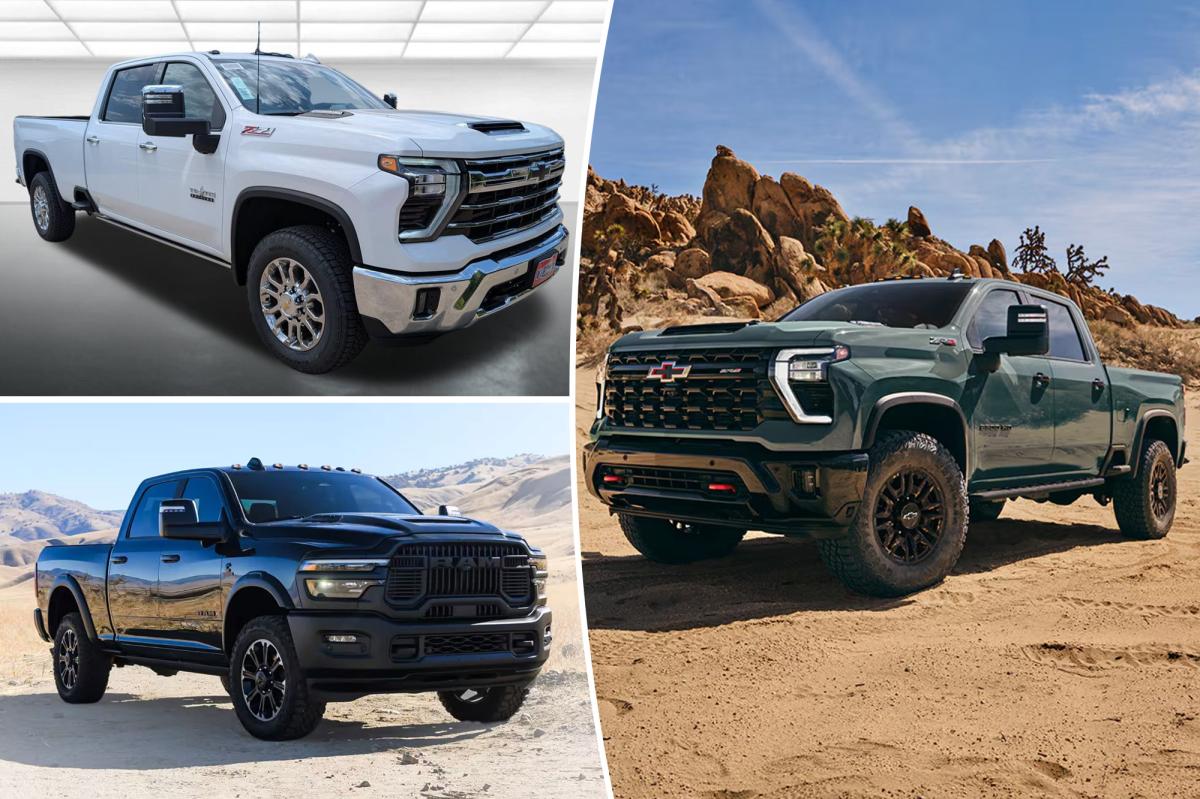
Here’s the thing about the biggest vehicles on American roads: they’re not just huge, they’re dangerous to everyone around them. They sit high on massive frames, their grilles level with the windows of ordinary cars. They can cross terrain that would swallow a sedan, tow a house, and shrug off a collision that would crumple a compact. But that invulnerability comes at a price, and it’s paid by the other drivers, pedestrians, and passengers unlucky enough to be near them when something goes wrong. A striking new report from Hines Law, based on government crash data and nearly 200 vehicle models, set out to identify exactly which vehicles are most threatening to others on the road. The method is elegant: instead of just looking at how many people die inside a particular truck, the study compared two fatality rates. The first is the number of drivers of that vehicle who die in crashes, per million vehicle-years on the road. The second is the number of drivers of other vehicles who die when their car crashes into that vehicle, using the same per-million-vehicle-years measure. The gap between those numbers is the real story. It tells you which vehicles are cocoons for their own occupants and coffins for everyone else. The top ten list that emerged is dominated by heavy-duty pickups, especially models from Ram, Chevrolet, and GMC, but it also includes a couple of SUVs. The common thread isn’t bad driving or reckless behavior—it’s physics. It’s mass, height, and blunt geometry. And the numbers are sobering enough to make you think twice before pulling up next to one of these behemoths.
At the top of the danger list sits the Ram 3500 crew cab long bed 4WD, a truck that is, in a very real sense, a rolling fortress. It weighs about 6,872 pounds, roughly two and a half times as much as a Toyota Corolla. In a crash with a typical sedan, the laws of momentum are brutally unforgiving: the lighter car experiences far more of the energy, and its occupants are the ones who pay. The data confirms this. When you compare death rates, the disparity is shocking. The Ram 3500’s own driver dies at a rate of 37 per million vehicle-years. That’s not trivial, but it’s far below the rate for drivers in other vehicles who hit a Ram 3500: 204 per million vehicle-years. That means the other driver is more than five times more likely to die than the person behind the wheel of the Ram. The report also notes that this same truck generates liability claims for damage to other people’s property at a rate that is 93 percent above the average vehicle. In other words, it doesn’t just hurt people; it wrecks their property, too. The truck is among the safest places to be in a collision—and among the most lethal things you can encounter outside of one. That is the definition of the danger gap, and the Ram 3500 has the widest one on the highway.
The rest of the top five tells the same story, with slight variations on a theme of massive weight and towering height. The Chevrolet Silverado 3500 crew cab 4WD is the heaviest model in the study, tipping the scales at more than 7,000 pounds. Its own driver death rate is an impressively low 10 per million vehicle-years—one of the lowest numbers recorded in the entire study. But the other driver death rate is 126 per million vehicle-years. That is nearly thirteen times higher. The truck is essentially an armored vehicle for its driver and a hazard for everyone else. It also prompts almost 60 percent more liability claims than an average car, meaning insurance companies know exactly how much damage it can cause. Then there’s the Ram 2500 crew cab short bed 4WD, another Ram model, with a curb weight around 6,700 pounds. The outside driver is more than five times as likely to die as the Ram driver, and its liability claims are 63 percent above average. And then comes a surprise, at least at first glance: the Ford F-150 SuperCrew 2WD. The F-150 is America’s best-selling pickup, a common sight in every state, and it weighs about 4,500 pounds—substantially less than the heavy-duty Rams and Chevys on this list. Yet the report says the other driver is more than fourteen times more likely to die than the person driving the F-150. That’s not because the F-150’s own driver death rate is so high; it’s because the other-driver death rate is so disproportionately severe. Even a “light” full-size pickup can be deeply dangerous to a sedan or an SUV that is smaller, lower, and less rigid.
The Chevrolet Silverado 2500 crew cab 4WD rounds out the top five at around 6,600 pounds, with an own-driver death rate of 21 per million vehicle-years and an other-driver death rate of 111 per million vehicle-years—again, more than five times higher. But the list doesn’t stop there, and it also includes vehicles that aren’t hardcore work trucks. The remaining five are the Volkswagen Atlas 2WD, the Ram 1500 Quad 2WD, the Cadillac XT5 2WD, the GMC Sierra 2500 crew cab 4WD, and the Ram 1500 crew cab short bed 2WD. The Atlas and the XT5 are SUVs, not heavy-duty pickups, which is a reminder that the problem isn’t limited to vehicles with tow hooks and diesel engines. It’s about height and blunt front ends as much as it is about raw weight. A front-end shape that is tall and flat, rather than sloped and crumple-friendly, is especially dangerous to pedestrians and to drivers in smaller cars because the initial impact is delivered to the occupant compartment rather than being deflected upward or absorbed by a hood. The physical consequences are stark. A recent study found that an adult pedestrian hit by an SUV is 44 percent more likely to die than one hit by a smaller car; for children, the risk jumps to 82 percent. This isn’t an accident of body styling. It’s the direct result of designing vehicles that protect their occupants first, with little regard for the people outside.
These findings have already started to reshape the conversation in other parts of the world. In the UK, some road-safety experts are calling on the government to restrict the size of SUVs sold to the public, arguing that their size is not just a matter of choice but a public-health issue. They point out that a heavier vehicle doesn’t just endanger people in other cars; it also increases braking distance, damages roads more, and produces more pollution. Pedestrian and cyclist advocacy groups have been pushing for regulations similar to those already applied to heavy goods vehicles, which must be fitted with extra mirrors and side guards to reduce injury. The Hines Law report suggests a similar crackdown might be politically difficult in the United States. One expert quoted in the report says that big trucks are part of the “culture” here, and that an outright restriction would be unlikely. That’s probably true. The pickup truck is intertwined with American identity—it’s a work tool, a family vehicle, a statement of independence, and for many, it’s the only thing that makes sense for rural life, towing, and winter roads. But culture isn’t a law of physics. The data is not ambiguous: heavy, tall, rigid vehicles are dangerous to other road users, and the danger is not distributed evenly. The people who are most likely to be killed by a Ram 3500 are not the people who chose to buy one. They’re the people driving a sedan a decade old, or standing on a sidewalk, or riding a bicycle to work.
If there’s a takeaway from all this, it isn’t that pickup owners are bad people or that every truck should be banned. It’s that the road is a shared space, and the consequences of vehicle design are not borne equally. When a 7,000-pound truck meets a 3,000-pound car, the crash is not a collision of equals. The driver of the smaller vehicle is essentially being asked to accept a risk that they never agreed to. The numbers in this report are more than statistics: every death is someone’s parent, partner, child, or friend. And the fact that the Ram 3500 is both a remarkably safe vehicle for its own occupants and a remarkably lethal one for everyone else says something uncomfortable about how we’ve chosen to design vehicles. We prize comfort, power, and invincibility, and we accept that someone else will pay the price. The next time you’re at a stoplight next to a huge pickup, glance at the height and bulk of that truck, and then imagine what happens if the driver’s foot slips. The data says you’re five times more likely to lose your life than the person sitting in that elevated cab. That should matter to all of us. We can keep loving our trucks and still ask for better visibility, softer front ends, and a serious conversation about whether the biggest vehicles should be held to a higher standard of responsibility for the danger they carry with them. Because culture may not change overnight, but physics never lies, and the road belongs to everyone.