

Paragraph 1
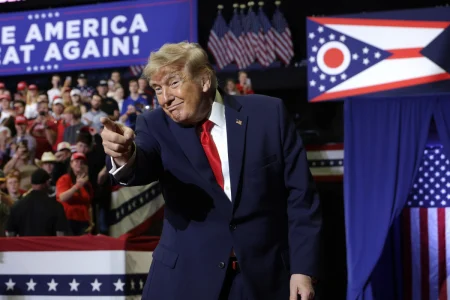
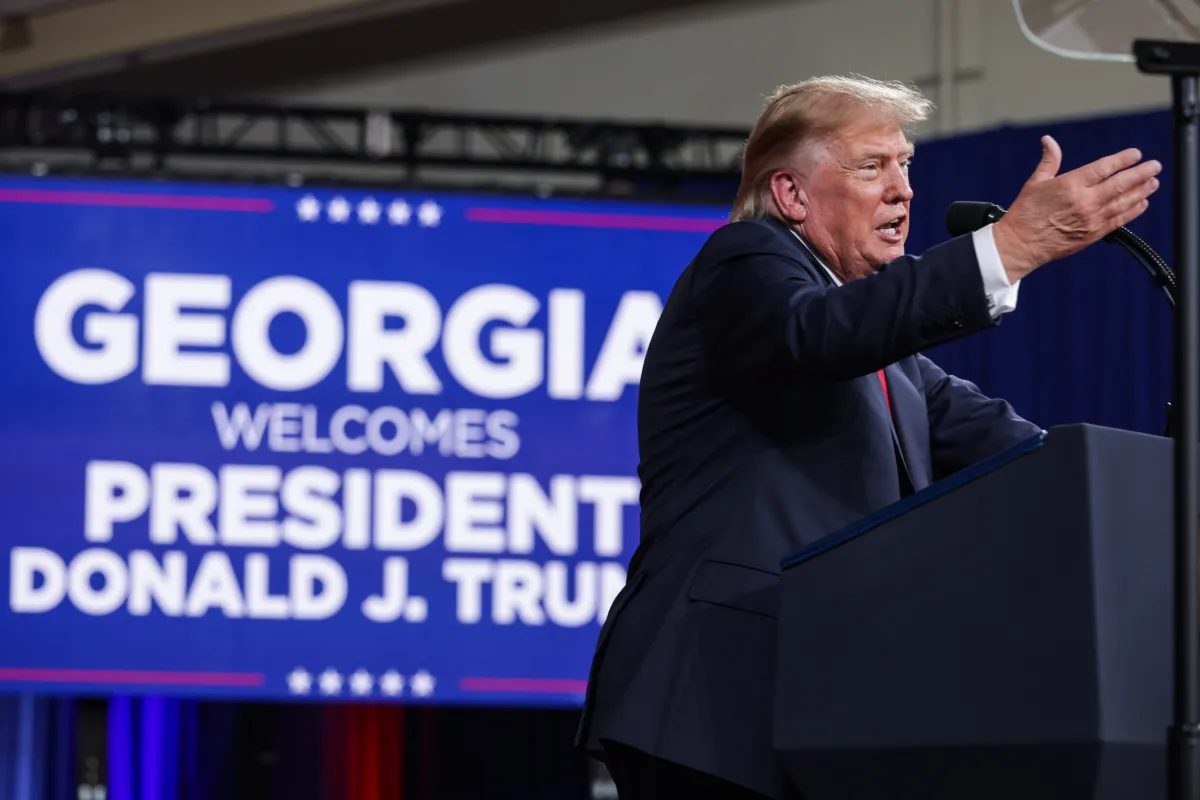
On a mild Saturday evening in Georgia, President Donald Trump climbed onto a rally stage and did something that has become his signature: he told the crowd exactly what his advisers told him not to say. It was October 24, and while thousands of supporters had gathered to hear the usual blend of grievance, bravado, and political warfare, they got something far more uncomfortable—a president openly admitting he had been advised to keep quiet about the financial windfall from an oil crisis that was squeezing everyday Americans. The setting was familiar: oversized flags, roaring applause, a sea of red caps, and the unmistakable energy of a man who thrives in front of a microphone. But the words that tumbled out were not the carefully rehearsed talking points of a politician concerned with optics. They were the raw, unfiltered thoughts of a leader who said he simply “didn’t give a damn” about how his honesty might look to the millions of families struggling with four-dollar-a-gallon gas. In that single moment, the rally transformed from a standard political spectacle into a national flashpoint—a president essentially bragging about national profit from global turmoil, even as the costs of that turmoil landed squarely on the shoulders of people who had come to hear him speak, people who had to decide between filling the tank and putting food on the table.
Paragraph 2
Trump’s actual words, captured on video and blasted across social media within minutes, cut through the noise like a knife. He described an America enriched by conflict, with Texas, Oklahoma, and Louisiana serving as global refuges for nervous oil buyers fleeing uncertainty in the Middle East. “Our country is making hundreds of billions of dollars because of what’s happened in the Middle East,” he declared, painting a picture of oil derricks pumping profits into national coffers as wars raged thousands of miles away. Then came the confession that transfixed the country: his own people, he said, had begged him not to mention the windfall. “Please don’t mention that, sir, people are paying a little higher,” he recalled them pleading. Any normal politician would have nodded, changed the subject, and moved on to safer ground. But Trump is not a normal politician. With theatrical defiance, he announced that he could envision the headlines already—”President Trump is talking about all the money they’re making while people are suffering at the pump”—and then shrugged off the entire concern in one dismissive sentence: “But I said, ‘I don’t give a damn, I’m gonna say it: We’re making a frickin fortune.'” The line was vintage Trump: blunt, self-aware, and deliberately provocative. It also laid bare the uncomfortable reality of a president who sees geopolitical turmoil through the lens of profit, a vision that seemed grotesque to critics even as his supporters celebrated it as refreshing honesty in a world of scripted lies.
Paragraph 3
Trump didn’t stop at the boast. Like a trial lawyer building a case, he reached back into history to find comparisons that might make his argument stick. He claimed Americans were “paying lower than Biden and Obama,” weaving in a strange reference to Iran’s nuclear capabilities—”and they don’t have nuclear weapons”—in a sentence that left even his most loyal interpreters scratching their heads. The numbers, however, tell a more complicated story than the president’s oratory suggested. Under Barack Obama, national average gas prices peaked at $3.93 in May 2011. Under Joe Biden, they spiked to an excruciating $5.06 in June 2022, an anomaly driven by post-pandemic inflation and global supply shocks. Trump’s implication was that the current $4.29 average somehow represented an improvement, a claim that crashed against the lived experience of drivers who remembered paying $3.06 just a year earlier. The Middle East conflict had injected fear into crude markets, and oil companies, facing investor demands for profit rather than long-term investment, had been slow to increase output. The result was a painful convergence: high international prices, limited domestic production growth, and an administration that seemed more interested in celebrating the revenue than in solving the problem. For the average American, the economic theory meant nothing—all they knew was that the number on the pump was red, rising, and eating their budgets alive.
Paragraph 4
The backlash to Trump’s remarks was fast, furious, and utterly predictable. California Governor Gavin Newsom, a Democrat with presidential ambitions of his own, pounced on the clip with a viral post that summed up the indignation millions felt: “Congratulations to Big Oil on their very successful, record-profits presidency.” The one-liner ricocheted through social media, capturing the anger of those who saw the administration’s energy policy as little more than a transfer of wealth from working families to corporate giants. Massachusetts Senator Elizabeth Warren, never shy about confronting wealthy interests, went even further, calling the president a “fraudster” and accusing him of breaking his Day 1 promise to lower costs. “Instead he launched a war that increased the prices of everything from gas to groceries,” she posted, turning the fury of middle-class voters into a pointed political attack. Protests broke out in several states, where demonstrators wove anti-war slogans with cost-of-living grievances, carrying signs that blended both causes into a messy, combustible expression of public frustration. The image of a president gleefully tallying oil profits while ordinary people cut back on groceries, delayed repairs, and cancelled family trips was a political gift to his opponents—and an emotional betrayal to many who had believed his promise that economic pain would end the day he took office.
Paragraph 5
Beyond the political theater, the data reinforces why this issue has become so toxic. According to the American Automobile Association, the national average price for regular gasoline stood at $4.29 per gallon on October 25—a figure that, while down from September’s jaw-dropping $4.49, still represented a 40 percent leap from the $3.06 average of just one year prior. That meant an extra $1.23 on every single gallon, roughly fifteen to twenty dollars more for every fill-up, a punitive tax on the daily commute that rippled through family budgets like a stone dropped in a pond. Midgrade fuel ran about $4.80, premium topped out at $5.20, and diesel—the vital artery of the American supply chain—weighed in at a crushing $6.35 per gallon. That diesel number deserved particular attention, because it didn’t just affect truckers; it drove up the cost of everything shipped by road, from produce and clothing to lumber and medicine. Regional disparities made the pain even more uneven, with drivers in some states paying far above the national average while others, blessed with access to refineries, saw slightly softer numbers that were still brutal by historical standards. For families living paycheck to paycheck, every trip to the pump meant a recalibration of weekly choices: less meat, fewer outings, postponed repairs, the quiet embarrassment of swiping a card and watching the total climb higher than expected.
Paragraph 6
In the end, this is not just an economic problem; it is a profound political one. A New York Times/Siena poll conducted October 12–19 found that a stunning 73 percent of likely voters disapproved of the president’s handling of gasoline prices—the worst rating for any issue tested—with only 24 percent voicing approval. Dig deeper, and the numbers become even more ominous for the White House: 77 percent of independents disapproved, and so did 42 percent of Republicans and 43 percent of those who cast ballots for Trump in 2024. That kind of erosion within his own base is the stuff of electoral nightmares, especially with midterm elections days away and every campaign strategist in America watching the latest poll numbers. The president’s instinct has been to double down, to embrace the “I don’t give a damn” persona as a badge of authenticity, but the consequences of that stance are now visible in angry town halls, empty supermarket shelves in poorer neighborhoods, and the quiet resentment of voters who feel forgotten. Trump remains convinced that ordinary people will understand his candor, that they will eventually see the global game in which America holds the winning hand. But the sound they hear is not the chime of national prosperity; it is the grim, grinding buzz of a gas pump, counting out dollars they didn’t plan to spend—dollars they can’t get back. In that gap between the president’s triumphant story and the public’s grinding reality, the next chapter of American politics is being written, and it is being written one unforgiving gallon at a time.