


Blockchain-Powered Stock Trading Gets Its First Big Test: OKXICE Launches Tokenized Share Pilot
On October 4, OKXICE, a securities venue backed by one of the world’s largest cryptocurrency exchange operators, issued its initial public notice and laid out an ambitious blueprint for tokenized equities. The plan revolves around using Uniswap (UNI) liquidity pools on OKX’s XLayer blockchain, with all transactions settled in stablecoins rather than traditional fiat currencies. The move signals a significant step toward blending conventional capital markets with decentralized finance, and it gives the broader financial world a live case study in how tokenized shares might actually work. Under the framework, venues are required to formally notify issuers before offering tokenized versions of their shares, and those companies have a 30-day window to object. The notification process is not a formality; it is a critical safeguard designed to give listed companies meaningful control over whether their stocks appear in this new digital format. For OKXICE, the filing marks the beginning of a carefully structured experiment that could eventually reshape how equities are issued, traded, and settled. At the same time, it highlights the cautious stance many corporations are taking as they weigh the risks and rewards of putting real stocks on blockchain rails. With a former New York governor helping lead the initiative and one of the most recognizable names in crypto supporting the underlying infrastructure, the project is being watched closely by both digital asset enthusiasts and traditional market participants.
The original trading roster put forward by OKXICE covered 62 companies, a deliberately broad mix of large-cap technology names, healthcare firms, chipmakers, and financial institutions. Interestingly, neither Wells Fargo nor Arm Holdings—two names frequently mentioned in tokenization conversations—appeared on that initial list. Instead, the roster included companies like Cisco, Moderna, Intuit, and Marvell, each representing a different slice of the U.S. equity market. As the notice circulated and issuers began responding, observers quickly noted that 22 objections had been filed. But assuming those 22 represent a wave of resistance to tokenized stocks would be a mistake. A closer look shows that not all of the objections can be counted as departures from the original selection, because some of the companies lodging objections were never part of the proposed roster to begin with. Cerebras Systems, a high-profile AI chip company whose objection was disclosed earlier, is a case in point: it was not among the original 62 companies either. That distinction matters because it changes the narrative from one of mass pushback to something more nuanced. An objection filed through the notification process blocks trading on the venue that received it, but it does not necessarily signal a principled opposition to every form of stock tokenization. In practice, an issuer may object to one venue’s framework while remaining open to other approaches, or it may simply want more time to evaluate the legal and operational implications of having its shares represented on a blockchain.
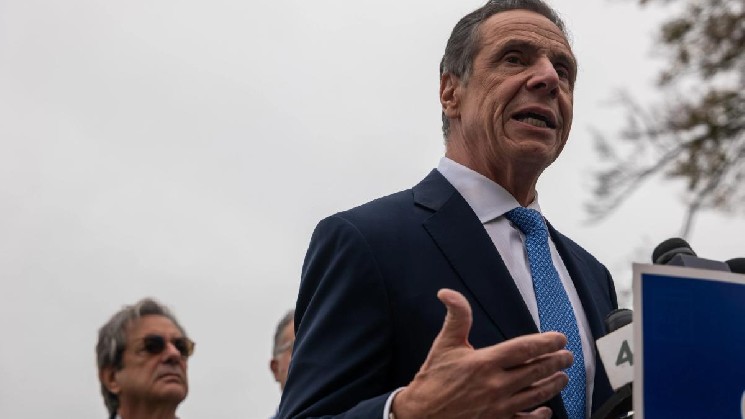
Andrew Cuomo, the former governor of New York who now serves as co-chairman of OKXICE, said the early wave of objections did not come as a surprise. Speaking during a press call on Monday, Cuomo framed the responses as an understandable reaction to a genuinely unfamiliar financial mechanism. “We always anticipated that, because this is such a dramatic and revolutionary change, many companies would want to wait and see how it goes rather than be the first to participate,” he explained. Those words reflect a measured, pragmatic approach to innovation—one that acknowledges both the excitement around tokenized assets and the deep caution that still exists within corporate boardrooms. Cuomo pointed out that the framework’s built-in limits on participating companies and trading volumes effectively make the project a sandbox. He described it as “a sandbox—a model demonstration,” emphasizing that the goal is not to disrupt global equities overnight, but to prove that the concept can work in a controlled, safe environment. That language is important for issuers and regulators alike. By positioning the effort as a demonstration rather than a full-scale rollout, OKXICE is signaling that it understands the stakes and is willing to move in increments. For a venture that sits at the intersection of decentralized finance and traditional securities law, that tone could be the difference between gaining institutional buy-in and being dismissed as another crypto experiment.
To understand what OKXICE is actually proposing, it helps to look at the mechanics underneath the announcement. The venue intends to leverage Uniswap, one of the most widely used decentralized exchanges in the crypto ecosystem, to create liquidity pools on OKX’s XLayer blockchain. Uniswap pools rely on automated market makers rather than traditional order books, meaning liquidity is supplied by users who deposit assets into smart contracts. By tapping into that model, OKXICE could offer continuous, automated trading for tokenized shares without depending on a centralized market maker. Transactions would be settled in stablecoins, which are designed to maintain a steady value and therefore bring a degree of price predictability that native cryptocurrencies often lack. That stablecoin settlement layer is a deliberate choice: it makes the system more familiar to institutional investors and regulators who are comfortable with dollar-pegged assets but wary of crypto volatility. Tokenized versions of shares would represent real equity claims, giving holders exposure to the price movements of the underlying stocks. However, the infrastructure also embeds a crucial compliance tool. Before a venue can offer tokenized shares, it must notify the issuer and wait at least 30 days. If the issuer objects, the venue is blocked from trading that company’s tokenized stock. This notification mechanism is not just a token gesture; it is the central control point that keeps the experiment tethered to existing securities norms, at least for now.
The implications of this rollout extend far beyond one venue or a single blockchain network. If tokenized equities gain traction, they could enable fractional ownership of high-priced stocks, open up access to international investors, and create a 24/7 trading environment that operates outside the traditional market’s hours. That kind of flexibility has long been a talking point among crypto advocates, who argue that blockchain-based settlement can reduce costs, increase transparency, and eliminate many of the operational delays associated with legacy clearing systems. But the foray into tokenized shares also raises serious questions. Securities regulation has been built around intermediaries, clearinghouses, and a clear legal framework for protecting investors. Moving stocks onto decentralized liquidity pools challenges some of those assumptions, and it is not yet clear how regulators will treat a venue that uses smart contracts and stablecoins to reference equities issued by companies that may never have consented to the arrangement. The 30-day objection window offers one solution, but it is not a complete answer to the complexity of securities law across borders. That is why many companies are adopting a wait-and-see posture. They want to see how regulators respond, how the market behaves, and what happens when an unexpected issue arises in a system governed by code rather than by traditional market operators. The involvement of a high-profile former elected official like Cuomo adds a layer of credibility, but it does not eliminate the fundamental uncertainties that come with merging established financial infrastructure and decentralized technology.
Looking ahead, the coming months will reveal whether OKXICE’s sandbox approach can turn cautious observers into active participants. The roster of objection letters is likely to grow or shrink depending on how the first wave of trading goes, and other venues will be watching closely to see how issuers react to this new form of equity representation. Cuomo’s framing suggests that the project is designed to be a proof of concept, but a successful proof of concept can very quickly become a competitive blueprint. If tokenized equities gain acceptance on XLayer and Uniswap’s liquidity pools prove reliable, other exchanges and blockchain networks may feel pressure to explore similar offerings. On the flip side, a high-profile legal challenge or technical failure could push the entire sector back into regulatory limbo. The balance between innovation and caution is delicate, and OKXICE is navigating it with an unusual combination of crypto-native infrastructure and politically seasoned leadership. The fact that some companies have already objected shows that the era of silent acceptance is over; issuers are paying attention, and they are not afraid to use the tools available to them. At the same time, the fact that OKXICE has moved forward despite those objections suggests that the venue is serious about establishing a first-mover position in tokenized equities. This is not a hypothetical conversation about the future of finance anymore. With the initial notice filed, the liquidity pools being prepared, and the objection window now active, the experiment is underway—and the entire industry is watching to see whether the model demonstration becomes a permanent part of the market or remains a cautious, carefully contained pilot project.