


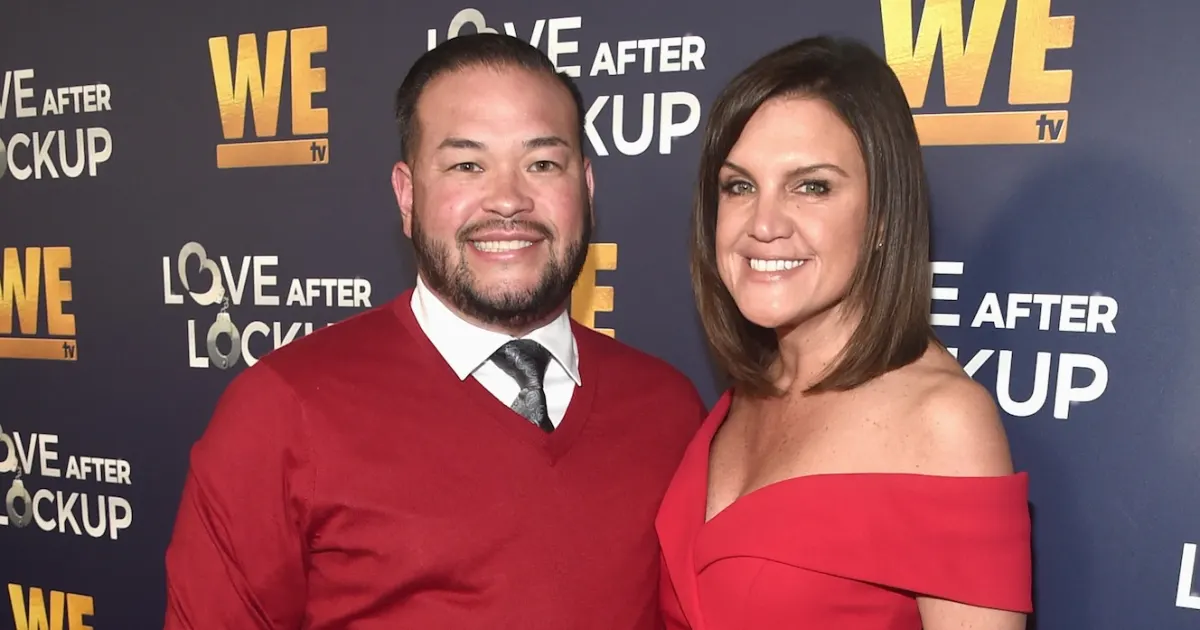
There is something quietly powerful about a social media post that stops you mid-scroll, especially when it comes from an unexpected place. On Friday, October 23, Colleen Conrad, the former longtime girlfriend of Jon Gosselin, did exactly that when she shared a deeply personal Instagram tribute to Jon’s son, Collin Gosselin. To anyone who had followed the sprawling, complicated, and often tabloid-driven story of the Gosselin family, the post was a striking moment of tenderness. Conrad, who dated Jon from 2014 to 2021, posted a carousel of photographs capturing moments with Collin over the years—images of a boy becoming a young man, of quiet milestones and everyday closeness. The occasion for the tribute was the release of Collin’s memoir, In the Shadow of Eight: Surviving the Reality of My Childhood, a book that promised to reveal the painful truths behind his famous upbringing. But Conrad’s message wasn’t about book sales or publicity. It was about love, survival, and the bonds that form when no one is looking. She wasn’t just congratulating him on his literary achievement; she was marking the journey of a child she had watched heal, grow, and find his voice. And in doing so, she reminded everyone that family is not always defined by blood, but by presence.
Conrad came into Collin’s life at a moment when he desperately needed stability. Her relationship with Jon began in 2014, after Jon’s very public and messy separation from Kate Gosselin, Collin’s mother. By then, Collin had already lived through more public scrutiny, family chaos, and private turmoil than any child should ever have to know. The Gosselin family had become a reality television phenomenon with Jon & Kate Plus 8, and the children had grown up in front of cameras, their lives dissected by viewers and commentators. For Collin, though, the pain was not just about fame. It was about feeling unseen, unheard, and, by his own account, hurt in ways that would take years to untangle. Conrad seems to have understood that immediately. In her caption, she wrote, “When you came into my life, you had already been through more than any child should ever have to experience. I didn’t know what the years ahead would bring, but I knew I loved you and wanted you to feel safe, loved, and supported.” Those words carry the weight of a woman who stepped into a complicated role with no instruction manual. She was not trying to replace anyone, and she didn’t pretend the past hadn’t happened. Instead, she offered something simpler and rarer: a present-tense promise to be there, to show up, and to care for a boy who desperately needed to know that someone was on his side.
What makes Conrad’s tribute especially moving is the way she frames their relationship as mutual salvation. Too often, adult figures in a child’s life are seen only as givers, but Conrad was honest about the fact that Collin gave her something too. “Watching you grow into the man you are today has been one of the greatest joys of my life,” she wrote. Then she shared a vulnerable truth about the overlap of their struggles: “Listening to your book was incredibly emotional. It brought back beautiful memories, but also painful ones. I was going through breast cancer, the end of my relationship with your dad, and so many changes in my own life. Through it all, there was a teenage boy who needed me. And what you may never fully realize is how much I needed you, too. We helped each other through some incredibly difficult times.” That admission is striking in its honesty. She was battling illness, losing a relationship, and navigating her own grief while trying to be a steady presence for a teenage boy who was navigating his own trauma. Yet she doesn’t present herself as a martyr. Instead, she describes a partnership of healing, two people holding each other up through the dark. It is a beautiful reframing of what it means to care for someone else. We often think of love as a one-way street, but the deepest bonds are built on mutual need and mutual support. Conrad showed that Collin, even in his brokenness, gave her purpose and companionship. It is a reminder that none of us heal alone.
The backdrop to this tender exchange is, of course, the painful story that Collin tells in his memoir. In the Shadow of Eight is not an easy book. In it, Collin writes about growing up alongside his seven siblings—his twin sisters Mady and Cara, now 26, and his fellow sextuplets Joel, Aeden, Hannah, Alexis, and Leah, now 22. He describes the unique experience of being part of a family so large that individual needs could easily be overlooked, and he alleges that his mother, Kate Gosselin, subjected him to abuse and neglect. These are serious allegations, and Kate has long denied any wrongdoing, consistently maintaining that she acted in the best interests of her children. The public has watched this family run its course through tabloids, court documents, and reality television, often reducing real children to characters in a scripted drama. But Collin’s book is a defiant act of reclamation. He is telling his own story, in his own words, after years of feeling silenced. The title alone evokes a childhood spent in the shadow of eight, a young person trying to find his place in a crowded, chaotic, and often overwhelming world. That Conrad’s tribute arrived alongside the book’s release feels intentional and symbolic. She is not just an ex-girlfriend of his father; she is a witness to his life, someone who knows the boy behind the headlines and loves the man he has become. In a world where his childhood was often exploited for entertainment, her post is a reminder that his worth is not measured by clicks or ratings, but by the real relationships he has built.
Perhaps the most poignant moment in the entire exchange came when Collin responded to Conrad’s tribute in the comments of her post. His words were raw, grateful, and deeply emotional. “I love you,” he wrote. “I loved that you say you needed me too. It just shows how meant to be everything was. If I could’ve gone through all the hard things again I’d gladly do it, because it led me to you. You’re kind, loving, funny and you love in a way that a real mother should. I’ll forever be grateful to have you in my life. Thank you for listening, showing up, and never giving up on that young, broken, hurting little boy who didn’t believe in himself. Sometimes all we need is to know our mom believes in us and it gives us enough faith in ourselves.” For anyone who has followed Collin’s story, these words are staggering. He has been through so much—public rejection, legal battles, time in residential treatment facilities, and the immense burden of growing up under the glare of reality TV. And yet here he was, not bitter, but profoundly aware of the love that had saved him. The image he paints of himself as “that young, broken, hurting little boy who didn’t believe in himself” is heartbreaking. But the image of Conrad as the maternal figure who believed in him, who listened, and who never gave up, is the kind of redemption that no television script could ever write. In that comment, Collin did more than thank her. He redefined the meaning of motherhood itself, suggesting that a mother is not simply the woman who gives birth, but the person who loves you into becoming yourself.
In the end, Colleen Conrad’s tribute to Collin Gosselin is about so much more than a book release. It is a testament to the resilience of the human heart and the power of chosen family. Conrad ended her post with a promise that transcended any label or legal definition: “As proud as I am of your book, I’m even prouder of the man you’ve become. No matter how old you get or where life takes you, I will always be your mom. I will always love you and cheer you on. Congratulations, Collin. You deserve all the happiness and success life has to offer. Love you always.” Those are the words of a woman who refuses to let circumstance define the depth of her love. She may have entered Collin’s life as her ex’s girlfriend, but she stayed as something far more important. And Collin, in his response, gave her the only gift that really matters: he let her know that her love made a difference. Their story is a powerful reminder that family is not always a matter of biology. It is built in the quiet moments, in the times when someone shows up, in the decision to love fiercely and without conditions. As Collin continues to tell his truth, he carries with him the knowledge that he is not alone. There is a woman out there who calls him her son, who celebrates his victories, and who will cheer him on for the rest of his life. In a family story filled with pain and complexity, that is a beautiful, hopeful chapter.