


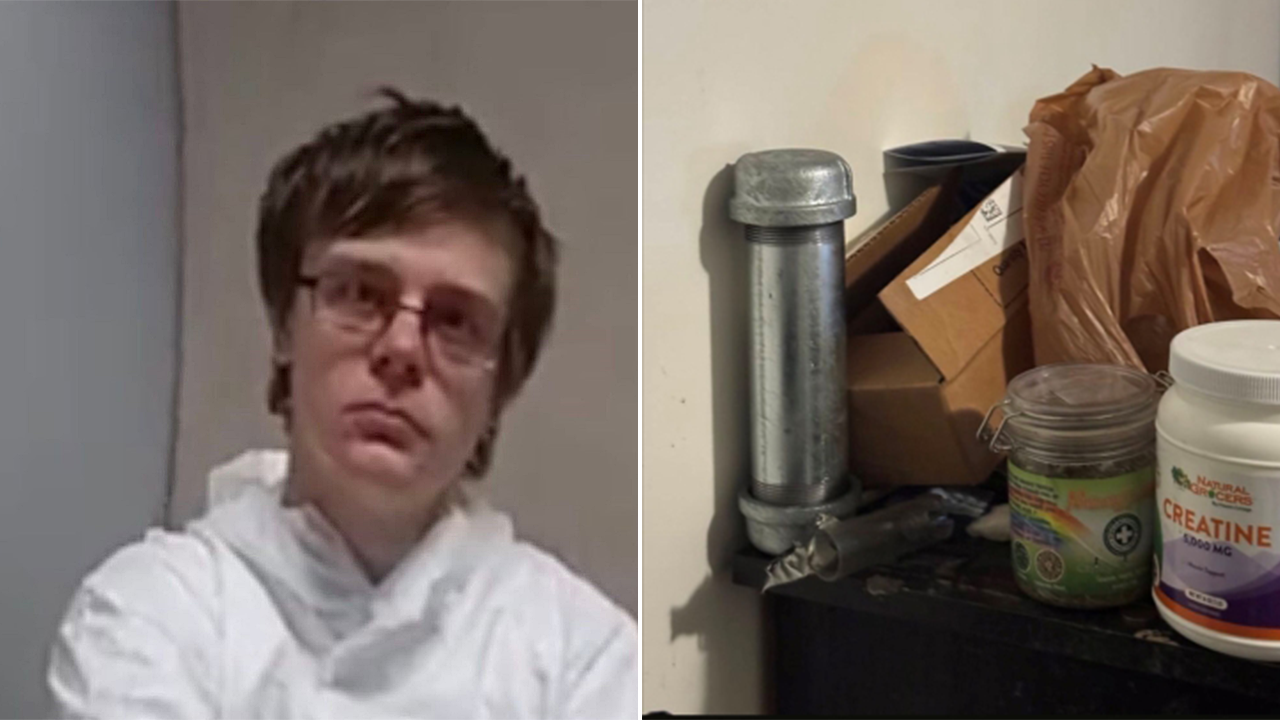
When people step into a synagogue, they carry with them generations of history, memory, and hope. It is a place where prayers are offered, where children learn, where community gathers around joy and grief. For the Jewish community in Ogden, Utah, that sanctuary was suddenly cast under a shadow of fear this winter. Federal prosecutors announced that a 22-year-old man, Skyler AJ Rose, had been indicted on charges that read like the script of a nightmare: attempted hate crime, possession of unregistered destructive devices, threatening to kill or injure people with an explosive, and even receipt and possession of child sexual abuse material. The indictment alleges that on December 23, Rose posted on social media, “I wanna blow up a synagogue.” That message was not dismissed as an anonymous outburst. Investigators traced the post to Rose’s home, and when they searched it, they found six improvised explosive pipe bombs, one inert device, explosive precursors, and components that could be used to construct more bombs. They also found two rifles, magazines, and ammunition. For the congregation that may never know how close they came to tragedy, the news is a chilling reminder that hate does not always announce itself loudly; sometimes it hides behind a screen, grows quietly, and waits. The indictment is a powerful statement that such hatred, even when it does not result in violence, will be met with the full weight of the federal government.
The details of the investigation reveal how close the alleged plot may have come to becoming a catastrophe. According to the U.S. Attorney’s Office for the District of Utah, Rose made multiple threatening social media posts on December 23, 2025. After the FBI identified the IP address tied to the posts, agents contacted the Ogden City Police Department, and officers made a home visit. During that visit, authorities say, they confirmed that Rose was the person behind the social media handle. What they found next was deeply alarming. A subsequent search warrant led to the recovery of six homemade pipe bombs and an additional inert device, along with a cache of explosive precursors and components. Such materials are not ordinary household items; they are the building blocks of violence, capable of causing serious injury or death. In addition, investigators seized a black Samsung cellphone and two rifles with magazines and ammunition. The synergy of these items—an expressed desire to bomb a synagogue, the knowledge of where a synagogue was located, and an arsenal of explosive and firearm materials—painted a portrait of a potential attack in its formative stage. Had the initial threat not been reported and aggressively followed up on, the outcome could have been drastically different. The collaborative effort between federal and local authorities was instrumental in preventing a tragedy, and it underscores the importance of taking every threat seriously, no matter how vague or distant it might seem.
The investigation, however, uncovered another layer of darkness. When forensic examiners searched Rose’s cellphone, they found more than just evidence related to the alleged bombing plot. According to prosecutors, the phone contained hundreds of cached images and screenshots depicting child sexual abuse material. That discovery added another grave dimension to the case, leading to additional charges of receipt and possession of child pornography. The juxtaposition of these two sets of alleged crimes—plans for an act of terror against a religious community and the possession of material that exploits and harms children—is a reminder that dangerous behavior often takes multiple forms. It also highlights the painstaking work of digital forensics: agents and analysts who meticulously sift through data to uncover the full scope of a person’s criminal activity. For the public, the revelation is another reason to be grateful for the diligence of law enforcement. For the families of the children depicted in those images, it is a painful reminder of a trauma that never fully goes away. The indictment against Rose includes both the hate crime and explosive charges and the child exploitation charges, ensuring that all potential victims are acknowledged in the legal proceedings. As the case moves forward, prosecutors will be tasked with proving each allegation in court, and Rose, like any defendant, is presumed innocent until proven guilty. But the breadth of the charges demonstrates a disturbing pattern of behavior that legal experts say points to a person in need of serious intervention.
Federal officials have responded to the case with strong words, emphasizing that hate-motivated violence has no place in American communities. U.S. Attorney Melissa Holyoak for the District of Utah stated, “There is no place for hate motivated violence—attempts or otherwise—in our communities. A place of worship should be a refuge of safety, not fear.” Her words carry a particular resonance in a country where houses of worship are meant to be open doors, welcoming all who seek solace. Assistant Attorney General Harmeet K. Dhillon of the Justice Department’s Civil Rights Division added, “Today’s indictment stops in its tracks an alleged plan to carry out a violent attack on a synagogue. The Department of Justice will take decisive action to protect American worshippers from violent threats, no matter where they occur.” These statements reflect a broader commitment at the federal level to confront antisemitism and religiously motivated violence head-on. Special Agent in Charge Robert Bohls of the FBI’s Salt Lake City field office also spoke to the emotional stakes of the case, saying, “No one should have to fear for their safety because of their faith. Every person deserves to worship freely, without threats, intimidation, or fear.” He credited the swift collaboration between the FBI and local police for addressing the threat and protecting lives. Such official expressions of resolve are important, but for many, the true measure of justice will be whether the legal system can provide a sense of closure and security to the community that was targeted.
Behind every indictment, there are human stories. There are the congregants who may now glance over their shoulders as they enter their synagogue. There are the parents who wonder whether their children are safe in a space that was always meant to be a second home. There are the elderly members who have witnessed too many moments in history when hate turned to horror, and who now must reconcile that legacy with the knowledge that their own community was almost the next headline. The court documents show that Rose allegedly searched online for a synagogue near him in November 2025, just a month before his arrest. That detail is particularly haunting, because it suggests a methodical process: first, identifying a target; then, acquiring the means; and finally, making the public threat that unraveled everything. One can only imagine the relief felt by law enforcement when the bombs were found and the suspect was taken into custody. But relief is not the same as safety. The emotional aftermath of a threat like this can linger for years. Faith communities often respond by increasing security, by speaking to their members about vigilance, and by relying on each other for support. Through it all, they continue to hold services, celebrate holidays, and mark life cycles, refusing to let fear dictate their devotion. That resilience is a quiet form of resistance, a statement that hate will not win.
As Rose prepares for his initial appearance in federal court in Salt Lake City on October 23, the case will continue to unfold. For now, he remains in custody, facing charges that carry potentially severe penalties. The legal process will examine the evidence, hear from witnesses, and determine whether the allegations are proven beyond a reasonable doubt. But regardless of the outcome, this case is a sobering reminder that threats against houses of worship must never be ignored. It is also a reminder of the importance of community vigilance. Someone saw a post, law enforcement responded, and a potentially devastating attack was prevented. In a world filled with divisive rhetoric, the image of a young person, armed with explosives and hatred, targeting a synagogue is chilling. Yet the response—by prosecutors, FBI agents, local police, and community leaders—offers a counter-narrative of courage and care. They acted swiftly, not only to enforce the law, but to protect the fundamental right of every person to worship in peace. The people of Ogden, and indeed people of goodwill everywhere, can take some comfort in knowing that in this instance, the system worked. But the work is never done. The fight against antisemitism, racism, and all forms of hate requires constant attention, collective action, and a refusal to look away. This indictment is a step in that fight, a defense of the simple idea that a synagogue, a church, a mosque, or a temple should always be a refuge of safety, not fear.