


Bitcoin Holds Its Breath: Low Volume, Musk Speculation, and a Market Waiting for a Signal
Market Snapshot: Bitcoin Holds Its Breath
Bitcoin has never been a quiet asset. It is the kind of market that lives on volatility, where fortunes are made and lost in seconds, and where social media posts can alter the trajectory of a trillion-dollar asset class. But on the latest market snapshot, the dashboard looked less like a crypto trading floor and more like a waiting room. Price data remained largely static, and the reported trading volume in the last 24 hours was conspicuously absent. For a market that usually moves around the clock, that silence is hard to ignore. It is not simply a low-activity day; it is a signal that traders have pulled back and are watching from the sidelines. The lack of definitive metrics suggests that market participants are not ready to commit. They are waiting for clearer signals before making substantial moves. Everyone wants to know which way the next big push will come from, and until that becomes obvious, capital stays parked. What has stepped into the vacuum is conversation. The community’s focus appears to be shifting toward speculative inquiry rather than immediate trading action. People are asking questions that have no easy answers: Is Elon Musk going to say something about Bitcoin again? Is SpaceX quietly building a treasury position? Are major institutions preparing to increase their exposure? The absence of fresh market data gives those speculative questions more weight than they might have on a busy trading day. That is the nature of Bitcoin in a quiet phase—when the charts stop talking, the narrative takes over. Community sentiment becomes the primary driver, and that sentiment, as Bitcoin has proven many times, can change in an instant.
The Coinbase Connection: Institutional Interest and Influence
Bitcoin is, at its core, a decentralized digital currency that has attracted serious attention from retail investors and institutional players alike. It was designed to exist outside the traditional financial system, but it has evolved into something far more integrated. Today, it is bought and sold through public exchanges, held on corporate balance sheets, and discussed in the same sentences as stock indices and Treasury yields. Coinbase, one of the world’s leading cryptocurrency exchanges, has a direct stake in that evolution. The company has a vested interest in the dialogue surrounding Bitcoin’s valuation and ownership, largely because its entire business model depends on trading activity, custody services, and the general growth of the digital asset ecosystem. When markets are quiet, exchanges feel the slowdown. When markets are loud, they benefit from every spike in activity. That is why Coinbase analysts and executives are often just as attentive to social media chatter as they are to order flow. They understand that the conversation around Bitcoin is not separate from its price—it is part of the mechanism that moves it. The exchange also sits at the intersection of the retail and institutional worlds. It provides the infrastructure for hedge funds, asset managers, and public companies to enter the cryptocurrency market with a level of legitimacy that was unthinkable just a few years ago. This gives Coinbase a front-row seat to a deeper transition in global finance. Digital assets are no longer a fringe curiosity; they are becoming a standard part of portfolio conversations. And because Coinbase profits from the volume and custody that those conversations produce, the company is not a neutral observer. It is a stakeholder in the outcome. When someone like Elon Musk talks about crypto, Coinbase often sees the impact in real time, through trading spikes, account signups, and shifts in customer sentiment. That connection between public figures, market participants, and exchange infrastructure has become one of the defining stories of the current crypto cycle.
The Elon Musk Factor: Why One Voice Still Moves a Global Market
There is perhaps no figure who embodies the intersection of celebrity and market influence more clearly than Elon Musk. The Tesla and SpaceX chief has a long history of moving digital asset markets with nothing more than a social media post. In 2021, Tesla announced a major Bitcoin purchase and briefly accepted the cryptocurrency as payment, sending prices sharply higher. Musk later voiced concerns about Bitcoin’s environmental impact, and the market reacted with a notable sell-off. His tweets about Dogecoin have repeatedly generated massive price swings, proving that his words carry weight across the entire crypto landscape. In the current environment, traders are watching him even more closely because the market is starved for a catalyst. Any response from Musk or SpaceX regarding Bitcoin holdings could dramatically influence market sentiment. A simple confirmation that SpaceX owns Bitcoin would likely ignite a fresh wave of speculative buying. A joke about selling could trigger the opposite reaction. The fact that this is possible at all speaks to how young and impressionable the digital asset market still is. Traditional financial markets are not typically moved by a single individual, but cryptocurrency markets are different. They are highly sentiment-driven, and sentiment can be controlled by a few powerful voices. This dynamic is uncomfortable for some institutional investors, but it is a reality that cannot be ignored. For traders, following Musk’s statements is no longer optional—it is part of the job. For the broader Bitcoin community, it is a reminder that decentralization is still a work in progress. In the absence of clear data, the market remains in a state of anticipation. It is waiting for a voice to break the silence.
Eyes on These Levels: The Search for a Catalyst
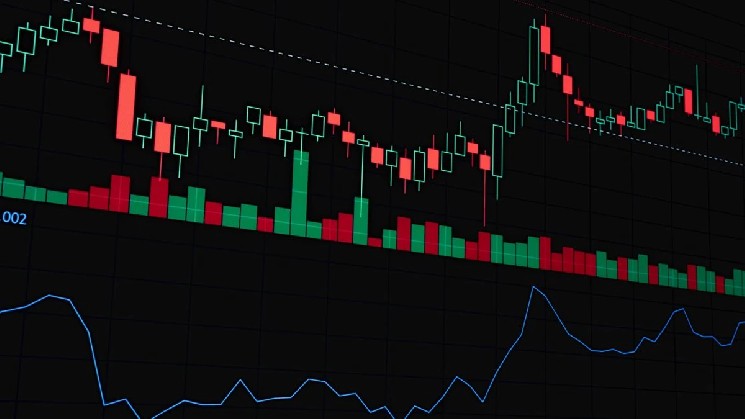
While the market’s attention may be focused on external voices, there is still a technical map being drawn behind the scenes. Traders are scanning the charts for support and resistance levels that could define the next move. These levels matter because they often represent where buyers or sellers have stepped in before. With volume absent, however, those levels become more speculative than usual. The market is effectively in a holding pattern, waiting to see whether Bitcoin can defend its current range or break out of it. If a known support level holds, it could inspire a wave of buying. If resistance breaks with meaningful participation, the quiet period might be remembered as the calm before a major rally. But the market is caught in a chicken-and-egg situation. There is no volume because traders lack conviction. And there is no conviction because traders see no volume. Something has to break the cycle. That something could be a regulatory headline, a macroeconomic shift, or a direct statement from Elon Musk or SpaceX about their Bitcoin holdings. Any of those events could prompt a sudden reassessment and force traders to act. At the same time, the broader conversation about cryptocurrency adoption continues to evolve. Governments are considering how to regulate digital assets. Financial institutions are offering new products. Companies are weighing whether to add Bitcoin to their treasury reserves. These are not short-term trading signals; they are structural shifts that will determine the market’s long-term path. In the meantime, the charts remain quiet, and traders are being forced to practice a skill that is often overlooked in crypto: patience. The levels are still being watched. But they matter even more when they are tested by unexpected news.
Bitcoin’s Bigger Question: Portfolios, Adoption, and Staying Power
Beyond the short-term price action, there is a deeper debate taking place about Bitcoin’s role in the modern investment portfolio. For years, Bitcoin was viewed as a niche asset, a speculative bet on the future of money. Today it is described as digital gold, an inflation hedge, a technology investment, and a high-risk growth asset, often all at once. These competing identities make it difficult for institutional investors to know exactly where Bitcoin fits. Should it be a 1% allocation in a diversified portfolio? A 5% hedge against currency devaluation? Or should it be avoided altogether? The ongoing discussion about Bitcoin’s role in portfolios may prompt meaningful shifts in trading strategies across the market. If a sovereign wealth fund announces a Bitcoin allocation, it would be a validation of long-term confidence. If a major pension fund adds Bitcoin to its portfolio, it would send a signal that the asset is maturing. If public companies like Tesla or SpaceX expand their holdings, it would suggest that corporate treasuries are becoming more comfortable with volatility. On the other hand, a wave of regulatory restrictions could pause the adoption story and push capital back into traditional assets. The market is currently watching all of these possibilities without committing to a single narrative. At the same time, adoption continues to move forward in quieter ways. New wallets are being created, new exchanges are launching, and new financial products are being built around digital assets. Bitcoin is becoming more embedded in the global financial system, and that integration brings both opportunity and scrutiny. Every new development—regulatory clarity, institutional entry, or technological improvement—shapes the path ahead. The current period of low volume may simply be a pause for reflection, a moment in which the market is digesting everything that has already happened and preparing for what comes next.
The Bottom Line: Risk, Volatility, and Patience
Before any investor decides to take action, one critical point must be made: cryptocurrency investments carry risks and volatility, and investors should always conduct their own research before committing capital. That is not standard boilerplate—it is the central reality of this market. Bitcoin can rise or fall by double digits in a single session, without warning. It can be influenced by tweets, by exchange outages, by fear-driven headlines, or by large holders moving the market. The current quiet stretch could easily be the calm before a violent expansion in either direction. Nobody knows with certainty which way the market will move, and anyone who claims otherwise is not being honest. The traders who are best positioned to handle the uncertainty are the ones who accept it. That means sizing positions carefully, setting limits, and never risking money that cannot afford to be lost. It also means staying skeptical of rumors, influencers, and unverified news. In a market that runs on emotion, discipline becomes a competitive advantage. For those who are patient and analytical, Bitcoin still offers a unique opportunity to participate in a new form of global finance. But for those who are unprepared for the volatility, the same market can be unforgiving. The lack of reported volume in the last 24 hours is not a reason to panic, and it is not a reason to rush into a trade. It is simply a reminder that the market is always waiting for the next headline, the next decision, the next signal. The best approach, in times like these, is to prepare for both possibilities. Define your thesis. Understand your risk tolerance. And remember that Bitcoin has never stayed quiet for long. The silence never lasts. The only question is what breaks it.