


Can a New U.N. Force Finally Break Haiti’s Gangs? Inside the Fight for Port-au-Prince
A Renewed International Push Faces the Nation’s Darkest Hour
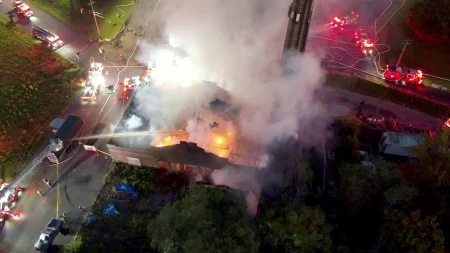
The roar of automatic weapons echoes through the hills of Port-au-Prince as a new international military force pushes deeper into neighborhoods that have been transformed into fortified gang strongholds. For the first time in years, the sound of returning gunfire is not coming from rival criminal factions battling for turf, but from disciplined soldiers and police officers under a United Nations-backed mandate, determined to reclaim the Haitian capital block by block. The mission, led by Kenyan police officers and supported by troops from several Caribbean and African nations, represents the most significant international intervention in Haiti since the devastating 2010 earthquake. But as the security forces advance through the narrow alleys of Cité Soleil and the sprawling slums of La Saline, a sobering question hangs over the operation: why should this attempt succeed when so many before it have failed?
A History of Broken Promises and Failed Interventions
To understand the gravity of the current crisis, one must look back at the long and troubled history of foreign involvement in Haiti, the world’s first Black republic and the second-oldest independent nation in the Western Hemisphere. Over the past three decades, the international community has launched no fewer than seven major military interventions, each one promising to restore order, disarm militias, and lay the groundwork for democratic governance. The most notable of these was the United Nations Stabilisation Mission in Haiti, known by its French acronym MINUSTAH, which operated from 2004 to 2017. Deployed in the wake of President Jean-Bertrand Aristide’s ouster, the mission at its peak fielded over 12,000 peacekeepers from countries including Brazil, Chile, and Uruguay. Despite its size and mandate, the mission failed to dismantle the armed groups that were already consolidating power in the country’s poorest neighborhoods. Worse still, MINUSTAH left behind a devastating legacy when peacekeepers from Nepal introduced cholera to Haiti, killing nearly 10,000 people and infecting over 800,000 others. The subsequent UN mission, MINUJUSTH, was even smaller and less equipped to handle the growing security vacuum. When it concluded in 2019, Haiti was left with no international security presence at all—a decision that would prove catastrophic as gangs filled the void with alarming speed and sophistication.
The Rise of a Deadly Gang Empire
Since the departure of international forces, the security situation in Haiti has deteriorated at a pace that has shocked even seasoned observers of the region. According to the United Nations Office on Drugs and Crime, gang-related violence has surged by over 500 percent since 2021, with an estimated 300,000 people displaced from their homes—more than half of them children. The capital, once a vibrant city of 2.8 million people, is now a patchwork of territories controlled by approximately 200 armed groups, the most powerful of which have formed strategic alliances that rival the strength of the Haitian National Police. Chief among these is the G9 Family and Allies, a coalition led by former police officer Jimmy Chérizier, better known as “Barbecue,” who has transformed himself from a rank-and-file officer into a revolutionary figure with significant influence over entire districts. His main rival, the G-Pep alliance, controls the northern sections of the city and has engaged in gruesome turf wars that have included mass shootings, kidnappings, and systematic sexual violence. The result is a humanitarian catastrophe of staggering proportions: hospitals shuttered, schools converted into shelters for the displaced, and food supplies cut off to nearly half of the capital’s residents. The de facto government, led by a transitional presidential council established after Prime Minister Ariel Henry resigned under pressure in March 2024, has been unable to project authority beyond a few secure enclaves, leaving the country’s governance in the hands of warlords who collect taxes, administer justice, and control access to basic services like water and electricity.
A Different Approach to a Familiar Problem
The new multinational force, formally known as the Multinational Security Support Mission, aims to learn from the mistakes of its predecessors. Unlike previous deployments that focused on static peacekeeping—manning checkpoints, patrolling during daylight hours, and retreating to fortified bases at night—this mission is designed for proactive combat operations against armed groups. The Kenyan contingent, which constitutes the bulk of the approximately 2,500-strong force, brings experience from counterinsurgency operations in Somalia, where Kenyan troops have fought Al-Shabaab militants for over a decade. That operational background is visible in the mission’s tactics: nighttime raids on suspected gang headquarters, aggressive patrolling in armored vehicles through previously no-go zones, and the establishment of forward operating bases deep inside contested territory. The force has also prioritized intelligence-sharing with the Haitian National Police, which has been overwhelmed and infiltrated by gang sympathizers. In the first weeks of deployment, the mission achieved notable successes, including the recapture of the main port and the reopening of the international airport, which had been closed for months due to gang control of surrounding areas. In a symbolic victory that resonated throughout the region, Kenyan forces managed to secure the National Palace after a firefight with members of the G9 alliance, marking the first time in over two years that the seat of government was under official control.
Skepticism, Challenges, and the Road Ahead
Yet despite these early gains, the mission faces formidable obstacles that have tempered optimism among Haitian civil society and international analysts alike. The first and most pressing challenge is the sheer scale of the task. With an estimated 5,000 to 7,000 heavily armed gang members spread across the capital, the multinational force is significantly outnumbered in a theater of operations that includes dense urban terrain, poorly mapped informal settlements, and a civilian population that is deeply wary of foreign soldiers. Memories of abuses committed by past interventions, including the cholera outbreak and numerous allegations of sexual misconduct, have created a trust deficit that the mission has struggled to bridge. This skepticism is compounded by the fact that the force’s funding remains precarious. Although the UN Security Council authorized the mission in October 2023, only a fraction of the $600 million pledged by member states has actually been delivered, forcing some contributing countries to withdraw or reduce their contingents. The United States, which has provided logistical support and intelligence-sharing, has been careful to avoid direct troop involvement, reflecting domestic political sensitivities and the bitter experience of the 1994 Operation Uphold Democracy, which saw American soldiers killed in Port-au-Prince. Even more troubling is the strategic ambiguity surrounding the mission’s endgame. Does the international community intend to defeat the gangs militarily—a goal that would require a vastly larger force and years of sustained operations—or is the objective to degrade their capabilities sufficiently to allow the Haitian National Police to take over? The answer to that question will determine whether this intervention becomes a genuine turning point or simply another chapter in Haiti’s long and painful saga of failed rescue attempts.
The People of Haiti Deserve More Than Promises
For the ordinary Haitians who have borne the brunt of the violence, the arrival of international forces has brought a mixture of hope and exhaustion. In the crowded refugee camps that dot the outskirts of the capital, families displaced by the fighting speak of a desire for peace that transcends political loyalties and historical grievances. They remember the promises of previous missions—the pledges of stability, prosperity, and democratic renewal that evaporated into corruption, mismanagement, and continued violence. Yet they also recognize that the alternative to international intervention is not a return to some imagined stability, but a continuation of the brutal status quo that has already claimed thousands of lives and forced hundreds of thousands to flee their homes. The humanitarian needs are acute: according to the World Food Programme, nearly half of Haiti’s population of 11.6 million is facing acute food insecurity, with over 1.5 million people one step away from famine. Children are being recruited into gangs at an alarming rate, some as young as eight years old, lured by the promise of regular meals and a sense of belonging that the state has failed to provide. The international community’s credibility is on the line in Haiti, not just in terms of security outcomes but in its basic capacity to respond to human suffering with effective, accountable, and sustainable action. As the guns fall silent in one captured neighborhood and then erupt in another, the world watches to see whether this mission will finally deliver the peace that Haiti has been denied for so long—or whether it will become yet another monument to good intentions gone wrong. The answer, as always, will be written in the streets of Port-au-Prince, where every morning brings a new test of whether the force can protect the fragile hope that has begun to take root. The stakes could not be higher, and the margin for error could not be thinner. But for the mothers who send their children to school in the morning and the shopkeepers who reopen their businesses after months of closure, the gamble is one worth taking—because the alternative is unthinkable.