

Paragraph 1
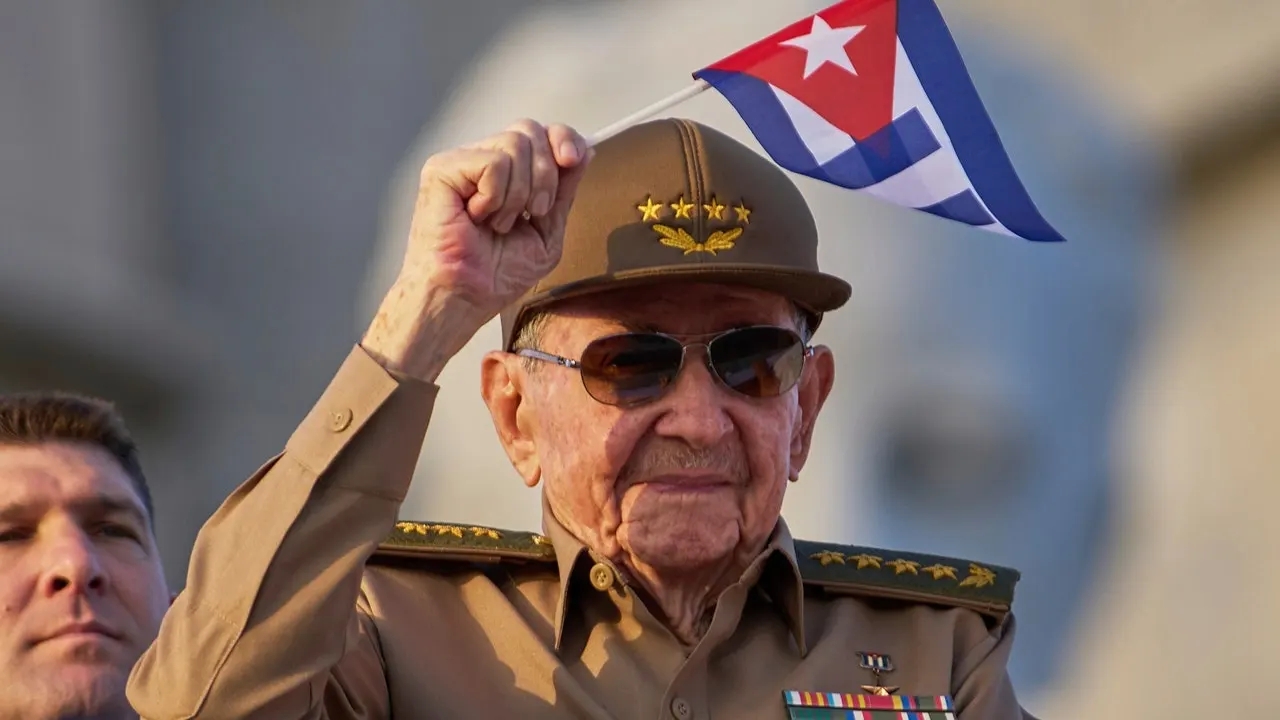
In a dramatic escalation of accountability efforts that have simmered for nearly three decades, the state of Florida has now issued a formal arrest warrant for Raúl Castro, the former Cuban leader, charging him with conspiracy to commit first-degree murder in connection with the infamous 1996 shootdown of Brothers to the Rescue aircraft. The warrant, obtained by Fox News Digital and issued in Miami-Dade County, carries no bond and directs law enforcement to arrest Castro immediately, citing a judge’s finding of probable cause that he conspired to kill the four unarmed civilian aviators aboard those planes. Florida Attorney General James Uthmeier, who reopened the state’s cold investigation upon taking office, is set to unveil the warrant alongside Governor Ron DeSantis at a Monday morning press conference, a moment that will surely resonate deeply in South Florida’s Cuban-American community. For decades, that community has carried the grief of the 1996 attack like a fresh wound, and this legal action represents a new front—state-level justice that bypasses the slow gears of federal diplomacy. It is not merely a piece of paper; it is a vindication of memory, a signal that the men who died have not been forgotten, and that even a 95-year-old former dictator, long retired from power, cannot escape the reach of American law if he dares to set foot on U.S. soil. The warrant’s no-bond stipulation underscores the gravity of the charges, treating Castro as an imminent flight risk and a man whose alleged crime warrants the most severe pre-trial detention. As the announcement looms, one can almost feel the collective breath of Miami’s exile community held in anticipation, hoping that this time, justice might actually land.
Paragraph 2
To understand the raw emotion behind this warrant, one must revisit the morning of February 24, 1996, when three unarmed civilian planes flown by Brothers to the Rescue were intercepted by Cuban MiG-29 fighters over international waters. Two of the aircraft were shot down, sending Carlos Costa, Pablo Morales, Mario de la Peña, and Armando Alejandre Jr. plunging into the sea, their bodies never fully recovered. They were not soldiers, not spies; they were humanitarian volunteers, men who had taken to the skies to search for Cuban rafters lost and drowning in the Florida Straits, their mission driven by compassion and a fervent hope for freedom on their island. In the years since, their names have become etched in the memory of a community that refuses to let their sacrifice fade. The families of the victims have waited patiently through endless appeals and diplomatic protests, watching as the Castro regime remained immune to justice, protected by the cold walls of sovereignty and the intricate dance of international politics. This new state warrant, however, cuts through those walls, invoking the power of Florida’s own criminal code to name Raúl Castro as a conspirator in their deaths. It is a deeply human gesture—a recognition that these men were not abstract statistics but beloved sons, husbands, and friends, their lives extinguished in a flash of fire and smoke over the ocean. The humanization of this legal action lies in the simple, devastating truth that four families have lived for 28 years without closure, without the ability to bury their loved ones, without watching anyone in Cuba face a courtroom. This warrant offers a sliver of that closure, a promise that the state of Florida stands with them.
Paragraph 3
The warrant itself is a meticulous tapestry of evidence, weaving together intercepted communications, eyewitness accounts, and historical records to paint a picture of a deliberate, cold-blooded conspiracy. According to investigators, the plan to shoot down Brothers to the Rescue aircraft and kill their occupants was not a rogue act but a calculated policy that traveled through the Castro regime’s chain of command, with the ultimate authority resting squarely on the shoulders of Raúl Castro and his brother, Fidel. The document quotes a recorded statement Raúl made months after the attack—a statement that is both chilling and revealing. In it, he casually recounts his orders to senior military leaders: “They have violated the airspace, the waters of the Republic. I made it clear that this had to be decentralized if we wanted it to do its job, and five generals were given the authority. I used to say: Try to shoot them down over our territory. But they would come into Havana and leave.” Then, with a chilling detachment, he adds, “Of course, with a missile shot like that, plane against plane, what comes down is a ball of fire, and it is going to fall on top of the city. So I said: Fine, shoot them down at sea when they show up, and those who have the authority are not to consult anyone.” These words, now part of a legal evidentiary record, strip away any pretense of self-defense or accidental engagement. They reveal a leader who considered human life expendable, who authorized lethal force with no oversight, and who calmly accepted the fiery deaths that would follow. The warrant’s language—that the deaths of Costa, Morales, de la Peña, and Alejandre were “the object of that conspiracy”—transforms political rhetoric into a prosecutor’s charge, a specific allegation that carries the weight of a state’s solemn judgment.
Paragraph 4
Brothers to the Rescue was more than just a humanitarian organization; it was a symbol of hope and defiance for the Cuban exile community. Founded in the early 1990s by pilot José Basulto, the group initially focused on searching for rafters fleeing Cuba, often spotting desperate souls clinging to makeshift rafts and guiding U.S. Coast Guard rescuers to them. But by the mid-1990s, the organization had also taken on a political mission, dropping pro-democracy leaflets over Cuban cities, urging citizens to resist the regime’s oppression. It was this latter activity that infuriated Havana, which viewed the flights as violations of its sovereignty. The Cuban government has consistently rejected the American prosecutions, insisting that Brothers to the Rescue repeatedly invaded Cuban airspace and that the shootdown was a defensive act. That narrative, however, stands in stark contrast to the international outrage that followed, including condemnation from the United Nations and the Clinton administration, which successfully pushed for sanctions against Cuba. The people of Miami, many of whom had fled Castro’s revolution, saw the attack as another chapter in a long history of brutality. Today, that sentiment is embodied in the legal strategy of Florida’s attorney general, who is determined to hold Castro accountable at the state level, circumventing the diplomatic gridlock that has stymied federal efforts. This case is not just about the four men lost; it is about a community’s collective trauma, a wound that reopens every time a new anniversary passes without justice. The state warrant acknowledges that trauma, giving it a legal voice and a path forward that feels tangible and personal.
Paragraph 5
The legal mechanics of this warrant are as significant as its headline-grabbing charge. Florida authorities are not merely issuing a symbolic document; they are actively seeking full extradition of Raúl Castro should he be apprehended outside the Sunshine State. The warrant authorizes law enforcement to pursue his return to Florida if he is arrested in another U.S. jurisdiction, meaning that any state trooper or federal agent who encounters him could act on this legal instrument. Moreover, the Attorney General’s Office of Statewide Prosecution will assume jurisdiction over the multi-circuit criminal conspiracy case, ensuring that the state’s resources are fully marshaled in this pursuit. This state action runs parallel to the federal case already pending against Castro, which was unsealed in 2021 and charged him with murder and other offenses related to the shootdown. That federal prosecution remains active, but it has been complicated by diplomatic considerations—Cuba’s lack of an extradition treaty with the U.S., and the delicate nature of international relations. The state warrant, by contrast, operates within Florida’s own criminal justice system, a system that recognizes the jurisdictional reach of a state to protect its citizens and pursue justice for crimes that impacted its territory. For the victims’ families, this means there are now two paths to accountability, two sets of courts that might one day hear the evidence against Raúl Castro. Even if he never sets foot in a Florida courtroom, the warrant serves as a permanent cloud over his legacy, a legal declaration that in the eyes of the state of Florida, he is a fugitive from justice.
Paragraph 6
Ultimately, this warrant is more than a legal procedure; it is a testament to the persistence of those who refuse to let history be rewritten. For 28 years, the Cuban-American community has grieved, protested, and lobbied, never allowing the memory of the four fallen pilots to fade. This action by Attorney General Uthmeier and Governor DeSantis signals that Florida’s leadership stands with that community, using every tool at its disposal to demand accountability from a regime that has long escaped it. The humanization of this story lies in the faces of the families—aging parents who have waited decades for a phone call to say there was justice, widows who have built entire lives around the absence of their husbands, children who grew up knowing their fathers as photographs and stories. Raúl Castro, now 95, may feel untouchable in his Havana home, but the reach of this warrant extends beyond geography. It says that the state of Florida remembers, that the state of Florida cares, and that the state of Florida will not rest until the men who died in the skies over the ocean are honored by a formal declaration of their murderer’s guilt. As the press conference unfolds on Monday, the world will witness not just a legal announcement but a moment of collective catharsis for a community that has waited far too long. It is a reminder that justice, though slow and often imperfect, can still find its way through the valleys of politics and power to touch the hearts of ordinary people who have suffered extraordinary loss. And for the families of Carlos Costa, Pablo Morales, Mario de la Peña, and Armando Alejandre Jr., that is no small thing—it is the first real glimmer of hope they have felt in nearly three decades.