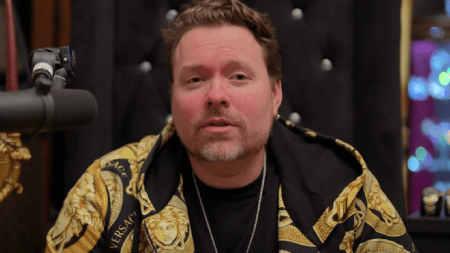



Patrick Witt’s Exit Leaves White House Digital Assets Council at a Critical Crossroads
Patrick Witt, the executive director of the White House’s President’s Council of Advisors for Digital Assets, is stepping down from his government post and returning to the private sector, a departure that has immediately raised fresh questions about the future of cryptocurrency policy inside the West Wing. Witt, who served as one of the most important behind-the-scenes figures in the administration’s efforts to shape digital asset regulation, was publicly identified last week as leaving his role, and no successor has been named. That silence is notable. The White House, at least for now, does not appear to have a publicly designated crypto head, leaving a conspicuous hole in the administration’s policy machinery at a moment when digital assets have moved from the margins to the mainstream of U.S. political debate. For an industry that has spent the better part of a decade asking Washington for clarity, the timing could hardly be more sensitive. The executive branch is still deeply engaged in rulemaking around digital assets, federal agencies are still wrestling with questions about custody, market structure, and the government’s own crypto holdings, and the entire policy landscape is bracing for a new Congress in just a matter of months. If the administration’s digital asset agenda was ever a one-person operation, it no longer is—but in the absence of a clearly designated coordinator, the risk of drift becomes considerably more acute.
Witt’s role was never the kind of position that generates headlines, but it was the kind that matters in Washington. As executive director of the President’s Council of Advisors for Digital Assets, he served as the connective tissue between an ambitious executive agenda and the sprawling, often disjointed machinery of federal policymaking. The council itself was created with considerable fanfare, designed as a mechanism through which leading voices in the digital asset sector could directly advise the president on the regulatory, economic, and national security implications of emerging financial technologies. Its members included a broad cross-section of the crypto ecosystem—founders, executives, investors, legal minds, and policy veterans—many of whom had spent years clamoring for a seat at the table where federal rules are actually written. Witt was the person responsible for making sure that table remained functional. He helped translate broad presidential priorities into concrete policy discussions, coordinated conversations among agencies, and worked to ensure that the industry’s perspective was not an afterthought but a starting point. His exit, therefore, is more than a personnel change. It signals a potential transition in how the White House approaches digital assets—or, at the very least, it exposes how much of the administration’s crypto strategy depended on one individual’s operational skills rather than institutional architecture that could withstand the loss of any single player.
The vacancy comes at an unusually awkward point in the political calendar. With midterm elections looming next month, most of Washington’s attention has shifted to campaigns, polling, and the balance of power on Capitol Hill. Yet the executive branch does not stop moving. Regulatory agencies continue to propose rules, interpretive guidance, and enforcement actions, regardless of whether voters are paying attention. The digital asset sector, meanwhile, is in a moment of enormous evolution. Questions that once seemed theoretical—whether digital commodities should be regulated by the Commodity Futures Trading Commission, whether stablecoin issuers should face federal standards, whether banks can hold crypto assets on their balance sheets, how the government should manage the digital assets it already owns—are now live issues with real economic consequences. Coordinating answers to those questions usually requires someone in the White House who can consolidate competing interests and provide cohesive direction. The fact that no one has been publicly named to replace Witt means that, for the immediate future, those responsibilities will be distributed across the interagency process, or perhaps left to individual departments to manage on their own. That may work in the short term, but it is not how coherent policy is made, and it is certainly not how the crypto industry expects the world’s most consequential regulator to behave.
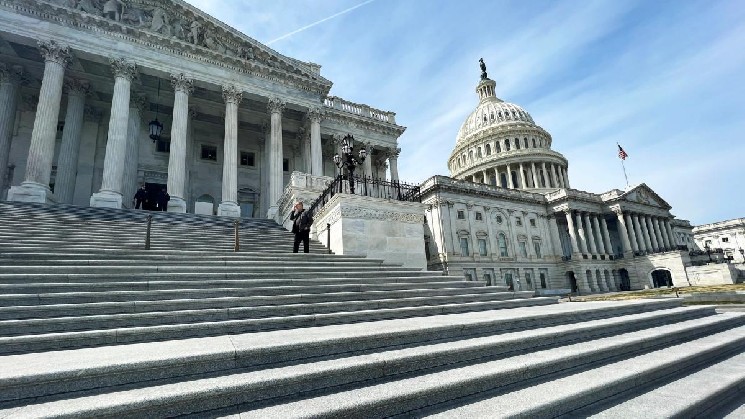
The stakes will only increase after the new Congress is sworn in. Lawmakers on both sides of the aisle have already started sketching out ambitious frameworks for digital assets, including comprehensive stablecoin legislation and market structure bills that would determine which federal agency has primary authority over cryptocurrency markets. Those efforts faced years of setbacks, but there is growing consensus that the 118th or 119th Congress—just as importantly, the political environment surrounding it—will make another attempt. If and when that happens, the White House will need a point person who can negotiate with committee chairmen, respond to concerns from regulators, and articulate the administration’s position in real time. A vacancy in that role does not simply mean a lack of representation at the table; it means the administration enters those conversations without a clearly defined voice. That is a considerable disadvantage, especially when the president has made clear that digital assets are a signature policy priority. A White House liaison is not optional in a legislative environment this complex. They are the person who ensures that executive branch views actually make it into drafting rooms, hearing rooms, and ultimately into statutory language. Without someone in that role, the risk is not just policy drift but policy confusion—where agencies, senators, and industry stakeholders all interpret the administration’s intent differently.
What happens next is still unclear. The White House could choose to promote from within, tapping someone already familiar with the council’s work and the administration’s internal dynamics. It could also reach outside government, bringing in an experienced crypto industry veteran or a seasoned regulatory attorney who can step into the role with a fresh perspective but a steep learning curve. There is no shortage of interested candidates; a position with this kind of direct access to the White House policy process is highly coveted. But naming a successor is rarely just a question of identifying the right résumé. In an administration that has been particularly attuned to the political importance of digital assets, the choice of a new crypto adviser will be seen as a signal about the future direction of U.S. crypto policy. It will also be scrutinized by an industry that has learned to parse every personnel decision in Washington for meaning. For the council itself, the immediate challenge is operational. An executive director is, in many ways, the person who keeps the machinery running—arranging meetings, managing competing schedules, distilling complex questions into actionable items, and pushing members toward consensus. Without one, the council risks becoming a largely symbolic body: an impressive list of names that meets occasionally but no longer carries the same weight in federal policymaking. That would be a far cry from the ambitious agenda the administration initially outlined.
In the end, Witt’s departure is not a scandal, and it may ultimately amount to little more than a brief transition period in a long and complicated policymaking story. People leave government all the time, especially when they have other opportunities waiting in the private sector. But in Washington, personnel is policy, and the vacancy at the heart of the White House digital asset effort speaks volumes about the current state of institutional energy around cryptocurrency. The industry has spent years asking for a serious partner in government—someone who not only understands the technology but also has the authority to make things happen across the vast federal apparatus. For a time, Witt was part of that answer. Now, with the chair empty and no name announced, the question is whether the administration can maintain its momentum. The crypto industry will be watching closely, as will federal regulators, state policymakers, and foreign governments trying to understand where the United States actually stands. Every week that passes without a successor increases the cost of drift. Whoever eventually fills this role will inherit a complicated agenda and high expectations. But the longer the White House waits, the more it looks like digital asset policy is no longer a top priority. That perception, once established, is hard to reverse.