


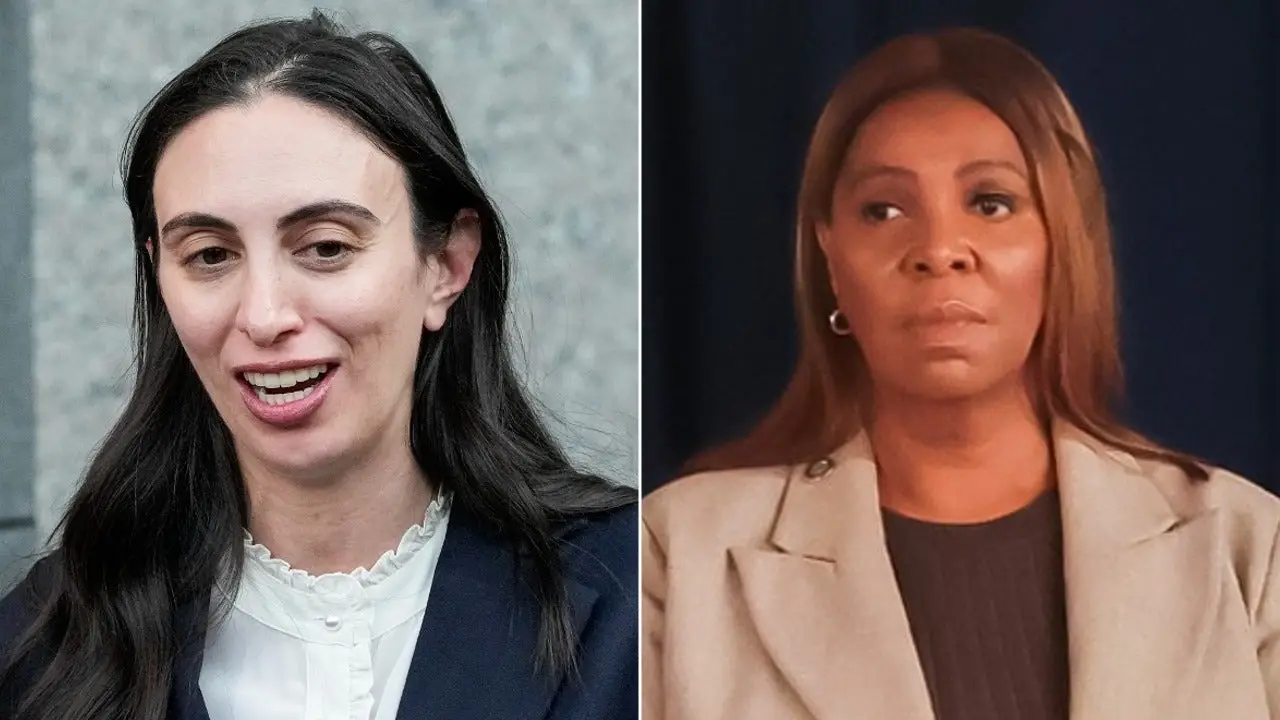
The escalating legal battle surrounding the sexual assault allegations against seven former Cornell University fraternity members has taken a dramatic and contentious turn, with defense attorneys now launching a direct attack on the impartiality of New York’s top law enforcement official. At the heart of this new controversy is a formal motion filed by Teny Geragos, a prominent attorney representing one of the accused men, demanding that New York Attorney General Letitia James be immediately removed from the criminal investigation. The motion, submitted Thursday in Tompkins County court, alleges that James has demonstrated an unacceptable level of bias that fundamentally undermines the integrity of the entire prosecution. The crux of the argument rests on a social media post James made on September 28th—the very same day that local prosecutor Matthew Van Houten announced his decision to reopen the case. In that post, James wrote a message that the defense now characterizes not as a simple expression of sympathy, but as a prejudicial declaration of guilt that has irreparably tainted the proceedings.
Geragos, who is the daughter of the well-known criminal defense attorney Mark Geragos, has built her legal argument around the premise that James crossed a critical ethical and legal line with her public statements. The offending post read: “What this young woman has been forced to endure is horrific and unacceptable. I’m holding her in my heart and in my prayers. To her, and to all survivors: you’re not alone. We stand with you.” While the statement may appear on its surface to be a gesture of solidarity with the accuser, Geragos argues that it reveals a deeper and more troubling reality: that James had already formed a conclusion about the guilt of the seven men before she had examined a single piece of evidence. The motion forcefully asserts that James’ words demonstrate she believed the men were responsible for the alleged crimes “despite not having examined a shred of evidence” at that point in time. This, Geragos contends, is a fundamental violation of the presumption of innocence that stands as a cornerstone of the American legal system. “The public cannot, and should not, have any confidence in the investigation or charging decisions of someone who has clearly prejudged the guilt of individuals who the law presumes are innocent,” the filing stated, before delivering its ultimate conclusion: “The AG should be removed.”
The defense’s motion goes beyond simply attacking James’ social media activity, however, and extends its criticism to the political process that led to her appointment as special prosecutor. Geragos has accused New York Governor Kathy Hochul of intentionally selecting James for this role precisely because of her “prejudicial public statements” about the case, suggesting that the governor’s decision was driven by a desire to ensure a specific outcome rather than a commitment to impartial justice. This line of argument paints a picture of a coordinated effort by state leadership to prioritize political considerations over the fair administration of law. When confronted with questions about James’ social media post at an October 2nd press conference, Hochul offered a robust defense of the attorney general, stating, “I will answer that. I have every confidence in our Attorney General to do what she has always done: look at the facts, examine the record and draw the proper conclusions. That’s exactly what’s going to happen in this case.” The governor’s response, however, has done little to quell the concerns raised by the defense, who view her words as further confirmation that the state’s highest offices have already made up their minds about the outcome of the investigation. The attorney general’s office itself has remained notably silent, declining to respond to requests for comment on the motion.
This latest legal maneuver is not occurring in a vacuum, as it follows closely on the heels of a nearly identical request filed by another one of the accused men in Albany State Supreme Court just days earlier. That separate motion also seeks James’s removal, citing the same concerns about alleged bias and prejudgment. The coordinated nature of these legal challenges suggests a strategic decision by the defense team to attack the prosecution’s legitimacy from multiple angles simultaneously, creating a multi-front war designed to discredit the investigation before it can even formally begin producing results. The timing of these motions is particularly significant given the charged political atmosphere surrounding the case, which has already attracted national attention and drawn commentary from high-profile politicians, including Congresswoman Alexandria Ocasio-Cortez. The case has become a lightning rod for broader debates about how sexual assault allegations are handled on college campuses, the rights of the accused, and the role of elected officials in high-profile prosecutions. The involvement of two separate courts in two different jurisdictions (Tompkins County and Albany) highlights the complexity of the legal proceedings and the determination of the defense to pursue every available avenue to challenge the current trajectory of the case.
To fully understand the gravity of these accusationshare, one must examine the underlying facts of the case that has generated such passionate responses. The young woman at the center of the investigation, who has been identified in legal filings only as “Jane Doe,” was a Cornell University student when she filed a civil lawsuit in September accusing seven former members of the Chi Phi fraternity of drugging and raping her. According to the detailed allegations contained in her civil complaint, the incident occurred on the night of October 19, 2024, and continued into the early morning hours of the following day. The lawsuit paints a harrowing picture of the events, claiming that Doe arrived at the fraternity house in a state of intoxication and was subsequently pressured by the men to consume ketamine and other substances. The complaint alleges that these drugs were used to render her incapacitated and unable to consent to sexual activity, making the encounter a case of rape rather than consensual sex. The seven men named in the lawsuit have uniformly denied any wrongdoing, though their defenses take slightly different forms. Some maintain that the sexual activity in question was entirely consensual, while others go further and deny that they participated in any sexual acts with Doe at all. This fundamental disagreement about the nature of what occurred that night lies at the very heart of the legal dispute.
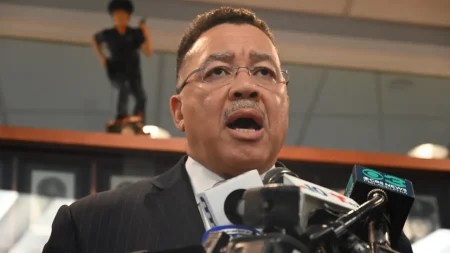
The timeline of events surrounding this case is complex and has been the subject of intense scrutiny. Doe first reported her allegations of sexual assault to campus police on November 8, 2024, and the fraternity was suspended on that very same day, indicating that the university treated the report with immediate seriousness. However, the path to criminal prosecution has been far from straightforward. Tompkins County District Attorney Matthew Van Houten initially reviewed the case and made the controversial decision to decline to pursue criminal charges. Van Houten has since explained his reasoning, stating that Doe’s November 2024 sworn statement did not allege that she was drugged against her will or gang-raped. Instead, according to his characterization, her own description of events portrayed her participation in both drug use and sexual conduct as “voluntary, conscious, and consensual.” This discrepancy between the initial account and the later civil lawsuit allegations raises complex questions about what exactly happened, how Doe’s recollection of events may have evolved, and whether the initial investigation was conducted thoroughly enough. The decision to reopen the case, apparently due to new evidence or information that emerged after the initial review, has only added another layer of controversy to an already deeply polarized situation.
As this legal drama continues to unfold, the broader implications for the American justice system hang in the balance. The defense’s core argument—that a prosecutor must come to the evidence with an open mind and a presumption of the defendant’s innocence—touches on fundamental principles that have long been seen as essential to fair legal proceedings. Yet the realities of high-profile cases involving sexual assault allegations on college campuses present unique challenges to these traditional ideals. Public opinion, political pressure, and the intense media scrutiny that accompanies such cases can create enormous pressure on law enforcement officials to take decisive action, even when the evidence may be ambiguous or incomplete. The case has become a stark illustration of the tension between the imperative to support and believe survivors of sexual assault and the equally important obligation to protect the rights of the accused. As the courts now prepare to consider the motions to remove Attorney General James, they must grapple with questions that extend far beyond the specific facts of this case. Can a prosecutor’s public expressions of sympathy for an alleged victim ever be considered so prejudicial as to require their removal? What role should politics play in the selection of special prosecutors? And how can the justice system maintain public confidence when it becomes entangled in such emotionally charged and high-profile disputes? These are the questions that will ultimately determine not just the fate of this particular case, but the precedents it establishes for how similar cases will be handled in the future. For the young woman at the center of the storm, for the seven men whose reputations and futures hang in the balance, and for a public deeply divided over issues of sexual violence and due process, the stakes could not possibly be higher.