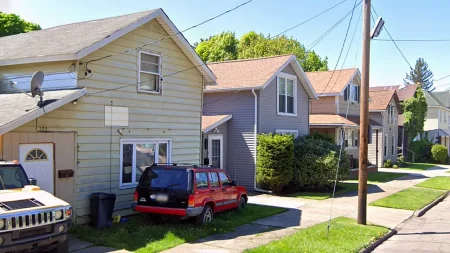


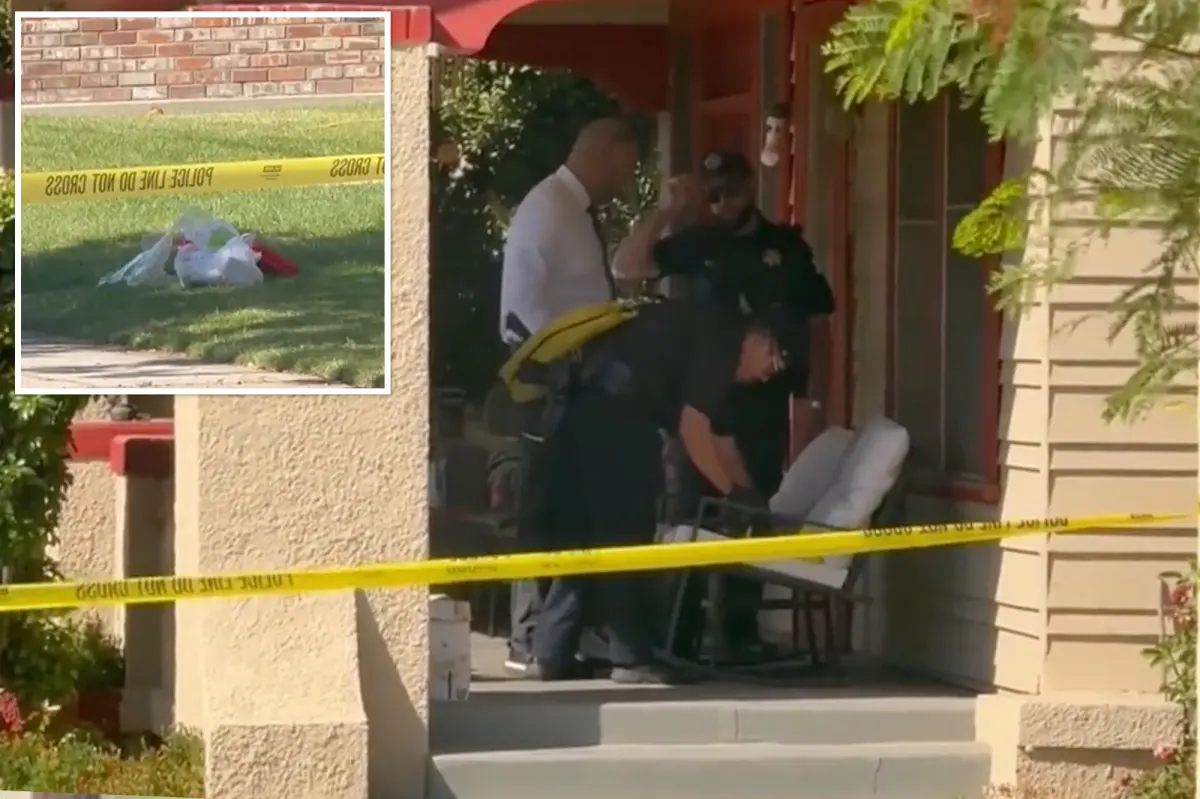
It was just after three in the morning in a quiet residential corner of Fresno, near East Dudley and North Broadway Street, when a woman pulled up to her home and saw something that did not belong. At first, it might have been a shadow, a pile of clothes, or a large animal stretched across the lawn. But as she got closer, she realized it was a man. He was lying there, completely motionless, asleep in the damp grass in the middle of the night. It is hard to know exactly what went through her mind in that moment. There is the initial shock, then the quick calculation: Is he hurt? Is he drunk? Is he dangerous? She did not recognize him. He was not a neighbor. He was a stranger, and he had made himself comfortable on private property, in the dark, while families on the street were asleep in their beds. Instead of confronting him alone, she did what many of us would do: she went inside and woke her 72-year-old father. The older man came outside, perhaps in pajamas, perhaps with a flashlight, perhaps already feeling the weight of having to protect his home at an age when a simple confrontation can be physically costly. He asked the man to leave. It was a reasonable, patient request. But according to police, the man did not get up, apologize, and walk away. Instead, he responded with hostility. That single decision—to refuse to leave and to turn on the people who had simply asked him to go—transformed a bizarre inconvenience into a violent nightmare.
The details that followed are the kind that make a neighborhood feel less safe in an instant. Police determined that the man, later identified as 32-year-old David Gonzalez of Texas, was allegedly intoxicated. When the 72-year-old father asked him to leave, Gonzalez allegedly resisted. The confrontation escalated quickly, and in the chaos, Gonzalez allegedly forced the elderly man to the ground. Imagine watching your aging father, someone who has lived long enough to see his children grow up, being knocked down by a stranger on the front lawn. The daughter, seeing her father in danger, stepped in. She tried to intervene, to pull the man away, to protect her dad. According to police, Gonzalez then also attacked her. At that point, this was no longer a matter of an unwanted guest. It was an assault happening outside a family home in the middle of the night. The father, who had been thrown to the ground, had to make a split-second decision. He was an elderly man, likely at a physical disadvantage. He did not know if the attacker had a weapon. He did not know if the man would stop after hurting him and his daughter, or if he would try to follow them inside. What he did know was that he had a firearm, legally owned, and that his family was in immediate danger. He pulled the gun and shot Gonzalez in the stomach. The gunshot ended the attack, but it also filled the night with a terrible finality. The wounded man was still alive, but the threat was over. Then, in an almost surreal twist, the woman’s boyfriend arrived at the scene. He was an off-duty police officer. He took control, handcuffed Gonzalez, and waited for emergency responders. Police found Gonzalez detained, wounded, and alive when they arrived.
There is something deeply unsettling about the image of an armed federal agent handcuffed on a stranger’s lawn, bleeding from a gunshot wound, after a night that should have ended with a quiet drive home. Gonzalez was not just any stranger. He was an off-duty agent with U.S. Immigration and Customs Enforcement, or ICE, according to the agency. He was 32 years old, from Texas, and he was alone. Why he ended up passed out on that particular lawn in Fresno remains unclear. Maybe he had been out drinking. Maybe he lost his way. Maybe he thought he was somewhere else. But whatever led him there, the outcome was a violent confrontation that nearly cost him his life and nearly cost a 72-year-old father his freedom. The father was not charged. Police said he legally owned the firearm and was defending himself and his daughter. Gonzalez, meanwhile, was taken to a hospital for treatment and is expected to be booked into the Fresno County jail once he is released. He has been charged with felony vandalism and battery. The vandalism charge suggests his behavior may have included damage to property, not just an unwanted nap on the grass. But the deeper problem remains: an off-duty federal agent, allegedly intoxicated, ended up in a residential neighborhood, attacked two residents, and forced an elderly man to shoot him in self-defense. It is a situation that would be alarming no matter who the man was. But the fact that he worked for ICE adds another layer of tension, especially in Fresno, the largest city in California’s Central Valley, a place with a significant immigrant community and a long history of complicated feelings about federal law enforcement.
ICE’s response to the incident was careful and brief. The agency told YourCentralValley.com that it was “referring inquiries regarding this incident to the Fresno Police Department.” Officials also noted that Gonzalez was off-duty and alone at the time. That statement, while factual, did little to answer the questions that residents were asking. What was an ICE agent from Texas doing in Fresno? Why was he so intoxicated that he passed out on someone’s lawn? Was he carrying his service weapon at the time? If so, what would have happened if he had reached for it during the confrontation? These are not just idle questions. They speak to a broader concern about the combination of authority, alcohol, and firearms. When someone is trained and empowered to carry a gun as part of their job, the public expects a certain level of responsibility. An off-duty agent who drinks to the point of unconsciousness and then attacks a 72-year-old man and his daughter is not living up to that standard. The fact that the father was not charged is reassuring, but it does not erase the terror of that night. For the family, the memory of seeing a stranger on their lawn, watching him fight back, and hearing the gunshot will not fade quickly. For the community, the incident is a reminder that danger can arrive in unexpected forms, sometimes in uniform, sometimes in civilian clothes, sometimes lying in the grass like a shadow.
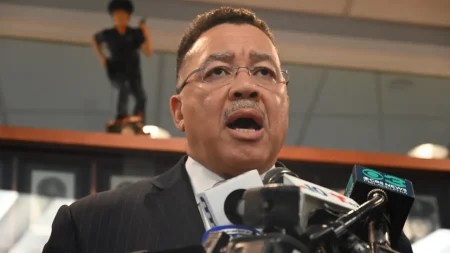
The reaction from local leaders and residents captured the anger and frustration that rippled through Fresno after the news broke. Fresno City Councilmember Miguel Arias did not hold back. “This is an example of an innocent life being put at risk because you have irresponsible adults with guns and intoxicated,” he said. “The fact that they are drinking and getting drunk in the neighborhoods in which they are terrorizing is just so stupid.” His words are blunt, but they reflect a real sense of injustice. A family was forced to defend themselves against a man who should have known better. An elderly father had to use a firearm to protect his daughter and himself. And all of it happened because someone with a badge made a series of reckless decisions. Another local resident put it even more directly: “I’m more worried about the fact that we have federal agents that are getting insanely drunk and then passing out on random citizens’ lawns and then being woken up by them and trying to attack them.” That concern is not limited to one neighborhood. It speaks to a deeper anxiety about power and accountability. When federal agents are involved, people often worry that the system will protect them, that questions will be quietly dropped, that the rules that apply to ordinary citizens will not apply to them. In this case, at least, Gonzalez was charged. He will face consequences. But the emotional impact on the family and the community cannot be resolved by a criminal charge alone. People want to feel safe in their own homes. They want to believe that a stranger on the lawn is just a lost traveler, not a threat. They want to trust that those who carry guns and badges will act with restraint, even when they are off duty and even when they have been drinking.
In the end, the legal outcome may be straightforward, but the human story is not. The 72-year-old father is not facing charges. He legally owned the firearm, and his actions appear to fall within the bounds of self-defense. That means he will not have to fight for his freedom, but he will still have to live with what happened. He will walk across that lawn knowing that he shot a man there. He will remember the sound of the gunshot, the sight of blood, the moment when his daughter was in danger. The woman who came home to find a stranger on her lawn will likely think twice every time she pulls into the driveway at night. Her boyfriend, the off-duty cop, will remember the strange duty of handcuffing a fellow law enforcement officer after a shooting. And David Gonzalez, the off-duty ICE agent from Texas, will recover from his wound only to face a jail cell, charges of vandalism and battery, and a reputation that will follow him for the rest of his life. The California Post reached out to ICE and the Department of Homeland Security for comment, but the agency’s response made clear that the police investigation is the priority. That is appropriate. But the broader questions remain. What does it mean for a community when the people entrusted with enforcing the law become the source of danger? What does it mean when a family’s safety depends on a legally owned gun fired by a 72-year-old man in his own front yard? There are no easy answers. What is clear is that this incident could have ended much worse. It could have ended with a dead federal agent, with a dead father, with a dead daughter, or with a standoff that turned an ordinary street into a crime scene. Instead, the night ended with a wounded man in handcuffs and a family left to process an experience no one should have to endure. The grass will grow back. The police tape will come down. The headlines will fade. But for the people who lived through that early morning, the memory will remain, a reminder that safety is never guaranteed, that strangers can be dangerous, and that sometimes the only thing standing between a family and disaster is the courage—and the firearm—of an elderly father who refused to let anyone hurt his child.