


1. A Quiet Friday Shattered by Unspeakable Violence
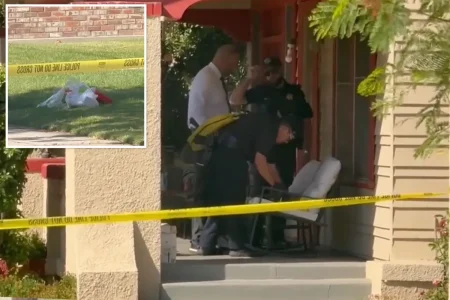
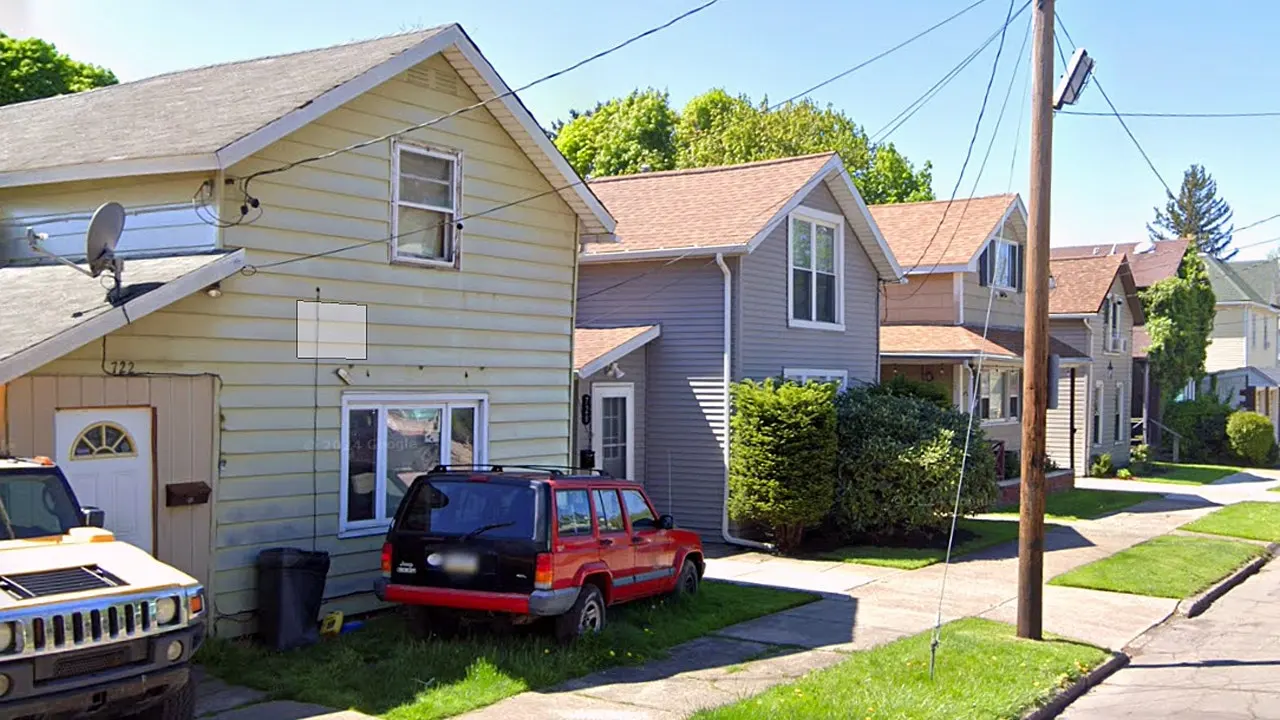
It was just before five o’clock on a Friday evening in Erie, Pennsylvania, when the ordinary rhythm of a neighborhood gave way to terror. Witnesses later told police they saw a person firing a weapon in the open air before disappearing into a nearby home, turning an otherwise unremarkable residential street into the backdrop for one of the most devastating tragedies the city has seen in decades. By the time the sun had fully set, authorities confirmed that multiple people were dead, including the suspected gunman, who was later found inside the residence with a self-inflicted gunshot wound. The initial reports trickled out with the cold, clinical language of law enforcement—”multiple fatalities,” “active scene,” “no ongoing threat”—but those words could not contain the raw human sorrow that would soon wash over the community. Erie Police Chief Rick Lorah, a man who has spent nearly three decades in law enforcement, stood before reporters and did not hide his anguish. He described the scene as the worst he had encountered in his entire career, a statement that carried the weight of a lifetime of witnessing humanity’s darkest moments. “I want to be candid with our community,” he said, his voice reportedly heavy with emotion. “This is one of the most difficult and heartbreaking scenes our officers and investigators have ever encountered. The loss of life is devastating, and the circumstances we are working through are deeply disturbing.” Those words would echo across the city as residents tried to make sense of the inexplicable, their Friday night plans replaced by a dawning horror that something unspeakable had happened just down the street.
2. The Human Cost Behind the Headlines
Behind every number in a breaking news alert is a person with a name, a story, a family, and a future that was abruptly stolen. While authorities were initially cautious in confirming the exact number of victims, they did confirm that at least two women were among those killed. The phrase “loss of life” can sometimes feel abstract in a news article, but for the families and friends of the victims, this was a living nightmare. A mother, a sister, a daughter, a friend—someone’s whole world has been torn apart in an instant. The city of Erie, a close-knit community on the shores of Lake Erie, is not unaccustomed to hardship, but this kind of targeted violence is a shock to the collective psyche. As news spread, neighbors gathered in clusters, speaking in hushed tones, some crying, others staring blankly at the police tape that now cordoned off an entire stretch of homes. The victims were not just statistics in a growing national crisis; they were people who had been going about their lives, perhaps making dinner, watching television, or planning for the weekend, when violence found them. The grief is not just in the homes of the victims, but in the hearts of first responders who will carry the images of what they saw inside that house for the rest of their lives. The community has been left to grapple with a painful question that has no easy answer: How could something this horrific happen here, in this neighborhood, to these people? And as investigators worked through the night, the families of the victims were left in agonizing suspense, waiting for official word, hoping against hope that their loved ones were not among the dead.
3. The Weight on Law Enforcement and the Grim Task at Hand
For the officers and SWAT teams who responded to the scene, this was not just another call. They arrived to find a chaotic, fluid situation, with witnesses reporting a gunman entering a home after firing a weapon. The Erie SWAT team, along with numerous police officers, surrounded the residence, creating a perimeter that would keep the public safe while they prepared to enter. They had to operate with the utmost caution, not knowing what awaited them inside, not knowing if the shooter was still actively engaged in violence, and not knowing if there were more victims in need of rescue. Eventually, they obtained a warrant and breached the property, and what they found inside was something Chief Lorah described as a “horrific scene.” There was a large loss of life both inside and outside the residence, he said, but he would not yet confirm the exact number of victims. For a chief with nearly thirty years of experience, the sight was so disturbing that it reset his entire scale of tragedy. It is one thing to prepare for the worst as a police officer; it is quite another to actually encounter it, to walk through a door into a space that should have been filled with the warmth of everyday life and find only devastation. The investigators on the scene were not just doing a job; they were processing the physical remnants of a human catastrophe, cataloging evidence, photographing the scene, and trying to piece together the final moments of multiple lives. The psychological toll on these men and women is immense, and while they remain professional, the crack in their voices when they speak to the media betrays the human heart beating beneath the badge.
4. An Investigation in Its Earliest, Most Painful Stages
As the night wore on, the focus shifted from emergency response to meticulous investigation. The Erie Police Department’s Criminal Investigations Division took charge of the case, working alongside other agencies to determine exactly what happened, why it happened, and whether anyone else was involved. Witnesses reportedly told police they saw the shooter run into a nearby home, a detail that helped guide officers to the right location. The discovery of the gunman’s body, dead from a self-inflicted gunshot wound, closed one chapter of the tragedy but opened another—the search for motive. What drives a person to such an act? Was this a domestic dispute that spiraled into murder, a planned attack, or an act of sudden, inexplicable rage? These are the questions investigators must answer, but the answers may be slow in coming. The crime scene itself is a complex puzzle, with evidence scattered both inside and outside the residence. Autopsies will need to be performed, forensic analysis completed, and witness statements corroborated. Chief Lorah was expected to provide an update on Saturday morning, but for now, the details are scarce, and the official silence is filled with the restless energy of a community desperate for answers. The city of Erie released a brief statement acknowledging the “multiple deaths” and offering reassurance that the situation had been contained, but the emotional work of understanding the tragedy was only just beginning. Every development will be scrutinized, every piece of information parsed, as the public seeks to make sense of an event that defies rational explanation.
5. Official Words, Community Grief, and the Long Road to Healing
In the immediate aftermath of such violence, official statements often serve as a lifeline for a shaken public, a way to say what cannot be said in person. The city of Erie’s statement was brief but heartfelt: “We understand that this news brings deep shock and sorrow to our residents, and we want to assure the public that the situation has been contained. Our thoughts are with the victims, their loved ones, and everyone impacted by tonight’s tragedy.” These are the words of a city in mourning, a government trying to provide stability in the midst of chaos. But behind those formal declarations are real people—mayors, council members, police officers—who are just as shocked as everyone else. They will attend vigils, offer words of comfort, and try to lead a community through the grieving process. But healing is not a straight line. It is a long, winding road filled with anger, sadness, confusion, and eventually, a fragile acceptance. The families of the victims will need support for months and years to come, not just in the immediate aftermath. The witnesses who saw the gunman, the neighbors who heard the shots, the officers who entered that home—all of them will need care as they process what they experienced. Grief counselors will likely be brought in, and community leaders will call for unity, but the memory of this night will linger. The city of Erie is not just dealing with the loss of life; it is dealing with the loss of innocence, the realization that even a quiet residential street can become a scene of unimaginable tragedy without warning.
6. A Community Resolved to Remember and Move Forward Together
As the sun rises over Erie on Saturday morning, the yellow police tape will still be up, the investigators will still be at work, and the reality of what happened will settle in like a heavy fog. There will be questions that may never be fully answered, and there will be pain that will not easily fade. But there will also be community. In the coming days, there will be candlelight vigils, shared meals for the grieving families, and countless conversations between neighbors who once barely knew each other but are now bound together by a shared tragedy. The loss of life is devastating, as Chief Lorah said, and there is no way to soften that truth. But in the human response to horror, there is also an opportunity for profound connection. The victims will be remembered not just for how they died, but for how they lived—the laughter they brought, the love they gave, the simple moments that made them irreplaceable. The gunman’s story is a painful one, a reminder of the dark impulses that can reside in a human heart, but the community’s story is one of resilience. As the investigation continues and more details emerge, the people of Erie will hold onto one another, refusing to let this tragedy define them. They will demand justice, not out of anger, but out of a deep desire to honor those who were lost. And while the road ahead is long, and the scars will remain, the community has already shown its strength by simply coming together in the face of the unthinkable. For now, there is only the quiet work of mourning, the slow process of healing, and the unwavering commitment to never forget the lives that were lost on a Friday night in Pennsylvania.