


Paragraph 1: The Unbearable Weight of a Father’s Grief
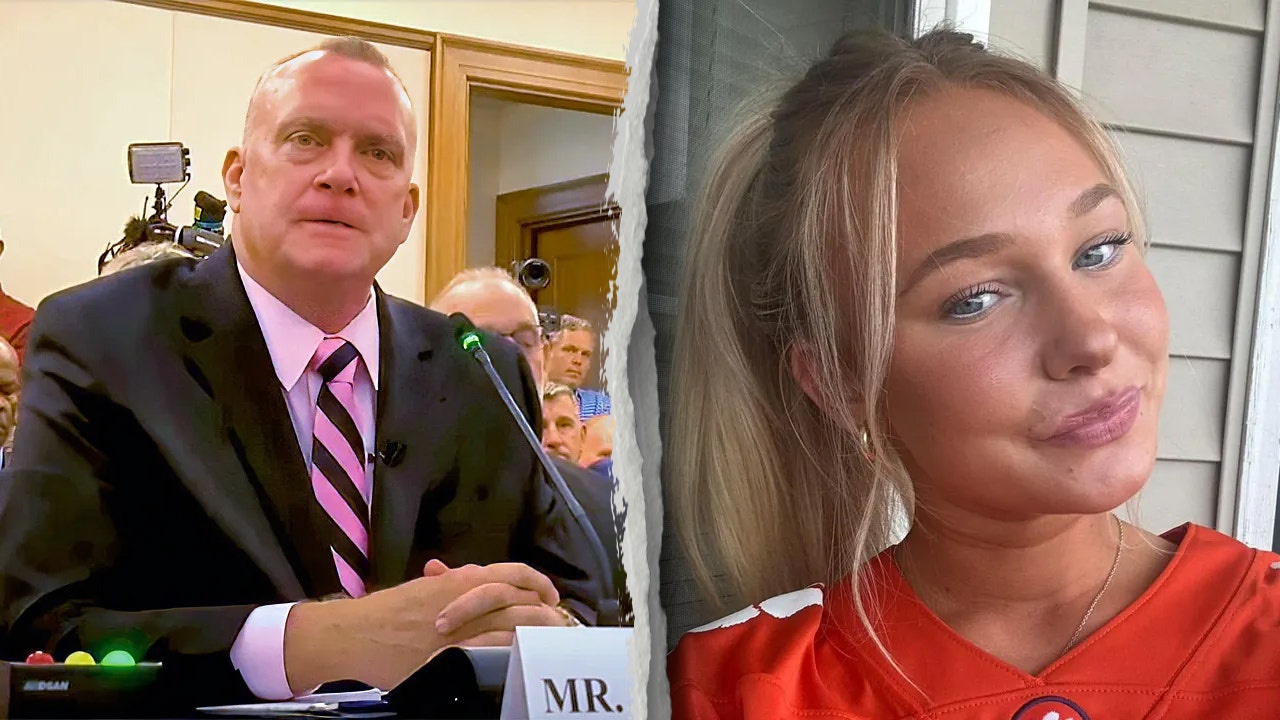
In the quiet, devastating aftermath of a home invasion that stole his daughter’s future, Stephen Federico has transformed his grief into a relentless crusade. His 22-year-old daughter, Logan Federico, was a bright college student with her whole life ahead of her—a young woman whose laughter, dreams, and very presence were extinguished in the early hours of May 3, 2025, in a rental home in Columbia, South Carolina. She had been staying with friends, sleeping in what should have been a safe haven, when a stranger forced his way through the door. The man, Alexander Dickey, had a criminal record so long and so violent that it defied logic that he was free. But he was. And because he was, Logan never saw the sunrise. Her father now carries a pain so immense that he has channeled it into something purposeful: a legislative proposal called “Logan’s Law.” Standing before U.S. Attorney General Todd Blanche and a room full of lawmakers, Federico’s voice broke with equal parts anguish and fury. “This was preventable,” he said. “And dammit, I’m not going to save just one more life. I’m going to save thousands.” His words were not just a plea; they were a demand for accountability in a justice system that, time and again, prioritizes the rights of repeat offenders over the safety of innocent citizens. His fight is no longer just about Logan—it is about every family that might endure the same preventable horror.
Paragraph 2: A Night of Terror and a Life Cut Short
To truly understand the depth of the tragedy, one must picture the scene that night. The Columbia neighborhood was quiet, a typical suburban setting where families felt safe. But Dickey, driving a stolen vehicle, shattered that peace. He first broke into a nearby home, stealing car keys and a gun—an ominous prelude to far worse. Then he targeted the house where Logan was staying. What happened next was not a random act of violence; it was a calculated, terrifying sequence of events. Dickey broke in, rummaged through the home, and stole credit cards. But he knew something else: there was a witness. Logan was awake. In that terrible moment, her life was measured not by her potential, not by the love of her family, but by the simple, brutal fact that she could identify him. Her father articulated the unthinkable with devastating clarity: “He didn’t kill our daughter for a debit card. She was the only one awake who could identify him. He killed a witness.” Logan was not just a victim of a home invasion; she was a target because she was awake, because she was aware, because she refused to be invisible in her final moments. Her family would later learn that Dickey had a lengthy rap sheet dating back to 2013—convictions for breaking and entering, burglary, grand larceny, strong-arm robbery, possession of a stolen vehicle, and resisting arrest. Each charge represented a chance for the system to intervene. Each chance was squandered. And on that May morning, Logan paid the ultimate price for those systemic failures.
Paragraph 3: The System’s Fatal Loopholes and the Birth of a Movement
Stephen Federico’s anger is not directed at a single man, but at a tangled web of failures that allowed Dickey to slip through the cracks. He points to what he calls “progressive” policies—reduced sentences, no-cash bail, and a revolving door for repeat offenders—as complicit in his daughter’s murder. But more than that, he is furious at the lack of communication between jurisdictions. Dickey had offended across multiple counties and possibly states, yet no single agency connected the dots. There was no mandatory public database for violent repeat offenders, no real-time cross-county alert system, no accountability for prosecutors who let habitual criminals plead down to lenient charges. This is the void that Logan’s Law aims to fill. Introduced by U.S. Rep. Russell Fry, R-S.C., and the late Sen. Lindsey Graham, R-S.C., the legislation would create a public registry for repeat violent offenders, mandate interstate and cross-county communication, and hold prosecutors accountable for how they handle habitual criminals. The parallel to the sex offender registry is intentional and powerful. “We have a sexual abuse registry that is publicly searchable,” Fry noted. “This is for violent crimes. It’s the same concept.” The bill has not yet formally come to the floor in either chamber of Congress, but its sponsors are pushing for urgency. For Federico, the law is not a symbolic gesture; it is a concrete, necessary tool to ensure no other parent has to bury a child because a predator was quietly moved along the margins of society.
Paragraph 4: Political Support and the Urgency of Action
The proposal has drawn support from across the political spectrum, including an unlikely alliance of lawmakers and law enforcement officials. Rep. Russell Fry, the South Carolina Republican who introduced the bill in the House, drew a direct parallel to existing public registries. “We have a sexual abuse registry that is publicly searchable. This is for violent crimes. It’s the same concept,” Fry said. The idea is simple: if communities can know where sex offenders live, why shouldn’t they be aware of violent repeat offenders in their midst? Attorney General Todd Blanche, who attended the roundtable, did not mince words. He urged lawmakers to act swiftly, noting that it took a tragedy to push the issue to the forefront. “But that’s OK,” he said. “I think the worst thing we could do is not act.” Blanche expressed optimism for bipartisan support, adding, “I don’t think it’s a controversial issue… I know President Trump supports it.” For Federico, the bill is not about revenge; it is about creating a system so transparent and so communicative that no other family has to hear the words, “He was out on bail,” or “We didn’t know his history.” Logan’s Law would mandate a public registry for repeat violent offenders, compel cross-county and interstate data sharing, and hold prosecutors accountable for how they handle habitual criminals. It is, in essence, a common-sense measure that closes the loopholes that treated Dickey’s record as a minor inconvenience rather than a flashing red warning.
Paragraph 4: Political Will and the Echo of a Father’s Voice
The proposal has found powerful allies. U.S. Rep. Russell Fry, a South Carolina Republican, and the late Sen. Lindsey Graham, who passed away at 71, introduced Logan’s Law. Though the bill has not yet reached the floor of either chamber, its momentum is growing—fueled by a grieving father’s testimony and a national outcry. Fry drew a poignant parallel: “We have a sexual abuse registry that is publicly searchable. This is for violent crimes. It’s the same concept.” Indeed, Logan’s Law would mandate a public database for repeat violent offenders, force cross-county and interstate communication, and hold prosecutors accountable for how they handle habitual criminals. It would close the very loopholes that made Logan’s murder feel inevitable in hindsight. Attorney General Blanche, visibly moved by Federico’s words, urged lawmakers to act swiftly. “It took a tragedy to push it to the forefront,” he admitted. “But that’s OK. I think the worst thing we could do is not act.” He added that he believed the measure had strong bipartisan appeal and that President Trump supported it. For a brief moment, in that room, grief and policy intersected—and out of that intersection, a movement was born.
Paragraph 4: Logan’s Law – A Blueprint for Accountability and Transparency
So what exactly is Logan’s Law? At its core, it is a proposed federal response to a glaring gap in public safety infrastructure. Introduced by U.S. Rep. Russell Fry, R-S.C., and the late Sen. Lindsey Graham, R-S.C., the legislation would mandate a publicly searchable database for repeat violent offenders—a concept not unlike the national sex offender registry, but for those convicted of violent crimes. The idea is simple: if a dangerous felon moves across a county or state border, law enforcement and the public should know. But the bill goes further. It would force cross-county and interstate communication, breaking down the silos that allowed criminals like Dickey to remain invisible to authorities until it was too late. And it would hold prosecutors accountable when they fail to pursue habitual offenders to the fullest extent of the law. “Common sense works. Common sense is easy,” said U.S. Rep. Russell Fry, R-S.C., who introduced the bill alongside the late Sen. Lindsey Graham. “We have a sexual abuse registry that is publicly searchable. This is for violent crimes. It’s the same concept.” The logic is simple: if we can track sex offenders, we can track violent repeat felons. But such common sense, as Fry noted, has been stubbornly blocked by political inertia and a misguided focus on criminal leniency.
Paragraph 4: The Legislative Battle and the Voices Behind It
Logan’s Law, introduced in the House by Rep. Russell Fry and co-sponsored in the Senate before the late Sen. Lindsey Graham’s passing, has yet to formally reach the floor of either chamber. But its proponents are not waiting idly. At the South Carolina roundtable on crime reduction, the atmosphere was electric with urgency. Fry drew a direct comparison to the existing sexual abuse registry—a publicly searchable database that has become a staple of public safety. “Common sense works. Common sense is easy,” he said. “We have a sexual abuse registry that is publicly searchable. This is for violent crimes. It’s the same concept.” The proposal would create a mandatory public database for repeat violent offenders, compel cross-county and interstate communication, and hold prosecutors accountable for how they handle habitual criminals. It is a sweeping, common-sense reform that should have been in place decades ago. Yet it has not even formally reached the floor in either the House or the Senate. Attorney General Blanche, standing beside Federico, urged lawmakers to act with urgency. “It took a tragedy to push it to the forefront,” he said. “But that’s OK. I think the worst thing we could do is not act.” He voiced confidence that the bill would find support across the aisle, noting, “I don’t think it’s a controversial issue… I know President Trump supports it.”
Paragraph 4: The Fight for Logan’s Law—A Bipartisan Call for Accountability
Logan’s Law, introduced by U.S. Rep. Russell Fry, R-S.C., and the late Sen. Lindsey Graham, R-S.C., has yet to reach the floor of either chamber. But its sponsors are determined. The legislation would create a mandatory public database for repeat violent offenders, similar to the existing sexual abuse registry. It would also require cross-county and interstate communication, ensuring that a predator cannot simply cross a line and start fresh. And crucially, it would hold prosecutors accountable when they fail to aggressively pursue habitual criminals. Fry, a staunch supporter, emphasized the simplicity of the concept. “Common sense works. Common sense is easy. We have a sexual abuse registry that is publicly searchable. This is for violent crimes. It’s the same concept.” Indeed, the logic is almost embarrassingly straightforward: if society maintains a registry for sex offenders, why not for violent repeat offenders? Why should a man with a dozen arrests for burglary and robbery be allowed to walk the streets, armed with a stolen gun, free to kill another innocent soul? The bill, co-introduced by the late Senator Lindsey Graham and Representative Russell Fry, both of South Carolina, has not yet reached the floor of either chamber. But its proponents are determined to change that. Attorney General Blanche, visibly moved by Federico’s testimony, urged lawmakers to act swiftly. “It took a tragedy to push it to the forefront,” Blanche said. “But that’s OK. I think the worst thing we could do is not act.”
Paragraph 4: The Legislative Vision of Logan’s Law
Logan’s Law is not merely a symbolic gesture; it is a comprehensive piece of legislation designed to close the very loopholes that failed Logan Federico. First, it would mandate a publicly accessible database for repeat violent offenders—similar to the existing sexual offender registry, but focused on those with convictions for violent crimes. This is not about public shaming; it is about transparency and prevention. As Rep. Russell Fry, the South Carolina Republican who introduced the bill alongside the late Sen. Lindsey Graham, explained, “We have a sexual abuse registry that is publicly searchable. This is for violent crimes. It’s the same concept.” Second, the law would force cross-county and interstate communication—an essential provision given that Dickey’s record spanned multiple jurisdictions that never coordinated. In today’s mobile world, a criminal in one state is a threat to every state, yet information silos allow dangerous individuals to remain invisible to the very system meant to monitor them. Third, and perhaps most importantly, Logan’s Law would hold prosecutors accountable. Under current practices, habitual offenders often benefit from plea deals and lenient sentencing that prioritize docket clearing over public safety. Federico argues that prosecutors must be answerable when they release known threats back into the community. “Common sense works. Common sense is easy,” said Rep. Russell Fry, R-S.C., who introduced the bill alongside the late Sen. Lindsey Graham. He drew a direct parallel to the existing sexual offender registry, arguing that a public database for violent offenders is a commonsense extension of a principle Americans already support.
Paragraph 4: A Legislative Proposal Rooted in Pain, Backed by Power
Logan’s Law, as introduced, is more than a symbolic gesture. It mandates a publicly searchable database for repeat violent offenders—a crucial tool that would allow families, police, and prosecutors to see the full picture of a person’s criminal history. It forces cross-county and interstate communication, closing the jurisdictional gaps that let offenders like Dickey move freely without consequence. And it holds prosecutors accountable, requiring them to treat habitual criminals with the seriousness they deserve. The bill was introduced by U.S. Rep. Russell Fry, R-S.C., and the late Sen. Lindsey Graham, R-S.C., whose death at 71 has not derailed the effort. Fry drew a powerful parallel to existing systems: “We have a sexual abuse registry that is publicly searchable. This is for violent crimes. It’s the same concept.” Attorney General Todd Blanche stood alongside the family, urging lawmakers to act swiftly. “It took a tragedy to push it to the forefront,” he said. “But that’s OK. I think the worst thing we could do is not act.” He expressed hope for bipartisan support, adding, “I don’t think it’s a controversial issue. … I know President Trump supports it.” For Stephen Federico, the moment is now.
Paragraph 4: Logan’s Law—A Blueprint for Accountability and Prevention
The legislative proposal that bears Logan’s name is not a vague, symbolic gesture; it is a concrete, enforceable framework designed to close the very gaps that allowed Alexander Dickey to kill. At its core, Logan’s Law would mandate a public database for repeat violent offenders, similar to the national sex offender registry. Just as communities can look up individuals who have committed sexual crimes, this new registry would make information about violent felons transparent and accessible to the public, empowering families to make informed decisions about their safety. But the bill goes further. It would force cross-county and interstate communication, breaking down the jurisdictional silos that let a criminal like Dickey accumulate charges without any single authority seeing the full picture. Perhaps most importantly, it would hold prosecutors accountable for how they handle habitual criminals, creating consequences for those who strike lenient deals or fail to pursue maximum sentences for violent offenders. “Common sense works. Common sense is easy,” said U.S. Rep. Russell Fry, R-S.C., who introduced the bill alongside the late Sen. Lindsey Graham. “We have a sexual abuse registry that is publicly searchable. This is for violent crimes. It’s the same concept.” The bill, fittingly named “Logan’s Law,” would create a mandatory public database for repeat violent offenders, break down silos between counties and states, and force the justice system to take a hard look at how it handles habitual criminals. It is a sweeping, commonsense reform that should not be controversial—and yet it has languished, waiting for lawmakers to find the courage to act.
Paragraph 4: A Legislative Push Against an Unforgiving System
Logan’s Law is more than a piece of legislation; it is a direct rebuke to a culture of leniency that has allowed thousands of dangerous individuals to walk free. The proposal, introduced by U.S. Rep. Russell Fry, R-S.C., and the late Sen. Lindsey Graham, R-S.C., has not yet reached the floor of either chamber. But its message is already resonating. At its core, Logan’s Law would establish a mandatory public database for repeat violent offenders, similar to the existing sex offender registry. It would force communication across county and state lines, ensuring that a criminal like Dickey—whose record spanned years and jurisdictions—could not evade scrutiny. And it would hold prosecutors accountable, requiring them to pursue habitual offenders with the full weight of the law. “Common sense works. Common sense is easy,” Fry said, pointing to the fact that the country already maintains publicly searchable registries for sex offenders. “This is for violent crimes. It’s the same concept.” The idea is simple but radical in its potential: no more blind spots. No more “he fell through the cracks” as an acceptable excuse. No more families being told that a man with a dozen felony convictions simply wasn’t deemed dangerous enough to keep behind bars. Attorney General Blanche echoed the urgency, noting that it took a tragedy to bring this to the forefront, but expressing hope that it is not a controversial issue. “I know President Trump supports it,” he said, signaling that the proposal may have the momentum needed to become law.
Paragraph 4: The Scope of Logan’s Law and the Battle for Bipartisan Support
So what exactly does Logan’s Law entail? At its core, it is a piece of legislation designed to close the very loopholes that failed Logan Federico. First and foremost, it would mandate a publicly accessible database for repeat violent offenders—much like the existing sexual abuse registry, as U.S. Rep. Russell Fry, R-S.C., pointed out. “We have a sexual abuse registry that is publicly searchable. This is for violent crimes. It’s the same concept,” Fry explained. The bill also forces cross-county and interstate communication, ensuring that an offender’s history follows them across invisible jurisdictional lines. Currently, a criminal like Dickey can rack up convictions in one county, then move to another, and no one connects the dots. Logan’s Law would close that loophole by creating a mandatory, searchable database that law enforcement agencies nationwide could access in real time. Furthermore, the legislation would hold prosecutors accountable, creating a mechanism to ensure that habitual offenders are charged to the fullest extent of the law, rather than being offered lenient plea deals that put the public at risk. For Federico, this is non-negotiable. “What we do as a society right now is make the criminal more important than the innocent,” he said, his voice thick with disgust. “We have turned the page. We are the underdogs.”
Paragraph 4: The Fight for Logan’s Law on Capitol Hill
Logan’s Law has found powerful champions in Congress. U.S. Rep. Russell Fry, R-S.C., and the late Sen. Lindsey Graham, R-S.C., introduced the proposal, though it has yet to come to a floor vote in either chamber. Fry draws a simple but powerful parallel: “We have a sexual abuse registry that is publicly searchable. This is for violent crimes. It’s the same concept.” The logic is irrefutable—if society can maintain a public list for sex offenders, why not for those who commit murder, armed robbery, and other violent acts? The law would create a mandatory public database for repeat violent offenders, force communication across county and state lines, and hold prosecutors accountable for how they handle habitual criminals. These are not radical ideas; they are common-sense reforms that could close the exact loopholes that allowed Dickey to slip away. U.S. Attorney General Todd Blanche urged swift action, saying, “It took a tragedy to push it to the forefront. But that’s OK. I think the worst thing we could do is not act.” Blanche added that he did not believe the bill was controversial, noting President Trump’s support. The proposal has been introduced by U.S. Rep. Russell Fry, R-S.C., and the late Sen. Lindsey Graham, R-S.C., though it has not yet reached the floor of either chamber. Fry drew a direct parallel to existing sex offender registries, arguing that a public database for violent offenders is just as commonsense.
Paragraph 4: A Proposal Rooted in Common Sense, Not Partisanship
Logan’s Law is not a radical idea; it is, as its supporters emphasize, a commonsense reform. The proposal would establish a mandatory public database for repeat violent offenders, ensuring that their histories are not siloed in separate jurisdictions. It would force cross-county and interstate communication—closing the exact loophole that allowed Dickey to remain free. And it would hold prosecutors accountable for how they handle habitual criminals, discouraging plea deals that dilute serious charges and letting violent offenders off with slaps on the wrist. Representative Russell Fry, a South Carolina Republican who introduced the bill alongside the late Senator Lindsey Graham, drew a powerful parallel: “We have a sexual abuse registry that is publicly searchable. This is for violent crimes. It’s the same concept.” The comparison is striking. If society deems it necessary for the public to know where convicted sex offenders live, why should repeat violent offenders remain invisible? Fry’s argument is simple and compelling: transparency saves lives. Attorney General Todd Blanche echoed that urgency, warning that inaction would be a grave mistake. “It took a tragedy to push it to the forefront,” Blanche said. “But that’s OK. I think the worst thing we could do is not act.” He expressed confidence that the bill would earn bipartisan support, noting that President Trump supports it. The proposal has not yet formally reached the floor of either chamber, but its champions are determined to see it become law.
Paragraph 4: Logan’s Law – A Blueprint for Accountability
At its core, Logan’s Law is about closing the loopholes that allow dangerous criminals to evade justice. The legislation, introduced by U.S. Rep. Russell Fry and the late Sen. Lindsey Graham, both of South Carolina, is straightforward in its ambition. First, it would create a mandatory public database for repeat violent offenders—a tool that would allow law enforcement agencies across counties and states to track habitual criminals in real time. Second, it would mandate cross-county and interstate communication so that a criminal’s record follows them, no matter where they go. Third, it would hold prosecutors accountable when they fail to seek appropriate sentences for repeat offenders. The idea is to eliminate the systemic blind spots that allowed someone like Dickey to avoid long-term confinement. As Fry pointed out, the model already exists: “We have a sexual abuse registry that is publicly searchable. This is for violent crimes. It’s the same concept.” The logic is simple—if society can track sex offenders, why can’t we track violent repeat offenders? Why should a man with multiple burglary and robbery convictions be free to roam, steal, and eventually kill? The proposal would create a publicly accessible database, compel communication between counties and states, and impose accountability on prosecutors who mishandle habitual criminals. It’s a common-sense approach, yet it has not moved forward in Congress. Introduced by U.S. Rep. Russell Fry and the late Sen. Lindsey Graham, both South Carolina Republicans, the bill remains stalled, awaiting the urgency that a grieving father demands.
Paragraph 4: The Fight for Logan’s Law and Bipartisan Hope
Logan’s Law is more than a piece of legislation; it is a reckoning. The proposal would establish a mandatory public database for repeat violent offenders, making their histories transparent and accessible to law enforcement across county and state lines. It would also hold prosecutors accountable for how they handle habitual criminals, ensuring that prior offenses are not plea-bargained away or quietly buried in files. For Stephen Federico, this is about closing the “systemic blind spots” that let Dickey evade long-term confinement despite a decade of dangerous behavior. U.S. Rep. Russell Fry, who introduced the bill alongside the late Sen. Lindsey Graham, draws a powerful parallel to existing systems: “We have a sexual abuse registry that is publicly searchable. This is for violent crimes. It’s the same concept.” It is a simple, commonsense idea—one that should not be controversial. Attorney General Todd Blanche echoed that urgency, standing at the South Carolina roundtable and pressing lawmakers to act quickly. “It took a tragedy to push it to the forefront,” Blanche said. “But that’s OK. I think the worst thing we could do is not act.” The bill, however, has yet to formally reach the floor of either chamber. For the Federico family, each day of legislative delay is another day of fear that another family could face the same knock on the door.
Paragraph 4: The Provisions of Logan’s Law and the Fight for Bipartisan Support
At its core, Logan’s Law is a commonsense solution to a glaring public safety gap. The proposal would mandate a publicly accessible database for repeat violent offenders, similar to the existing sex offender registry. This would give communities and law enforcement agencies a tool to track individuals who have demonstrated a pattern of dangerous behavior. But the law goes further. It would require mandatory cross-county and interstate communication, ensuring that a criminal like Dickey cannot simply move across a state line and leave his record behind. Perhaps most importantly, it would hold prosecutors accountable when they handle habitual criminals, forcing them to seek appropriate sentences rather than plea bargains that let violent offenders walk free. U.S. Rep. Russell Fry, R-S.C., who introduced the bill alongside the late Sen. Lindsey Graham, framed it as common sense. “We have a sexual abuse registry that is publicly searchable. This is for violent crimes. It’s the same concept,” Fry said. The comparison is striking: if a sex offender can be tracked and publicly identified, why not a violent felon? The legislation would mandate a public database for repeat violent offenders, compel cross-county and interstate communication, and hold prosecutors accountable when they fail to keep habitual criminals behind bars. It is a sweeping reform aimed at closing the exact loopholes that let Alexander Dickey walk free—and, in doing so, forever altered the course of the Federico family’s life.
Paragraph 4: The Politics of Grief and the Pursuit of Change
The introduction of Logan’s Law in Congress represents a rare moment of bipartisan potential, but it has not yet reached the floor. U.S. Rep. Russell Fry, a South Carolina Republican, is championing the bill alongside the late Sen. Lindsey Graham, whose death at 71 has left a void in the GOP’s legislative leadership. Fry draws a stark parallel to existing public registries: “We have a sexual abuse registry that is publicly searchable. This is for violent crimes. It’s the same concept.” The proposal would mandate a public database for repeat violent offenders, compel cross-county and interstate communication, and hold prosecutors accountable for how they handle habitual criminals. For too long, offenders like Dickey have fallen through cracks created by fragmented databases and lenient plea deals. A man with a dozen convictions for serious crimes should never have been on the streets, let alone able to cross jurisdictional boundaries without any agency flagging him. Logan’s Law aims to close those loopholes by creating a searchable registry for violent offenders, similar to sex offender registries, ensuring that law enforcement and the public can track repeat predators. It would also require prosecutors to document and justify any decision to reduce charges or release a habitual offender, making it far harder for them to quietly plead away violent histories. This is not about revenge; it is about prevention. It is about building a system that treats a violent criminal’s pattern of behavior as the warning it truly is, rather than waiting for a family to be shattered before taking action.
Paragraph 4: The Political Push and the Power of a Name
The introduction of Logan’s Law has already sparked momentum in Washington, though it has not yet formally reached the floor of either chamber. The bill is sponsored by U.S. Rep. Russell Fry, a South Carolina Republican, and was introduced alongside the late Sen. Lindsey Graham, who passed away at 71. The timing is bittersweet—Graham, a champion of criminal justice reform, did not live to see the bill pass, but his advocacy laid the groundwork. At the roundtable, Fry drew a simple but powerful parallel: “We have a sexual abuse registry that is publicly searchable. This is for violent crimes. It’s the same concept.” Indeed, the proposal is elegant in its common sense. It would mandate a publicly accessible database for repeat violent offenders, require cross-county and interstate communication, and hold prosecutors accountable for how they handle habitual criminals. No more silos. No more missed opportunities. No more “he fell through the cracks” because there would be nowhere left to fall. Attorney General Todd Blanche echoed the urgency, urging lawmakers to act swiftly. “It took a tragedy to push it to the forefront,” he said. “But that’s OK. I think the worst thing we could do is not act.” His words reflect a rare moment of bipartisan clarity in a deeply divided Washington—a recognition that this issue transcends politics.
Paragraph 4: The Legislative Vision Behind Logan’s Law
At the heart of this crusade is a simple yet powerful concept: if you are a dangerous repeat offender, the public deserves to know, and law enforcement deserves the tools to track you. Logan’s Law, introduced by U.S. Rep. Russell Fry and the late Sen. Lindsey Graham, both Republicans from South Carolina, would mandate a public database for repeat violent offenders—much like the existing sex offender registry. It would require cross-county and interstate communication so that a criminal like Dickey cannot hide in plain sight, moving between jurisdictions where no one has the full picture. It would also hold prosecutors accountable when they handle habitual criminals, ensuring that plea deals and reduced sentences do not let violent offenders off with a slap on the wrist. The legislation has not yet reached the floor of either chamber, but its sponsors are determined. Fry compared it to the national sexual abuse registry: “Common sense works. Common sense is easy. We have a sexual abuse registry that is publicly searchable. This is for violent crimes. It’s the same concept.” The idea is simple: if society can track sex offenders, why can’t we track violent repeat felons with the same rigor? Why should a man with a 12-year rap sheet be allowed to wander free, steal cars, and break into homes without a single alarm sounding in the justice system? Logan’s Law would mandate a public database for repeat violent offenders, require cross-county and interstate communication, and hold prosecutors accountable when they fail to seek appropriate penalties for habitual criminals. It is a direct rebuke to the “catch and release” culture that treats violent crime as a series of unfortunate events rather than predictable patterns of escalating danger.
Paragraph 4: The Legislative Fight and the Political Will
The proposal has found powerful allies. U.S. Rep. Russell Fry, R-S.C., introduced the bill with the late Sen. Lindsey Graham, who passed away before the legislation could advance. Despite the momentum, Logan’s Law has not yet formally reached the floor of either chamber—a source of deep frustration for Federico, who sees every day of delay as another potential tragedy. But Fry, who has championed the bill, draws a simple parallel to existing systems: “We have a sexual abuse registry that is publicly searchable. This is for violent crimes. It’s the same concept.” That comparison is striking because it highlights a fundamental hypocrisy in how America treats different categories of offenders. A sex offender’s name is plastered across public databases, but a violent repeat burglar or armed robber can roam free without any real-time public accountability. Attorney General Todd Blanche, standing beside the grieving father, urged lawmakers to move swiftly. “It took a tragedy to push it to the forefront,” Blanche admitted. “But that’s OK. I think the worst thing we could do is not act.” He expressed hope that the bill would receive bipartisan support, noting that President Trump also backs the measure. Yet the bill, introduced by U.S. Rep. Russell Fry and the late Sen. Lindsey Graham, remains stalled in committee. For Federico, the lack of urgency is another betrayal. He has seen the cost of inaction. He lives with it every single day.
Paragraph 4: The Specifics of Logan’s Law and the Fight for Accountability
Logan’s Law is not a vague gesture—it is a concrete, multi-pronged proposal designed to close the exact loopholes that failed Logan. At its core, the legislation would create a mandatory, publicly searchable database for repeat violent offenders. This is not a radical idea; in fact, it mirrors the existing sexual abuse registry, which allows anyone to look up convicted sex offenders in their neighborhood. As U.S. Rep. Russell Fry, R-S.C., noted, “We have a sexual abuse registry that is publicly searchable. This is for violent crimes. It’s the same concept.” The proposal would also mandate cross-county and interstate communication, ensuring that a criminal’s record follows them across jurisdictions. Too often, offenders like Dickey slip through because one county doesn’t know what another has done. But the bill goes further. It seeks to hold prosecutors accountable when handling habitual offenders, addressing the plea-bargaining and sentence-reduction practices that allow dangerous individuals to walk free. Stephen Federico’s argument is simple: if the system had treated Dickey’s prior convictions—burglary, grand larceny, strong-arm robbery—as the violent pattern they represented, Logan would still be alive. “What we do as a society right now is make the criminal more important than the innocent,” he said. “We have turned the page. We are the underdogs.” His frustration echoes a growing sentiment across the country that the pendulum of justice has swung too far toward leniency, protecting the rights of the accused at the expense of public safety.
Paragraph 4: The Legislative Vision Behind Logan’s Law
Logan’s Law, introduced by U.S. Rep. Russell Fry and the late Sen. Lindsey Graham, both of South Carolina, is a direct response to the systemic breakdown that let Dickey roam free. At its core, the bill would create a mandatory public database for repeat violent offenders, similar to the existing sex offender registry. This would give law enforcement agencies, prosecutors, and the public a transparent, searchable tool to track individuals who have demonstrated a pattern of violent behavior. The law would also mandate cross-county and interstate communication, closing the jurisdictional silos that allowed Dickey’s record to remain fragmented across multiple regions. Furthermore, it would hold prosecutors accountable for how they handle habitual criminals, ensuring that plea deals and early releases are not handed out like get-out-of-jail-free cards to those with a history of violence. Representative Russell Fry, a South Carolina Republican who introduced the bill alongside the late Senator Lindsey Graham, drew a direct parallel to existing systems. “We have a sexual abuse registry that is publicly searchable. This is for violent crimes. It’s the same concept,” he said. The simplicity of the idea is its strength: if a career criminal with a history of violent offenses is roaming free, the public should have the tools to know. And if prosecutors fail to seek appropriate punishment, there must be consequences.
Paragraph 4: The Bipartisan Call for Accountability
Attorney General Todd Blanche, standing alongside Federico and Fry, did not mince words. “It took a tragedy to push it to the forefront,” he said. “But that’s OK. I think the worst thing we could do is not act.” Blanche’s presence at the roundtable signaled a shift in federal priorities, a willingness to tackle an issue that has long been mired in partisan gridlock. The proposal has already gained the support of President Donald Trump, and Blanche expressed optimism that Logan’s Law would find bipartisan backing. “I don’t think it’s a controversial issue,” he said. And yet, despite this momentum, the bill has not formally come to the floor in either chamber. Introduced by U.S. Rep. Russell Fry, R-S.C., and the late Sen. Lindsey Graham, R-S.C., Logan’s Law faces the slow, often maddening machinery of Congress. But for Stephen Federico, the urgency is not political—it is personal. He has sat in courtrooms, watched defendants plead out, and listened as prosecutors celebrated plea deals that resulted in slap-on-the-wrist sentences. He has seen how the justice system, so often, treats violent criminals as victims of circumstance rather than as the dangers they are. “What we do as a society right now is make the criminal more important than the innocent,” he said. His words echo the frustration of countless families who have watched dangerous offenders cycle through the courts, only to be released to offend again. Logan’s Law is his attempt to change that culture of leniency.
Paragraph 4: Logan’s Law and the Politics of Public Safety
So what exactly is Logan’s Law? The legislative proposal, introduced by U.S. Rep. Russell Fry, R-S.C., and the late Sen. Lindsey Graham, R-S.C., is deceptively simple: it would create a mandatory public database for repeat violent offenders, similar to the national sex offender registry. It would force cross-county and interstate communication, ensuring that a criminal’s record follows them across jurisdictional lines—closing the very loopholes that allowed Dickey to remain free. The bill also seeks to hold prosecutors accountable when they fail to properly handle habitual criminals, a direct rebuke of a justice system that has become too comfortable with plea deals, early releases, and revolving-door policies. Fry, who introduced the legislation, emphasized the common-sense nature of the proposal. “We have a sexual abuse registry that is publicly searchable. This is for violent crimes. It’s the same concept,” he said. The comparison is powerful: if the public can access a registry for sex offenders, why not one for violent felons? Why not a system that forces counties and states to share information about repeat offenders? The answer, Federico believes, is a culture of complacency and misplaced priorities. He described a justice system that has made the criminal more important than the innocent, a system that often treats the accused with more compassion than the victims it is supposed to protect. “We have turned the page. We are the underdogs,” he said, capturing the frustration of countless families who have watched dangerous individuals walk free on technicalities, plea bargains, and a philosophy that prioritizes rehabilitation over public safety.
Paragraph 4: Logan’s Law – A Concrete Solution for a Broken System
In response to this preventable tragedy, U.S. Rep. Russell Fry, R-S.C., and the late Sen. Lindsey Graham, R-S.C., introduced “Logan’s Law,” a piece of legislation that Stephen Federico believes is the cornerstone of meaningful reform. The law would create a mandatory public database for repeat violent offenders, similar to the existing sex offender registry. It would force cross-county and interstate communication so that a criminal’s full record follows them across jurisdictional lines, preventing the kind of gaps that allowed Dickey to remain free. Additionally, it would hold prosecutors accountable when they handle habitual criminals, ensuring that those with a history of violence are not given lenient plea deals or early releases. “Common sense works. Common sense is easy,” said Rep. Russell Fry, R-S.C., who introduced the bill alongside the late Sen. Lindsey Graham. “We have a sexual abuse registry that is publicly searchable. This is for violent crimes. It’s the same concept.” The idea is simple: if communities can protect themselves from sex offenders through public awareness, why not do the same for violent repeat offenders? Yet, despite its straightforward logic, Logan’s Law has not formally come to the floor in either chamber. It sits in legislative limbo, a painful reminder that even the most common-sense reforms often stall in the machinery of government. For Stephen Federico, every day of inaction is another day that a family could suffer the same unimaginable loss.
Paragraph 4: The Call for Accountability and a Shifting Political Landscape
The push for Logan’s Law comes at a time when public frustration with the justice system is reaching a boiling point. Attorney General Todd Blanche, standing alongside Stephen Federico, did not mince words. “It took a tragedy to push it to the forefront,” he said. “But that’s OK. I think the worst thing we could do is not act.” Blanche’s presence was a powerful symbol of federal commitment, and his words signaled that the Department of Justice is paying attention. But he also made clear that this is not a partisan issue—it is a matter of public safety. “I don’t think it’s a controversial issue,” Blanche added. “I know President Trump supports it.” That support is crucial, but it also raises questions about whether such a law can overcome the deep partisan divides that have gridlocked so much of Washington. Yet the logic behind Logan’s Law is so straightforward, so rooted in common sense, that it may just transcend politics. U.S. Rep. Russell Fry, R-S.C., drew a parallel to the existing sex offender registry: “We have a sexual abuse registry that is publicly searchable. This is for violent crimes. It’s the same concept.” If the public can know when a sex offender moves into their neighborhood, why shouldn’t they know when a repeat violent offender is in their midst? Why should a man with Dickey’s record—multiple burglaries, grand larceny, strong-arm robbery—be allowed to walk freely, carrying weapons, stealing cars, and ultimately taking a young woman’s life? The bill, co-sponsored by the late Sen. Lindsey Graham, has not yet reached the floor of either chamber. But for Stephen Federico, the urgency is personal. Every day that passes without action is another day that a family might be shattered.
Paragraph 4: Logan’s Law – A Blueprint for Accountability
Logan’s Law is more than a tribute; it is a hard-edged policy response to a systemic crisis. At its core, the proposed legislation would mandate a publicly searchable database for repeat violent offenders—a stark acknowledgment that the current system lacks transparency. Just as the nation maintains a registry for sex offenders, Logan’s Law would create a similar tool for those convicted of violent crimes, allowing law enforcement agencies across county and state lines to share critical information. The idea is simple: if a habitual offender crosses a border, the receiving jurisdiction should know about it. No more silos, no more missed connections. The bill also seeks to hold prosecutors accountable when they handle habitual criminals, ensuring that prior records are not plea-bargained away or ignored in the name of expediency. For Stephen Federico, this is not about revenge; it is about prevention. “We are fighting 15 million that crossed our borders—some horrific criminals, some not,” he said, drawing a parallel between the failures of immigration enforcement and the domestic criminal justice system. “Now we’re also fighting the constant felon. How are we supposed to win without Logan’s Law?” The question is rhetorical, but the answer is sobering: without systemic change, more families will be forced to bury their children.
Paragraph 4: The Legislative Vision—Logan’s Law Takes Shape
The proposal, introduced by U.S. Rep. Russell Fry, R-S.C., and the late Sen. Lindsey Graham, R-S.C., is elegantly simple in concept but radical in its implications. Logan’s Law would mandate a public database for repeat violent offenders—a searchable registry similar to the one that exists for sex offenders. It would force mandatory communication between counties and states so that a criminal like Dickey cannot hide his history by crossing a border. And it would hold prosecutors accountable when they fail to seek appropriate penalties for habitual criminals. “We have a sexual abuse registry that is publicly searchable,” Fry noted. “This is for violent crimes. It’s the same concept.” The logic is undeniable: if a parent can look up a neighbor’s history of sexual violence, why can’t they know if a violent felon is living next door? Why should a man with multiple burglary and robbery convictions be allowed to roam free, undetected by the public and unmonitored by authorities? Attorney General Todd Blanche echoed the urgency, stating, “It took a tragedy to push it to the forefront. But that’s OK. I think the worst thing we could do is not act.” He expressed hope for bipartisan support, noting that no one could reasonably argue against a public registry for violent offenders. President Trump, he added, supports it. Yet despite this momentum, Logan’s Law remains stalled in committee, a frustrating testament to the slow, bureaucratic machinery of Washington.
Paragraph 4: The Political Battle and the Loopholes That Enabled a Killer
The proposed law, introduced by U.S. Rep. Russell Fry, R-S.C., and the late Sen. Lindsey Graham, R-S.C., is both simple and profound. It would create a publicly searchable database for repeat violent offenders, similar to the existing sex offender registry. It would mandate that courts and law enforcement agencies share information across county and state lines, closing the gaps that allowed Dickey to remain free. And it would hold prosecutors accountable when they fail to pursue habitual offender charges. “Common sense works. Common sense is easy,” Fry said at the roundtable. “We have a sexual abuse registry that is publicly searchable. This is for violent crimes. It’s the same concept.” The logic is almost painfully simple: if communities can know who the sex offenders are, why shouldn’t they know about armed burglars, repeat carjackers, and violent felons? Yet, despite the obvious appeal, Logan’s Law has not formally come to the floor in either the House or the Senate. The bill, introduced by Fry and the late Senator Lindsey Graham, remains stalled in committee—a frustrating reality that Stephen Federico knows all too well. He has seen how bureaucracy and political caution can delay justice, and he refuses to wait while another family is shattered. Attorney General Todd Blanche has urged lawmakers to move quickly, noting, “It took a tragedy to push it to the forefront. But that’s OK. I think the worst thing we could do is not act.”
Paragraph 4: The Provisions of Logan’s Law and the Fight for Accountability
At its core, Logan’s Law is a commonsense measure designed to close the gaps that allowed Alexander Dickey to remain free. The proposed legislation would mandate the creation of a publicly searchable database for repeat violent offenders—a tool that would allow law enforcement, prosecutors, and everyday citizens to see the true scope of an individual’s criminal history. It would also force cross-county and interstate communication, ensuring that no jurisdiction acts in a silo when dealing with habitual criminals. Perhaps most importantly, it would hold prosecutors accountable when they fail to pursue appropriate sentences for repeat violent offenders. The inspiration comes from a simple, devastating truth: the current system relies too heavily on discretion and too little on transparency. If a man like Dickey—whose record included violent felonies—had been flagged, tracked, and incarcerated, Logan would still be alive. As U.S. Rep. Russell Fry, a South Carolina Republican and one of the bill’s sponsors, noted, “We have a sexual abuse registry that is publicly searchable. This is for violent crimes. It’s the same concept.” The comparison is apt. If communities can be protected from known sex offenders, why not from violent repeat offenders? Why is there no comprehensive, publicly accessible database for those who have demonstrated a pattern of breaking, entering, stealing, and harming others? The answer, according to Federico, is a cultural rot that excuses criminal behavior and treats the accused as more valuable than the innocent.
Paragraph 4: A Father’s Fight for Logan’s Law and the Political Landscape
Stephen Federico’s fight has found powerful allies. U.S. Rep. Russell Fry, a South Carolina Republican, and the late Sen. Lindsey Graham have taken up the cause, introducing legislation that would create a mandatory public database for repeat violent offenders, mandate cross-county and interstate communication between law enforcement agencies, and hold prosecutors accountable for how they handle habitual criminals. Fry drew a direct parallel to existing systems: “We have a sexual abuse registry that is publicly searchable. This is for violent crimes. It’s the same concept.” The logic is undeniable. If communities can be warned about sex offenders, why not about violent predators? The bill, dubbed Logan’s Law, aims to close the systemic blind spots that allowed Dickey to evade long-term confinement. It would force different jurisdictions to share intelligence, creating a web of accountability that would make it far harder for repeat offenders to hide in plain sight. It also seeks to hold prosecutors accountable—a pointed response to the lenient plea deals and early releases that critics say have become all too common. The bill has not yet been formally introduced in either chamber, but it has already gained powerful allies. U.S. Rep. Russell Fry, a South Carolina Republican, drew a direct parallel to the existing sex offender registry: “We have a sexual abuse registry that is publicly searchable. This is for violent crimes. It’s the same concept.” Attorney General Todd Blanche echoed that sentiment, urging lawmakers to act swiftly. “It took a tragedy to push it to the forefront,” Blanche said. “But that’s OK. I think the worst thing we could do is not act.”
Paragraph 4: A Father’s Broader Battle and the Politics of Safety
Stephen Federico’s advocacy arrives at a moment of deep national reckoning over public safety, recidivism, and the perceived failures of criminal justice reform. His words carry a sharp edge, deliberately drawing a line between protecting the innocent and coddling the guilty. “What we do as a society right now is make the criminal more important than the innocent,” he said, his voice trembling with conviction. He criticized progressive policies such as reduced sentencing and no-cash bail, arguing that they place the rights of repeat offenders above the safety of law-abiding citizens. But Federico’s critique is not merely ideological; it is deeply personal. He sees Logan’s death as a direct result of a culture that measures justice in terms of leniency rather than accountability. His grief has made him a powerful, unexpected advocate—a father who refuses to let his daughter’s murder become a statistic. He also drew a striking parallel to the ongoing border crisis, noting that while the nation debates who should be allowed in, the country is simultaneously releasing dangerous felons onto the streets. “We are fighting 15 million that crossed our borders—some horrific criminals, some not,” he said. “Now we’re also fighting the constant felon. How are we supposed to win without Logan’s Law?” It’s a stark, uncomfortable question that challenges lawmakers to rethink their priorities.
Paragraph 4: Logan’s Law — A Legislative Blueprint for Accountability
Logan’s Law, as proposed, is more than just a tribute to a murdered daughter; it is a comprehensive attempt to close the gaps that let violent repeat offenders roam free. The legislation would mandate a publicly searchable database for repeat violent offenders, similar to the existing sex offender registry. It would also require cross-county and interstate communication so that a criminal’s history follows them across jurisdictions—no more blind spots, no more “he fell through the cracks.” And critically, it would hold prosecutors accountable for how they handle habitual criminals, ensuring that career criminals cannot plead their way into lenient sentences or avoid enhanced penalties simply by moving to a new county. U.S. Rep. Russell Fry, R-S.C., who introduced the bill alongside the late Sen. Lindsey Graham, emphasized the common-sense nature of the proposal. “We have a sexual abuse registry that is publicly searchable,” Fry noted. “This is for violent crimes. It’s the same concept.” The comparison is striking: if a sex offender registry helps communities protect themselves, why shouldn’t there be a similar public tool for violent repeat offenders? The logic is simple, yet the legislative path has been anything but. Despite being introduced, Logan’s Law has not yet formally come to the floor in either the House or the Senate. But for Stephen Federico, the delay is unacceptable. Every day that passes without action is another day a family could suffer the same tragedy.
Paragraph 4: The Legislation That Could Save Thousands
Logan’s Law is not just a memorial; it is a comprehensive attempt to close the loopholes that failed Logan. The proposal would mandate a publicly searchable database for repeat violent offenders—similar to the national sex offender registry, but focused on those convicted of violent crimes. This would give law enforcement agencies, prosecutors, and the public a tool to track individuals who have demonstrated a pattern of dangerous behavior. It would also require mandatory cross-county and interstate communication, ensuring that a criminal’s record follows them across jurisdictions. Currently, a man like Alexander Dickey can be arrested in one county, released, and then re-offend in another without any agency connecting the dots. Logan’s Law aims to end that. It would also hold prosecutors accountable, imposing consequences when habitual criminals are allowed to plead down serious charges or receive lenient sentences that endanger the public. The bill is the brainchild of U.S. Rep. Russell Fry, R-S.C., and the late Sen. Lindsey Graham, R-S.C., and it has not yet been formally introduced on the House or Senate floor. But the emotional weight behind it is undeniable. “Common sense works. Common sense is easy,” Fry said, comparing the proposal to the publicly searchable sexual abuse registry. “This is for violent crimes. It’s the same concept.” For Federico, Logan’s Law is not a partisan talking point; it is a moral imperative designed to ensure that no other father has to bury his daughter because the justice system failed to connect the dots.
Paragraph 4: The Legislative Vision and the Fight for Accountability
Logan’s Law, as proposed, would create a mandatory public database for repeat violent offenders, similar to the existing sex offender registry. It would mandate cross-county and interstate communication, ensuring that a criminal’s record follows them across invisible jurisdictional lines. Perhaps most importantly, it would hold prosecutors accountable for how they handle habitual offenders—forcing them to consider prior convictions when making plea deals and sentencing recommendations. The logic is simple: if Alexander Dickey’s full record had been visible and actionable, he would have been behind bars, and Logan would still be alive. U.S. Rep. Russell Fry, R-S.C., who introduced the bill, emphasized the common-sense nature of the proposal. “We have a sexual abuse registry that is publicly searchable. This is for violent crimes. It’s the same concept,” he said. The comparison is striking: if a community can be warned about sex offenders living nearby, why can’t they be warned about violent repeat offenders? Why should a man with Dickey’s history—burglary, strong-arm robbery, stolen vehicles—be allowed to move freely, undetected, across county and state lines? Logan’s Law would mandate a public database for repeat violent offenders, force cross-county and interstate communication, and hold prosecutors accountable for how they handle habitual criminals. It would close the gaps that let Dickey fall through the cracks. But the bill, introduced by U.S. Rep. Russell Fry and the late Sen. Lindsey Graham, has yet to reach the floor in either chamber.
Paragraph 4: A Legislative Race Against Time
The legislative path for Logan’s Law is fraught with the same bureaucratic inertia that plagues most meaningful reform. The bill has been introduced but has not yet formally come to the floor in either the House or the Senate. Yet the families and lawmakers behind it are determined not to let it fade. U.S. Rep. Russell Fry, a South Carolina Republican, draws a powerful parallel to existing systems that Americans already accept as common sense. “We have a sexual abuse registry that is publicly searchable,” he said. “This is for violent crimes. It’s the same concept.” The analogy is striking: if a woman can go online and check whether a neighbor is a registered sex offender, why can’t she look up whether a repeat violent felon lives nearby? Logan’s Law would create a mandatory public database for repeat violent offenders, force cross-county and interstate communication, and hold prosecutors accountable for how they handle habitual criminals. It would close the loopholes that let Alexander Dickey walk the streets, loopholes that are not abstract policy failures but literal life-and-death gaps in the system. Attorney General Todd Blanche called for swift action, warning, “The worst thing we could do is not act.” His words echoed the urgency of a father who knows that every day without this law is another day that an innocent family could be shattered. The bill, introduced by U.S. Rep. Russell Fry and the late Sen. Lindsey Graham, has not yet reached the floor. But for Stephen Federico, the waiting is not an option. As he put it, “We have turned the page. We are the underdogs.” His daughter’s memory demands nothing less than a revolution in how America treats repeat offenders.
Paragraph 4: Logan’s Law – A Blueprint for Accountability
Logan’s Law is more than a tribute; it is a practical, enforceable framework designed to close the gaps that failed Logan Federico. The proposed legislation has three core components. First, it would mandate a publicly searchable database for repeat violent offenders, similar to the existing sex offender registry. Supporters argue that if a neighbor can check a map to see if a sex offender lives nearby, the public should be able to search for violent predators who have proven they cannot stop harming others. Second, the law would force mandatory communication across county and state lines. Too often, offenders like Dickey exploit the silos between jurisdictions—no one knows the full scope of their history because records aren’t shared. Logan’s Law would require agencies to share intelligence on habitual criminals, ensuring that a burglary in one county is seen as a warning sign in the next. Third, and perhaps most crucially, it would hold prosecutors accountable for how they handle repeat offenders, discouraging plea bargains that let dangerous criminals walk with reduced sentences. As U.S. Rep. Russell Fry, R-S.C., explained, the model already exists for sex offenders. “We have a sexual abuse registry that is publicly searchable. This is for violent crimes. It’s the same concept.” A public registry for repeat violent offenders would allow law enforcement, prosecutors, and ordinary citizens to see the pattern before it is too late.
Paragraph 4: The Push for Logan’s Law and Political Momentum
Logan’s Law has been introduced in Congress by Rep. Russell Fry and the late Sen. Lindsey Graham, both South Carolina Republicans, but it remains stalled in committee. The proposal is elegant in its simplicity: it would create a mandatory public database for repeat violent offenders, force cross-county and interstate communication, and hold prosecutors accountable for how they handle habitual criminals. Unlike federal sex offender registries, which are already publicly searchable, this database would focus specifically on those convicted of violent crimes—burglary, armed robbery, assault, and murder—ensuring that no jurisdiction can claim ignorance when a known predator moves through their community. The bill also seeks to mandate stricter pretrial detention for dangerous offenders and to end the catch-and-release policies that allow violent criminals to walk free while awaiting trial. It is, in many ways, a mirror of the sexual abuse registry, but tailored to a broader class of violent criminals. As Rep. Russell Fry, R-S.C., the bill’s House sponsor, said: “We have a sexual abuse registry that is publicly searchable. This is for violent crimes. It’s the same concept.” The idea is simple: if the public and law enforcement can easily look up a sex offender’s history, why can’t they do the same for repeat violent felons? Why should a man with multiple burglary and robbery convictions be allowed to roam free, invisible to the system until he kills again? Logan’s Law aims to answer those questions with a mandate for transparency, communication, and accountability.
Paragraph 4: The Legislative Battle and the Power of a Name
Logan’s Law, introduced by U.S. Rep. Russell Fry, R-S.C., and the late Sen. Lindsey Graham, R-S.C., has not yet formally come to the floor in either chamber. But its backers are not waiting idly. The proposal is deceptively simple: create a mandatory public database for repeat violent offenders, mandate cross-county and interstate communication, and hold prosecutors accountable for how they handle habitual criminals. It mirrors the concept of a sexual abuse registry, which is already publicly searchable. “We have a sexual abuse registry that is publicly searchable. This is for violent crimes. It’s the same concept,” Fry said, emphasizing that the framework is proven and sensible. Attorney General Todd Blanche, visibly moved by Federico’s testimony, urged lawmakers to act swiftly, warning that inaction would be the worst possible response. “It took a tragedy to push it to the forefront,” Blanche said. “But that’s OK. I think the worst thing we could do is not act.” He expressed hope for bipartisan support, noting that the president supports the measure. For Stephen Federico, the urgency is existential. He compares the fight to border security, arguing that just as the country must contend with criminals who crossed into the country illegally, it must also deal with “the constant felon” at home. Without a comprehensive, coordinated approach—one that includes mandatory registries and cross-jurisdictional data sharing—he insists that more families will suffer the same senseless loss. “We are fighting 15 million that crossed our borders—some horrific criminals, some not,” he said. “Now we’re also fighting the constant felon. How are we supposed to win without Logan’s Law?”
Paragraph 4: Logan’s Law – A Legislative Blueprint for Accountability
Logan’s Law, introduced by U.S. Rep. Russell Fry and the late Sen. Lindsey Graham, both South Carolina Republicans, is a direct response to the systemic failures that enabled Dickey’s crimes. The proposed legislation has three core pillars. First, it would mandate a publicly searchable database for repeat violent offenders—similar to the existing national sex offender registry, but focused on violent crimes. This would give law enforcement agencies, as well as the public, a powerful tool to track individuals who have demonstrated a pattern of dangerous behavior. Second, it would force cross-county and interstate communication, closing the jurisdictional silos that allowed Dickey’s record to remain fragmented across different courts and districts. Had such a system existed, prosecutors and police might have seen the full picture of his escalating violence. Third, the bill aims to hold prosecutors accountable, ensuring that habitual criminals are not given plea deals or early releases that endanger the public. “Common sense works. Common sense is easy,” said Rep. Russell Fry, the South Carolina Republican who introduced the bill alongside the late Sen. Lindsey Graham. “We have a sexual abuse registry that is publicly searchable. This is for violent crimes. It’s the same concept.” The proposal, still in its infancy, has not yet been formally introduced on the floor of either chamber, but it has already ignited a necessary conversation about accountability, public safety, and the value of a single innocent life.
Paragraph 4: The Man Who Fell Through the Cracks
Alexander Dickey’s criminal history reads like a tragic warning ignored. Starting in 2013, he accumulated a litany of charges that painted the portrait of a career criminal growing bolder with each offense: breaking and entering, burglary, grand larceny, strong-arm robbery, possession of a stolen vehicle, and resisting arrest. Each conviction was a missed opportunity to remove a dangerous predator from the streets. Instead, he was released, repeatedly, often due to overcrowded courts, lenient plea deals, or policies designed to reduce incarceration rates. Stephen Federico does not just blame one bad actor; he blames a culture that has grown comfortable with treating violent crime as a manageable statistic rather than a human catastrophe. He specifically calls out progressive policies like reduced sentencing and no-cash bail, which he argues send a message that the criminal is more important than the innocent. But the problem is also structural: there is no mandatory national database for violent repeat offenders, no requirement for cross-county or interstate alerts, and no mechanism to hold prosecutors accountable when they fail to connect the dots. Dickey’s record was not a secret—it was just fragmented. One jurisdiction saw a burglar; another saw a car thief; none saw the full picture of a man who was escalating toward murder. Logan’s Law, as proposed, would mandate a publicly searchable database for repeat violent offenders, force communication between counties and states, and hold prosecutors accountable for how they handle habitual criminals. It is a sweeping, commonsense reform born from a parent’s worst nightmare. But for Stephen Federico, it is the only legacy that can give his daughter’s death meaning.
Paragraph 4: The Legislative Push and the Politicians’ Promises
The proposal has found powerful allies. U.S. Rep. Russell Fry, a South Carolina Republican, has introduced Logan’s Law alongside the late Sen. Lindsey Graham, a fixture of South Carolina politics who understood the need for such reform. The bill has not yet reached the floor of either chamber, but its architects are determined to see it through. Fry drew a compelling parallel: “We have a sexual abuse registry that is publicly searchable. This is for violent crimes. It’s the same concept.” The idea is deceptively simple: create a public, searchable database for repeat violent offenders, mandate communication across county and state lines, and hold prosecutors accountable when they allow habitual criminals to plea down serious charges or avoid lengthy sentences. For Stephen Federico, this is not about punishment for its own sake—it is about prevention. It is about closing the loopholes that allowed a man with 2013 convictions for burglary, strong-arm robbery, and possession of stolen vehicles to walk the streets and kill his daughter. The current system, he argues, is fragmented, lenient, and riddled with blind spots. Prosecutors are not always communicating; counties are not sharing records; and the public is left in the dark about dangerous repeat offenders living among them. Logan’s Law would change that by mandating a public database for violent offenders, forcing cross-jurisdictional communication, and holding prosecutors accountable for how they handle habitual criminals. It is a simple, commonsense solution to a problem that has been allowed to fester for decades.
Paragraph 4: The Fight for Logan’s Law and the Power of Public Outrage
The legislative proposal, introduced by U.S. Rep. Russell Fry and the late Sen. Lindsey Graham, both of South Carolina, has yet to reach the floor of either chamber. But its sponsors are determined to keep pushing. Fry, a Republican, draws a powerful parallel to existing systems that the public already accepts: “We have a sexual abuse registry that is publicly searchable. This is for violent crimes. It’s the same concept.” Indeed, Logan’s Law would create a mandatory public database for repeat violent offenders, forcing counties and states to share information that could flag habitual criminals before they strike again. It would also hold prosecutors accountable—an unprecedented step that challenges the culture of plea deals and early releases that often dilute sentences. Attorney General Todd Blanche, visibly moved by Federico’s testimony, urged lawmakers to act swiftly. “It took a tragedy to push it to the forefront,” he admitted. “But that’s OK. I think the worst thing we could do is not act.” Blanche sees the bill as a commonsense measure, one that should transcend party lines. “I don’t think it’s a controversial issue,” he said. “I know President Trump supports it.” Yet despite the support, Logan’s Law has not yet been formally introduced on the floor of either chamber. It remains a proposal, a symbol of a father’s hope, waiting for the machinery of Washington to catch up with the urgency of grief.
Paragraph 4: The Brutal Irony of a Criminal Career Allowed to Continue
The details of Dickey’s criminal history read like an indictment of the entire justice system. Since 2013, he had been convicted of breaking and entering, burglary, grand larceny, strong-arm robbery, possession of a stolen vehicle, and resisting arrest. Each offense was a red flag, a warning sign that this man was escalating in violence and brazenness. Yet he remained free—free to steal, free to break into homes, free to carry a firearm, and ultimately, free to kill. Stephen Federico does not just blame one man; he blames a culture of leniency that has normalized the early release of violent offenders, that embraces no-cash bail policies and reduced sentencing, and that fails to share information across county and state lines. “What we do as a society right now is make the criminal more important than the innocent,” Federico said, his voice heavy with contempt. He sees the justice system as a twisted game where the accused are given every chance, while victims are given only condolences. The fact that Dickey was a known threat—a man with multiple violent convictions—yet was still on the streets is not just an oversight; it is a systemic indictment. Federico refuses to accept that this is the best society can do. He is determined to turn Logan’s death into a turning point, to ensure that no other parent has to bury a child because of bureaucratic silence and judicial leniency.
Paragraph 4: Logan’s Law – A Legislative Sword Against Revolving-Door Justice
Logan’s Law, introduced by U.S. Rep. Russell Fry and the late Sen. Lindsey Graham, both South Carolina Republicans, is a direct response to these failures. The proposal is simple but radical in its implications: it would create a mandatory public database for repeat violent offenders, similar to the existing sex offender registry. It would mandate cross-county and interstate communication so that a criminal’s history follows them across jurisdictional boundaries—a critical gap that allowed Dickey to remain free. And it would hold prosecutors accountable, ensuring they can no longer strike lenient deals that prioritize courtroom convenience over public safety. “We have a sexual abuse registry that is publicly searchable,” Fry said. “This is for violent crimes. It’s the same concept.” The bill, introduced by U.S. Rep. Russell Fry and the late Sen. Lindsey Graham, has yet to reach the floor of either chamber. But its proponents are determined. They see it as a common-sense measure that bridges the gap between public safety and prosecutorial accountability. Attorney General Todd Blanche echoed that urgency, warning, “It took a tragedy to push it to the forefront. But that’s OK. I think the worst thing we could do is not act.”
Paragraph 4: Logan’s Law—A Blueprint for Accountability and Transparency
Logan’s Law is not a vague or symbolic gesture; it is a concrete, enforceable piece of legislation designed to close the exact loopholes that failed Logan Federico. First and foremost, it would create a mandatory public database for repeat violent offenders—an accessible tool that would allow law enforcement agencies across counties and states to see the full picture of a person’s criminal history, not just the fragments that appear in a single jurisdiction. This addresses the dangerous reality that Dickey’s record spanned years and multiple jurisdictions, yet no single agency tracked his escalating pattern of violence. The bill would also mandate cross-county and interstate communication, ensuring that a criminal’s record follows them across state lines, closing the gaps that allow someone like Dickey to roam free and prey on innocent people. Perhaps most critically, Logan’s Law would hold prosecutors accountable for how they handle habitual criminals. It would end the practice of plea-bargaining away violent offenses and force a review of sentencing guidelines to ensure that repeat violent offenders face the consequences they have long evaded. As U.S. Rep. Russell Fry noted, the concept is simple: “We have a sexual abuse registry that is publicly searchable. This is for violent crimes. It’s the same concept.” Common sense, he argues, is all it takes—but common sense must be codified into law.
Paragraph 4: The Political Push and Bipartisan Potential
Logan’s Law has not yet been formally introduced in either chamber, but it has already ignited a conversation that transcends party lines. Introduced by U.S. Rep. Russell Fry and the late Sen. Lindsey Graham, both South Carolina Republicans, the bill would establish a mandatory public database for repeat violent offenders, compel cross-county and interstate communication, and impose accountability measures on prosecutors who handle habitual criminals. The comparison to sex offender registries is deliberate and powerful. “We have a sexual abuse registry that is publicly searchable. This is for violent crimes. It’s the same concept,” Fry said. Attorney General Todd Blanche echoed that urgency, warning that inaction would be a grave mistake. “It took a tragedy to push it to the forefront,” Blanche said. “But that’s OK. I think the worst thing we could do is not act.” He expressed optimism for bipartisan support, noting that President Trump backs the measure. For a deeply divided Congress, this is a rare point of potential unity—an issue that cuts across party lines because public safety is not partisan. The father’s message is simple: “Common sense works. Common sense is easy.” If we can maintain a publicly searchable database for sex offenders, why not for violent felons? Why should a person with a history of burglary and robbery be able to cross a county line and become invisible to law enforcement? The answer is that they shouldn’t be, and Logan’s Law aims to fix that.
Paragraph 4: The Provisions of Logan’s Law and the Political Landscape
Logan’s Law, introduced by U.S. Rep. Russell Fry, R-S.C., and the late Sen. Lindsey Graham, is built on a simple but powerful premise: repeat violent offenders should not be able to hide in the shadows of bureaucratic inefficiency. The proposed legislation has three main pillars. First, it would mandate a publicly searchable database for repeat violent offenders—similar to the existing sexual offender registry. This would give law enforcement and the public a tool to track dangerous individuals across state lines. Second, it would force mandatory cross-county and interstate communication between law enforcement agencies, closing the very gaps that allowed Alexander Dickey to be arrested and released multiple times without consequence. Third, it would hold prosecutors accountable when they fail to adequately charge or confine habitual criminals, ensuring that plea deals and early release policies do not undermine public safety. As Rep. Russell Fry, R-S.C., put it, “We have a sexual abuse registry that is publicly searchable. This is for violent crimes. It’s the same concept.” Yet despite the logic, the bill has not advanced in Congress. It sits in limbo, awaiting sponsors and momentum—a frustrating reality for a father who has already waited too long for justice.
Paragraph 4: A Legislative Fight Rooted in Anger and Hope
Logan’s Law is more than a piece of legislation; it is a line drawn in the sand. If passed, it would mandate a publicly searchable database for repeat violent offenders, requiring law enforcement agencies across counties and states to share information about habitual criminals. It would also impose accountability on prosecutors who fail to pursue serious charges or who accept lenient plea deals for violent offenders. The parallels to existing systems are clear—there is already a publicly searchable registry for sex offenders, so why not for violent repeat offenders? “Common sense works. Common sense is easy,” said U.S. Rep. Russell Fry, the South Carolina Republican who introduced the bill alongside the late Sen. Lindsey Graham. “We have a sexual abuse registry that is publicly searchable. This is for violent crimes. It’s the same concept.” The idea is simple: if law enforcement and the public can track convicted sex offenders, they should be able to track career criminals whose patterns escalate to murder. But the legislation faces a long, uncertain road in Congress. It has not yet formally come to the floor in either chamber, and its future remains uncertain. Yet Attorney General Todd Blanche has urged swift action, framing the issue as a moral imperative rather than a political one. “It took a tragedy to push it to the forefront,” Blanche said. “But that’s OK. I think the worst thing we could do is not act.”
Paragraph 4: The Hard Truth of a Broken System
The story of Logan Federico is not just a story of one man’s failure; it is a damning indictment of a justice system that has lost its way. Dickey’s criminal history is a litany of missed opportunities: beginning in 2013, he was convicted of breaking and entering, burglary, grand larceny, strong-arm robbery, possession of a stolen vehicle, and resisting arrest. Each arrest was a chance to protect the public. Each conviction was a warning ignored. Yet under policies that favor rehabilitation over accountability, he repeatedly received lenient sentences or early release. This is the “revolving door” that Stephen Federico and so many other victims’ families have decried. “What we do as a society right now is make the criminal more important than the innocent,” he said. “We have turned the page. We are the underdogs.” His words resonate with the frustration of countless Americans who have watched violent criminals cycle through the system with alarming regularity. The problem is not isolated to one state or one jurisdiction. It is a national failure, rooted in a culture that has come to see incarceration as a last resort rather than a meaningful consequence. Dickey was a career criminal in every sense of the word—his rap sheet read like a warning list, yet the system continued to release him back into the streets, prioritizing what some call rehabilitation and others call leniency, all while innocent civilians remained unprotected.
Paragraph 4: Logan’s Law — A Concrete Plan to Close the Gaps
Logan’s Law is not merely a tribute to one young woman; it is a practical, sweeping response to the systemic failures that ended her life. The proposed legislation, introduced by U.S. Rep. Russell Fry and the late Sen. Lindsey Graham, seeks to create a mandatory public database specifically for repeat violent offenders. Unlike the existing sex offender registry, this database would catalog those convicted of violent crimes—burglary, armed robbery, aggravated assault—making their histories transparent to law enforcement agencies, prosecutors, and the public. It would also mandate cross-county and, crucially, interstate communication, ensuring that a criminal’s record follows them across state lines, a gap that allowed Dickey’s long history to remain fragmented across jurisdictions. But Logan’s Law goes further. It would hold prosecutors accountable for how they handle habitual criminals, establishing a system of checks and balances to prevent weak plea deals and early releases that endanger communities. As U.S. Rep. Russell Fry noted, “We have a sexual abuse registry that is publicly searchable. This is for violent crimes. It’s the same concept.” The law is simple in design yet revolutionary in scope: if you are a repeat violent offender, the public has a right to know, and law enforcement has an obligation to act. For Stephen Federico, this is not about punishment—it is about prevention. It is about ensuring that no other parent has to bury a child because a career criminal was allowed to walk free, armed with a stolen gun, driven by the certainty that he would face few consequences.
Paragraph 4: The Political and Legislative Battle Ahead
Logan’s Law has not yet made it to the floor of either chamber of Congress, but its sponsors are determined to change that. Introduced by U.S. Rep. Russell Fry and the late Sen. Lindsey Graham, both Republicans from South Carolina, the bill would mandate a publicly searchable database for repeat violent offenders, akin to the existing sex offender registry. It would also require mandatory cross-county and interstate communication between law enforcement agencies, and it would hold prosecutors accountable when they fail to pursue habitual criminals to the fullest extent of the law. “Common sense works. Common sense is easy,” Fry said, emphasizing that the public already has access to a sexual abuse registry. “This is for violent crimes. It’s the same concept.” The logic is simple: if communities can know who the sex offenders are among them, why shouldn’t they be warned about violent repeat felons? Attorney General Todd Blanche echoed that urgency, stating, “It took a tragedy to push it to the forefront. But that’s OK. I think the worst thing we could do is not act.” His presence at the South Carolina roundtable signaled high-level federal interest. And while the bill has yet to reach the floor in either chamber, the momentum is building. Introduced by U.S. Rep. Russell Fry and the late Sen. Lindsey Graham, both of South Carolina, Logan’s Law is still in its legislative infancy. But its sponsors are determined to see it through, and they are not shying away from drawing direct comparisons to the national sex offender registry—a system that has long been accepted as a necessary tool for public safety.
Paragraph 4: The Core Tenets of Logan’s Law and the Fight for Accountability
So what exactly would Logan’s Law do? At its heart, it is a sweeping, no-nonsense piece of legislation designed to close the dangerous gaps that allow habitual criminals to walk free. First, it would mandate a public database for repeat violent offenders—a national, searchable registry similar to the existing sex offender list, where communities can see who lives among them. Second, it would require mandatory cross-county and interstate communication, ensuring that a criminal’s record follows them across jurisdictions, preventing the “one-off” arrests that get lost in bureaucratic silos. Third, and perhaps most radically, it would hold prosecutors accountable when they fail to seek appropriate penalties for habitual offenders. This is not about punishing the poor or those with addiction; it is about identifying those who have demonstrated, through repeated violent acts, that they cannot be allowed to roam free. As U.S. Rep. Russell Fry, the bill’s sponsor, noted, the model already exists for sexual predators: “We have a sexual abuse registry that is publicly searchable. This is for violent crimes. It’s the same concept.” The bill also mandates cross-county and interstate communication, closing the very gaps that allowed Dickey to fall through the cracks. Attorney General Blanche echoed the urgency, stating, “It took a tragedy to push it to the forefront. But that’s OK. I think the worst thing we could do is not act.”
Paragraph 4: The Legislative Battle and the Politicians’ Promises
Logan’s Law, introduced by U.S. Rep. Russell Fry, R-S.C., and the late Sen. Lindsey Graham, R-S.C., has not yet reached the floor of either chamber. But its message is already reverberating through Washington. The proposal is deceptively simple: create a publicly searchable database for violent repeat offenders, mandate that courts share criminal histories across county and state lines, and hold prosecutors accountable for their decisions regarding habitual criminals. It mirrors the logic of the national sex offender registry, a system Fry argues has proven that public awareness can prevent crime. “We have a sexual abuse registry that is publicly searchable. This is for violent crimes. It’s the same concept,” Fry said. Attorney General Todd Blanche, who attended the South Carolina roundtable alongside Stephen Federico, expressed urgency, saying, “It took a tragedy to push it to the forefront. But that’s OK. I think the worst thing we could do is not act.” He added that he believes the bill can attract bipartisan support, noting that it is not a controversial issue and that President Trump supports it. For the Federico family, the bill represents more than policy; it is a legacy—a way to ensure that no other parent has to bury their child because the justice system repeatedly failed to keep violent offenders behind bars. The bill’s key provisions are straightforward: create a national, searchable database for repeat violent offenders, mandate cross-jurisdictional communication so records don’t vanish between counties, and hold prosecutors accountable for habitual criminals. It’s a simple concept, but one that could save lives.
Paragraph 4: A Father’s Fight and a Nation’s Reckoning
Stephen Federico’s testimony before the roundtable, which included U.S. Attorney General Todd Blanche, was not just a grieving father’s plea—it was a clear-eyed indictment of a broken system. He drew a direct line between the failures that allowed his daughter’s killer to remain free and the broader national crisis of recidivism. His comparison to immigration enforcement was pointed: “We are fighting 15 million that crossed our borders—some horrific criminals, some not,” he said. “Now we’re also fighting the constant felon. How are we supposed to win without Logan’s Law?” The proposal he champions is named in Logan’s memory, and it is simple in its premise but profound in its potential impact. It would create a mandatory public database for repeat violent offenders, much like the existing sex offender registry. It would mandate cross-county and interstate communication so that a criminal’s history follows them, no matter where they go. And it would hold prosecutors accountable when they fail to seek maximum sentences for habitual offenders. In essence, it seeks to close the very loopholes that allowed Alexander Dickey to avoid long-term confinement despite a record that should have put him behind bars for years. The bill was introduced by U.S. Rep. Russell Fry, R-S.C., and the late Sen. Lindsey Graham, R-S.C., and while it has yet to reach the floor, its proponents are optimistic that the political climate is finally ripe for change.
Paragraph 4: The Legislative Fight and the Human Cost Behind It
At its core, Logan’s Law is about accountability—not just for criminals, but for the systems that enable them. The proposed legislation would create a publicly searchable database for repeat violent offenders, similar to existing sexual offender registries. It would mandate cross-county and interstate communication, ensuring that a criminal with a record in one jurisdiction cannot simply slip into another without notice. And perhaps most provocatively, it would hold prosecutors accountable for how they handle habitual offenders, addressing the plea-bargaining and early-release practices that have become all too common. U.S. Rep. Russell Fry, who introduced the bill, drew a direct comparison to sex offender registries. “We have a sexual abuse registry that is publicly searchable. This is for violent crimes. It’s the same concept,” Fry said. The logic is simple: if the public can know who the predators are, why can’t they know who the repeat violent offenders are? Attorney General Todd Blanche added urgency to the push, stating, “It took a tragedy to push it to the forefront. But that’s OK. I think the worst thing we could do is not act.” His words carry weight, especially as the Biden administration, and now the incoming Trump administration, have signaled support for the measure. But despite the momentum, Logan’s Law remains in legislative limbo—introduced in both chambers but yet to see a formal hearing. For Stephen Federico, this is another betrayal, another delay that could cost more lives.
Paragraph 4: The Machinery of a Broken System
Alexander Dickey’s criminal history is a damning indictment of a justice system that treats repeat violent offenders with kid gloves. Since 2013, he had been arrested for a litany of crimes: breaking and entering, burglary, grand larceny, strong-arm robbery, possession of a stolen vehicle, and resisting arrest. Each arrest was an opportunity for the system to protect the public. Each time, he was released, often with reduced charges or early release, to continue his spree. Logan’s Law, as proposed by Representative Russell Fry and the late Senator Lindsey Graham, seeks to close the loopholes that made this possible. At its core, the law would mandate a publicly searchable database for repeat violent offenders—similar to the national sex offender registry. It would also require law enforcement agencies to share information across county and state lines, ensuring that a habitual criminal cannot hide behind jurisdictional silos. Perhaps most significantly, the law would hold prosecutors accountable, creating a legal standard for how they handle repeat offenders. For Stephen Federico, these provisions are not abstract policy; they are a lifeline. “Common sense works. Common sense is easy,” Fry said, emphasizing that the country already has a public sexual abuse registry, so extending the same concept to violent crimes is only logical. The bill, introduced in Congress by Rep. Russell Fry and the late Sen. Lindsey Graham, has not yet reached the floor, but its momentum is growing. Attorney General Todd Blanche has publicly urged lawmakers to act swiftly, warning that inaction would be a grave mistake. “It took a tragedy to push it to the forefront,” Blanche said. “But that’s OK. I think the worst thing we could do is not act.” With President Trump’s backing and bipartisan appeal, Logan’s Law is poised to become a defining legislative battle in the ongoing fight against violent crime. But for Stephen Federico, it is not about politics. It is about a promise he made to his daughter in the silence of grief: that her death will not be in vain. He has joined a growing chorus of parents and advocates who refuse to accept the status quo, who believe that a life like Logan’s deserves more than a passing news cycle. As he put it, “We have turned the page. We are the underdogs.” In that fight, the underdog’s voice is quiet but unyielding, and it is amplified by the memory of a daughter whose future was stolen by a system that failed her. Logan’s Law is not just a piece of legislation; it is a legacy forged from unspeakable pain, a promise that her name will be more than a headline—it will be a turning point. Whether lawmakers in Washington heed the call remains to be seen, but one thing is certain: Stephen Federico will not stop until the system that failed his daughter is forced to change. Because as he said, he isn’t just fighting for Logan anymore—he’s fighting for thousands of others who deserve a justice system that actually works. And in that fight, he may just save the lives of those who, like Logan, never had the chance to see their dreams come true.