


It begins with a memory, a moment of private anguish made public. In the cold aftermath of President Barack Obama’s 2012 re-election, Abdul El-Sayed sat down and wrote something that many progressives felt but few dared to say out loud. The young physician, activist, and son of Egyptian immigrants had once believed in Obama the way one believes in a sunrise. He had knocked on doors, argued with skeptical relatives, and let himself be swept up in the audacity of hope. But four years later, he was no longer willing to swallow his disappointment. In a HuffPost op-ed that has now resurfaced, El-Sayed declared that Obama’s second victory was not a triumph of progressive values, but a compromise. “Obama was not the right choice — he just wasn’t the wrong one,” he wrote. The line carried a strange, aching nuance. It was not a rejection of the man, exactly, but a lament for what might have been. And now, as El-Sayed prepares to take the stage beside Obama at a Detroit rally later this month, those words hang in the air like an old argument that never quite resolved, reminding us that political alliances are rarely as clean as campaign flyers suggest.
The op-ed itself was a heartbreaking inventory of unmet promises. El-Sayed confessed that he had kept quiet throughout the campaign, biting his tongue as Obama rallied against Mitt Romney, but the silence was becoming unbearable. He wrote about Obama’s international record with the frustration of someone who believed in a more peaceful America — citing drone strikes in Pakistan and Yemen that killed civilians and expanded the very terror networks they were meant to destroy. At home, he saw an economy still limping toward recovery, with young people like his own peers unable to find meaningful work despite having poured their hearts into “hope and change” just four years earlier. And perhaps most intimately, he wrote about feeling no more accepted as a Muslim American, no safer, no more dignified. He described cops across the country usurping his right to walk the streets freely, without fear of unjustified interference. Inequality had accelerated, he said; the divide between the haves and have-nots had never been starker. Yet even in his fury, El-Sayed was honest enough to admit that he had voted for Obama in 2008 and again in 2012. He was not a spoiler or a cynic. He was a believer who felt let down by the man he had helped put into office — and his words captured the quiet heartbreak of so many on the left who watched their ideals get filed away in White House drawers, replaced by pragmatism, compromise, and the grinding machinery of governance.
To understand what El-Sayed was feeling, you have to remember what Obama meant in 2008. He was not just a candidate; he was a projection screen for generations of progressive dreams. He promised to end wars, close Guantanamo, reform health care, and heal a fractured nation with a single soaring voice. Then, in office, he confronted an obstructionist Congress, a global financial crisis, and the brutal reality that the presidency is far less powerful than it seems. For many progressives, the gap between the rhetoric and the record was painful. They saw a president who expanded the drone program, who deported millions of people, who bailed out banks while homeowners drowned, and who spoke of “change we can believe in” while presiding over a system that often seemed permanent. El-Sayed’s 2012 piece was a generational cry. He argued that, for progressives who cared about peace, prosperity, civil liberties, and the future of the country, Obama’s re-election was “no victory.” It was, he wrote, “the rock we chose over the hard place.” That metaphor speaks volumes. The rock and the hard place are both uncomfortable, but the rock is familiar, stable, and survivable. Romney was the hard place — an election-year embodiment of corporate conservatism, overseas adventurism, and austerity. Obama, at his most disappointing, was still the lesser of two evils. But in El-Sayed’s eyes, a lesser evil was still an evil, and he refused to call it good just because it was not worse. This is the quiet tragedy of progressive politics: the constant struggle between the change you want and the choices you get.
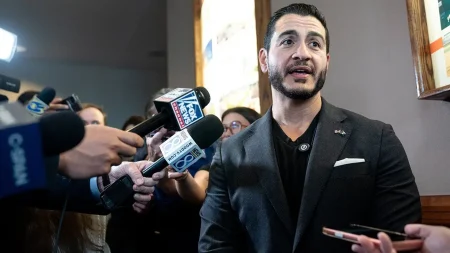
Now El-Sayed himself is in a very different position. He is no longer an outside critic writing angry op-eds from the margins. He is a Senate candidate, the former director of Detroit’s health department, and a Democrat who has spent the last year trying to win a seat in one of the most consequential chambers in the country. His platform is unabashedly progressive — he wants Medicare for All, tuition-free college, lower housing costs, and an end to corporate tax carve-outs. He believes, like Obama, that government can be a force for good, but he argues that the scope and pace of that good must be far more ambitious. During the Michigan primary, Obama notably stayed out of the race between El-Sayed and Representative Haley Stevens, declining to take sides between a progressive insurgent and an establishment-backed incumbent. That silence spoke volumes. Obama had long represented the old guard of the party, while El-Sayed, with his sharp elbows and sharper critiques, seemed to embody a new generation hungry for structural change. And yet, politics makes strange bedfellows. Now, in a general election race against a Republican opponent, El-Sayed needs Obama’s presence, his fundraising power, and perhaps most of all, his magic among older, moderate, and Black Democratic voters in Detroit. The man who once called Obama’s re-election “no victory” is now walking arm-in-arm with him down the campaign trail, a living lesson in how personal disappointment often gets swallowed by strategic necessity.
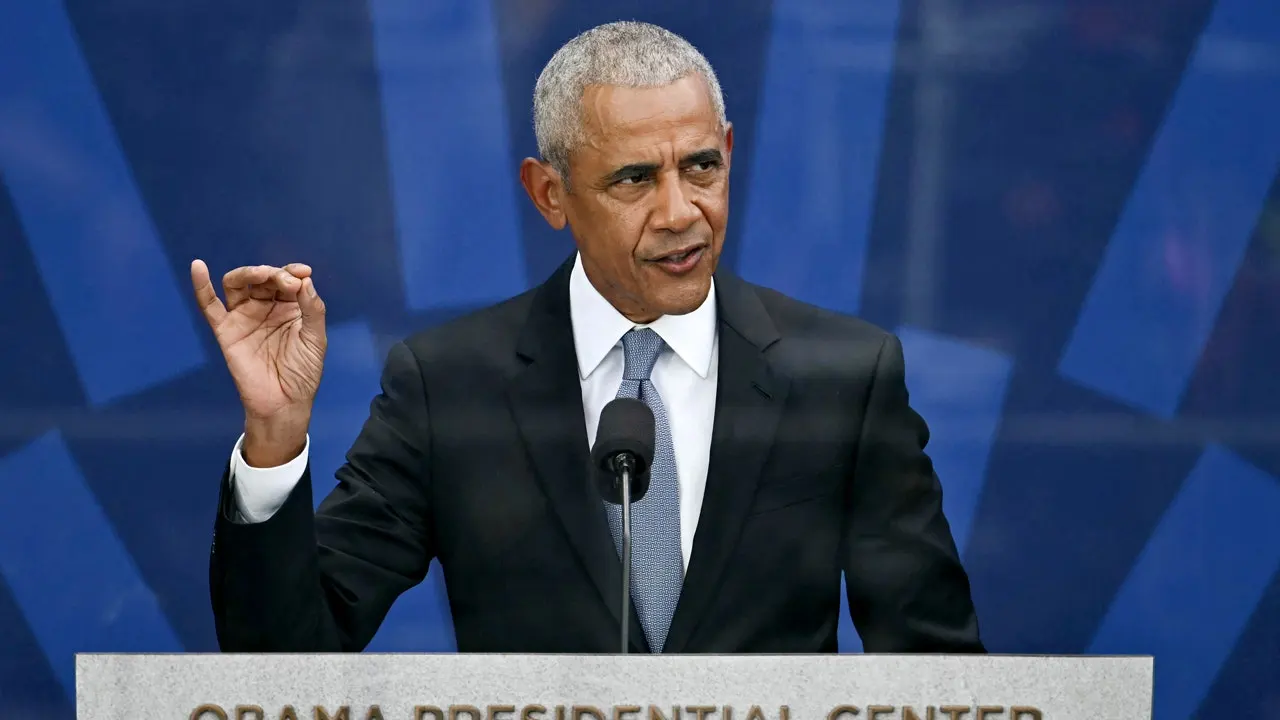
The upcoming rally, scheduled for October 24 in Detroit, is a delicate dance. Obama took to social media to announce his appearance, writing that he was “looking forward to being in Detroit on 10/24 to campaign for Jocelyn Benson, Abdul El-Sayed and Democrats up and down the ballot in Michigan.” Benson, running for governor, is the headliner of sorts, but Obama specifically named El-Sayed — a signal that the party establishment understands the stakes of this raceamentary nuance of the political moment. One can almost imagine the scene: the former president, old and comfortable in his skin, walking into a cavernous Detroit hall; El-Sayed, younger and sharper, waiting backstage. They stand for a photograph maybe, two tall men with broad shoulders and wide smiles, cameras flashing, the crowd roaring. And in that embrace, the past is neatly folded away. There is no mention of the op-ed, no discussion of drones or stagnant wages or the pain of being a Muslim American under a president who once seemed like a dream. None of that has a place on the rally stage. But it seeps into the air anyway, an unspoken reminder that political coalitions are built not only on shared belief but on shared survival. El-Sayed’s campaign did not immediately respond to requests for comment on the old op-ed or his current view of Obama’s legacy. Perhaps because there is nothing more to say. Some disappointments are not forgiven; they are simply placed in a drawer and carried forward.
In the end, El-Sayed’s journey from critic to colleague is the story of every disappointed idealist who ever had to navigate the murky waters of real-world politics. We all choose between the rock and the hard place, between the candidate who fails us and the candidate who frightens us)Skip that. We all wrestle with the distance between our convictions and our compromises. El-Sayed’s op-ed was raw and honest, a snapshot of a moment when one man refused to lie about his feelings. His current alliance with Obama is equally honest in its own way — honest about the constraints of power, the realities of coalition, and the fact that no one is fully pure in a system built on half-measures. The two men share more than they might admit. Both believe in the capacity of government to improve lives. Both have tasted the bitter fruit of governing. Both understand that you cannot always get what you want, even when you are the one holding the wheel. Perhaps that is why Obama can campaign for El-Sayed without resentment, and why El-Sayed can stand beside Obama without hypocrisy. In the complicated ecosystem of American politics, yesterday’s sharpest critique becomes today’s organizing tool remains a ghost. We carry our old words with us, like luggage we cannot shed fact. They are our memories, our wounds, our growth. And on that October evening in Detroit, when Obama and El-Sayed raise their hands together, the ghosts of 2012 will not be exorcised, but they may finally find a moment of peace. Progress, after all, is not a straight line of victories. Sometimes it is a slow spiral, circling back to the people you once thought you had lost, on a stage built not of perfect unity but of stubborn hope.