


Paragraph 1: The approaching execution and its place in a grim national count
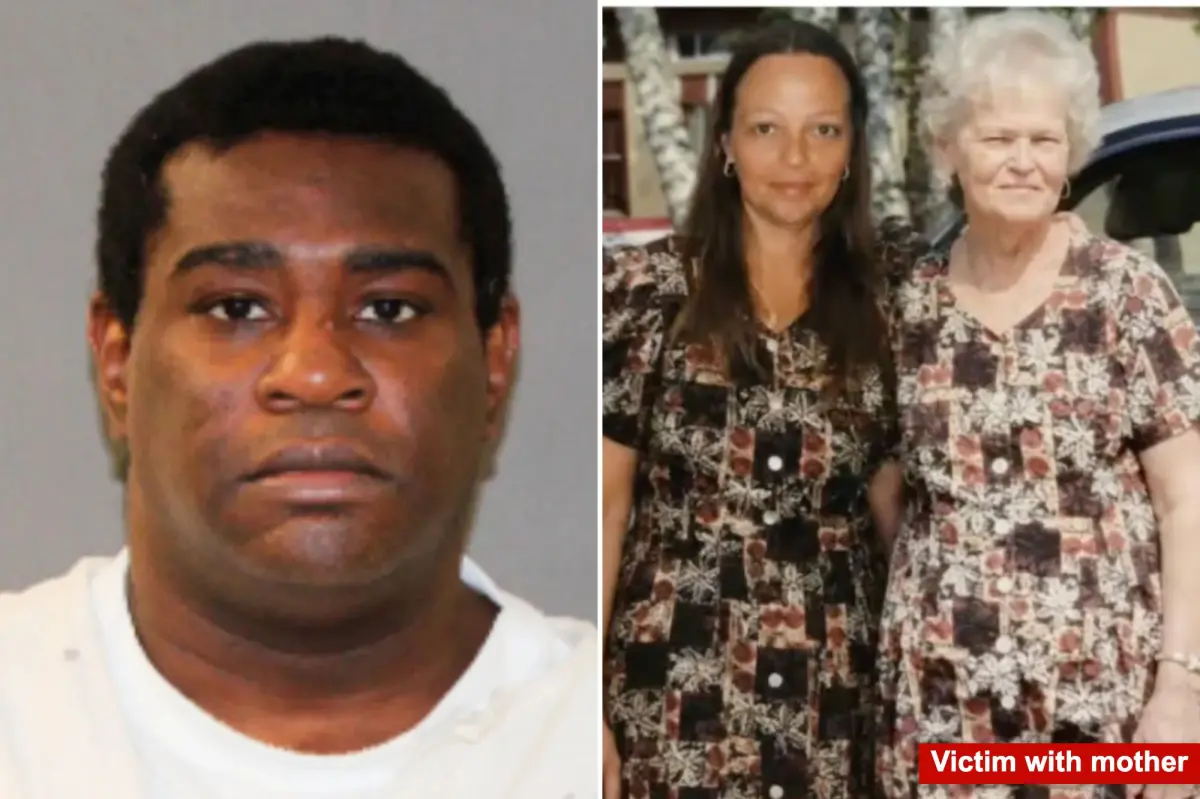
In the quiet final hours before a scheduled lethal injection, the weight of an old tragedy settles once more over a small Texas town. Jamaal Howard, a 46-year-old man convicted of capital murder, is set to die by lethal injection on Wednesday for the 2000 shooting death of Vickie Swartout, a 42-year-old convenience store clerk. Her life was cut short with a single bullet to the chest during a robbery, a moment captured in chilling detail by the store’s own surveillance camera. The execution, if it proceeds, will mark the thirtieth death sentence carried out in the United States this year, a sobering milestone that underscores how routinely the machinery of capital punishment continues to operate across the country. For Howard, the procedure will involve a lethal dose of pentobarbital, a barbiturate that is now the primary method of execution in most states that still maintain the death penalty. But this is not simply a legal proceeding; it is the end of a long, painful human story that began more than two decades ago in Silsbee, a small rural municipality roughly one hundred miles northeast of Houston. The people who remember Vickie Swartout still carry the shock of her loss, and those who have spent years fighting on Howard’s behalf carry their own convictions that his life should be spared. As the hour approaches, all of those threads—grief, justice, doubt, and finality—pull together into one stark moment, with the state of Texas prepared to act as the arbiter of a punishment that can never be reversed.
Paragraph 2: A robbery turned fatal and the evidence that left no room for denial
The facts of the crime, as established during the trial, are painful and direct. In 2000, Howard was a young man of just twenty years old when he entered the convenience store in Silsbee, a community where the rhythms of daily life were familiar and the violence that would soon unfold was almost unthinkable. According to court records, he took $114 and a carton of cigarettes from the store, petty gains that stand in agonizing contrast to the human cost of the encounter. The surveillance video, played for jurors, showed Howard shooting Swartout, a woman who had likely greeted countless customers over the years and never expected to become the central figure in a capital murder trial. That footage, grainy and silent perhaps, became the cornerstone of the prosecution’s case, removing any real question about who pulled the trigger. It is one of those brutal reminders that some crimes are not mysteries; they are recorded, witnessed, and replayed in courtrooms until the horror becomes a matter of evidence rather than speculation. Swartout’s death left a family without a mother, a community without a neighbor, and a young defendant facing the ultimate punishment the state can impose. For those who loved her, the guilty verdict may have brought a measure of closure, but closure is never simple when a life is taken. The surveillance tape ensured that Howard would not walk free, but it could not restore what was lost, and it could not answer the deeper questions that would follow for decades about whether his mental capacities should have shielded him from the death chamber.
Paragraph 3: The long fight over intellectual disability and the uncertain road to the Supreme Court
In the years since his conviction, Howard’s legal team has waged a persistent battle to stop his execution, arguing that he is intellectually disabled and therefore ineligible for the death penalty under a landmark Supreme Court ruling. That ruling, issued in 2002 in the case of Atkins v. Virginia, barred the execution of intellectually disabled people, recognizing that they possess diminished culpability and that executing them offends evolving standards of decency. But the court also left room for states to determine how intellectual disability should be defined and proven, and that discretion has created a tangled landscape of standards and burdens that vary from jurisdiction to jurisdiction. Texas, in particular, has historically adopted narrow criteria, and the state now insists that Howard has failed to present evidence meeting its requirements for a claim of intellectual disability. His attorneys, however, maintain that the evidence is there, that the state has ignored or mischaracterized it, and that sending Howard to his death would be a grave injustice. The case has wound its way through state and federal courts, producing emergency motions, stays, and denials, and now sits before the United States Supreme Court in a last-minute appeal to halt the execution. The justices have the power to intervene, and they have done so in other cases when procedural or constitutional concerns arose, but they have also shown increasing reluctance to second-guess state courts and state determinations in recent years. For Howard, the wait is existential. Every hour that passes brings either a reprieve or a final reckoning, and the legal arguments are not abstract theories but the difference between life and death.
Paragraph 4: The context of an unusually active year for executions
Howard’s scheduled execution arrives at a moment when the death penalty is being carried out with notable frequency in the United States, and Texas remains one of the most active states in the country. So far this year, Texas has executed six people, with at least two more executions scheduled in the coming weeks after Howard’s. The numbers are striking, but they are dwarfed by Florida, which has already carried out sixteen executions this year, more than any other state. That concentration of capital punishment in a handful of jurisdictions reflects a broader reality: while many states have abolished or paused executions, others have continued to push forward, often amid legal questions about drugs, procedures, and the humanity of the process. Lethal injection remains the primary method, and most states rely on pentobarbital or a combination of drugs to induce death. But the process has become increasingly difficult to administer, partly because pharmaceutical companies have restricted the sale of drugs for execution purposes, forcing states to seek alternative supplies or compounding pharmacies. The controversies are not merely administrative; they raise profound moral and practical concerns about whether the death penalty can be carried out without cruel and unusual suffering. Howard’s case sits squarely within those debates, a human life at the center of a system that is struggling to reconcile its own methods with constitutional limits and public unease. Each execution that proceeds adds another story to a national ledger, and each story carries its own complicated history of crime, punishment, and the unresolved question of whether death is ever truly justice.
Paragraph 5: The shadow of a failed execution in Tennessee and the growing unease over lethal injection
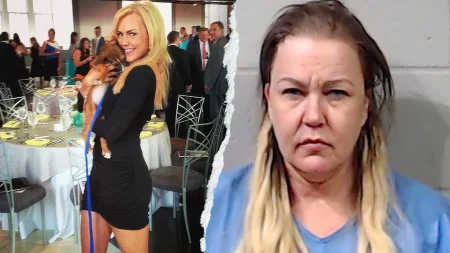
The timing of Howard’s execution is particularly significant because it follows what was widely reported as a failed attempt to execute Christa Pike in Tennessee last week. Pike, one of the few women on death row, was scheduled to die, but her execution was halted after her attorneys said she was awake and speaking as she was being treated at a hospital. The revelation cast a harsh light on the reality of lethal injection procedures, which are often expected to be clinical and swift but can become complicated and disturbing. If Howard dies on Wednesday, he will be the first person executed in the United States since that failed attempt, and the comparison will inevitably invite scrutiny of whether the state can be confident that its methods will work as intended. The fact that Pike survived her scheduled execution, at least for now, is a reminder that the machinery of capital punishment is not infallible. It is operated by human beings, using substances that are sometimes difficult to obtain and occasionally difficult to administer, and the consequences of error are profound. For Howard’s supporters, the failed execution in Tennessee is another reason to pause and reconsider, another sign that the system is broken and that risking an irreversible mistake is unacceptable. For the families of victims, however, delays and complications can feel like a betrayal of justice, a prolongation of grief that they never asked for. The debate over methods is not abstract; it plays out in real time, in real bodies, and in the quiet moments before a man is strapped to a gurney.
Paragraph 6: A human life caught between law, memory, and the unresolved question of justice
As Wednesday approaches, the story of Jamaal Howard is more than a legal case; it is a profound human drama with no easy answers. Behind the filings and the motions, the witnesses and the verdicts, there is a man who was twenty years old when he committed an act of terrible violence, a man who has spent more than half his life in prison, and a man who now faces the final minutes of his existence at the hands of the state. There is also a woman, Vickie Swartout, whose life was stolen in a moment, whose family has lived with that loss for over two decades, and whose name is often spoken in courtrooms but too rarely remembered as a person with her own dreams and relationships. Capital punishment is often framed in abstract terms—deterrence, retribution, justice—but it is always, ultimately, about individuals. The execution chamber is the point where all those abstractions collide with flesh and blood, where a state makes a deliberate choice to end a life. Some will see Howard’s death as the deserved consequence of his actions, a long-delayed payment for the pain he caused. Others will see it as a tragedy compounded, an act that diminishes everyone involved and does nothing to undo the harm. The debate will not end with his final breath; it will continue in the arguments of scholars, the grieving of families, and the consciences of citizens. For now, the clock is ticking, the appeal is pending, and a Texas prison is preparing to carry out a sentence that cannot be withdrawn. In the end, whatever happens on Wednesday, the story of Vickie Swartout and Jamaal Howard will remain a powerful reminder that the death penalty is not a solution but a choice—a choice that says something about who we are as a society, what we value, and how we understand justice in the presence of irreparable loss.