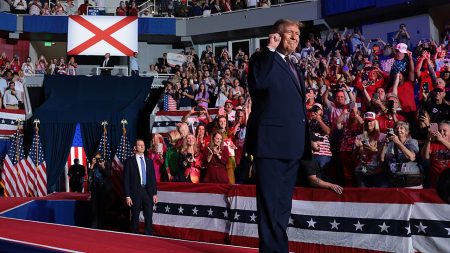



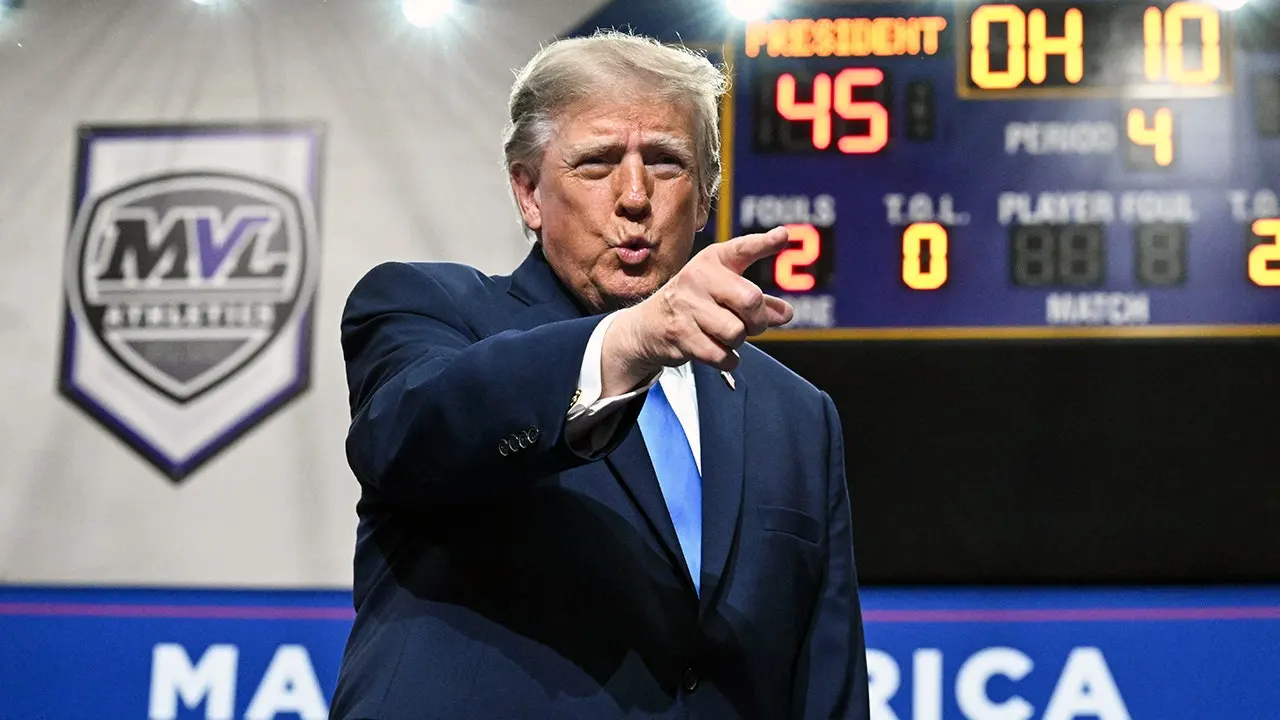
On a crisp Saturday night in Ohio, President Donald Trump stepped before a roaring crowd in Dayton with the unmistakable energy of a man who refuses to be relegated to the sidelines. For the third evening in a row, he had traded the trappings of the White House for the raw, electric intimacy of a rally, and the faithful had packed the venue as if the fate of the republic hung on every word. This time, however, Trump’s name was not on the ballot. The midterm election was just 31 days away, and the president was there for the Republican Party: for Senator Jon Husted, for gubernatorial hopeful Vivek Ramaswamy, and for the congressional candidates fighting to hold the line in a deeply polarized country. Yet Trump, never one to let formality get in the way of a good show, gave the audience a simple, almost playful instruction. “Just pretend that I’m running,” he said, leaning into the microphone with that familiar mix of defiance and charm. “When I run, we win.” The crowd erupted. It was a masterstroke of political theater, blurring the line between a midterm obligation and a presidential campaign, and it set the tone for a night that was equal parts victory lap, economic sermon, and fiery warning to anyone who thought the movement had lost its momentum.
From there, Trump turned to the economy, the issue that has always formed the bedrock of his political identity, and he painted Ohio in the bold colors of a comeback story. “Your state is booming,” he declared, and he had the numbers to back it up. He pointed to a $400 million investment by Stellantis in Toledo, an $850 million aerospace project by Electra near Springfield, and a sprawling $2.2 billion pharmaceutical manufacturing campus by Bayer outside Columbus—a facility that the company said would create roughly 600 permanent jobs and 1,500 construction jobs. Trump told the crowd that his trade and tariff policies were behind these announcements, arguing that the United States was finally leveling a playing field that had long been tilted against American workers. With tariffs, he explained, other countries could no longer dump cheap foreign goods on U.S. soil while profiting from American openness; instead, they had every incentive to build here, hire here, and invest here. He even wove in a personal anecdote about his daily aspirin habit, somehow connecting his own routine to the Bayer investment, and the crowd laughed along, delighted by the humble confession that made a corporate announcement feel like a conversation among friends. It was vintage Trump: policies intertwined with personality, economic theory delivered with the warmth of a storyteller, and skepticism of globalism wrapped in a patriotic embrace.
But the president’s economic pitch went far beyond a few ribbon cuttings. He threw his weight behind Husted’s Ratepayer Protection Act, a piece of legislation designed to shield ordinary consumers from the rising electricity costs that come with the explosive growth of data centers. Trump was blunt: “We want them,” he said of data centers. “There’s so much money to be made for Ohio. You can’t just turn them off. They’ll go to China.” It was a carefully nuanced stance—enthusiasm for the industry, but a firm commitment to protecting the families and small businesses who might otherwise be left footing the bill. Husted had brought the bill to the Senate floor only days before, and while it had failed to advance, Trump made a sweeping promise: “I will sign this Ratepayer Protection Act into law immediately,” he told the crowd, if it ever reaches his desk. That promise folded neatly into a broader national victory lap. Trump touted record stock market highs, surging manufacturing growth, and what he described as unprecedented levels of investment and employment, all while contrasting his own record with that of former President Joe Biden. “Our nation is doing better now than ever before,” he declared, and he praised the tax provisions Republicans were pushing, including no tax on tips or overtime. Then came the headline-grabber: if Republicans hold the House and Senate, Trump reiterated his proposal to send $5,000 payments to every adult American—a plan he defended as both a reward for his economic policies and a “beautiful” consequence of tariff revenue.
The night, however, was not all about money and markets. Trump shifted with practiced ease to immigration, and in doing so, he returned to a place that had become a national flashpoint during the 2024 presidential campaign: Springfield, Ohio. The city had been thrust into the spotlight over an influx of Haitian nationals, and the president dedicated his recitation of “The Snake”—a poem he has long admired as an allegory for the dangers of unguarded borders—to the community. “I dedicate this to Springfield, Ohio,” Trump said, his voice carrying a somber gravity. “They went through hell.” The poem, with its famous tale of a kind-hearted woman who nurses a dying snake back to health only to be bitten by it, has been a staple of Trump’s speeches for years, and he delivered it with theatrical precision. When he finished, he looked out at the sea of faces and said, “That’s what happened at our border,” before pivoting to praise his administration’s aggressive immigration crackdown. For the crowd, it was a moment of emotional continuity, a bridge between the abstract policy debates of Washington and the lived experiences of communities like Springfield. It was also a reminder that Trump’s appeal has never been purely economic; it is visceral, rooted in a nostalgia for order, safety, and the belief that America’s generosity should not become its vulnerability. By tying the poem to a specific city that had become a symbol of that vulnerability, Trump transformed a decades-old piece of verse into a timely political metaphor, and the crowd responded with the kind of fervent applause that has become the signature of his rallies.
Trump also took a brief detour into foreign policy, but even then, he framed global events through the lens of American strength and profit. On Venezuela, he claimed that the United States had more than recouped the costs of its military operation against former Venezuelan dictator Nicolás Maduro through the country’s vast oil resources. “We paid for the cost of the war many, many times over,” he said. “We’re making a fortune with it.” It was a striking claim, but one that fit neatly into his larger narrative of transactional governance: every action, every intervention, every risk should yield a tangible benefit to the American people. The president then turned to the future, pitching Ohio as a potential home for the U.S. National Space Academy. He cited the state’s rich aviation history, the legacy of the Wright brothers, and the aerospace investments he had mentioned earlier, suggesting that if Republicans win the midterms, Ohio would be “very, very strongly considered” for the honor. “I really want you to go out and vote again for John Husted and for Vivek,” he said, once again weaving the urgency of the election into the broader fabric of the evening. The message was consistent: this is not just about Republican power in Washington; it is about securing the future of Ohio, the future of the country, and the future of the “golden age” Trump believes his return to office has inaugurated.
As the rally wound down, the mood was one of anticipation rather than satisfaction. Trump had come to Ohio not merely to celebrate past victories, but to lay the groundwork for a midterm success that would cement his legacy as a transformative leader. He reminded the crowd that his name might not be on the ballot, but that his movement was, and he urged them to vote as if the entire fate of that movement depended on their turnout. “If you don’t mind, please pretend that I’m on the ballot,” he had said earlier, and that sentiment lingered in the air long after he left the stage. There was an almost poignant quality to the request—a President who has dominated American politics for a decade, asking voters to imagine him running even when he is not. But there was also confidence, the swagger of a man who knows his rallies are more than just campaign events; they are communal experiences, spaces where loyalists gather to affirm their beliefs, share in a collective sense of grievance and hope, and prepare for the battles ahead. The crowd filed out into the Ohio night energized, carrying with them the president’s promises of economic prosperity, border security, and a homeland that would once again be “booming.” Whether those promises will translate into votes is the question that hangs over November. But for one night, in Dayton, Trump made the midterms feel less like a logistical necessity and more like the continuation of a crusade—a crusade that, if the faithful follow his instructions, he believes will end in yet another victory for the movement he has built.