



Upbit Places BLAST Token Under Delisting Warning as Blast Network Winds Down
South Korea’s digital asset market is on alert after one of the country’s largest cryptocurrency exchanges moved to place the BLAST token under an official delisting review, a decision that has raised fresh concerns about the future of the asset and the network behind it.
A Cloud Over BLAST: Upbit Triggers a Delisting Review
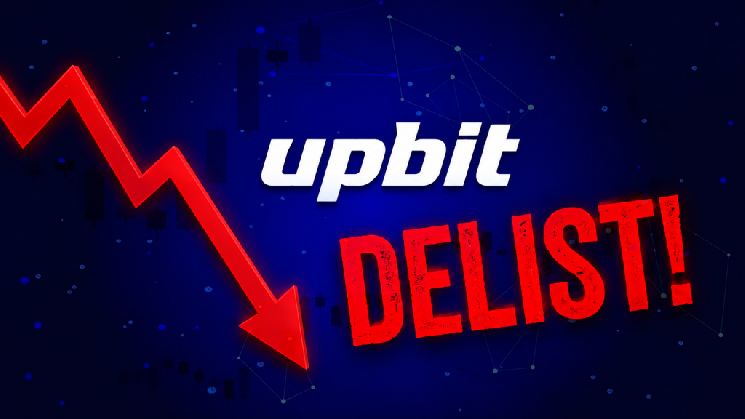
South Korea’s cryptocurrency market woke up to a wave of unease this week as Upbit, one of the country’s most influential digital asset exchanges, placed the BLAST token under a formal delisting warning. The notice applies to every BLAST trading pair currently listed on the platform, including BLAST/KRW, BLAST/BTC, and BLAST/USDT. That means traders who hold the token against the South Korean won, Bitcoin, or Tether’s USDT will now have to navigate a period of heightened uncertainty. Upbit has set the warning period to run through the third week of October, specifically from October 12 to October 16, giving market participants a narrow window to evaluate their positions. While the exchange has not yet taken the drastic step of removing BLAST from its platform, the warning itself has already altered the conversation around the token. For many investors, the notice was their first indication that something was seriously wrong behind the scenes. And just days after the Blast team announced it would shut down the network, the timing of Upbit’s move felt less like a routine compliance check and more like a response to an unfolding crisis. The message was simple: BLAST is now an asset under watch.
A Formal Warning, Not a Final Decision
It is easy to misread an exchange warning as an immediate death sentence, but the reality is more nuanced. Upbit’s decision does not mean BLAST has been permanently delisted from the exchange. A delisting warning is, at its core, a formal heads-up. It tells users that the token is being monitored closely due to potential concerns, while giving the exchange room to conduct a thorough review. In the case of BLAST, that review is taking place against a highly troubling backdrop. The Blast network is winding down, and the token’s long-term utility has become questionable. At the end of the review, Upbit could choose to remove the warning, a move that would effectively restore BLAST to its previous status and allow trading to continue without the shadow of an imminent exit. Alternatively, the exchange could extend the evaluation period, buying more time to see how the situation develops. There is also the possibility that Upbit decides to end support entirely, severing the token from all three trading pairs and sending BLAST into the kind of uncertain territory that often precedes a sharp decline in liquidity and price. The key point is that the door is still open. But it is also clear that the door may not stay open for long.
Could BLAST Actually Be Delisted? Here’s What Upbit Said
Perhaps the most consequential element of Upbit’s announcement is its explicit acknowledgment that BLAST could be delisted. The exchange stated that if the issues behind the warning are not fully resolved, a delisting decision may be made. This is not vague legal language; it is a straightforward warning that the token’s future hinges on whether the Blast team can provide clarity or fix whatever triggered the exchange’s concern. If that happens, Upbit will issue a separate announcement revealing the official date on which trading support will end. That would give holders a final window to exit their positions, though as later details would reveal, even that exit could be complicated. The warning period from October 12 to October 16 is shaping up to be the most important date range for BLAST in recent memory. It is the window in which Upbit is expected to conduct its assessment and, potentially, decide the token’s long-term fate. During this phase, market participants may react emotionally, driving volatility in ways that make it difficult to determine fair value. Some traders might rush to sell before any potential delisting, while others may view a dip as an opportunity to buy at a discount. But given the broader situation, namely the collapse of the Blast network, any apparent bargain could be an illusion. The safest approach, for most investors, is to treat the warning period as a serious reason to reassess risk.
Urgent Deposit Warning: Don’t Send BLAST to Upbit Right Now
Amid the uncertainty surrounding BLAST’s listing status, a separate but equally alarming development has emerged. Reports began circulating that BLAST tokens sent to Upbit might not be credited to user accounts, and in some cases, those funds might not be recoverable. Upbit responded by warning users not to make any new BLAST deposits. That warning is important for a number of reasons. First, it signals that there may be technical problems on the network side or the exchange side that could interfere with normal operations. Second, it means that even a well-intentioned attempt to move tokens from a private wallet to Upbit for sale could end in loss. For traders, the message is unmistakable: do not test the system right now. If you already hold BLAST on Upbit, your focus should be on understanding the options available to you. But if you are thinking about sending BLAST from another wallet or another platform, the risk is simply too high. The inability to recover tokens in the event of a failed deposit is one of the worst-case scenarios in crypto, because it effectively destroys value without any clear path to recourse. This practical warning adds a new layer of urgency to the situation. It also highlights the importance of paying close attention to exchange notices, particularly when a project is in the middle of a shutdown.
Why the Blast Team Decided to Shut Down the Network
To understand what is happening with BLAST, it is necessary to step back and look at the network itself. Blast was created as an Ethereum layer-2 solution, a project designed to offer faster and cheaper transactions while benefiting from Ethereum’s security. One of its defining features was a focus on enabling users to earn yield on their assets, an idea that attracted attention and investment during the early stages of its development. At its peak, Blast was part of a crowded field of ambitious networks trying to carve out a space in the Ethereum ecosystem. But the economics of operating a network became increasingly difficult to ignore. The Blast team announced that it had decided to cease operations, citing network maintenance costs that had begun to exceed revenue. It was a stark admission, particularly for a project that had once been seen as a promising player in the layer-2 landscape. The announcement effectively removed the foundation from under the BLAST token. Without an active network, the token loses much of its purpose. Upbit’s decision to place BLAST under review must be understood in this context. When a project ceases operations, every exchange that lists its token is forced to rethink the relationship. The risk of continuing to support an asset from a dead or dying network is simply too great, especially for a regulated platform operating in a jurisdiction like South Korea, where investor protection is under increasing scrutiny.
What BLAST’s Troubles Signal for the Wider Crypto Market
The BLAST situation is not just a story about one exchange and one token. It is a reminder that the digital asset market is still full of fragile projects, and that the line between success and failure can be extremely thin. For a time, Blast represented everything that crypto entrepreneurs seemed to aspire to: a new network, a passionate community, and a token that gave users a stake in its future. But those bright beginnings were not enough to guarantee sustainability. The fact that Upbit felt compelled to act so quickly shows that exchanges are becoming more willing to cut ties with troubled assets. It also demonstrates how quickly market narratives can shift when the fundamentals no longer support the hype. For BLAST holders, the immediate path forward is uncertain. The October 12 to October 16 warning period will likely be the deciding moment, and Upbit’s subsequent actions will determine whether BLAST is delisted, kept alive through an extended review, or granted a reprieve. But regardless of the final outcome, the lesson is clear: in crypto, a listing is not a guarantee, and a project’s team must continuously prove its value. Investors should take this moment to reflect on their own risk management strategies and remember that exchange warnings should never be ignored. BLAST’s decline may be painful for those who believed in the project, but it is also a valuable case study for an industry that still has a great deal to learn about transparency, sustainability, and trust. As always, this article is not investment advice, and anyone involved with BLAST should proceed with caution.