


Here is a humanized summary and expansion of the provided content, structured into six cohesive paragraphs as requested.
—
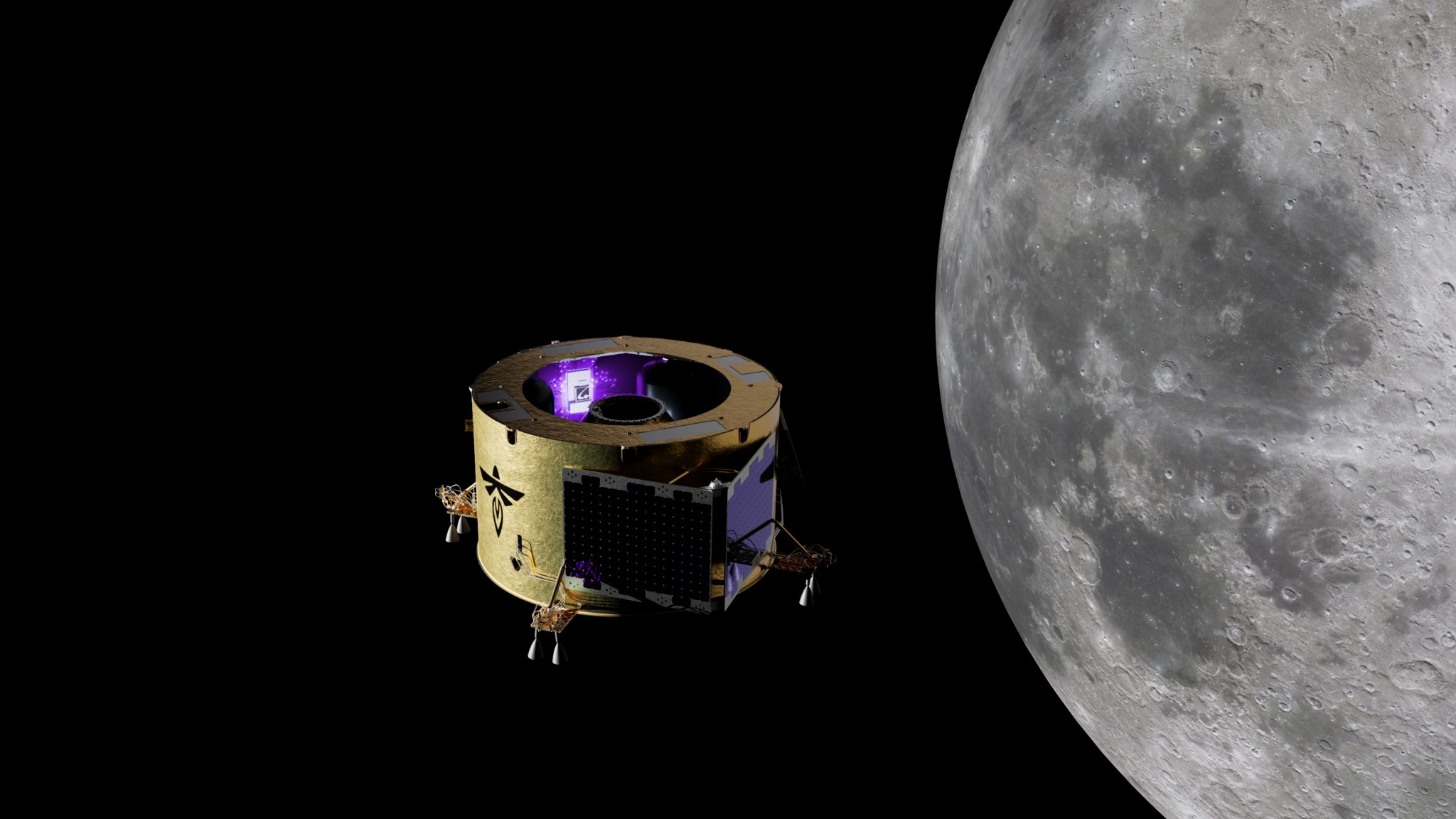
In a bold convergence of two cutting-edge frontiers, the Redmond, Washington-based artificial intelligence company Starcloud has announced a groundbreaking partnership with Firefly Aerospace to send its sophisticated data-processing hardware on a journey to the moon. This isn’t just another satellite launch; it’s a strategic maneuver in a high-stakes race to establish a permanent computing presence beyond Earth. The plan is to deploy Starcloud’s SC-1L payload aboard Firefly’s versatile Elytra orbital vehicle as part of a NASA-supported mission slated for liftoff no earlier than 2028. This mission is being framed not as a simple experiment, but as a vital demonstration of the technologies that will one day power entire fleets of AI data centers in Earth’s orbit and, crucially, around the lunar sphere. By bridging the gap between space exploration and advanced artificial intelligence, this collaboration signals a future where our computational needs are increasingly met by infrastructure residing in the great beyond, far from the constraints of terrestrial power grids and cooling systems.
The essence of this mission is to prove that high-performance AI computing can thrive in the harsh and isolated environment of deep space. Starcloud’s SC-1L payload will be carefully integrated into Firefly’s Elytra spacecraft, which is tasked with a complex orbital ballet: delivering Firefly’s Blue Ghost lander to a fascinating lunar region known as the Gruithuisen Domes. After Blue Ghost separates from Elytra and makes its perilous descent to the lunar surface, Elytra will pivot its role, transforming into a high-tech data relay satellite, beaming communications back and forth. However, the real drama begins once the primary Blue Ghost mission concludes. At that point, the SC-1L payload will take center stage. It will ingest raw data streaming from Elytra’s onboard Solux vision system—a high-powered suite of sensors designed for autonomous navigation—perform heavy-duty AI computations directly in lunar orbit, and then transmit the refined, processed data back to Earth. This cycle of ingesting, computing, and transmitting represents a quantum leap in how we handle data in space, moving from simply relaying raw information to processing it at the source.
This lunar mission is far from Starcloud’s first rodeo. In fact, the company made history last year with its predecessor mission, Starcloud-1, a satellite equipped with a cutting-edge Nvidia H100 chip—the same kind of high-powered processor used in the most advanced terrestrial AI data centers. In a pioneering feat, Starcloud-1 successfully trained a large language model called NanoGPT entirely in low Earth orbit, marking an unprecedented first for orbital computing. This was a monumental achievement that proved enterprise-grade AI training is possible outside the protective bubble of Earth’s atmosphere. As Ezra Feilden, Starcloud’s co-founder and CTO, eloquently put it, “We successfully validated our ability to run and train AI models on enterprise-grade GPUs in low Earth orbit, and now we’re taking this proven technology to lunar orbit.” This progression from low Earth orbit to the moon is a clear indication of the company’s ambitious roadmap, showcasing a rapid evolution from a successful tech demo to a foundational piece of a much larger space infrastructure puzzle.
The implications of this mission extend far beyond simply checking a box for a successful orbital AI run. Starcloud’s vision is nothing short of creating the first true data centers in space, and the moon is now viewed as the next logical frontier for this grand ambition. By demonstrating reliable, high-performance AI computing in the distant, radiation-soaked environment of lunar orbit, Starcloud is laying the groundwork for a future where massive data centers no longer compete for scarce land, water, and energy resources on Earth. Imagine a future where AI models are trained and deployed in space, where solar energy is unconstrained by weather or nightfall, and where data can be processed and sent back to Earth in a matter of seconds. This partnership with Firefly is essentially an insurance policy and a stepping stone, ensuring that when the space-based data economy truly takes off, Starcloud will already have the proven technology and orbital track record to be a dominant player, turning a sci-fi vision into a tangible, operational reality.
From a technical perspective, the mission highlights several ingenious innovations designed to overcome the unique challenges of the space environment. The Solux vision system, for instance, is an autonomous navigation and tracking tool engineered to function in space environments where GPS signals are completely unavailable. This is essential for deep-space missions, where spacecraft can’t simply rely on a network of Earth-orbiting satellites to determine their position. Instead, Solux will likely use star trackers, visual odometry, and other advanced computer vision techniques to understand exactly where it is and how to orient itself. Firefly’s Elytra orbiter is expected to operate in lunar orbit for at least five years, providing a long-lived testbed for these technologies. Beyond the AI demonstrations, Elytra will also be busy with its own scientific and commercial work, using high-resolution telescopes and Firefly’s Ocula moon imaging service to map the lunar surface, detect mineral deposits, and conduct detailed reconnaissance. This multi-purpose approach—simultaneously serving as an AI testbed, a data relay, and an observation platform—shows how future missions will maximize their value by packing as much functionality as possible into a single spacecraft.
Looking toward the future, the momentum behind Starcloud’s grand vision is undeniable, backed by substantial financial and regulatory momentum. In August, the company announced it had successfully raised a staggering $250 million in funding, a war chest explicitly intended to accelerate the creation of a large constellation of AI data-center satellites in low Earth orbit, all powered by Nvidia’s latest Space-1 Vera Rubin Module. This funding has fueled an aggressive expansion plan, evidenced by Starcloud’s application to the Federal Communications Commission to operate up to 88,000 satellites as orbital data centers—a number that, while mind-boggling, underscores the sheer scale of the anticipated demand for space-based computation. This isn’t just about building a few cool tech demos; it’s about building an entirely new cloud computing ecosystem in the sky. By combining Firefly’s reliable transportation and lunar infrastructure expertise with Starcloud’s bleeding-edge AI hardware and Nvidia’s powerful processors, this collaboration is setting the stage for a new era. It’s a future where the boundaries between Earth and space blur, where our most demanding computational tasks are handled by a constellation of solar-powered servers orbiting our planet and our moon, permanently expanding the horizons of human capability and commerce.