



The Lindsay Clancy Case: A Legal Saga Continues in Massachusetts
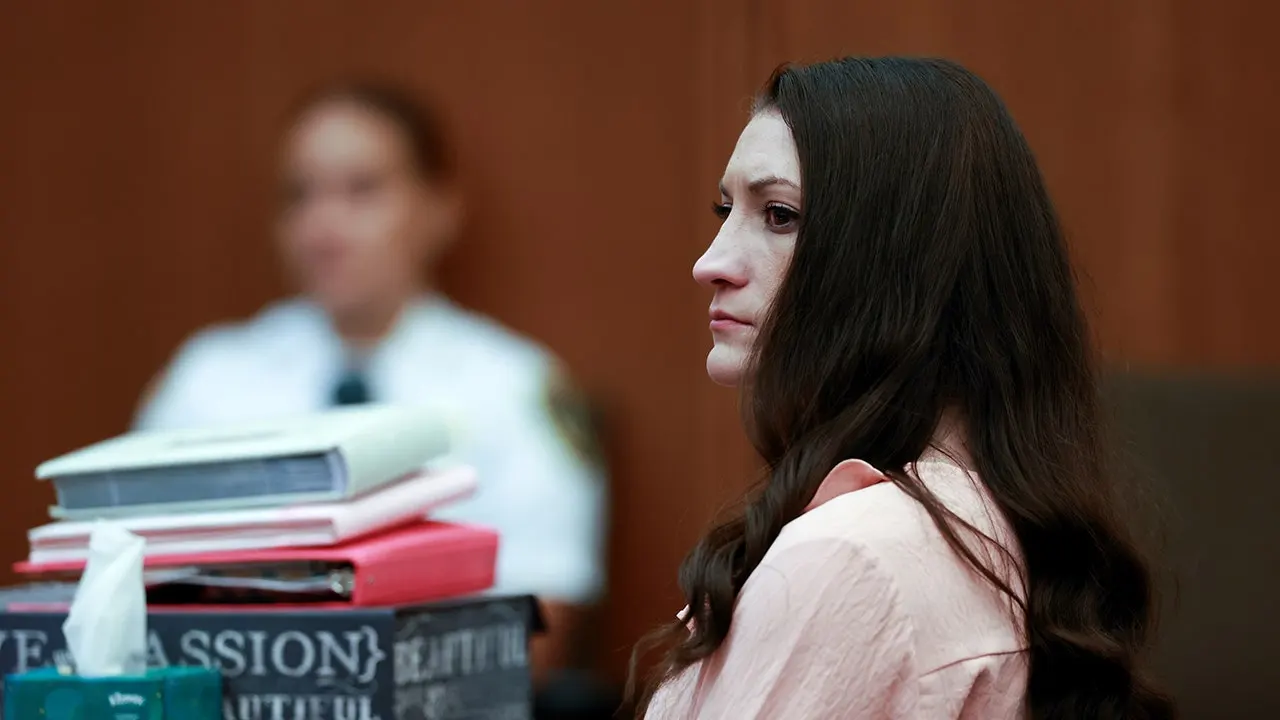
The courtroom in Plymouth, Massachusetts, is set to become the center of a legal storm once again as Lindsay Clancy prepares to appear in person for the first time since her trial concluded in a mistrial on September 4th. The case, which has captured national attention and sparked intense public debate, involves a mother accused of the unthinkable: the deaths of her three young children. As Clancy returns to face the judge, the proceedings promise to be anything but routine, with multiple legal battles brewing beneath the surface. The atmosphere in the Plymouth courthouse is expected to be tense, with Clancy’s defense team pushing forward on multiple fronts while the prosecution remains notably reserved about their next steps. The case has divided public opinion and now appears to have divided the jury as well, creating a complex legal situation that could have far-reaching implications for how similar cases are handled in the future.
The most controversial element of the post-trial proceedings centers on the lone holdout juror, Michael Desronvil, who stood alone against eleven other jurors who apparently favored convicting Clancy. Clancy’s defense attorney, Kevin Reddington, has been unusually aggressive in his pursuit of an investigation into Desronvil, labeling him “the obstructionist juror” and suggesting that his refusal to convict was somehow improper or influenced by outside factors. Reddington’s motion calls for a comprehensive examination of Desronvil’s actions during deliberations, including requests for his phone records, confidential juror questionnaire, and police records. The defense attorney has not been shy about expressing his frustration publicly, describing Desronvil as someone who “stole seven weeks of the life of these other jurors” and suggesting the holdout had an undisclosed “agenda” that prevented him from fairly considering the evidence presented during the lengthy trial.
However, the situation has become even more complicated with the involvement of Desronvil’s new attorney, Edward Paltzik, who has pushed back forcefully against what he describes as a “looney tunes motion” to investigate his client. In a surprising development, it appears that both the defense and prosecution have agreed to postpone the motion to investigate the holdout juror, a decision that Reddington was quick to clarify was merely a matter of professional courtesy. Reddington emphasized that he and the district attorney’s office agreed to continue the motion because Desronvil’s newly retained local counsel needed adequate time to review the extensive motion and prepare a proper response. The defense attorney was clearly irritated by suggestions that this postponement represented any kind of victory for the holdout juror or his legal team, insisting that “the motion remains active, fully alive, and is currently pending a ruling from Judge Sullivan.”
The legal maneuvering surrounding the holdout juror has brought retired judges and legal experts out of the woodwork to offer their analysis of what might happen next. Retired Massachusetts Judge Carol Erskine explained the technical distinction between an adjournment and a continuance, noting that Reddington’s objection to the characterization of the postponement reflects his desire to maintain the pressure on the holdout juror. If Reddington ultimately prevails in his quest for an inquiry, the court could hold what is known as a Fidler hearing, during which the judge would directly question Desronvil about his deliberations and any potential outside influences. Such a hearing represents a serious step that goes beyond routine procedural matters, and experts suggest it could potentially establish grounds for arguing that a second trial should be barred under the principle of manifest necessity. However, Erskine also cautioned that such motions are long shots, and Reddington may be strategically laying the groundwork for future appeals rather than expecting immediate success.
The larger issue looming over all these proceedings is the question of double jeopardy and whether Clancy can be retried at all. In addition to the motion to investigate the holdout juror, Reddington has also filed a separate motion asking the judge to acquit Clancy outright and bar any retrial. This motion argues that the evidence presented during the trial was insufficient to support a conviction, and therefore, subjecting Clancy to another trial would constitute double jeopardy. Legal experts have varying opinions on the likelihood of success for this motion, with some suggesting it faces an uphill battle while others believe it could gain traction depending on how the judge views the evidence presented in the first trial. The double jeopardy argument is particularly significant in this case because of the unusual outcome of the first trial, where eleven jurors favored conviction but a single holdout prevented a unanimous verdict. This scenario raises fundamental questions about what constitutes a fair trial and whether the Commonwealth should be permitted to try Clancy again after failing to convince the entire jury of her guilt.
The case itself stems from a tragic incident that occurred in October 2022, when Clancy allegedly strangled her three young children, ages five, three, and eight months, at their family home in Duxbury, Massachusetts. Clancy has pleaded not guilty to charges of murder and strangulation, with her defense team arguing that she was suffering from postpartum depression and psychosis at the time of the killings. The trial, which lasted approximately seven weeks, featured extensive testimony from psychiatric experts on both sides, with the defense presenting evidence of Clancy’s deteriorating mental state and the prosecution arguing that she was aware of her actions and understood that they were wrong. The case has sparked widespread debate about mental health, postpartum depression, and the criminal justice system’s treatment of mothers who harm their children, with passionate advocates on both sides of the issue. The emotional weight of the case was evident throughout the trial, with jurors visibly affected by the testimony and the graphic details of the children’s deaths.
As the legal proceedings continue, both sides appear to be preparing for a potential second trial, though significant questions remain about how such a trial would unfold. Mark Bederow, a New York-based criminal defense attorney and former prosecutor who has been following the case, noted that most prosecutors would hesitate to seek a second trial in a case where only one juror agreed with their position. However, he acknowledged that this case may be different, given the severity of the charges and the Commonwealth’s apparent determination to secure a conviction. Bederow suggested that if a retrial occurs, the prosecution would need to significantly improve their presentation, particularly regarding expert testimony, to counter the defense’s psychiatric evidence more effectively. He also noted that jury selection in any potential retrial would likely become even more critical, with both sides likely to be more aggressive in questioning potential jurors about their views on mental health and criminal responsibility. The legal maneuvering between the defense and prosecution over the past several weeks suggests that neither side is willing to back down, setting the stage for a protracted legal battle that could continue for months or even years.
The involvement of Desronvil’s new attorney, Paltzik, who is a former Trump lawyer, has added another layer of complexity to an already complicated situation. Paltzik has been highly critical of Reddington’s tactics, accusing him of attempting to intimidate a juror who simply followed his conscience and his understanding of the law. He has also raised concerns about the safety and well-being of his client, who apparently asked for something specific in a new video released after the mistrial drama began. The public battle between the two attorneys has played out in the media, with each side attempting to shape the narrative and sway public opinion. This unusual public spectacle has drawn criticism from some legal observers who believe that the arguments should be made in the courtroom rather than in the media. However, others have noted that the high-profile nature of the case and the intense public interest make some level of public engagement unavoidable, particularly when one side is making serious allegations about juror misconduct.
The question of whether the holdout juror could pursue legal action against Reddington has also been raised, though experts suggest that defamation claims would face significant hurdles. Jack Lu, another retired Massachusetts judge, noted that statements made during court proceedings are generally protected by privilege, and comments made outside the courtroom could potentially be characterized as opinions rather than statements of fact. The legal standard for defamation requires false statements of fact that cause harm, and it would be difficult to prove that Reddington’s characterizations of Desronvil crossed that threshold. However, the intense publicity surrounding the case and the personal nature of some of the attacks could potentially create grounds for legal action, though experts believe such a lawsuit would be unlikely to succeed. For now, the focus remains on the immediate legal proceedings and the decisions that Judge Sullivan will make regarding the various motions before him.
Looking ahead, the implications of this case extend far beyond the immediate fate of Lindsay Clancy. The proceedings raise fundamental questions about the jury system, the standard of proof required for conviction, and the rights of defendants who have been through lengthy and emotionally draining trials. The case has also highlighted the challenges of dealing with complex mental health issues within the criminal justice system and the difficult balance between accountability and compassion. Regardless of how the legal proceedings ultimately resolve, the Clancy case will likely be studied by legal scholars and mental health professionals for years to come. The tragic deaths of three young children have left a permanent mark on the community and the nation, and the legal proceedings that followed have only added to the complexity of this heartbreaking case. As Clancy prepares to appear in court once again, the outcome of Tuesday’s hearing could set the stage for the next chapter in this ongoing legal saga, with implications that could resonate well beyond the Plymouth County courthouse.