

Terror Plot at RAF Fairford: Five Men Released as British Counterterrorism Police Investigate Suspected Iran-Related Threat
British counterterrorism police have confirmed that all five men arrested in connection with an alleged plot against RAF Fairford — the strategically vital Royal Air Force base in Gloucestershire used by the United States in operations against Iran — will be released without charge. The announcement, which came after a weekend of intense public scrutiny, brought a sudden and somewhat anticlimactic end to what initially looked like a serious security emergency. The five men, whose identities have not been officially released, were detained early on Sunday as part of a pre-planned operation. Intelligence reports had suggested that the base could be targeted by individuals with links to terrorist networks sympathetic to Iran. Armed officers executed warrants at multiple residential addresses, and a visible police presence was deployed around the airfield’s perimeter. Yet by the time detectives had completed their interviews and reviewed digital evidence, they concluded that there was insufficient proof to justify holding the men any longer. The legal threshold for a terrorism arrest is based on reasonable suspicion, while the threshold for charge requires evidence capable of securing a conviction. In this instance, the gap between the two proved decisive. A British counterterrorism police spokesperson said simply that all five suspects would be released, and that the investigation into the alleged threat would continue. No details were provided about the men’s ages, nationalities or backgrounds, but the confirmation that they have been cleared for now is a major development in one of the most sensitive security operations of the year.
RAF Fairford is not a typical military base. It has no resident combat squadron in the way that many other RAF stations do, but its remote location, enormous runway and exceptionally strong supporting infrastructure have made it indispensable to the United States Air Force. The base sits in the Cotswolds, near the town of Fairford, and is technically owned by the Ministry of Defence, but it operates under the control of the United States Air Forces in Europe. It has been used for decades as a forward operating base for heavy bombers taking part in campaigns across the Middle East and the Mediterranean. During the 1991 Gulf War, B-52 Stratofortresses flew some of their longest bombing missions from Fairford. The same aircraft returned in 2003 for Operation Iraqi Freedom, and in more recent years the base has hosted rotations of B-1B Lancers, B-2 Spirit stealth bombers and RC-135 Rivet Joint reconnaissance aircraft. In the context of the current crisis with Iran, the base has assumed an even greater strategic significance. American commanders value its location, its security and its ability to receive long-range assets on short notice. That combination of factors makes RAF Fairford a visible projection of American power on British soil — and, by extension, a possible target for anyone seeking to strike back at that power. Security experts have long argued that US bases in the UK are among the most obvious symbolic targets for terrorist groups, state-sponsored proxies or radicalized individuals inspired by unfolding conflicts abroad.
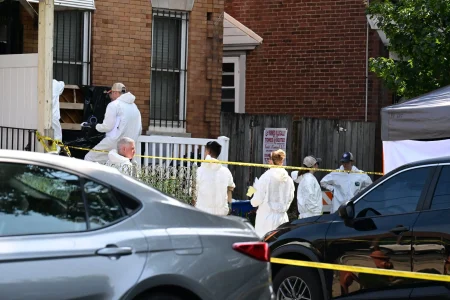
The arrest operation began in the early hours of Sunday morning, when teams from the Metropolitan Police Counter Terrorism Command, supported by the South West Counter Terrorism Unit and local armed response officers, moved simultaneously on several addresses. According to a statement released later that day, the five men were detained “as part of an ongoing investigation into a suspected terrorist plot.” At that point, the media had already begun reporting that RAF Fairford was the likely target, and local residents described seeing a sizeable police and emergency services presence along the roads surrounding the base. The investigation was led by experienced counterterrorism detectives, with support from technical units specialising in digital forensics and surveillance. It is understood that the intelligence package which prompted the arrests had been developed over a number of days, following a tip-off or observation that raised alarms. In such cases, the policing approach is almost always the same: arrest first, ask questions later. The theory is that preventing an attack must take priority over avoiding inconvenience to suspects. That approach has been widely praised in the past, but it also carries inherent risks. In this case, the evidence did not stand up. As the interviews progressed, it became increasingly clear that the men were not involved in any terrorist activity. They were not found in possession of weapons, extremist literature or any other material that might have supported a prosecution. Their homes were searched, but nothing incriminating was recovered. By the end of the questioning period, all five had been told that they would be released without charge.
The timing of the investigation is significant. RAF Fairford has been thrust into the public eye because of the escalating confrontation between the United States and Iran. For many observers, the idea that anti-Iranian sentiment could translate into a physical threat at a British air base seemed all too plausible. The Middle East has a long history of generating far-reaching security consequences, and the UK has repeatedly found itself caught in the middle. The country remains one of the United States’ closest allies, and its real estate has often been used as a launching point for American operations. During the Cold War, anti-nuclear protesters camped outside US bases. During the Iraq War, thousands marched against the use of RAF Fairford and other facilities. Today, the threat is less about mass protest and more about security. The government has consistently maintained that the UK itself is not directly involved in any war with Iran, but hosting US forces involved in that conflict creates a complex legal and strategic position. It also creates new vulnerabilities. British counterterrorism police have warned in recent years that the threat from international terrorism has become more diffuse, more unpredictable and more difficult to detect. Large, well-organised plots have given way to smaller online-inspired conspiracies. A single individual with a vehicle, a knife or a homemade device can cause enormous disruption. When a credible lead emerges, the instinct to act is overwhelming. The fact that this particular lead ultimately came to nothing does not mean that the threat to bases like RAF Fairford is imaginary. It merely means that this specific group of men was not part of it.
The decision to release all five men without charge will likely provoke a mixture of relief and criticism. Civil liberties advocates will see it as proof that the system is functioning correctly, with the burden of proof remaining a fundamental protection against arbitrary detention. Others may question why the men were arrested in the first place, or whether the police overreacted to what could have been a false lead. These are legitimate concerns. Counterterrorism investigations are inherently difficult to evaluate from the outside, because the public rarely gets access to the intelligence that triggered the operation. What looks like a false alarm may actually have been a narrow escape. Conversely, what looks like decisive action may at times be based on suspicions that turn out to be wholly unfounded. The police are unlikely to apologise for their conduct. They are paid to take precautions, not to wait until an attack is underway. In this case, the operation was carried out with a high level of professionalism: no one was injured, no property was damaged, and the suspects were released as soon as the evidence no longer justified their detention. That is exactly how a democratic counterterrorism system should behave. Yet the lingering question is whether the episode will have a chilling effect on future operations. If police become overly cautious about making arrests, they may miss a genuine threat. If they are too quick to arrest, they risk alienating communities and destroying reputations. The balance is a difficult one, and there is no simple formula.
All five men now return to their normal lives, but normal may not be the right word. To be arrested on suspicion of terrorism is a life-changing event, even if the suspicion is eventually dispelled. Neighbours, employers and even family members may see the men differently. The police have no legal obligation to publicise their exoneration, and the damage caused by a single news headline can linger for years. Still, the outcome of this investigation stands as a reminder of the importance of due process. British counterterrorism police have made it clear that they will not compromise on security. They also have made it clear, by this release, that they will not let anxiety override evidence. In an era when the language of terrorism is often weaponised and the slightest rumour can trigger panic, that commitment to restraint is more valuable than ever. The Ministry of Defence has offered no comment on the case, and the United States has not publicly altered its posture at RAF Fairford. The base remains fully operational. The war against Iran, if it can be called that, continues to unfold in ways that are difficult to predict. But for now, the immediate danger at RAF Fairford has passed. The investigation may remain open, but the men are free. And the silence from the authorities speaks louder than any press release: in a world of heightened threats, the law still has a final word. The uglier truth is that terrorism is messy, uncertain and often ambiguous — and the response to it is equally messy. The weekend’s events may fade quickly from the headlines, but they will not be forgotten by those who were caught in the glare of a very public security scare.