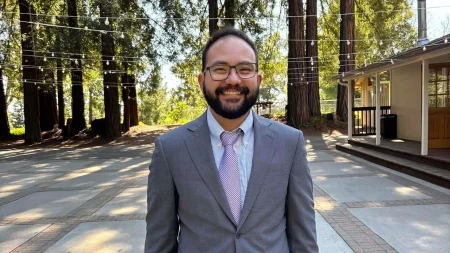



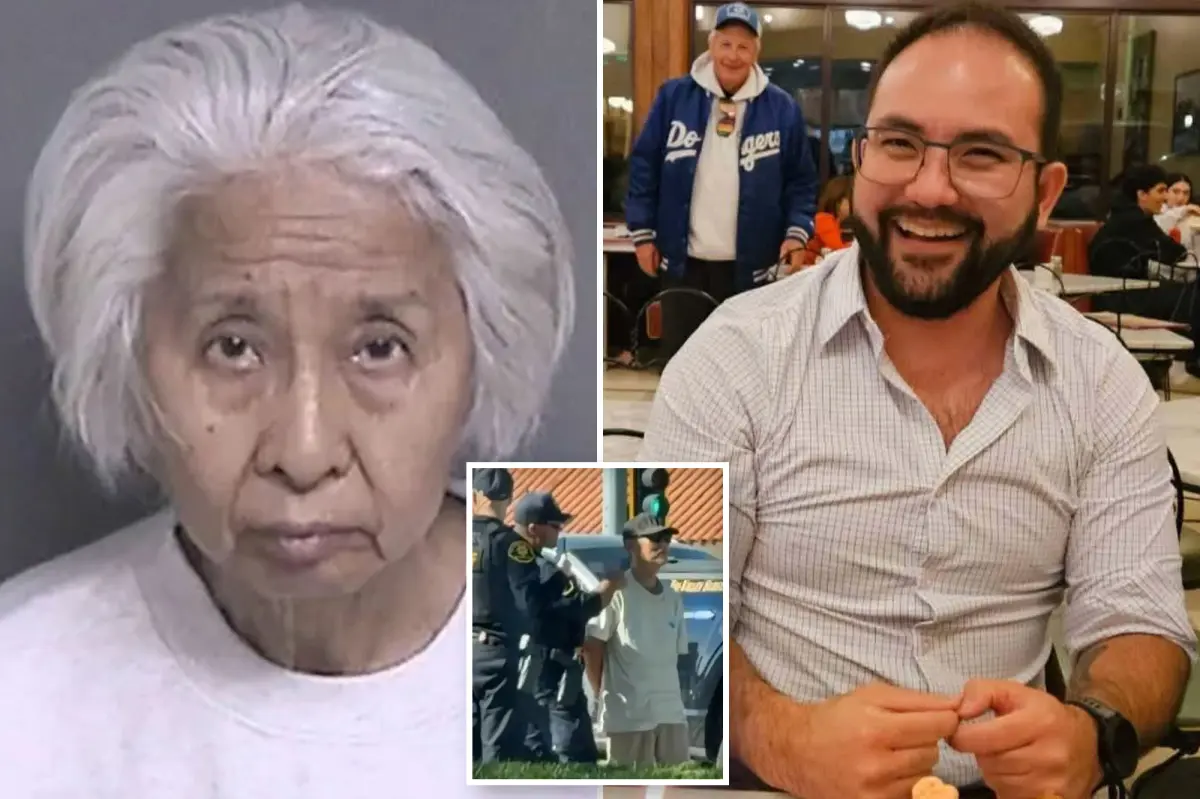
On a sunlit Saturday afternoon in Dublin, California, a quiet suburb east of San Francisco, the ordinary rhythm of a sports complex was shattered by gunfire. Jonathan McKinsey, a 40-year-old technology executive who served as The New York Times’ head of engineering for games player experience, had arrived at the parking lot, perhaps for a game, a practice, or some simple errand that would turn out to be his last. Around 3 p.m., he was shot and killed. Police quickly arrested two suspects: Shouyong Zhang and Shili Chen, both 77, who were charged with murder. The alleged attackers were not random strangers; they were McKinsey’s in-laws, the parents of the wife from whom he had been estranged. The shooting was the sudden, violent endpoint of a family conflict that had been documented in court filings for months. In those filings, McKinsey described a bitter war over his transgender identity, his marriage, and the couple’s children. The courtroom paperwork painted a picture of a family tearing itself apart in private, while the rest of the world saw only fragments afterward. Colleagues at The New York Times were left reeling. A newspaper spokesman confirmed that McKinsey was the victim and said he had worked for the paper since 2025. But to those who loved him, he was never merely a job title or a line in a police report; he was a person whose life was far more complicated, and far more tender, than any headline could ever convey. The tragedy in the parking lot was not an act of random violence. It was the final, irreversible chapter in a story that had been unfolding for years, involving identity, rejection, fear, and the kind of family pain that few people ever see from the outside.
According to the court records, the roots of the conflict stretched back more than a decade and were entangled with the most intimate details of McKinsey’s life. McKinsey was a transgender man who had transitioned from female to male in 2010, just one year before he married Candice Jang. What should have been a period of hope and new beginnings instead became a source of deep division. In a restraining order petition filed in December 2025, McKinsey claimed that Jang had tried to pull medical tubes from his body after he underwent a procedure, an act that would have been both physically painful and emotionally devastating. He also alleged that his mother-in-law, Shili Chen, branded him a “disgusting queer” and a “pervert,” words that he said were directed at him during an argument over one of the children’s clothing choices. Those alleged comments were not merely offensive; in context, they spoke to a family that seemed unwilling to accept who McKinsey was and ready to turn his identity into a weapon against him. The petition portrayed a marriage that had curdled into cruelty, a household in which the people who should have been his support system became sources of fear. McKinsey also claimed that Jang had beaten him with a frying pan in 2013 and had verbally abused their children. If those accounts are true, his home was never a truly safe place, and the legal system, which he asked to protect him, was the only refuge he had left. Behind every legal accusation was a human being trying to explain to a judge why his own family had become dangerous to him.
The image that emerges from McKinsey’s side of the story is one of sustained abuse and increasing desperation. In addition to the frying-pan incident and the alleged attack on his medical tubes, he accused his wife of verbally abusing their children and accused his mother-in-law of doing the same. He described arguments about clothing that escalated into slurs and threats, with Chen, Jang’s mother, allegedly joining in the mistreatment of the children. In December 2025, after 15 years of marriage, McKinsey asked a judge for a restraining order, hoping to create some distance between himself and Jang and to protect the children from what he described as a toxic environment. The court filings were part of a larger series of tit-for-tat legal moves, with each side accusing the other of abuse and domestic violence. But beyond the legal language, there is a deeply human story of a family falling apart: two parents who no longer trusted each other, children caught in the middle, and grandparents who had chosen sides. McKinsey may have been seeking protection, but he was also, perhaps, trying to preserve some stability for the young lives in the household. The courts had not yet finished untangling the mess when the situation turned lethal. It is impossible to read those documents without feeling the weight of the despair that must have surrounded them, and without wondering whether anyone, including the criminal justice system, could have done more to stop the cycle of escalation before it ended in violence.
The story, however, is not a simple one of victim and villain. While McKinsey was asking the court for protection, he was also facing criminal charges of his own. In 2025, Alameda County prosecutors charged him with two misdemeanor counts of child abuse. The charges stemmed from Jang’s report that McKinsey had struck her six-year-old son in the face with an open hand. Jang also told investigators about a 2018 domestic violence incident in which McKinsey allegedly bruised her left arm. When police went to the family home, they reportedly found a two-year-old child alone in an upstairs room while McKinsey was out shopping, a detail that a deputy sheriff recorded in a report. McKinsey pleaded not guilty to both child-abuse charges and was released from jail on the condition that he take parenting classes. These accusations are deeply troubling, and they complicate any attempt to paint McKinsey as simply a blameless victim of intolerance. It is possible for two uncomfortable truths to exist at the same time: he may have been the target of transphobic abuse and domestic violence, and he may also, at other moments, have behaved harmfully. The legal paperwork from this period shows a family in which tempers had spun out of control, where every dispute seemed to become a police matter, and where the children were exposed to events that no child should ever have to witness. The courts, designed to resolve disputes calmly, had instead become another arena in which the couple’s war was fought.
Taken as a whole, the record is a painful collage of mutual grievances, failed interventions, and escalating rage. McKinsey asked for a restraining order; Jang called the police; prosecutors filed charges; a judge imposed conditions. And still the conflict continued, until it reached a Dublin parking lot and ended in bullets. The two people now accused of murder are McKinsey’s in-laws, both 77 years old. They are presumed innocent until proven guilty, and the coming trial will determine what happened in that parking lot and why. But no court proceeding can undo the fact that a 40-year-old man is dead and that two children will grow up without one of their parents. The case also raises troubling questions about how domestic violence is understood when it occurs in queer and transgender families. McKinsey’s identity was used against him in the most personal way, according to his filings, and it may have played a role in the final catastrophe. Yet the justice system had to weigh that against the separate accusations he faced. In the end, there was no clean answer, no winner, no way to sort all the blame into two neat columns. There was only a family shattered into pieces, leaving behind documents, memories, and unanswered questions for everyone else to sift through. Whatever the courts decide, the tragedy reminds us that family conflict can be as dangerous as any street violence, especially when rejection and identity are caught up in the same storm.
In the aftermath, the people who worked with McKinsey are grappling with a loss that cannot be rationalized. A spokesperson for The New York Times confirmed his death and acknowledged his role at the company, where he helped lead engineering for the games player experience. To his colleagues, he was a creative and technical leader with a passion for building digital experiences. To his friends, he was someone who had navigated an extraordinary personal journey, only to find rejection and violence inside his own family. The children involved in this story are now left with questions they are too young to ask aloud: Why did their grandparents kill their father? Why did the adults in their lives hurt each other so much? Why did love and anger become so tangled? There are no easy answers. The case is a reminder that gender identity, family loyalty, and cultural expectations can become battlegrounds where ordinary disagreements turn tragic. It is also a reminder that transgender people, especially those whose families refuse to accept them, are disproportionately vulnerable to violence and rejection. As the murder case moves through the courts, the public may be tempted to choose a side. But the truth is more textured, more sorrowful, and more human than any headline can capture. The best anyone can do now is mourn Jonathan McKinsey, honor the complexity of his life, and hope that the children at the center of this tragedy will receive the care, patience, and peace they will need for years to come.