

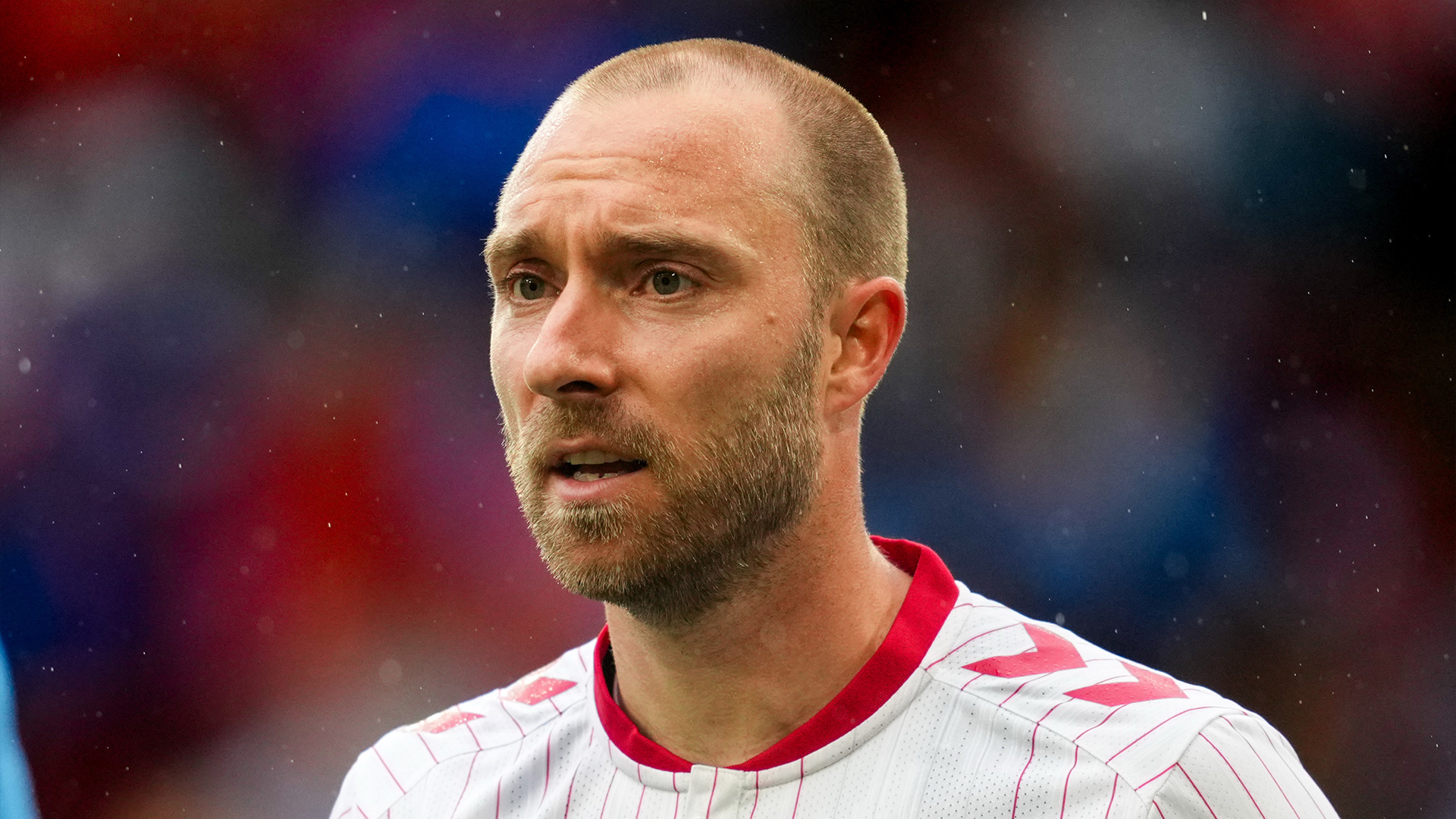
Christian Eriksen has once again forced the football world to pause and take a breath. The Danish midfielder, now 34, has agreed to terminate his contract with German club Wolfsburg, just under four months after he collapsed on the pitch during a friendly match between Denmark and Ukraine in Odense. The club confirmed the news on Wednesday, but for anyone who has followed Eriksen’s journey, this was never going to be a routine transfer-room announcement. It was, rather, a quiet, deeply human decision—a moment when a celebrated athlete looked past the calendar of fixtures and obligations, and chose something far more important. Eriksen has not played since that tense evening in Odense on June 7, when he clutched his chest and fell to the grass, sending a stadium into silence and a worldwide audience into collective fear. His contract with Wolfsburg was due to run until the end of June 2027, but sport, with all its rules and formalities, suddenly felt irrelevant. The story of Christian Eriksen was no longer about formations, transfer valuations, or tactical errors. It was about a man, a family, and the fragile line between life and everything else.
That line had been crossed once before, in a way that no one who saw it will ever forget. Five years earlier, during Denmark’s opening match at the European Championship in Copenhagen, Eriksen suffered a cardiac arrest in full view of the world. Players formed a protective ring around him as medical staff fought to bring him back to consciousness. The image was terrifying, and yet somehow, he survived. He walked off the field, eventually received an implantable cardioverter defibrillator, and against every reasonable projection, returned to the sport he loved. That return was celebrated as a triumph of modern medicine and human will. He played again for Denmark, he scored at the World Cup, he defended the colors of Manchester United and Tottenham, and he became a symbol of perseverance for countless people. So when he collapsed again in June, this time during a friendly against Ukraine, the familiarity of the image was perhaps the most horrifying part. It felt like a cruel sequel to a story that had already had its miracle ending. Players once again surrounded him, fans once again prayed, and the world once again waited for news that could not come fast enough. Eriksen later said he was “doing well” and that the ICD fitted after the 2021 incident had done its job. But those words brought only partial comfort. The emotional weight of watching him fall again, no matter how strong he appeared afterward, settled heavily on everyone who had watched his career and his recovery.
Since that day, Eriksen has been undergoing rehabilitation in Denmark, close to the people who matter most to him. The decision to separate from Wolfsburg, therefore, should not be seen as a scandal or a difficult exit, but as an act of self-knowledge. The club and the player reportedly agreed to the termination together, which suggests mutual respect and an understanding of the human circumstances involved. Eriksen had joined Wolfsburg as a free agent before the 2025-26 season, a season that ended with the club being relegated from the Bundesliga. In normal times, a player with his pedigree might be expected to stay, to help lead the club back to the top flight, to be part of a rebuilding project. But there is nothing normal about what Eriksen has endured. The familiar rhythms of a football season—training camps, travel, matchdays, recovery sessions—acquire a different meaning when every sprint over a certain intensity is accompanied by a memory of a body failing on a national stage. Wolfsburg’s fans may wonder what might have been, but the most honest reading of this announcement is that everyone involved chose to prioritize a human being over a squad sheet. Eriksen’s contract had another year and a few months to run, but contracts are made of paper and ink; life, as he knows better than almost anyone, is made of heartbeats.
In his statement, Eriksen was gracious and clear. “At the moment, it is important for me to be close to my family in Denmark,” he said. “I’m pleased that we were able to find a solution together. It was a great pleasure for me to play for you, and I will look back fondly on this period.” For those unfamiliar with the customs of football club announcements, these are not empty phrases. Eriksen has always been a measured, thoughtful presence—a player who lets his football speak, but who also understands the value of sincerity. His mention of family is not a gesture of polite farewell; it is the core of the entire decision. The need to be near his loved ones, to watch his children grow up, to wake up in a familiar place, to share ordinary breakfasts and bedtime stories, outweighs whatever ambitions a fading football career might still hold. There is a certain relief in hearing him speak with such calmness. The move to Wolfsburg had carried hope with it, of course. A new chapter, a new league, a chance to contribute in a different environment. But when your own body sends you a warning in front of thousands of spectators, the world of transfers and tactical formations can feel strangely small. Eriksen’s words do not sound like the voice of a man in conflict. They sound like someone who has made peace with the decision, who understands that strength sometimes means stepping away rather than pushing forward.
To fully appreciate the weight of this moment, one must remember the breadth of Eriksen’s career. He was the young visionary at Ajax, the elegant playmaker at Tottenham, the mature midfielder at Inter Milan, and the resilient figure at Manchester United. He was Denmark’s heartbeat for well over a decade, the player through whom so many national-team attacks flowed. His vision, his passing range, and his calmness on the ball made him one of the most respected midfielders of his generation. But the defining chapter of his story is not found in assists or titles. It is the one that began on that afternoon in Copenhagen, when he lay motionless on the grass, and then continued through months of recovery, into a spectacular return to the highest level. That return was never taken for granted by those who understood what he had survived. Every time he pulled on a shirt after that, whether for Denmark, Manchester United, or Wolfsburg, it felt like an affirmation of life itself. He went on to play in the 2022 World Cup and helped Denmark navigate difficult international campaigns. He did all of this with a device in his chest designed to restart his heart if it ever stopped again. That kind of courage cannot be measured in statistics. It can only be witnessed, admired, and remembered.
And now, perhaps, that extraordinary chapter is coming to an end. It may be tempting to ask whether Eriksen will ever play professionally again. The answer is unclear, and perhaps even he does not know yet. What he does know is that he wants to be in Denmark, with his family, in a place where he can recover in his own time and make decisions based on something deeper than obligation. There is no shame in that. Sports fans often speak about athletes as if they belong to us, as if their bodies and careers are part of a shared inheritance. But before Eriksen is a favorite player, a former Manchester United star, or a Denmark legend, he is a husband, a father, a son, a friend. He has given so much to football, and football has given him so much in return—fame, achievement, and a stage on which to prove that human beings can survive extraordinary trauma. Yet in the end, the most powerful lesson of his story might be that walking away can be as brave as staying. The decision to leave Wolfsburg without drama, without bitterness, and with a simple expression of gratitude speaks to a maturity that does not always appear in football. The next few months will be quiet for him, and that is okay. Somewhere in Denmark, a family will wake up each morning with a husband and father beside them. The stadiums will go on, the seasons will pass, and new stars will rise. But Christian Eriksen has already given the world something that no trophy can capture: proof that after the darkest moments, life can still be found, cherished, and protected—one quiet morning at a time.