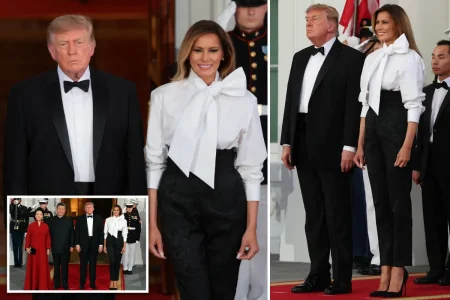



The White House on Tuesday unveiled the menu for the upcoming state dinner, a meticulously crafted three-course meal that speaks to the delicate art of diplomatic hospitality. The centerpiece will be a beautifully prepared sea bass accompanied by crisp bok choy, a dish that at first glance seems simple but carries profound meaning. According to officials, the menu features the finest American ingredients—farm-fresh produce and sustainably sourced seafood from across the nation—while weaving in a “subtle Chinese influence” designed to honor the visiting head of state and the deep cultural heritage of China. It is a menu that reflects a philosophy of harmony, of two great nations finding common ground not in grand gestures alone, but in the humble pleasure of a shared meal. The choice of ingredients and the gentle nod to Chinese culinary tradition signal a deliberate effort to build bridges, to show respect for a culture renowned for its deep appreciation of food as both nourishment and art.
The first course, as described by the executive chef who spent weeks in preparation, is a delicate pairing of flavors and textures designed to awaken the palate and set a tone of sophisticated warmth. While the exact recipe remains a closely guarded secret until the night of the dinner, the chef hinted that it would begin with a light seasonal soup, perhaps a velvety butternut squash purée drizzled with a hint of toasted sesame oil—a whisper of the East meeting the robust bounty of American autumn. The goal, the chef explained, was not to replicate Chinese cuisine, but to draw inspiration from its principles of balance: the interplay of sweet, sour, salty, and umami, and the emphasis on contrasting temperatures and textures. Each spoonful would carry the story of two lands—the richness of an American harvest, elevated by a technique or a spice that has been used in Chinese kitchens for millennia. It is a delicate dance, and the kitchen team spent days tasting and refining, ensuring that no single note overwhelmed another, but that all worked in concert, much like the relationship between the two nations they hoped to celebrate.
The main course, the sea bass, is the undeniable star of the evening. Sourcing the fish required a painstaking process of selection, choosing only the freshest, most pristine fillets from the cold, clean waters of the American coast. The preparation, however, will show its kinship with the East. The fish will likely be steamed to a perfect, flaky tenderness, a technique that is a hallmark of Cantonese cuisine, prized for its ability to preserve the natural sweetness and delicate texture of the seafood. The skin, crisp and golden, will provide a satisfying contrast, perhaps blistered in a screaming-hot wok with a splash of fragrant peanut oil. The accompanying sauce, a light reduction of soy, ginger, and scallion, is a classic Chinese preparation that is both simple and profound, designed to flatter rather than mask the fish. A single, glossy leaf of bok choy, its subtle bitterness balancing the richness of the dish, will be placed with artistic precision. The presentation will be minimalist, a hallmark of modern fine dining that also echoes the Chinese aesthetic of appreciating the natural beauty of ingredients. In that single plate, there is a culinary metaphor: an American staple, prepared with the wisdom and reverence of an ancient culinary culture, demonstrating that the two are not mutually exclusive but infinitely better together.
The much-discussed vegetable, bok choy, deserves a moment of its own. For many Americans, this humble leafy green, also known as Chinese cabbage, represents a familiar yet still slightly exotic taste of Asia, a staple in the stir-fries of countless home kitchens and takeout menus. Its inclusion on the White House menu is a powerful symbol, a gesture of cultural recognition. It is a vegetable that tells a story of migration and adaptation, of seeds brought to new lands and finding a place in a new world. Served simply, perhaps lightly charred with a touch of garlic and a glaze of high-quality soy sauce, it will be a showcase of its natural earthiness. The choice of bok choy is a departure from the usual state dinner fare of asparagus or green beans, and that departure is precisely the point. It signals a willingness to not just accommodate another culture, but to center it, to place its elements proudly on the table of the world’s most powerful nation. It is a quiet but profound statement of an inclusive American identity, one that is enriched by the diverse cultural threads that make up its fabric. The slight bitterness of the bok choy, contrasted with the sweetness of the fish, ensures that the meal has a complex, memorable finish.
The atmosphere in the State Dining Room will be as carefully curated as the menu. The table will be set with the iconic, gleaming white-and-gold china, a tradition that dates back to the Truman administration, but the centerpieces will be a fusion of American and Chinese floral design. Towering branches of cherry blossoms, a gift from Japan that have become a symbol of spring in Washington, will be intertwined with the autumnal beauty of American oak leaves and Chinese orchids. The soft glow of candelabras will cast a warm, flickering light on the sea of distinguished guests, a mix of politicians, business moguls, artists, and academics from both nations. The clinking of glasses and the low murmur of conversation will provide a steady, gentle hum. As the sea bass is presented with quiet ceremony, a hush will fall. In that moment, the food will transcend its ingredients. It will become the language of diplomacy. A shared glance, a nod of approval, a comment on the exquisite flavor of the broth. These small interactions are the building blocks of international relationships, breaking down barriers of language and politics. The success of the evening is not measured, and force of personality, but by the genuine connections forged over a shared appreciation for a beautiful meal.
Ultimately, the story of this state dinner is the story of “subtle influence”—a phrase that feels refreshingly modest in a world often defined by hard power. It acknowledges that cultural exchange is not about one side imposing itself on another, but about a soft, powerful, and lasting integration of ideas, tastes, and traditions. The menu is a diplomatic overture on a plate, a statement that the American dream is not a melting pot that erases differences, but a vibrant mosaic that gains strength from the harmonious coexistence of its distinct parts. By serving sea bass and bok choy, the White House acknowledges that the future of global leadership is intrinsically linked to mutual understanding, and that such understanding can be cultivated around a dinner table. In the end, the forkfuls of perfectly cooked fish and the delicate crunch of the stir-fried greens are more than just a meal; they are a quiet toast to partnership, a hopeful gesture toward a world where subtle influences can build the most enduring of bridges. Long after the dishes are cleared and the guests have returned to their hotels, the memory of that evening, and the taste of that dinner, will linger as a tangible example of the power of food to heal, to connect, and to inspire.