

The world of college athletics is rarely short on drama, but the situation unfolding in Bloomington, Indiana, has taken on a particularly urgent and personal dimension. As the Indiana Hoosiers prepared to open their Big Ten conference schedule against the Northwestern Wildcats, the fate of two of their most important defensive players hung precariously in the balance, decided not by a game plan or a last-minute tackle, but by a judge’s gavel. In a sweeping and decisive ruling, Monroe Circuit Court Judge Kara Krothe issued a preliminary injunction that granted defensive linemen Stephen Daley and Kellan Wyatt, along with more than ninety other athletes across the country, a crucial fifth year of eligibility. The decision, which immediately reinstated their ability to play, came just in time for Friday night’s game, cutting through a thicket of legal red tape and shifting the landscape of college sports yet again, even as the NCAA signaled its intent to appeal.
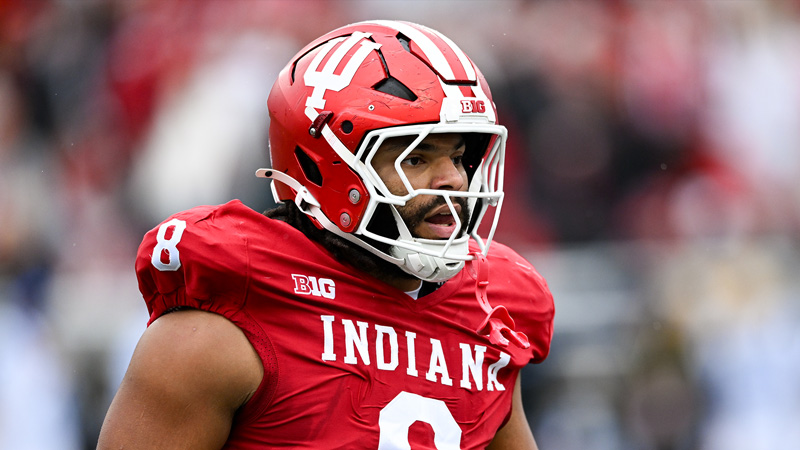
The ruling was not just a legal technicality; it was a lifeline for two young men who had dedicated their hearts to the Hoosiers’ championship aspirations. Daley and Wyatt were not just role players; they were starters on last season’s national championship team, integral cogs in a defensive line that helped define the team’s identity. Their paths, however, took a cruel turn. Both suffered season-ending injuries before Indiana’s playoff run, forcing them to watch from the sidelines as their teammates fought for glory. The injuries also derailed their professional ambitions. Neither was selected in April’s NFL draft, and neither signed a free-agent contract to participate in offseason workouts or training camp. This left them in a limbo that is becoming increasingly common in the modern era of college football: their collegiate careers were cut short by injury, but their professional doors were not open. The only path back to the field, and to a potential showcase for NFL scouts, was a fifth year of eligibility, a path the NCAA was blocking.
Judge Krothe’s 37-page opinion painted a stark picture of the consequences of inaction, framing the issue not in the abstract terms of association bylaws but in the concrete realities of a young athlete’s career. “The 2026-27 Division football, soccer, cross country, and field hockey seasons are underway,” she wrote. “Swimming and basketball seasons are fast approaching, with official practices for basketball beginning on September 21. 2026. Spring sports are around the comer.” She elaborated on the immediate and irreparable harm the players would suffer if the injunction were denied, stating that they had secured roster spots but would not receive scholarship aid or NIL payments until their eligibility was continued by court order. “If relief is denied, they will lose their roster spots,” she wrote. “College sports seasons are time-limited opportunities. Once lost, they cannot be restored, even if plaintiffs later prevail on the merits.” The message was clear: this was not a distant legal debate, but a ticking clock that threatened to permanently extinguish the athletic dreams of Daley, Wyatt, and their fellow plaintiffs.
For Daley and Wyatt, the ruling was a vindication of a painful and uncertain wait. They had testified in court the previous week, hoping for a swift decision that would allow them to face Western Kentucky. But the temporary restraining order that had allowed them to compete had expired, and when the judge’s decision did not come down before that game, they were held out of a 38-0 victory. It was a gut-wrenching experience, watching their teammates from the sideline knowing that their entire season hung on the whims of a legal process. They had already suffered the physical pain of injury and the emotional disappointment of not hearing their names called in the NFL draft; now they faced the existential dread of not being able to play at all. The uncertainty wasn’t just affecting their morale; it was affecting the team. Hoosiers coach Curt Cignetti has been a vocal supporter of their efforts, repeatedly stating his backing. After last weekend’s game, he alluded to the impact their absence had on the squad. “We’ve gotten better since the first game for sure,” Cignetti said. “You know, it sure will help if we have Wyatt and Daley. It’s hard to measure that. We’ll find out we think soon. But if not, we lost some key guys last year and other guys stepped up.” His comments reflected the practical and emotional void left by two of his most experienced and talented defenders.
This Indiana ruling is the latest, and perhaps most potent, explosion in a chaotic legal war that has engulfed the start of the 2026 college football season. The conflict began in June when the NCAA announced it would adopt a new eligibility model, allowing all athletes to compete for five college seasons over five years. The controversy ignited when the governing body stated this new model would not apply to the freshman class of 2022-23, a cohort that included players whose careers had been disrupted by the COVID-19 pandemic. This decision triggered a wave of litigation. In Colorado, District Judge Charlotte Sweeney ruled that some members of that freshman class could receive a fifth year, a decision so significant that it led some players already in NFL training camps to consider abandoning their professional contracts to return to the college game. That decision was eventually stayed by a federal appeals court, but the legal door had been opened. Lower courts, like the one in Bloomington, have now stepped into the fray, creating a patchwork of rulings that vary by state and jurisdiction.
Judge Krothe’s ruling is a forceful rebuke of the NCAA’s position, accusing the organization of breaching its own contractual obligations. “Under the plain terms of the 2026-27 NCAA Manual, they are eligible to compete, and the NCAA is breaching its contractual obligations by denying them that opportunity,” she wrote. She directly addressed the NCAA’s primary argument against the injunction—the potential harm to its operations—by dismissing it as minimal or nonexistent. “The NCAA regularly grants waivers allowing athletes five years to play, sometimes for hundreds or thousands of athletes at time,” she noted. “This injunction covers less than one hundred athletes across a multitude of sports.” This line of reasoning reframes the narrative, suggesting that the NCAA’s resistance is not about a principle of fairness but a stubborn refusal to adapt to the demands of a new era. The expected appeal from the NCAA will undoubtedly add another layer of uncertainty, but for now, the ruling provides a temporary sanctuary for Daley, Wyatt, and the other athletes covered by the injunction.
As Friday night approaches, the focus for Indiana shifts from the courtroom back to the gridiron. With Daley and Wyatt back in the lineup, the Hoosiers’ defense gains a formidable boost, restoring a level of experience and talent that had been sorely missed. For the players themselves, the ruling is more than just a legal victory; it is a chance to rewrite the final chapter of their college careers. They have been given an opportunity to return from injury, to contribute to their team’s success, and to prove to professional scouts that they are still capable of performing at the highest level. The larger issue, however, remains unresolved. This case, along with the others scattered across the country, raises fundamental questions about the structure of college athletics, the power of the NCAA, and the rights of the athletes who generate billions of dollars in revenue. While the courts will continue to wrestle with these complex issues, the story of Stephen Daley and Kellan Wyatt serves as a powerful reminder that behind the legal jargon and organizational policies are real people with real dreams, fighting for the chance to play the game they love. Their battle has been won for now, but the war over the future of college eligibility is far from over, promising a season of uncertainty and change that will likely define the sport for years to come.