


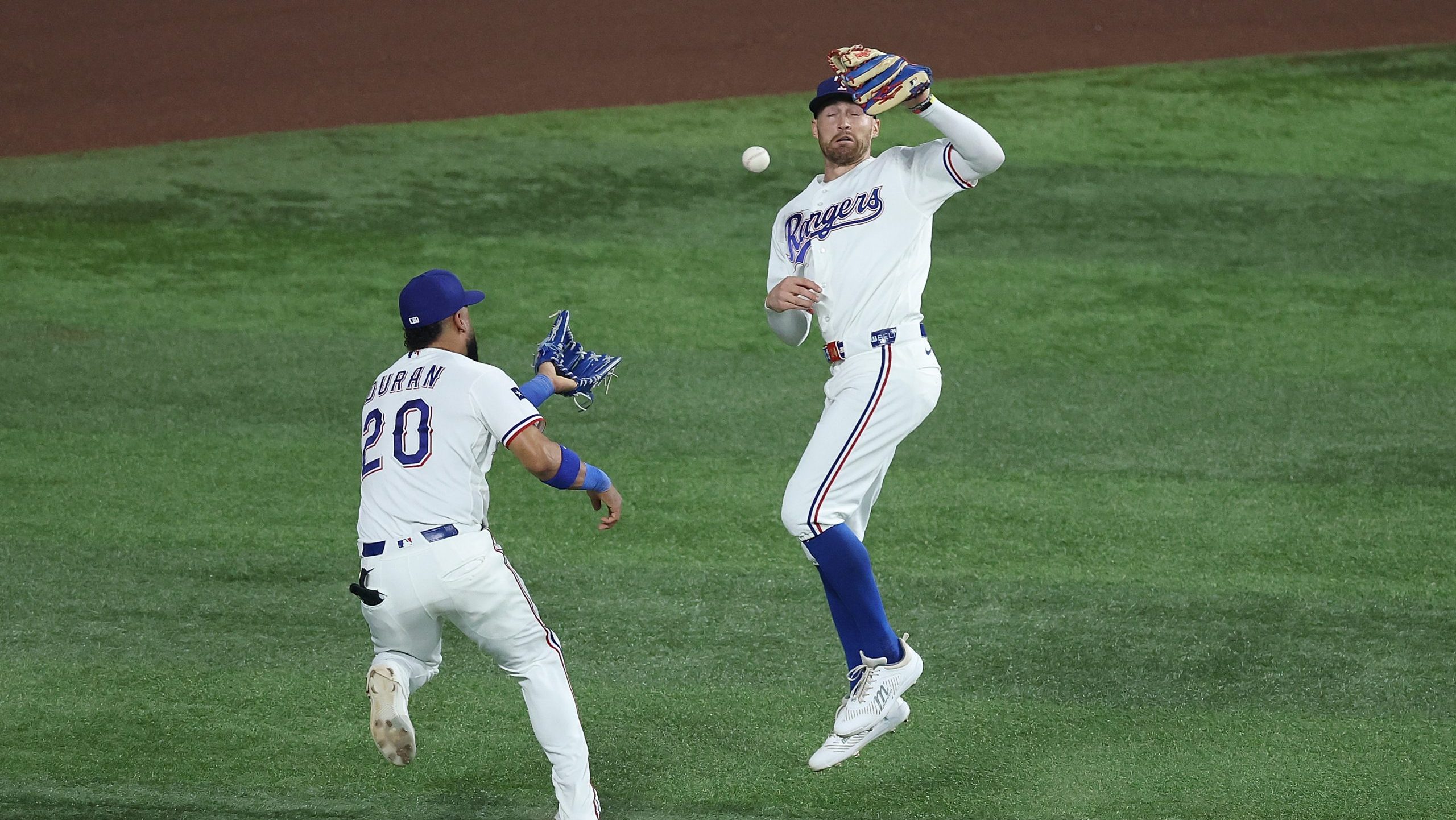
Baseball is a sport that loves to mythologize greatness, but it also has a quiet soft spot for the flawed, the staggered, and the not-quite-good-enough. That soft spot is about to be tested in the American League West. With just a few days left in the regular season, the Texas Rangers and Houston Astros were deadlocked at the top of the division with identical 78-79 records. A full-season division champion has never finished with a losing record, and yet here were two teams—one of them a recent World Series champion and the other a perennial powerhouse—tripping over themselves to avoid winning. It is the kind of mediocrity that would normally be forgotten, except the expanded 12-team playoff format has made October accessible to nearly everyone. The only previous times baseball had to squint and allow sub-.500 teams into the postseason were weird, asterisk-laden years. The pandemic-shortened 2020 season let in the Milwaukee Brewers and Houston Astros at 29-31. The strike-split 1981 season allowed the Kansas City Royals to sneak in with a 50-53 overall mark because they won the second half. And in 1994, the Rangers led a dreadful AL West at 52-62 before the players’ strike wiped out the playoffs entirely. Those were exceptions, freakish wrinkles in baseball’s schedule. This year could produce a true first: a champion of a full 162-game season with more losses than wins. It would be embarrassing, sure. It would also be very, very compelling.
The Mets of 1973 are the patron saints of this kind of hope. They were in last place at the end of August, six and a half games back, with an offense that seemed allergic to runs. Then Tug McGraw, their frantic, gospel-quoting reliever, gave voice to something desperate: “Ya gotta believe!” Somehow, the Mets did. They closed the season on a 21-8 tear, won the NL East by a game and a half, and entered the playoffs with a record of 82-79. Tom Seaver was still Tom Seaver, going 19-10 with a 2.08 ERA and 18 complete games, but the rest of the roster was a patchwork of aging veterans and unproven kids. They took on Cincinnati’s Big Red Machine in the NLCS and beat them with pitching, holding the Reds to eight runs in five games. That series is still remembered for the brawl between Bud Harrelson and Pete Rose, a moment of pure, uncontrolled emotion that somehow captured the fury of a team that refused to die. The Mets came within one victory of the World Series title, losing Game 7 to the Oakland A’s after taking a 3-2 series lead. But “Ya gotta believe” outlived them. Eleven years later, the Kansas City Royals made the playoffs by being less bad than everyone else. They were 84-78, with a run differential of minus-13, and they spent the middle of July eleven games below .500. George Brett hit just .284, his worst number in a 14-year span. The offense was not the story. The story was Dan Quisenberry, a closer with a submarine delivery and 44 saves, who threw 129 1/3 innings of relief and finished second in Cy Young voting. The Tigers swept the Royals in the ALCS, but that humbling defeat helped build the team that would win the World Series the next year. Sometimes you have to stumble into the postseason before you can walk on air.
The 1987 Minnesota Twins may be the most lovable frauds in World Series history. They finished 85-77, got outscored by 20 runs over the season, and still ended up holding the trophy. Frank Viola was brilliant, but the rotation around him was held together with duct tape: Bert Blyleven gave up 46 home runs, Joe Niekro had a 6.26 ERA, and Steve Carlton made seven starts that looked nothing like his Hall of Fame past. The lineup, though, could mash. Kirby Puckett finished third in MVP voting, while Kent Hrbek, Gary Gaetti, and Tom Brunansky each slugged more than 30 homers. The old playoff format did not reward regular-season records with home-field advantage, so the Twins got to play their home games at the deafening Metrodome despite finishing well behind Detroit. They went 6-0 at home in the playoffs, squeezing every bit of noise and chaos out of that air-supported building. It is impossible to watch footage of that run and not believe in the power of circumstance. A decade later, the 1995 Colorado Rockies were the first NL wild card, and they were a wonderful mess. Their staff ERA of 4.97 was the worst by a postseason team in a non-DH league during the live-ball era. But they led the league in runs, with Dante Bichette winning the home run and RBI crowns while finishing third in batting average. They were fun, explosive, and doomed. The 2005 San Diego Padres had none of that charm. They won the NL West with an 82-80 record and a minus-42 run differential, scoring the fourth-fewest runs in baseball. Jake Peavy was a legitimate ace and Trevor Hoffman was a Hall of Fame closer, but the starters as a group went 52-60 with a 4.49 ERA. In the NLDS, the 100-win Cardinals wiped them out in three games, and the Padres never held a lead at any point. They were a placeholder, a team that was invited to October simply because someone had to be.
The 2006 St. Louis Cardinals are the gold standard for average teams that found magic. They were 83-78, and in the final two weeks they nearly blew a seven-game lead in the NL Central. They went into October with a run differential of plus-19, which is to say they were ordinary. But ordinary can still be dangerous when the ordinary includes Albert Pujols and Scott Rolen, and when the pitching staff has Chris Carpenter and a baby-faced Adam Wainwright. The Cardinals won the division by a single game, then did what Cardinals teams of that era always seemed to do: they won the games that mattered. The NLCS against the Mets was an all-timer, and the decisive moment in Game 7 was pure October magic. Yadier Molina, a catcher known for his defense, launched a two-run homer in the top of the ninth, and Wainwright struck out Carlos Beltrán looking at a bending curveball that seemed to defy logic. The Cardinals went on to beat Detroit in five games for the championship. It was a reminder that the postseason is not a morality play; it does not reward the best team, only the one that gets hot at the right time. The 2017 Minnesota Twins were not that lucky, but they were still a wonderful surprise. One year after losing 103 games, they went 85-77, spent some time in first place, and captured the AL’s second wild card. Byron Buxton played 140 games and looked like the five-tool star he was supposed to be. Brian Dozier hit 34 home runs. Joe Mauer, moved to first base, hit .305. Ervin Santana, in his last good season, anchored the rotation. They lost 8-4 to the Yankees in the wild-card game, but no one in Minnesota could complain. The 2023 Miami Marlins were even more improbable. They reached October at 84-78 with a run differential of minus-57, one of the worst ever for a playoff team. They did it by going 33-14 in one-run games, a formula that is impossible to sustain and impossible to dismiss. Sandy Alcantara, Eury Pérez, Jesús Luzardo, and Braxton Garrett made the rotation competitive, and the offense was basically Luis Arraez, Jorge Soler, and a lot of anxious plate appearances. Seven of the team’s most-used hitters had negative WAR. They lost to the Phillies in two games, but they had already proven something that has no statistical category: survival.
Then came the 2023 Arizona Diamondbacks, who turned “just get in” into an art form. In late July, they still looked like a young team finding its way. Then August started with nine straight losses, and they sank below .500. They managed to stabilize, finished 84-78, and grabbed the third NL wild card with a run differential of minus-15. That was the unimpressive part. The impressive part came next. The Diamondbacks swept the Brewers in the wild-card round, then swept the 100-win Los Angeles Dodgers in a stunning NLDS. In the NLCS, they were outscored by the Phillies, 30 to 21, and still won the series in seven games, taking the final two games in Philadelphia. Just like that, a team that had spent most of the season looking like a footnote was in the World Series. They lost to the Rangers in five games, but the damage had been done: Arizona had proven that October can transform a mediocre regular season into an unforgettable championship run. The 2025 Cincinnati Reds were not as dramatic, but they were another example of how the expanded playoffs reward persistence. The Reds finished 83-79, with a solid run differential of plus-35, but very little star power. Elly De La Cruz was electric when he was on, and Hunter Greene was brilliant when he was healthy, but neither could carry the team alone. Cincinnati got the final NL wild-card spot by beating out the Mets on a tiebreaker, seven games behind the second wild card. Their best month was 15-11, their worst 12-15, and they spent the season hovering around .500 without ever collapsing. In the wild-card series, the Dodgers swept them in two games. The Reds did not make history or capture the imagination, but they still got a few October days. And in a sport where anything can happen, those days are all you need.
So what should we make of the AL West’s race to nowhere in particular? It would be easy to laugh at the Rangers and Astros, two teams with big payrolls and big expectations, fighting over a division title like two tired boxers in the last round. But the history of baseball is filled with champions who stumbled into October and then found their footing at exactly the right moment. The 1987 Twins were outscored and still won the World Series. The 2006 Cardinals nearly gave away their division and then took everything. The 2023 Diamondbacks had no business standing on the same field as the Dodgers, and they swept them anyway. The lesson is not that records are meaningless; over 162 games, they tell us a lot. But once the playoffs begin, the sample size shrinks, the pressure changes, and the team with the most momentum—or sometimes the most luck—can beat anyone. The Rangers have recent championship blood and a roster full of players who know what October demands. The Astros have a core that has been to the American League Championship Series more times than anyone can count and a knack for peaking when the lights are brightest. One of these teams will get the chance to prove that a losing regular season was just a prelude, not a prophecy. Baseball has always been a game of redemption, of second chances, of small moments that cascade into miracles. That is why we can’t look away. That is why Tug McGraw’s half-crazed cry still rings through the sport. Ya gotta believe—even when the record says you shouldn’t.