




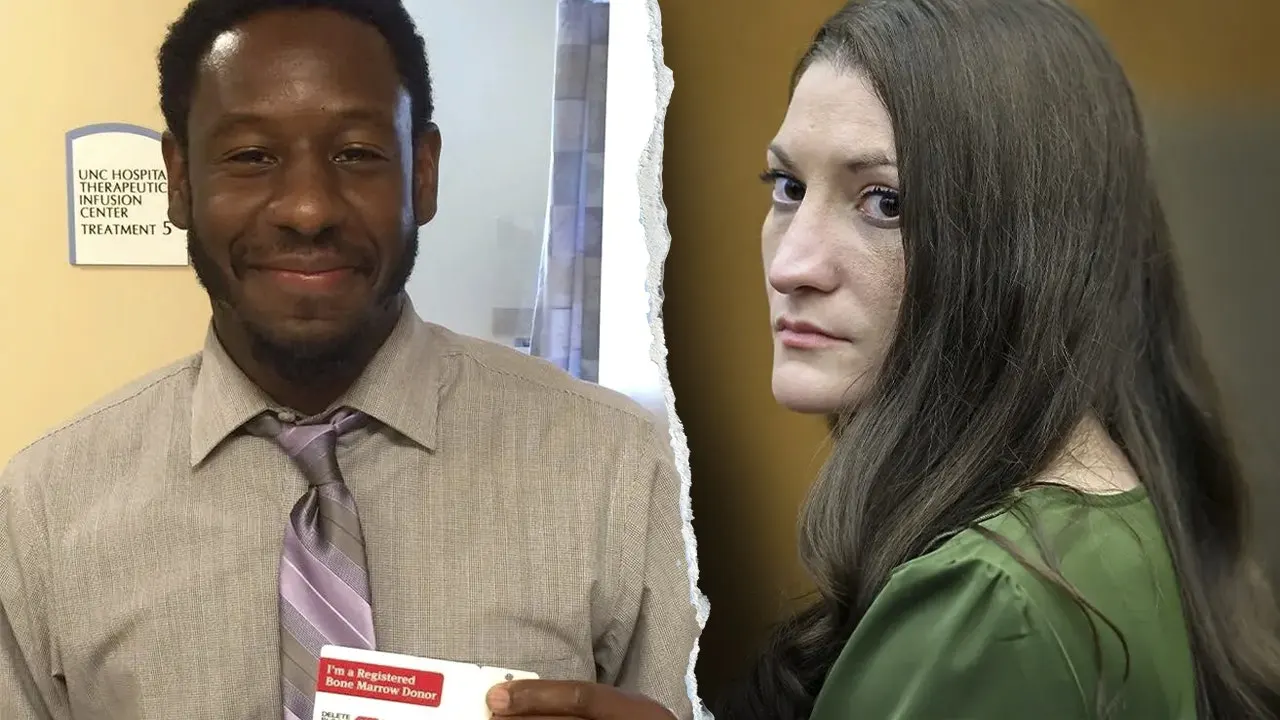
In the wake of a trial that left a community fractured and a family in mourning, the lone juror who refused to convict Lindsay Clancy of murdering her three children has stepped out of the shadows, not with apology, but with defiance—and a well-connected lawyer by his side. Michael P. Desronvil, the single holdout in a case that ended in a mistrial on September 4th, has retained Edward Paltzik, an attorney known for representing President Donald Trump in high-stakes media lawsuits, to protect his reputation and, as one legal scholar put it, to “stand up for himself.” The case against Clancy, a 36-year-old mother accused of strangling her 5-year-old daughter Cora, 3-year-old son Dawson, and 8-month-old son Callan in their Massachusetts home in January 2023, seemed to many to be a clear-cut tragedy of criminal intent. But the jury’s 11-1 split revealed a deeper, more painful division—not only over what happened that day, but over how the law should treat a mother who may have been in the grips of profound mental illness. For Desronvil, however, there was no ambiguity, no lingering doubt, and no room for second-guessing. His decision to remain silent during the trial, then to speak after the mistrial, and now to retain legal counsel, signals that he is not willing to be vilified for the hardest decision he has ever been asked to make.
Desronvil’s first public statement, confirmed by Paltzik, was striking not because it was long, but because it was unflinching. “I didn’t have any doubts,” he said. “As I tried to explain different possible theories during deliberation, I kept getting cut off as if I had doubts based on the evidence present. Based on all the physical evidence, key witnesses and what the prosecution presents, I thought it was enough proof that she knew exactly what she was doing and planned.” The words speak of a juror who did not drift into his position through confusion or sympathy, but who arrived there through a careful, if lonely, examination of the facts. In a case like Clancy’s, where the emotional weight of dead children pulls hard on the heart, Desronvil’s insistence on the prosecution’s burden of proof reads as both cold and courageous, depending on who is hearing it. He described being cut off during deliberations, a detail that paints a picture of a jury room not of calm exchange, but of tension and frustration, where a single voice refused to join the chorus. His decision to come forward, rather than vanish quietly back into private life, suggests a man who believes in his own judgment and wants the public to understand that his “not guilty” vote was not a failure to comprehend the evidence, but a firm conclusion that the state had met its burden. In a justice system that depends on unanimity, his was the one vote that prevented the state from securing a first-degree murder conviction against a mother who had already lost everything.
Enter Edward Paltzik, the lawyer now standing between Desronvil and the glare of public outrage. Paltzik is no stranger to hostile press. He represented President Trump in his lawsuit against The New York Times over an article that allegedly mischaracterized Trump’s business success as fraudulent, a case dismissed in 2025 but later refiled. He was involved in Trump’s suit against CBS over the “60 Minutes” interview with then-Vice President Kamala Harris, which settled for $16 million, and in the suit against ABC News that settled for $15 million—both settlements directed toward Trump’s future presidential library. Paltzik’s resume screams legal heavyweight, but his work for Desronvil is about something more personal than political intrigue. In a statement, Paltzik called Desronvil an “American Hero” and a “Champion of Justice,” adding that “we are focused entirely on his health, safety, and well-being. There will be a time for accountability and a time for the real story of the Lindsay Clancy Trial to be told. But not right now.” That kind of language is not typical for a juror. It is the language of a defender who believes his client is being unfairly targeted for doing his duty. The reference to “health, safety, and well-being” is telling; it suggests that Desronvil has faced threats, harassment, or at least such intense public pressure that he needed to shield himself behind legal representation. To be a holdout juror in any high-profile case is to invite criticism, but in a case involving murdered children and a mentally ill mother, the judgment of the public can be merciless. Paltzik’s presence changes the dynamic: Desronvil is no longer a passive figure in the story, but an active one, with a voice, a strategy, and a team.
Mark Astor, a former prosecutor and behavioral health law expert, told Fox News Digital that Desronvil’s move to retain counsel was entirely understandable, especially given the backlash he has faced since the mistrial was declared. “I think there’s certainly some indication that his name and reputation is now being dragged through the mud,” Astor said. “The other issue, obviously, is he’s basically been attacked not just by potentially the other jurors, but by Mr. Reddington on the foot of the courthouse, since we had that mistrial declared by the judge. So, I mean, I think he feels like he needs to, you know, at least stand up for himself.” The mention of Kevin Reddington, Clancy’s attorney, is a reminder that the fight did not end in the courtroom. Reddington, speaking after the mistrial, signaled openness to a deal and expressed hope that the district attorney would “revisit” the case, a statement that could be read as a plea to spare his client a second trial. But for Desronvil, being publicly criticized by the defense attorney is only part of the burden. Astor framed the larger concern: when jurors are dragged into public battles, the entire institution of the jury is threatened. “I think it’s a terrible thing that we’re having to see this,” Astor said. “The whole idea of the jury is sort of this sacred arena where jurors get to decide a verdict in a case. And now we’re taking what is really a sacred arena, and we’re exposing it to the public.” That is the quiet tragedy of the Clancy case. After all the evidence, all the expert testimony, and all the hours of deliberation, the verdict is not justice but a beginning of a new kind of litigation—one waged in the court of public opinion, where a juror’s name becomes a headline and his character becomes a battlefield.
Behind the legal maneuvering and media statements lies the human story that started it all: three young children who lost their lives at the hands of their own mother. Lindsay Clancy, a nurse, had reportedly struggled with mental health issues, including postpartum depression and anxiety, and her case became a flashpoint for national conversations about maternal mental illness, criminal responsibility, and the limits of the insanity defense. To some, Clancy is a victim of a broken mental health system, a woman so overwhelmed by postpartum psychosis that she could not distinguish right from wrong. To others, she is a calculated killer who planned the deaths of her children and deserved to be convicted of first-degree murder. The jury’s inability to reach a unanimous verdict suggests that both perspectives found resonance in the deliberation room. The 11 jurors who voted to convict reportedly believed the prosecution proved premeditation and criminal responsibility. Desronvil, the lone holdout, apparently believed the same, based on his statement—he said “she knew exactly what she was doing and planned”—so why did he vote not guilty? It is a question that has confused many. In some cases, a holdout might vote not guilty to send a message about the death penalty, or to express doubt about a lesser charge, or to force a compromise. But Desronvil’s statement implies he found her guilty of knowing and planning the acts, yet perhaps did not believe the state had proved something else—maybe specific intent, maybe the absence of extreme emotional disturbance, maybe the legal definition of criminal responsibility in the context of mental illness. Without hearing his full reasoning, the public is left with a frustrating ambiguity, and Desronvil is left with the burden of having made a decision that could result in Clancy being retried, or reaching a plea deal, or walking free.
As Plymouth County prosecutors decide whether to retry Clancy, and her defense team raises the possibility of resolving the case without another trial, the next chapter in this tragedy is far from written. Clancy is due back in court on September 29th for a status hearing, where more information about the future of her case may come to light. If the district attorney moves forward with a retrial, the case will rely on finding a new jury—12 individuals willing to step into the same “sacred arena” that left Desronvil in need of legal protection. That is a sobering thought. Who, after watching a juror be called an “American Hero” on one side and attacked on the other, would want to serve? Who would want to face the possibility of becoming a public figure, having their name plastered across news sites, and retaining a lawyer just to sleep peacefully at night? The system that depends on ordinary citizens to render verdicts is now confronted with the uncomfortable reality that in high-profile cases, the verdict is only the beginning. As for Desronvil, his lawyer says he will not be doing further media interviews at this time. His focus is on “health, safety, and well-being,” and on waiting for the story to be told in full. But whether that story will be told in a courtroom, in a plea deal, or in the confessional pages of a memoir is impossible to say. What is certain is that three children are buried, a mother remains in custody, and a juror who believed he was simply following the evidence has become a central figure in one of the most painful and divisive trials of the decade. In the end, the mistrial was not a verdict of innocence, nor a conviction of guilt. It was a declaration that even after all we know, there are things we cannot agree on—and that sometimes, justice is not a verdict, but a conversation we are forced to continue.