


Paragraph 1: The Resurfacing and the Political Storm
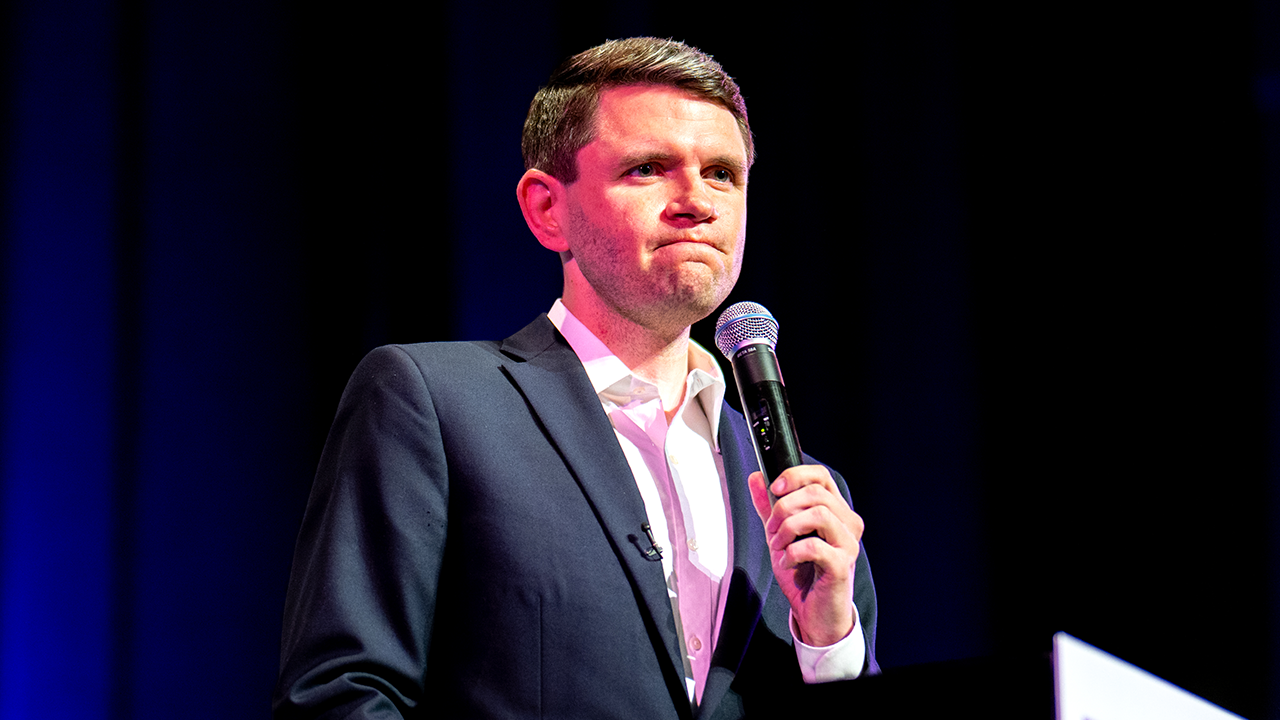
In the brutal, unforgiving arena of American politics, where a single phrase spoken years ago can detonate like a landmine in the present, Texas Democratic Senate candidate James Talarico has found himself at the center of a fresh firestorm. A resurfaced video from a June 2024 appearance on the MeidasTouch Network’s The Weekend Show has ignited fierce criticism, painting the young state representative as a man skeptical of America’s democratic health. In the clip, Talarico, who was then a long-shot candidate but is now the official Democratic nominee facing Republican Attorney General Ken Paxton, made a candid admission that cuts against the grain of traditional political rhetoric. He stated that the United States had not “lived up to the promise of democracy” and expressed profound concern that the nation was “backsliding” from its foundational ideals. This raw, introspective moment—captured before the grueling campaign season truly began—has now become a flashpoint in a high-stakes Texas Senate race. The clip’s circulation on social media drew the attention of tech billionaire and vocal conservative Elon Musk, whose curt, dismissive reply—simply “No”—sent the controversy viral. For Talarico, a former middle school teacher and Presbyterian seminarian, the resurfaced interview encapsulates a fundamental tension: how does a progressive candidate criticize the nation’s flaws without being branded an “America-laster” in a state where patriotism is often equated with unflinching praise? The answer, as his campaign has quickly learned, is that nuance is a luxury rarely afforded in the red-hot crucible of a statewide election, particularly when juxtaposed against the formidable and combative political machine of Ken Paxton.
Paragraph 2: The Interview, the Ideals, and the “Beloved Community”
The context of the original remarks reveals a man grappling with the philosophical underpinnings of governance rather than a politician delivering a stump speech. During the June 2024 conversation with Anthony Davis, Talarico was likely engaged in the kind of intellectual introspection that defines his background—a mix of theological study and public service. When he spoke of the United States “backsliding” on democracy, he was tapping into a broader anxiety felt by many progressives regarding voting rights restrictions, partisan gerrymandering, and the erosion of institutional trust in the post-Trump era. But the most inflammatory part of his statement was his suggestion that Americans should look to Western European nations for “inspiration” on how to continue the democratic “experiment.” To critics, this implied a rejection of American exceptionalism; to Talarico, it seemed to be an appeal to learn from peer democracies that have implemented robust social safety nets, proportional representation, and higher voter turnout rates. His invocation of a “true democracy” and a “beloved community” is telling—the latter phrase is a concept popularized by theologian and civil rights leader Martin Luther King Jr., signifying a society based on justice, equal opportunity, and love for one’s neighbors. For a man who spent time in a seminary, these are not just political buzzwords but spiritual aspirations. However, in the digital age, the nuanced context of his theological and philosophical influences was stripped away, leaving a simple, damaging soundbite. The resurfacing of this clip forces voters to consider whether Talarico is a patriotic reformer seeking to perfect the nation, or a cynical critic who believes the American experiment has failed, a question that now defines his political survival in a deeply conservative state.
Paragraph 3: The Campaign’s Defense and the Paradox of Patriotism
Faced with the viral backlash, Talarico’s campaign moved quickly to reframe the narrative, attempting to build a bridge between his critical remarks and a deep-seated love for his country. Campaign spokesperson JT Ennis issued a statement firmly asserting that James agrees with the “majority of Texans that America is the greatest country in the world” and that Texas is the “greatest state in the union.” Ennis pivoted to the aspirational language of the U.S. Constitution, noting that Talarico is fighting for a “more perfect union”—a phrase that inherently acknowledges imperfection. This defense highlights a classic American paradox: the ability to criticize the nation’s shortcomings as an act of profound patriotism. Yet, this framing is a hard sell in the current political climate. The Republican Party, particularly in Texas, has increasingly championed a form of nationalism that views any suggestion of comparative inferiority—even when couched in the rhetoric of improvement—as heresy. The contrast with Ken Paxton could not be starker. Paxton, a firebrand who has built his career on challenging the federal government and defending conservative orthodoxy, represents a vision of America as a beacon of unquestioned supremacy. For Talarico, the challenge is immense: he must convince moderate and independent voters that his belief in democratic backsliding is not a rejection of the nation, but a desperate plea to rescue it from what he views as authoritarian trends. The human reality is that Talarico is walking a tightrope, attempting to speak truth as he sees it while acknowledging the emotional weight of the flag and the nation it represents—a balancing act that often leads to missteps in the unforgiving theater of campaign politics.
Paragraph 4: The Broader Culture War and the Faith Controversies
The “backsliding” controversy does not exist in a vacuum; it is part of a tapestry of resurfaced comments that Republicans have eagerly weaponized to paint Talarico as a radical leftist out of step with Texas values. Perhaps the most damaging have been his remarks about his own Christian faith, where he described himself as a Christian who “hates Christianity,” and his provocative assertions that “God is nonbinary” and that there are six biological sexes. These statements, stripped of their theological and biological nuance, are political dynamite in a state where evangelical voters form a powerful bloc. Talarico’s campaign has tried to explain that his “hate” is directed at the institutional church’s historical hypocrisy and the weaponization of scripture to justify greed, violence, and exclusion, not at the person of Jesus Christ or the core tenets of the gospel. Similarly, his comments about a nonbinary God likely stem from theological discussions about the ineffable nature of the divine, which transcends human gender constructs, while his “six sexes” comment references the biological reality of intersex conditions and the spectrum of sexual development. However, these nuanced explanations are easily drowned out by the sheer force of conservative outrage. Paxton’s campaign and allied groups like the Lone Star Liberty PAC have seized on these gaffes to frame Talarico as an “America-laster” and a cultural outsider. For Talarico, a devout man who wears his faith on his sleeve, this is deeply personal. He represents a new generation of progressive Christians who are trying to reconcile modern social justice movements with ancient scripture, a path that often puts them at odds with the conservative religious right. Yet, in the brutal simplicity of political advertising, complex theological musings become thirty-second attack ads, reducing a man’s faith to a series of shocking soundbites that overshadow his legislative record and his vision for Texas.
Paragraph 5: The Flag, the “America-Laster” Label, and the Battle for Symbolism
Compounding the controversy over democracy and faith is the ongoing debate over the American flag itself. In July, the Lone Star Liberty PAC, a conservative political action committee, launched a scathing critique labeling Talarico an “America-laster” after he described the American flag as a “complicated symbol.” This comment, much like the others, was immediately cast as an insult to the millions of veterans, active-duty service members, and citizens who view the flag as a sacred representation of freedom and sacrifice. However, Talarico’s intention, as his campaign later clarified, was not to disrespect the flag, but to acknowledge the duality of American history—the flag represents both the soaring ideals of “freedom, opportunity, and hope” and the ugly legacy of slavery, genocide, and systemic injustice. In a nation grappling with critical race theory and the 1619 Project, the flag has become a polarized emblem. For many conservatives, the flag is a monolithic symbol of pure virtue; for many progressives, it is a complex artifact that must be examined with honesty. Talarico, a former educator, understands this complexity intellectually, but politically, it is a liability. By suggesting the flag is “complicated,” he inadvertently aligned himself with the left-wing critique that America’s founding was flawed, a position that is politically toxic in a state like Texas. The human element here is tragic: Talarico’s attempt to offer a mature, nuanced historical perspective is being used to define him as someone who is ashamed of his country. The “America-laster” label is designed to dehumanize him, casting him as an outsider who does not share the patriotic fervor of the average Texan. As the campaign against Paxton intensifies, Talarico must find a way to reclaim the narrative, explaining that loving one’s country can involve a clear-eyed acknowledgment of its historical sins, while still fighting to ensure its future greatness—a task that seems almost Sisyphean in the current media landscape.
Paragraph 6: The Stakes, the Polls, and the Future of Texas Democracy
As the general election approaches, the race between James Talarico and Ken Paxton has taken on national significance, with a recent shock poll showing Talarico tying Paxton in a state long considered a Republican stronghold. This statistical dead heat suggests that despite the mountain of controversial soundbites, there is a substantial appetite in Texas for change, or at least a deep unease with Paxton’s own legal troubles and combative style. The resurfaced interview, the faith controversies, and the flag debate are all part of a broader existential question: Can a progressive Democrat win in Texas by running on a platform of democratic reform, social justice, and a redefined Christian morality? Talarico’s path forward requires him to humanize himself beyond the attack ads. He must stand on debate stages and look voters in the eye, explaining that his desire to study Western European models of governance is not a rejection of American values but a pragmatic search for solutions to real problems like healthcare costs, education funding, and voter suppression. The human reality of this campaign is that Talarico is a young, idealistic former teacher who genuinely believes he can bring a fresh perspective to the U.S. Senate, challenging the status quo of both parties. Yet, he is running against the machinery of the Texas GOP, which is adept at using cultural wedge issues to mobilize its base. The “backsliding” comment, while deeply offensive to some, may actually resonate with the growing number of Texans who feel disenfranchised by the state’s restrictive voting laws and the partisan gridlock in Austin. Ultimately, the election will be a referendum not just on Talarico’s controversial words, but on the very soul of Texas—whether it embraces a nostalgic, defiant nationalism or a forward-looking, critical patriotism. For Talarico, the fight is deeply personal; he is betting that voters will see beyond the labels of “America-laster” and “radical,” and instead see a passionate public servant who, in his own flawed and human way, is desperate to ensure that the promise of democracy—for all its backsliding—remains a living, breathing reality for generations to come.