



It takes only one person to stop a verdict. In the small, tense world of a courtroom, twelve jurors sit in silence, each carrying the same awful weight, and when they file back into the jury box, the entire nation holds its breath. For weeks, the trial of Lindsay Clancy had drawn intense attention, not because the facts were simple, but because they were so unthinkable. A young mother, a nurse, a woman described by neighbors as devoted and by her own family as deeply unwell, stood accused of ending the lives of her three children in a single devastating night. The prosecution argued premeditation and murder. The defense painted a portrait of mental illness spiraling out of control. The jury listened to doctors, experts, witnesses, and the raw testimony of a grieving father, and then they retreated to deliberate. But in the end, they could not agree. The judge declared a mistrial after the panel split 11 to 1, and from that fracture emerged a name that became a symbol of the case’s impossible moral complexity: the lone holdout. Now, for the first time, that juror’s family is speaking, and their words do not offer clarity so much as a quiet, human reminder of what it means to sit in judgment of another person’s worst moment.
The lone holdout’s brother, speaking to the New York Post, did not try to explain the verdict or defend the choice. He simply described a man who did what he felt obligated to do. “For me, that’s how I would do it,” the brother said. “I would just listen to the case with all the evidence, and go from there.” Those words are strikingly ordinary, almost understated, in the face of a decision that will be debated for years. But that ordinariness is precisely what makes it human. The brother did not claim that his sibling had answered every question, nor that he had found certainty that would satisfy anyone else. Instead, he described the process as a patient, deliberate act: look at the evidence, weigh it, and make the call. “His choice was good for some people, but not good for other people,” the brother added, acknowledging the deep divide that has followed the case. He also pushed back on one popular rumor that had begun to circulate in online forums and televised commentary—the idea that religion had played a role in the holdout’s decision. “I don’t think religion had anything to do with it,” he said plainly. In that one sentence, he rejected the easy explanations, the tidy theories that so often reduce a juror to a caricature. This was not about faith, he insisted, at least not in the way outsiders imagined. It was about something more personal, more grounded: a person facing an impossible task and trying to do right by his own conscience.
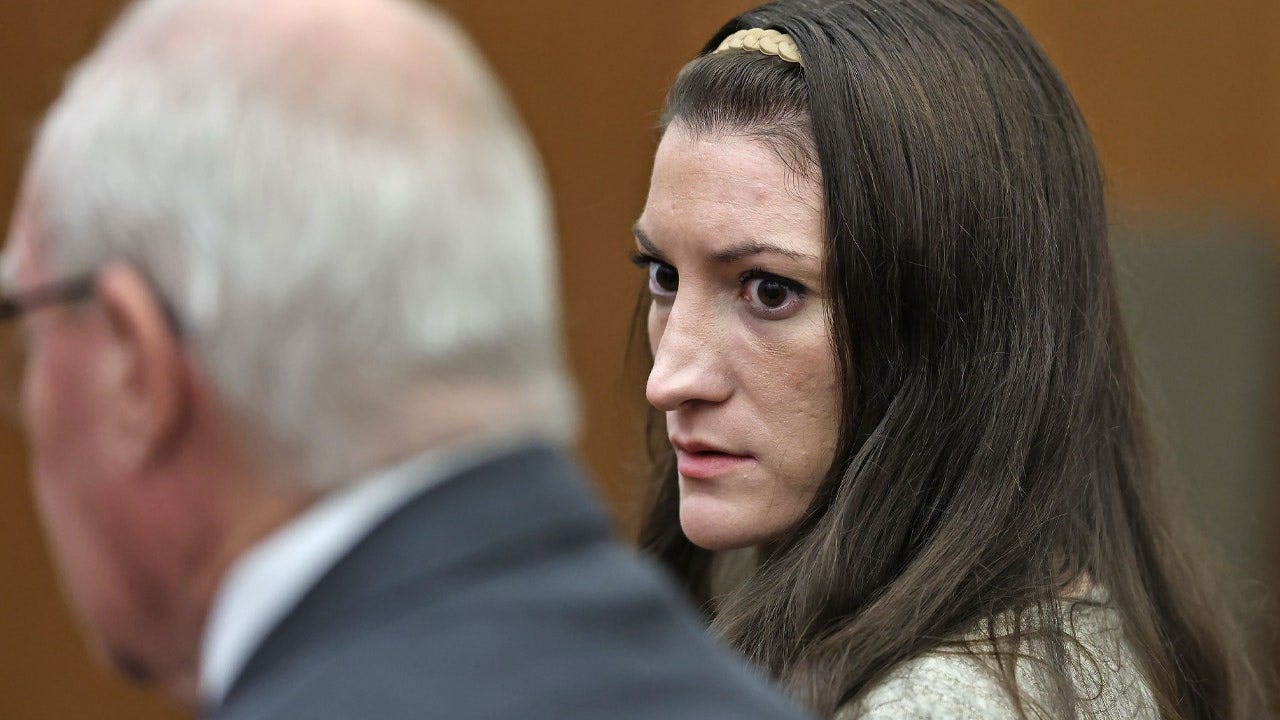
The tragedy at the heart of the case is almost too heavy to hold. Lindsay Clancy, thirty-six, was charged with three counts of first-degree murder in connection with the deaths of her children—five-year-old Cora, three-year-old Dawson, and eight-month-old Callan. They were found strangled in the family’s home in January 2023, after officials responded to what began as a frantic call. The scene has been described in court as one of indescribable horror, but also as the aftermath of a woman who appeared to be in the throes of severe psychiatric crisis. Over the course of the trial, the jury heard about Clancy’s struggles with her mental health, her reported history of anxiety and postpartum symptoms, her medication, her journals, and the slow unraveling that preceded the deaths. The prosecution, however, argued that the level of detail and planning in the killings showed criminal intent, that Clancy knew what she was doing, and that she should be held accountable. The defense countered with a portrait of a woman whose mind had been shattered, who loved her children but could no longer perceive reality clearly, and who, under the law, could not be held morally responsible for actions she took while legally insane. The jury was asked to resolve the single most difficult question in criminal law: whether a person who commits an unthinkable act can still be considered capable of evil, or whether illness can erase culpability entirely.
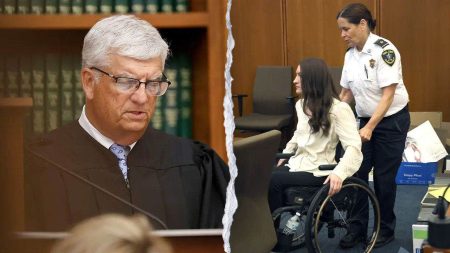
For weeks, the panel deliberated. At first, there were reports of intense debate, of jurors revisiting testimony, of notes sent to the judge asking for clarification on legal definitions. The law requires unanimity in a criminal verdict, and that requirement exists to ensure that no one is convicted without collective confidence in the guilt. But when a jury is split so dramatically—eleven for one outcome, one for another—it becomes clear that the evidence itself did not produce certainty. The lone holdout was not simply being stubborn, according to his brother; he was engaged in a deep, conscientious effort to satisfy the oath he had sworn. In the end, Judge William Sullivan declared a mistrial on September 4, releasing the jurors and leaving the case unresolved. For the Clancy family, for the memory of the children, and for Lindsay Clancy herself, it was an ending without closure. Prosecutors now face the decision of whether to retry her, a possibility that could prolong the pain for everyone involved. A mistrial in a case like this is rarely experienced as a win by anyone. It is an acknowledgment that twelve people, looking at the same evidence and listening to the same witnesses, could not find a common truth. And that failure is not a flaw in the system; it is a reflection of how deeply this particular case divided even those who dedicated themselves to following the facts.
There is something profoundly lonely about being the lone holdout. Imagine sitting in a small room with eleven other human beings, all of whom have reached one conclusion, and knowing that you cannot join them. Imagine the pressure, the exhaustion, the whispers. The brother’s words suggest that this juror did not come to his position lightly, and that he did not enjoy being the one to block a verdict. He simply could not do otherwise. “He looked at the case, and he made the call,” the brother said. That blunt statement carries a certain dignity. It does not dress up the decision in grand language about justice or morality. It does not claim that the juror knew something the others did not. It acknowledges that any choice in this situation would be a choice between unhappy options, and that whatever he chose would leave someone feeling betrayed. “Good for some people, but not good for other people,” the brother repeated, and in that simple phrase lies the whole tragedy of criminal justice. Every verdict, every judgment, every act of legal conclusion has a human cost. The jury is meant to be a bulwark against tyranny, but it is also a body of flawed, feeling people who must carry the weight of their decision for the rest of their lives. For the lone holdout, there is no anonymity anymore. His face, or at least his role, has become part of the public story. Strangers will criticize him, some will praise him, but no one except him and the other eleven will ever know what happened in that room.
In the end, the story of the Lindsay Clancy trial is not just a story about a mother and her children. It is a story about how a community tries to make sense of the senseless, how courts attempt to translate human suffering into legal categories, and how twelve ordinary people are asked to do the extraordinary: to decide whether a woman who murdered her babies was a monster or a victim of her own broken mind. The brother’s brief remarks offer no solution to that riddle. He did not claim to know what happened, nor did he ask anyone to forgive or condemn his sibling’s vote. He simply reminded us that the man at the center of the holdout was a human being, one who listened, weighed, and decided as best he could. That humanizing detail matters, especially in a media environment that often reduces jurors to pawns in a larger narrative. The brother’s refusal to inflate the story, his insistence that religion was irrelevant and that the process was a matter of evidence and conscience, brings the entire spectacle down to a more intimate level. We are left with all the questions still unanswered: Will there be a retrial? What happens to Lindsay Clancy? How do families heal? Can justice ever be truly served in a case where the victims were children and the accused was their mother? Perhaps the only honest answer is the one the juror himself seems to have reached: that after all the testimony, all the arguments, all the tears, there is no verdict that can bring peace. There is only the quiet, painful act of making a call and living with it. And that, in the end, is the human condition—not certainty, but choice; not resolution, but responsibility. The brother understood that. And for those who watched the trial from afar, it may be the closest thing to wisdom the case can offer. As the story continues to develop, and as the legal process moves forward, we would do well to remember the lone holdout not as a hero or a villain, but as a person who sat in judgment under impossible circumstances, and who, after looking at all the evidence, made the only call he could live with.