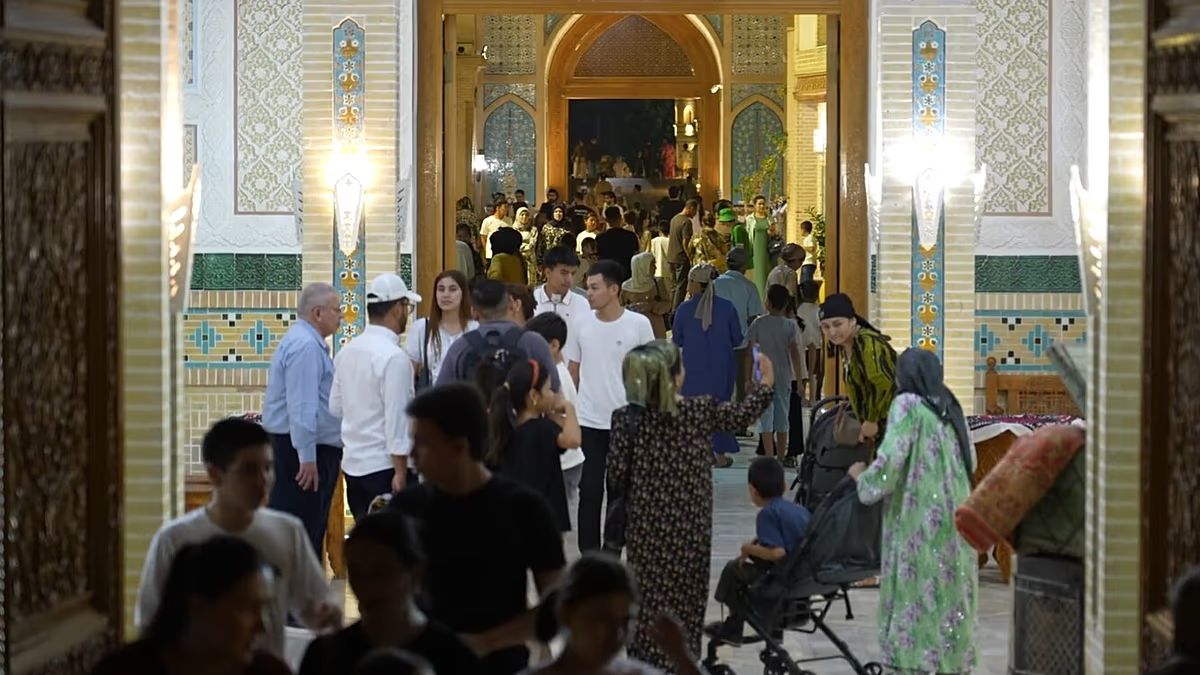




There is a moment every traveller to Uzbekistan remembers: the first glimpse of the Registan’s turquoise domes in Samarkand, the scent of grilled meat and spices drifting through Bukhara’s old bazaars, the clay walls of Khiva rising out of the desert like a half-remembered dream. For years, these were the images that defined the country in the outside world, names that carried the romance of the Silk Road and little else. But the Uzbekistan that foreign visitors are discovering today is no longer just a chain of extraordinary monuments. In the first eight months of 2026, the country recorded 9.1 million visits by foreign nationals, an increase of 21.1 percent over the same period a year earlier. Tourism services exports climbed by 53.5 percent to $4.6 billion over that period, a sign that visitors are not only arriving in greater numbers but also leaving more of their money behind. The headline figure, however, deserves a closer look. Official statistics include people coming to see relatives, doing business, and travelling for other purposes, so the number does not represent holidaymakers alone. In the same eight-month period of 2025, 5.17 million of the 7.5 million recorded arrivals were visits to relatives, while only 1.15 million were classified as travel. Still, the direction is unmistakable. Uzbekistan is being noticed, and the people who do come are beginning to explore far beyond the classic route of Tashkent, Samarkand, Bukhara and Khiva.
The way people travel in Uzbekistan is changing, and the change is visible in numbers that matter more than simple arrivals. According to Oybek Hakimov, adviser to the chairman of Uzbekistan’s Tourism Committee, the average amount spent by a tourist has reached $503, up from just $197 in 2017. Surveys conducted in May and June put the average length of stay at eight days, a remarkably long time for a country that many visitors once considered a brief stop between Istanbul and Almaty. Longer stays mean slower travel, and slower travel is pulling people off the well-worn Silk Road circuit. Hakimov points to growing interest in the Fergana Valley, the fertile basin framed by mountains and known for its ceramics, silk and lively bazaars; in Kashkadarya and Surkhandarya in the south, where ancient citadels and desert oases lie close to Afghanistan; and in Muynak and Nukus in Karakalpakstan, the remote western region where the retreat of the Aral Sea has left a hauntingly beautiful ghost landscape and where the Savitsky Museum houses one of the world’s most astonishing collections of Soviet avant-garde art. For a country long marketed as a string of famous cities, this is a quiet revolution. Travellers are beginning to understand that Uzbekistan is not a single story but a whole library of landscapes, languages and histories. They are stopping in villages, drinking tea in family courtyards, learning about crafts that have been practiced for centuries and leaving with a sense of place rather than a checklist of monuments.
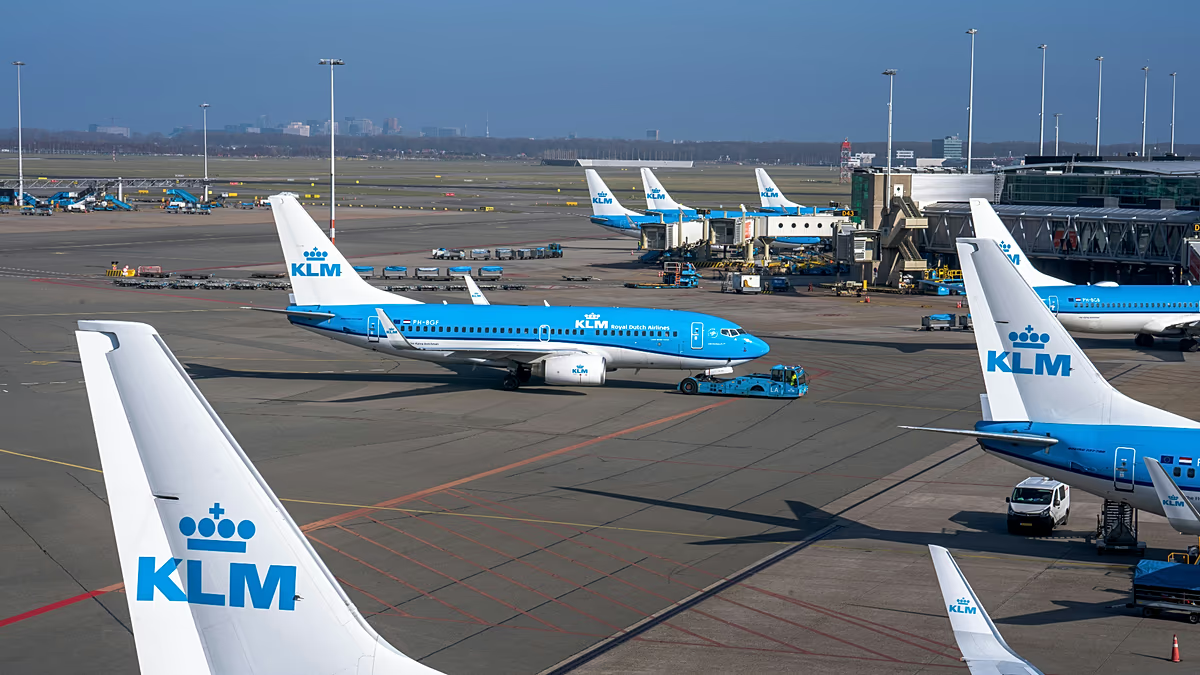
Some of the fastest growth is now coming from long-haul markets, and the door has swung open wider than ever before. In the first eight months of 2026, arrivals from China increased two-and-a-half times, arrivals from Malaysia doubledchers, and Japan saw a rise of 50 percent. Germany was up 25 percent, while France and the United Kingdom both recorded increases of 21 percent. These are not merely symbolic numbers; they reflect a fundamental shift in who is coming to Uzbekistan and why. The official data show that European visitors, in particular, are overwhelmingly travelling for the purpose of tourism. Of 26,100 German visitors recorded in the first seven months of the year, more than 23,100 were classified as travelling for that purpose. For Italy, the figure was 20,100 out of 21,000 visitors. Visa policy has played a central role in opening the country. Uzbekistan now offers visa-free entry to citizens of 94 countries, with the length of permitted stay varying by nationality. China is a telling example: after Beijing and Tashkent introduced reciprocal 30-day visa-free travel, the number of Chinese visitors recorded in 2025 was more than six times the level of 2023. Behind these statistics are individual decisions to step into the unknown. It is one thing to dream about a place from photographs; it is another to book a flight, navigate a country with a different alphabet and unfamiliar customs, and trust that you will be welcomed. The growth suggests that Uzbekistan has become easier to reach, easier to enter and easier to enjoy.
Uzbekistan’s appeal is no longer confined to heritage tourism, either. In Much Better Adventures’ 2026 ranking of destinations for solo adventure travel, the country placed fifth, with the ranking taking into account safety, entry requirements, costs, hiking opportunities and traveller feedback. That reputation for safety and welcome is confirmed by visitors who knew little about the country before they arrived. Romanian traveller Cezar Marksteiner-Ungureanu admitted that Uzbekistan was a blank on his mental map, and that even some friends questioned what there was to see. But he was looking for something completely new, so he read about the Silk Road and planned a journey through Tashkent, Samarkand, Bukhara and Khiva. Once there, his expectations were upended in the best possible way. “I felt very secure all the time,” he said. “People are very welcoming and try to help us everywhere.” Tessa Bradford came for a simpler reason: the images looked incredible, and after hearing that Uzbekistan was beautiful and fun to travel, she had to see it for herself. Her instinct was right. The country has reached a point where travellers feel safe enough to be spontaneous, welcome enough to slow down, and curious enough to look beyond the obvious tourist sites. The energy of the bazaars, the hospitality of strangers, the quiet thrill of finding a small teahouse where nobody else speaks your language—these are the experiences that turn a trip into a memory.
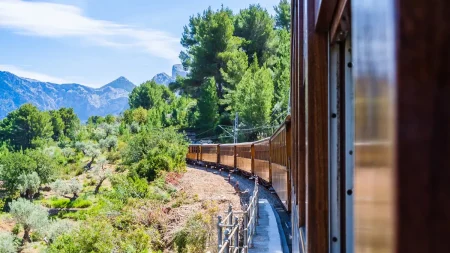
None of this growth would matter if getting around the country were difficult, but transport is improving just as quickly as demand. In May, the new Jaloliddin Manguberdi high-speed rail service began running between Tashkent and Khiva, cutting the journey from around fourteen hours to about seven and a half. By late July, the service had already carried almost 30,000 passengers. Tourist Sabina Flandrick said travelling around the country by train was wonderfully straightforward. “We got around by train, which was great,” she said, and she also praised the hotels, restaurants and service she encountered along the way. For Khiva, one of Uzbekistan’s most remote and atmospheric cities, the new connection has been transformative. Qudrat Rajabov, manager of the Khiva Silk Road Hotel, also points to better air connections through nearby Urgench. Direct international flights into Urgench, combined with the new rail link, are bringing a steady stream of visitors to the region. The high-speed train has turned Khiva from a place that felt far away into a place that feels essential, and the railway itself has become part of the experience. Crossing the desert at speed, watching the landscape shift from dry steppe to irrigated fields to ancient walls, is a journey that trains the eye and the imagination. Travel in Uzbekistan is no longer a test of endurance; it is a pleasure in its own right.
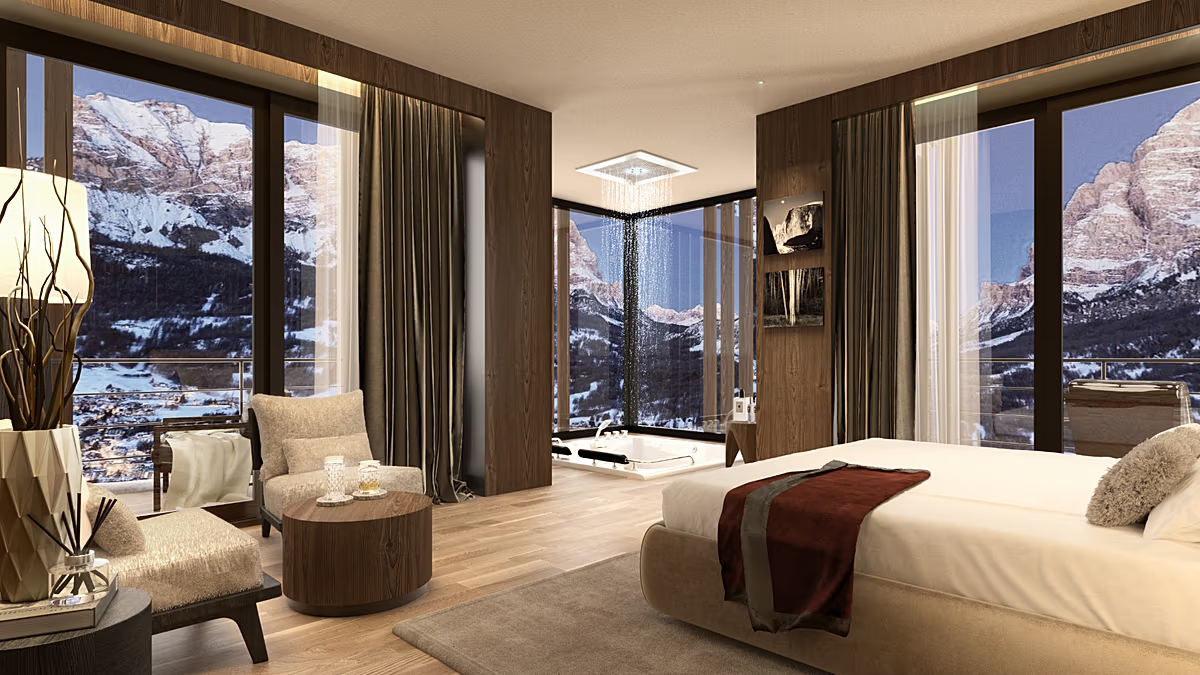
The expansion of tourism is also visible in where visitors lay their heads at night. Between January and July 2026, 705 new accommodation facilities opened across the country, adding 22,296 beds. Uzbekistan now has 7,440 registered places to stay, with capacity for more than 202,000 guests. At the Khiva Silk Road Hotel, the growth has been personal as well as statistical. The hotel opened in 2019 with 38 rooms and has since expanded to 43; it welcomes 7,000 to 8,000 guests a year, with international visitors making up the larger share. Manager Qudrat Rajabov sees the transformation not only in occupancy rates but in expectations. “Service comes first now,” he says. “Competition has become very strong and there are many hotels.” To keep pace, the hotel has been sending reception staff, chefs and waiters to professional training centres, a quiet but profound shift in a country long known for its monuments rather than its customer service. That emphasis on hospitality may be the most important revolution of all. The blue tiles and ancient walls will always be the reason people first come to Uzbekistan, but the reason they tell their friends to go is increasingly human: a warm welcome, a well-made bed, a meal prepared with pride, a conversation shared over tea. As the country continues to grow, it is learning that hospitality is not just a matter of buildings and beds, but an art in itself—and Uzbekistan has every intention of mastering it.