


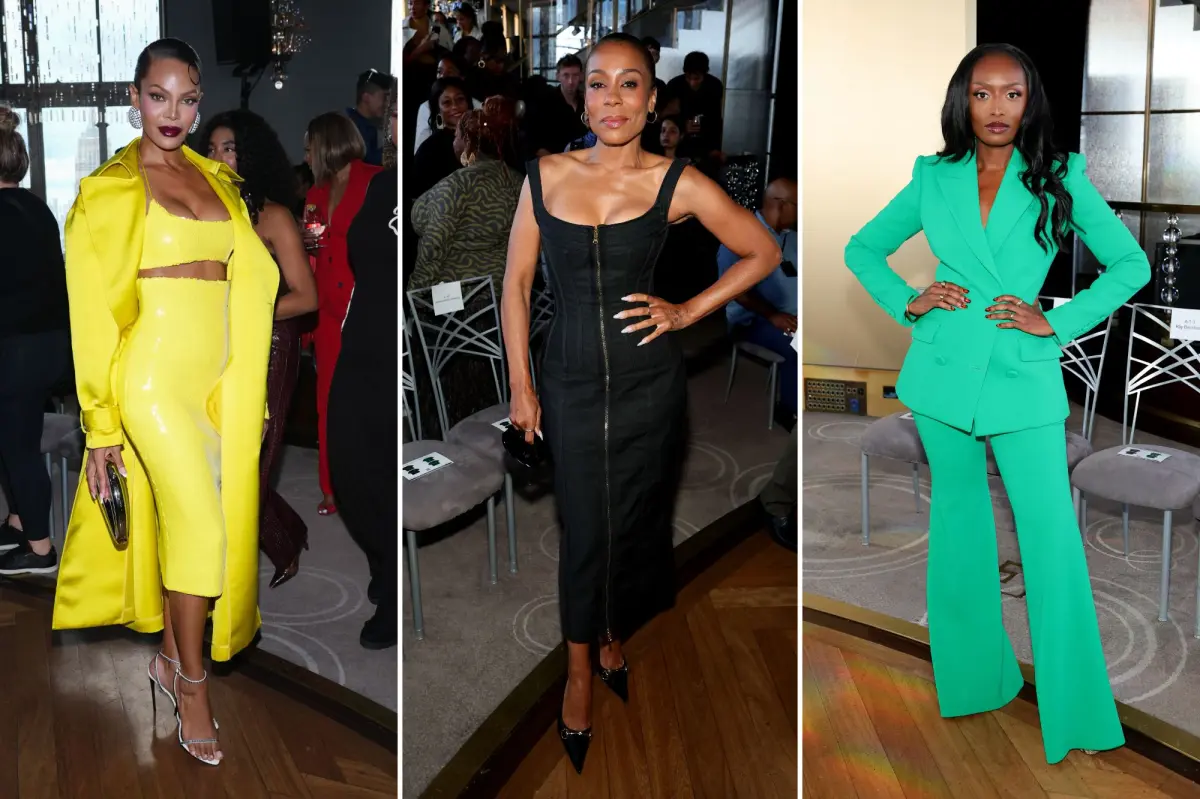
The Rainbow Room, high above Manhattan, is a place already dripping with history and glamour, but on this particular night, it felt like the center of the universe for fashion. The lights lowered, the crowd hushed, and the unmistakable pulse of anticipation filled the room. Sergio Hudson, the designer who has dressed some of the most famous women in the world, was about to unveil his spring collection, and the atmosphere was electric. The room itself, with its sweeping views of the glittering city and its legendary Art Deco elegance, seemed to be the perfect backdrop for a collection that was all about power, femininity, and unapologetic sensuality. And then the models began to walk. With a confidence that was both quiet and commanding, they stepped out in looks that seemed to have been designed with every curve, every dip, and every line of the female body in mind. The show’s title, whispered among the fashion set, was one that promised both excitement and a little danger: “Dangerous curves ahead.” It was a fitting warning, because as each look appeared, it became clear that Hudson had not simply created clothes; he had crafted armor for modern sirens.
The collection itself was a masterclass in the hourglass silhouette. Evening gowns clung to the body “fitted to a whisper,” as one thrilled observer put it, outlining every contour with a precision that felt almost sculptural. There were sharp suits that meant business, their tailored lines crisp and exact, yet still somehow soft and alluring. There were plunge-neck jumpsuits that made a bold statement, the deep V drawing the eye down to the waist, cinched tightly with slender belts that emphasized the curve of the hips. Every piece seemed to move with the body, never against it, and the overall effect was one of polished, undeniable power. The styling was equally meticulous: vertiginous heels that elongated the leg, sleek hair pulled back to keep all the attention on the clothes, and those delicate belts that acted as exclamation points on each silhouette. The color palette was rich and varied, from vibrant chiffon evening gowns that caught the light as they swirled to the second-skin black lace that threatened to steal the entire show. It was a look that was both dangerously alluring and completely controlled, a combination that Hudson has become famous for perfecting. In his world, femininity is not something to be toned down or hidden; it is a superpower, to be worn openly and celebrated.
For Hudson, this particular inspiration was a little different from his usual, often sporty or streetwise references. He looked to James Bond for the upcoming season, but with a crucial twist. In his universe, the woman is the secret agent, and the audience loved that premise immediately. This was not about a woman waiting to be rescued or standing beside a hero. This was about Bondian confidence, spy-level intrigue, and the kind of magnetic danger that comes from knowing exactly who you are and what you want. The clothes reflected that spirit: they were sleek, seductive, and impossibly self-assured. These were not outfits for wallflowers. They were designed for women who walk into a room and immediately own it, women who have secrets and glamour and intelligence in equal measure. It was a powerful narrative, and it resonated deeply with the front row. The designer, who has dressed everyone from Michelle Obama, Beyoncé, Keke Palmer, Rihanna, and Rachel Brosnahan, has always had a singular vision: to make women feel beautiful, strong, and entirely themselves. And with this collection, he delivered on that promise with a level of sophistication and allure that few contemporary designers can match.
The front row was a constellation of stars, all of them eager to celebrate a designer they genuinely adore and trust. Among them sat actors, singers, and television personalities who have come to rely on Hudson for their biggest moments. Karen Pittman, the beguiling star of “The Morning Show” and “And Just Like That,” was laced into one of his striking black corset dresses, and she couldn’t contain her admiration. “I’m a woman with a waist,” she said with a knowing smile. “I can always depend on him to create a silhouette that’s flattering and in beautiful colors, shapes and textures.” For Pittman, Hudson is far more than just a famous designer who dresses celebrities for the red carpet. He is woven into the fabric of her real life, in all its personal, meaningful moments. “I wore him when I was a Time Magazine honoree,” she continued. “I’ve worn him on ‘The Morning Show’ as Mia Jordan. I wear him in my life for my biggest moments: my daughter’s graduation, my son’s birthday parties.” Her voice softened as she spoke, and it was clear that these clothes carry memories, not just style. “He’s more than just a celebrity designer. He really does fit in my life.” That sentiment is exactly why Hudson has become so beloved. He doesn’t just design for an imaginary muse; he designs for real women, with real livers, real celebrations, and real stories. The fitting, the colors, the textures—they are all chosen to make a woman feel like the best version of herself, whether she is accepting an award or dancing with her children at a birthday party.
Just a few seats down from Pittman, NeNe Leakes was having a moment of pure, unfiltered glee. The television icon was busy snapping pictures of her favorite looks, her phone held high to capture the intricate details of a second-skin black lace jumpsuit and the vibrant chiffon evening gowns that closed the presentation. There was no facade of cool indifference from the typically outspoken star; she was completely focused on getting a closer look at these clothes. “I love the lace!” she exclaimed, practically glowing with excitement. But she didn’t stop there. As the final model disappeared backstage and the applause began to swell, Leakes was already on the move. “And the dress too. I’m going backstage [to reserve them]. Right now!” She raced toward the exit, laughing, determined to be the first to claim her favorites. Her enthusiasm was infectious, and it perfectly captured the reaction of everyone in the room. The collection had done what all great fashion should do: it made people feel something. It made them want to wear these clothes, to step into this world of powerful femininity and unforgettable glamour. With guests like Muni Long, Sunny Hostin, June Ambrose, Crystle Stewart, Mickey Guyton, and Bianca Lawson also in attendance, the love and respect for Hudson were palpable. It was a room full of women who know their own worth, and they saw that same confidence reflected back at them from every seam and every line of the collection. They were not just spectators; they were champions of a designer who understands them.
Looking at the sheer breadth of Hudson’s career, it’s easy to see why he has reached such heights. Dressing Michelle Obama is no small feat, and neither is dressing Beyoncé, Rihanna, Keke Palmer, or Rachel Brosnahan. But what makes Hudson truly remarkable is not just the high-profile names on his client list, but the way he translates his signature aesthetic across so many different types of beauty. He has a rare gift for making a woman feel seen, for understanding that a waist is something to be celebrated and that a curve is an asset, not something to be hidden. His body-conscious cuts are not about exclusion; they are about empowerment. They are an invitation for every woman to own her shape and move with confidence. In a fashion industry that has too often worshipped rigid, unattainable ideals, Hudson’s work is refreshingly inclusive and wonderfully human. This collection, inspired by a female secret agent, proved once again that his true superpower is his ability to dress the whole woman—her ambitions, her sweetness, her power, and her irresistible allure. As the final model walked, the applause was thunderous. The crowd rose to its feet, not just as a polite gesture, but as a genuine standing ovation for a designer who had just shown them a vision of femininity that was both aspirational and real. Dangerous curves ahead? Perhaps, but Hudson knows exactly how to navigate them, and he invites every woman to come along for the ride. The Rainbow Room was buzzing long after the lights came up, with guests still talking about the lace, the gowns, and the sheer force of the show they had witnessed. They had come expecting beautiful clothes; they left feeling something much deeper—a renewed sense of the power and beauty found in every woman who dare to take up space, wear a fitted dress, and look like the hero of her own glamorous story.