



Paragraph 1: The Big News and the Human Context
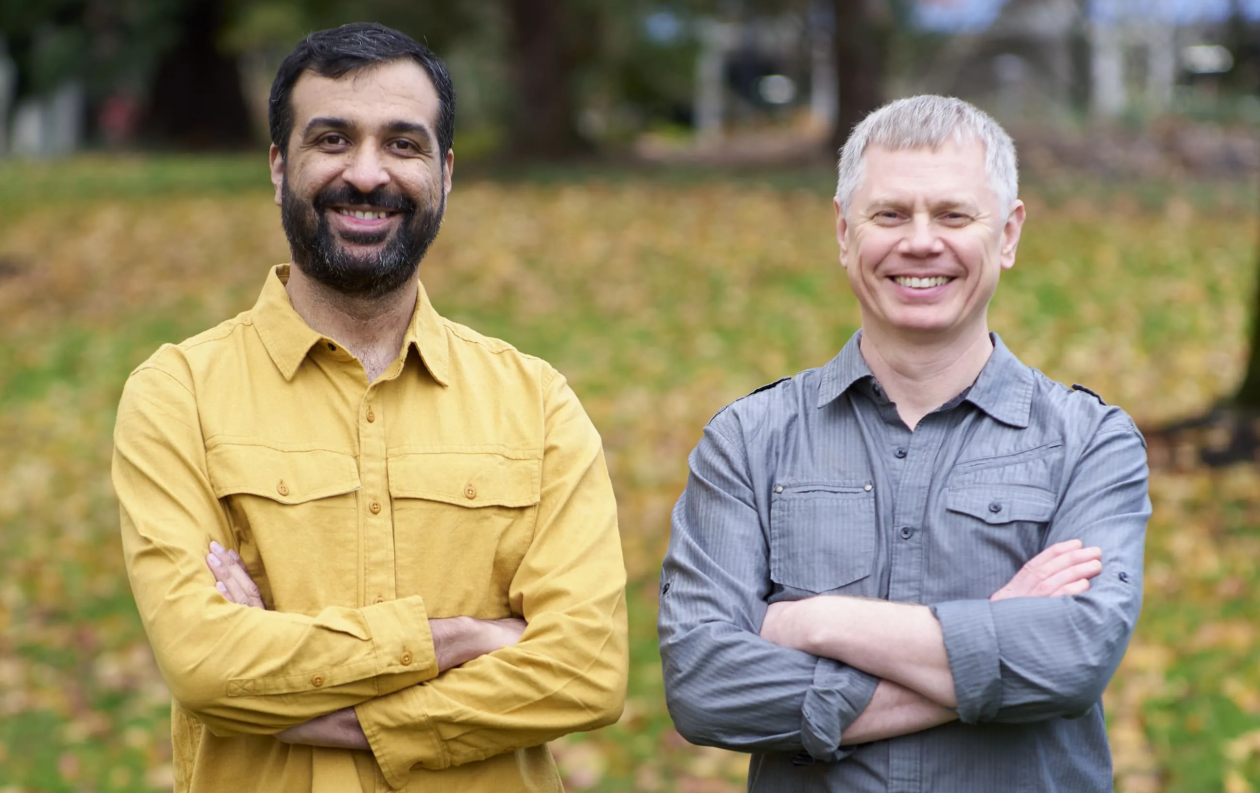
It’s a monumental moment in the Pacific Northwest tech scene, and frankly, in the broader world of venture capital. Temporal, the Bellevue, Washington-based infrastructure startup, has just announced a staggering $550 million Series E funding round. This massive infusion of cash rockets the company’s valuation to an eye-watering $12.55 billion—more than double where it stood just a few months ago. To put that number into perspective, back in February, the company was considered a unicorn at $5 billion; now, it’s a bonafide behemoth of the AI infrastructure world. But behind these astronomical figures lies a very human story of two engineers who saw a problem that was gnawing at the software industry long before the buzzword “AI” took over every boardroom. Samar Abbas, the CEO, and Maxim Fateev, the CTO, are veterans of tech giants like Amazon, Microsoft, and Uber. They didn’t set out to create a flashy consumer app or a catchy chat interface. Instead, they set out to solve a deeply unglamorous, yet utterly critical, engineering challenge: how to keep complex software systems from breaking down under the weight of their own complexity. With an annualized revenue run rate that has just soared past $250 million—a jaw-dropping growth rate of over 200% year-over-year—it’s clear that their focus on reliability is not just a technical nicety; it’s become the foundational necessity for the entire artificial intelligence revolution that is currently sweeping the globe.
Paragraph 2: The Invisible Problem of AI Chaos
To truly understand why investors are throwing money at Temporal, you have to step away from the spreadsheets and look at the messy reality of how AI actually works in the real world. For years, we’ve been fascinated by large language models that can write poetry, code software, and answer trivia. But business leaders are quickly realizing that the real magic—and the real nightmare—lies in agentic AI. These aren’t just chatbots having a conversation; these are autonomous agents that are supposed to execute multi-step workflows across dozens of different systems. Imagine an AI agent tasked with managing a company’s entire shipping logistics: it needs to check inventory, place orders, verify payments, coordinate with suppliers, and update customer records—all in sequence. If just one of those steps fails—say, a third-party API goes down for thirty seconds, or a server times out—the whole process collapses. The AI “hallucinates,” spits out an error, or simply stops working, requiring a human to manually pick up the pieces. This is the “on steroids” problem that Abbas referred to earlier this year. Temporal sits in the background as the invisible, ironclad plumbing that keeps these fragile AI agents safe. Using what they call “durable execution,” Temporal preserves the state of an application, retries failed steps automatically, and ensures that when a pesky external service drops out, the AI agent doesn’t have a nervous breakdown. It simply pauses, waits, and resumes exactly where it left off, ensuring that the job gets done—reliably, predictably, and without the resulting panic of a frustrated technical team. Without this foundational layer, the entire enterprise AI ecosystem would be a house of cards, crashing every time reality fails to match the perfect script.
Paragraph 3: The Founders’ Journey and a Decade of Preparation
The story of Samar Abbas and Maxim Fateev is one of patience and prescience. They cut their teeth building infrastructure at Uber, where they experienced firsthand the chaos of managing millions of microservices that needed to talk to each other flawlessly. They realized that as software grew more distributed, the failures became more frequent, and the debugging became more painful. When they founded Temporal in 2019, they weren’t targeting AI at all. They were building a general-purpose solution for the distributed systems headaches that plagued every growing tech company. They built an open-source platform that essentially acts as a super-reliable orchestrator, managing the lifecycle of background jobs and workflows. The “aha” moment came when the generative AI explosion happened. Companies like OpenAI, NVIDIA, Netflix, and JPMorgan Chase started building complex AI systems that went beyond simple query-and-response. They needed those systems to perform critical business functions. They realized that while their models were brilliant at reasoning, they were hopeless at guaranteeing the execution of a business process. Temporal’s engine stepped in to provide the missing “feet” for the AI’s “brain.” The founders have remained deeply rooted in the Seattle area for decades, choosing to build their global empire from the Pacific Northwest. Their humility—the tendency to focus on the hard engineering problems rather than the hype—is precisely what has endeared them to the enterprise clients who trust them with their most critical data, and to the investors who have now bet a combined $1.2 billion on their vision over the years.
Paragraph 4: Scaling Up, Keeping Roots
This explosive growth isn’t just a financial story; it’s a story about human infrastructure as much as technical infrastructure. Over the past twelve months, Temporal has doubled its workforce to a staggering 570 employees spread across the globe. While they operate as a remote-first organization—a structure that allows them to pull in top-tier engineering talent from New York to London to Bangalore—they haven’t abandoned their Pacific Northwest identity. The company continues to deliberately expand its engineering footprint in the Seattle area, maintaining a physical hub that taps into the deep talent pool cultivated by Amazon and Microsoft over the years. This hybrid approach reflects a distinct philosophy: they want the global reach, but they also want the face-to-face collaboration that sparks the best innovations. The hiring spree has been frantic, as the demand from enterprise customers means the engineering team can barely keep up with the influx of new use cases. Every industry—from financial services to supply-chain management to healthcare—is desperately trying to figure out how to integrate AI into their workflows without risking catastrophic errors. Temporal’s team is essentially acting as the rescue squad for companies that rolled out AI too fast without thinking about durability. The culture is intense, but it’s driven by a mission that is tangible: they are building the nervous system for the next generation of software, and every new hire is a piece of the neural network ensuring that the whole system doesn’t collapse under the stress of innovation.
Paragraph 5: The Financial Round and the Market’s Appetite
The financial details of this Series E round are a testament to the shifting sentiments of the AI market. The round was led by the influential venture capital firm Lightspeed, with co-leads from Wellington Management, Growth Equity at Goldman Sachs Alternatives, and Tiger Global. The participation of these heavyweights in the growth equity space—typically associated with late-stage public-market pivots—signals a massive shift in how investors are viewing the AI stack. Initially, the gold rush was about buying picks and shovels for foundational models—the massive training runs and the chips required to power them. Now, the focus has pivoted to the “picks and shovels” of deployment—the infrastructure that ensures these models can be used in production without breaking the bank or the business. The fact that Temporal was able to raise such a massive round at a $12.55 billion valuation—a 150% jump in just a few months—shows that investors are willing to pay a premium for reliability in an era of chaotic innovation. The influx of new backers, including T. Rowe Price alongside returning supporters like Sequoia Capital, Index Ventures, and Madrona, demonstrates a consensus that Temporal is not just a flash in the pan, but the default standard for durable execution. They are effectively becoming the “Oracle” of the AI age, providing the dependable database-like backbone that enterprise CIOs can bet their careers on. The $550 million cash injection brings their total war chest to $1.2 billion, providing them with a fortress balance sheet to weather any economic storms and outlast any competition that might attempt to imitate their model.
Paragraph 6: The Road Ahead and a Sea Change in Software
So, what happens now? The road ahead for Temporal is paved with both opportunity and immense responsibility. The fresh capital is earmarked for accelerating research and development, specifically expanding the core platform to handle even more complex AI workloads. They also plan to aggressively expand their developer and enterprise go-to-market teams, ensuring that when a developer at a Fortune 500 company encounters an AI reliability issue, Temporal is the first name that comes to mind. There is a palpable sense that we are witnessing a sea change in software engineering. For decades, the priority was writing code and shipping features. Now, the priority is ensuring that the code—especially the autonomous, self-directed code of AI—doesn’t kill the company through errors. Abbas put it perfectly: “Durable Execution is becoming the standard for reliable applications at scale.” This isn’t just a sales pitch; it’s a recognition of a fundamental human truth. We trust technology to do more and more of our work, freeing us to do the creative thinking. But we can only delegate that work if we know it will be done correctly, every single time. Temporal is essentially earning the trust of the digital world. By providing the safety net that catches the falling data whenever a server hiccups or a model glitches, they are enabling the promise of AI to actually be realized. As they continue to expand their roots in Bellevue and scale their global operations, they are leading a quiet revolution—one that ensures the future of software isn’t just smarter, but infinitely more dependable. For the two founders who began this journey debugging complex systems years ago, the ultimate victory isn’t just the billions in the bank; it’s knowing that they have become the unseen guardians of the connected world.