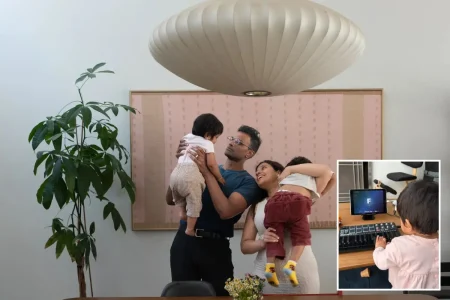




One of the quiet truths about family life is that the smallest words often carry the largest feelings. In a recent Dear Abby letter, a grandmother who signs herself “Nickname in the East” writes about a tiny title with an enormous emotional weight. Her two-year-old grandson has started calling her “Mimi,” and the name feels like a gift—natural, affectionate, and easy for a toddler to say. But there is a problem: the other grandmother had already chosen “Mimi” for herself, and the daughter-in-law is annoyed, insisting that the child should not call both women by the same name. The letter writer, who has been an active caregiver since the boy was born, is hurt. She has been there for diaper changes, quiet afternoons, and the everyday choreography of early childhood. The other grandmother lives far away, makes no effort to call or visit, and, in the writer’s eyes, seems to care more about sounding like a doting grandmother on Facebook than about actually being one. To make things more complicated, the name “Mom-Mom” is also off the table because the little boy already calls his mother “Ma-Ma,” and the daughter-in-law worries about confusion. The grandmother is not asking for much. She needs a simple name her grandson can call out in a crowded playground so he can find her. But she is also looking for something deeper: recognition, respect, and a visible sign of the bond she has worked so hard to build. She knows the question may sound silly, but the hurt underneath it is not silly at all. A nickname is more than a label; it is a public emblem of intimacy. When someone else claims the name, it can feel as if credit is being given to the wrong person. She wonders if two Mimis is really so impossible, especially because she herself grew up with two mothers. But even as she asks for advice, she suspects the issue is not simply about an honorific—it is about feeling chosen, remembered, and honored by the child she loves.
Abby’s response is gentle but clear, and it cuts through the emotional clutter with a wisdom that is both kind and practical. She begins by acknowledging that more than one Mimi could indeed be confusing for a two-year-old, but she quickly shifts the focus to what truly matters: the relationship itself, not the title. The name, Abby reminds her, is a secondary detail in the larger story of a grandmother’s love. Rather than fighting over who has “dibs” on Mimi, she advises the woman to let the other grandmother keep that name and, instead, collaborate with the little boy on creating a new nickname for her. If the child takes part in the decision, Abby explains, it will be easier for him to remember and far more special to them both. There is something almost magical in this suggestion. A name that emerges from their own private bond—maybe something he invents, mispronounces, or associates with a favorite activity—becomes a treasure that no one else can claim. It transforms what feels like a loss into an adventure. The grandmother can say to her grandson, “What should you call me?” and let his imagination lead. He may choose something silly, sweet, or unexpected, but precisely because it is theirs, it will carry more meaning than a borrowed family label ever could. In her response, Abby also signals to the letter writer that her feelings are valid. It is not wrong to be upset. It is only wrong if the upset begins to overshadow the child’s joy. The boy does not understand grandmother politics or Facebook personas. He understands warmth, presence, and the face that lights up when he walks into the room. That grandmother already has the most important title: the one she has earned through love. In time, she may discover that the nickname she worried about was never the real source of her security. Her place in his life is secure, and no name, however perfect, can replace the simple fact that she shows up.
The second letter comes from a stepfather in New Mexico who is exhausted by a grown man’s refusal to reach for his wallet. For twelve years, he has been married to a woman with two stepchildren, and the hardest one to love right now is her 37-year-old son. On paper, this young man is a successful professional with a good income. In practice, he is, in his stepfather’s words, the biggest cheapskate he has ever met. When the family goes out to dinner or drinks, he almost never picks up the tab, and he rarely even offers to pay for himself. Instead, he acts as if his parents are obligated to take care of his expenses—as if adulthood simply means finding other adults to cover the bill. The stepfather finds it infuriating, but he has held his tongue for too long. The situation has become even more tense because the boy’s mother, the letter writer’s wife, has recently begun quietly paying her son’s portion when the check arrives. She does it from her own separate account, which may be her way of keeping the peace, but the stepfather still seethes. He watches his stepson lean back after a meal, make no move toward the bill, and wait for Mom to save him. It is not about the money, really. It is about respect, independence, and the painful realization that a child can grow up in years but remain emotionally reliant on a parent. The stepfather loves his wife, and he wants to respect her choices, but every time she covers her son’s meal, he feels as if they are teaching the man that he never has to be responsible. He also feels erased: the stepfather’s opinions are not being consulted, his frustration is not being heard, and his table, quite literally, is being used as a stage for a performance of enabling he never agreed to.
Abby’s response to the stepfather is measured and practical, but it also carries an important emotional lesson. She begins by asking whether his wife has asked him not to talk directly to her son about this matter. If she has not, then perhaps it is time for a straightforward, respectful conversation with the stepson. Abby suggests saying, gently but clearly, that he is too old for his mother to constantly pay his tab, especially since he is a fully employed adult. Even a small gesture of offering to pay, even occasionally, would show that he understands the social contract of adult relationships. At the same time, Abby is careful not to ignore the wife’s autonomy. She tells the stepfather that he should start by telling his wife how the situation makes him feel—how watching her pick up her son’s portion makes him lose his appetite and undermines his sense of shared values. But if she continues to do it, Abby reminds him, that money is hers, and how she chooses to spend it is her business. This is a hard but loving truth. In a marriage, we often expect our partners to see the world exactly as we do, but money, especially separate money, can be a place where boundaries must be respected. The stepfather has every right to feel frustrated, and he has every right to express that frustration to his wife and his stepson. But he cannot control another adult’s choices forever. What he can control is his own response: he can stop letting the stepson’s behavior steal his appetite, his peace, and his evening. He can decide not to participate in the drama. He can even choose to enjoy the time with his family despite a character flaw he did not create. The deeper lesson is that love sometimes asks us to accept imperfections in the people we married, even while we work to protect our own hearts from resentment. The stepfather may never get the pleasure of watching his stepson pick up a check, but he can still find freedom in learning to let go of what he cannot change.
The third letter is shorter but no less human. A resident of a senior living center, who calls herself “Healthy Hands in California,” is troubled by the dining room manager’s habit of shaking hands with residents at their tables. On the surface, this sounds like a kind and respectful gesture. The manager is trying to make people feel welcome, greeted, and seen. But the letter writer is worried about germs, especially in a community where many residents may be older, immunocompromised, or simply protective of their health. She does not want to shake his hand, but she also does not want to seem rude. To avoid the handshake, she has been saying that her hand is wet or greasy, a small white lie that works in the moment but leaves her feeling awkward. She wonders how to decline the manager’s unsanitary effort without causing embarrassment. The wording of her letter is careful and polite, and that politeness is itself a window into her personality. She is not angry at the manager. She does not think he is a bad person. She just wants to set a boundary, and she is struggling because setting a boundary can feel uncomfortable, especially in a place where she has to continue living and eating every day. She is also navigating the subtle power dynamics of a communal environment; the manager is an authority figure, and residents may depend on him for daily comforts. The fear of sounding difficult, ungrateful, or overly fussy can be just as strong as the fear of germs. Her story is a reminder that even the smallest interactions can feel complicated when we care about the feelings of the people around us. She is not asking for permission to be rude. She is asking for a way to be honest without losing her place in the community.
Abby’s answer to the handshake problem is almost beautifully simple: tell the manager, with a polite smile and a good-natured tone, that you prefer not to shake hands while dining. She explains that the manager wants to appear friendly and welcoming, and a respectful explanation should not cause embarrassment. The key, Abby says, is in the delivery. A warm smile and a relaxed voice can turn a rejection into an invitation for connection, not an insult. The manager may not even realize that some residents feel uncomfortable with physical contact. By saying, “I prefer not to shake hands during meals, but I’m so glad you came by,” the resident can protect her health while preserving the warmth of the interaction. She might even offer an alternative: a smile, a nod, a wave, or a hand over her heart. These small gestures can carry just as much friendliness as a handshake. The deeper wisdom in this letter applies to all of us. We often overthink the moment before we speak, imagining that honesty will ruin a relationship. In reality, most people respond well to kindness and clarity. The manager would likely rather know how residents feel than have them discreetly wiping their hands or making excuses. Abby’s advice is not just about handshakes; it is about the human need to be understood. When we can say what we need with grace, we give other people the chance to accommodate us. We also give ourselves permission to stop hiding behind small lies and to live more openly in the relationships that matter.
Taken together, these three letters offer a gentle lesson about the art of being human. We all want to be loved, respected, and safe, and we all struggle to protect those things without hurting the people around us. The grandmother seeking a nickname is really seeking a place in her grandson’s heart that no one can take away. The stepfather dealing with a cheapskate stepson is really seeking alignment with his wife and a sense that their family life reflects shared values. The resident declining a handshake is really seeking control over her own body and health in a world full of social pressures. In each case, Dear Abby points toward the same fundamental principle: honest, kind communication is almost always better than silence, resentment, or avoidance. That does not mean every problem can be fixed. The other grandmother may still claim “Mimi,” the stepson may still reach for his mother’s purse, and the manager may still offer his hand. But when we speak with grace and act with intention, we reclaim something invaluable—our own peace. We stop being victims of situations and become participants in our own lives. The grandmother can create a new nickname and discover that it is sweeter because of the story behind it. The stepfather can choose where to focus his attention and find joy even in imperfect family gatherings. The resident can state her preference without apology and enjoy her meal with a lighter heart. In the end, the letters are not about names, money, or germs at all. They are about the quiet courage it takes to ask for what we need, accept what we cannot change, and keep loving the people who make life complicated and rich. That is the human condition, and it is exactly the place where Dear Abby’s wisdom lives.