



Thailand Proposes Strict ‘Same-Owner’ Rule for Stablecoin Transfers as SEC Tightens Crypto Oversight
A new ownership test for stablecoin transfers
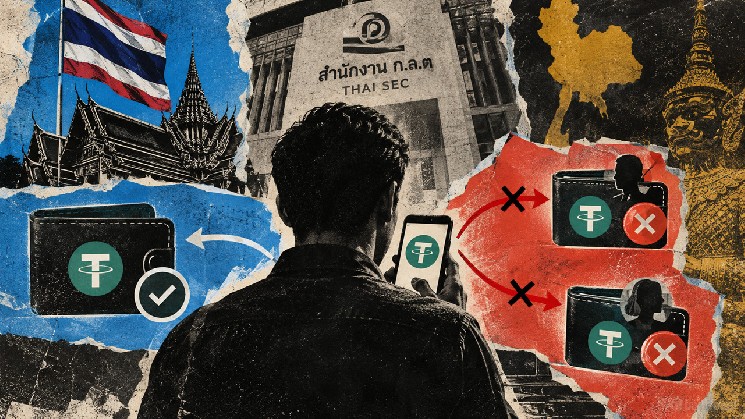
Thailand’s Securities and Exchange Commission has put forward a draft proposal that would force stablecoin transfers conducted through licensed digital asset operators to take place only between accounts and wallets controlled by the same customer. The measure, still in consultation and not yet an operative rule, would dramatically change how people can move tokens like Tether’s USDT in and out of Thailand’s regulated crypto ecosystem. Under the principles endorsed by the SEC Board on Sept. 3, any stablecoin entering a customer account at a digital asset operator must first come from an account or wallet verified as belonging to that customer. Withdrawals would follow the same standard: funds may leave only for an account or wallet verified as the customer’s own. The explicit result is that a stablecoin deposit from another person’s account, or a withdrawal to another person’s account, would be prohibited at any SEC-supervised platform. The scope is limited to transfers involving regulated digital asset operators, meaning peer-to-peer transactions that never touch a licensed platform would not be affected. However, for the wide universe of customers who use Thai exchanges and brokers as their primary stablecoin gateway, the proposal would change the game. Stablecoin users often rely on third-party wallets for good reasons — receiving money from a client, sending funds to a family member, or moving value between personal accounts held on different platforms. Under the same-owner rule, those moves would be blocked unless the external wallet could be verified and linked to the customer’s legal identity. Digital asset firms would therefore have to build new verification systems capable of confirming ownership or control of external wallets, likely through signatures, authentication challenges, or documentation. This is not simply a paperwork change. It would affect how stablecoin liquidity enters and leaves Thailand’s regulated markets, how trading desks move funds, and how ordinary users think about their own assets. The SEC has framed the proposal as a way to protect financial integrity while stablecoin usage grows, but the practical consequences may be just as significant as the policy intention.
How the proposed ownership gate would work
As drafted, the restriction would stop a customer from using a Thai SEC-supervised platform to receive a transfer from someone else’s wallet or send stablecoins to another person’s wallet. The design purpose is straightforward: to create an unbroken ownership chain between an external wallet and the customer account inside a licensed operator. If a customer wants to deposit stablecoins, the originating wallet must already be verified as theirs. If a customer wants to withdraw stablecoins, the destination wallet must also be verified as theirs. No third-party funding, no third-party payouts, no exceptions for friends, business partners, or service providers. The requirement touches on every form of stablecoin-supported activity that crosses the boundary of a supervised operator. For example, a Thai trader receiving USDT from an international exchange is currently able to transfer those tokens into a local platform and convert them to baht. Under the proposed rule, that deposit would be rejected unless the international exchange wallet was held by the same customer. Likewise, a customer who wants to send USDT to a business associate’s wallet as payment for goods or services would not be able to do so through a Thai SEC-supervised platform. Instead, both the sender and receiver would need to be verified as the same customer, a condition that would invalidate most real-world commercial transactions. What makes the proposal unusual is how far it goes beyond anti-money-laundering norms. Most financial regulations require banks to know their customers and report suspicious activity, but they do not prohibit a customer from sending money to another person’s account. Thailand’s stablecoin plan effectively does, creating a wall around each customer’s stablecoin holdings within the regulated ecosystem. The result is a framework that treats stablecoin transfers less like ordinary payments and more like movements of an asset between accounts that must all belong to the same beneficial owner. It remains to be seen whether the SEC will adjust this approach as it receives feedback from the industry, but as written, the ownership test is exceptionally strict.
Daily caps, income checks and exemptions
In addition to the same-owner rule, the proposal would require stablecoin transfer values to be consistent with a customer’s income source and financial position. This is a significant expansion of the know-your-customer concept. It means that a transfer, even if it is between wallets owned by the same customer, could still be rejected if the value is far out of line with the customer’s declared earnings or assets. The regulator appears to be building a framework that looks not only at who a customer is, but also at whether the transaction makes economic sense for that customer. The proposal also introduces daily limits. Inbound and outbound stablecoin transfers would each be capped at 5 million baht per day, per person, per operator. This means a customer cannot deposit more than 5 million baht worth of stablecoins into a single platform in a single day, and cannot withdraw more than 5 million baht worth of stablecoins from that platform in a single day. The cap is applied at the operator level, so spreading activity across multiple digital asset firms could be one way around the limit, though the regulatory infrastructure and reporting requirements may make that difficult. There are exemptions. The daily cap would not apply to transfers between customer accounts through SEC-supervised operators when both firms comply with the Travel Rule. The consultation document, released on Sept. 11, also lists exemptions for specified operator business transfers, certain Bank of Thailand-authorized operators and stablecoin/baht market makers. What the document does not clearly explain is whether these exemptions also apply to the same-owner requirement. A market maker, for example, might be allowed to send large stablecoin amounts above the cap, but could still be blocked if the ownership test applies independently. The interaction between the same-owner condition and the daily cap exemptions is one of the biggest open questions in the proposal, and market participants will be watching closely for clarification.
Why the SEC is moving on stablecoins
The SEC has said it developed the measures after observing significant growth in stablecoin transaction volume and value, particularly involving USDT. It also cited patterns associated with risks tied to money laundering, cybercrime and the circumvention of rules governing international money transfers. Stablecoins have become one of the most efficient ways to move value across borders, but that efficiency has a dark side. Because stablecoin transactions can be settled quickly, anonymously and outside traditional banking channels, they are attractive to criminal networks, sanctioned entities and others looking to avoid oversight. The SEC’s proposal appears designed to cut off the main access point between the stablecoin world and Thailand’s regulated financial system. By requiring same-owner transfers, the regulator can limit the ability of third parties to use Thai platforms as a gateway for laundering money or circumventing capital controls. The mention of USDT is important. Tether’s stablecoin has long been the dominant token in Asia, used not just by crypto traders but also by businesses and individuals seeking a stable store of value. Its popularity has made it a key focal point for regulators, who worry that the token’s liquidity could be exploited by illicit actors. The SEC’s focus on international money transfer rules also suggests that stablecoins are being viewed as a potential substitute for traditional cross-border payment channels, which are subject to strict reporting and vetting requirements. The proposal is therefore not just a crypto rule; it is a financial-integrity measure aimed at preserving the boundaries of Thailand’s formal banking system. At a time when other countries are debating how to regulate stablecoins, Thailand is choosing to act directly and decisively, making clear that its licensed digital asset operators cannot serve as neutral pipes for anonymous value transfer. The full extent of that position will become clearer after the consultation period.
A separate track from Thailand’s Travel Rule
The proposed ownership test would be separate from Thailand’s finalized Travel Rule. That rule requires digital asset operators to collect information about transfer parties, check counterparties and verify ownership or control of certain self-hosted wallets. It takes effect on Feb. 27, 2027. The Travel Rule is essentially a transparency and information-sharing standard. It ensures that when digital assets move from one regulated entity to another, the sending and receiving firms share identifying information about their customers, in much the same way that banks share wire transfer details. The stablecoin proposal, by contrast, would impose a stricter condition. When a transfer crosses the boundary of a licensed operator, the outside sending or receiving account would have to belong to the platform’s customer, not another person. This is a fundamental difference. The Travel Rule asks an operator to know and share; the same-owner requirement asks an operator to refuse. A transaction that passes all Travel Rule checks could still be blocked if the wallets on both ends are not controlled by the same customer. That creates a new compliance burden for digital asset operators. They must not only verify their customers’ identities, but also verify ownership of external wallets before allowing a stablecoin transfer to be processed. This could be done through wallet-signature challenges, small test transactions, or documentary proof, but each method adds friction. It also raises questions about interoperability. A customer holding stablecoins on an international exchange may not be able to prove, to the satisfaction of a Thai operator, that the exchange wallet belongs to them, even though the customer controls the account credentials. The SEC has not yet explained how such cases would be handled. The relationship between these two pillars of Thailand’s crypto framework is likely to be a central topic of the consultation. The Travel Rule already creates a substantial workload for platforms; the same-owner rule would add a separate and clearer restriction on top of it.
Consultation opens, effective date uncertain
The SEC formally opened public consultation on Sept. 11, and interested parties have until Sept. 25, 2026, to submit comments. The regulator did not announce an effective date for the proposed stablecoin restrictions. Until final rules are issued, the same-owner restriction remains a proposal and not a binding requirement. The absence of an effective date leaves room for negotiation, and the consultation process could produce changes to the ownership test, the daily cap, or both. But the overall direction is clear. Thailand has been tightening its digital asset rules methodically. It has approved USDT and USDC for official trading, set out a comprehensive Travel Rule, and now appears determined to limit stablecoin activity to transfers between a customer’s own verified wallets. The same-owner principle, if adopted, will reshape the market. For digital asset operators, it will require investment in verification technology and compliance systems far beyond what is currently necessary. For customers, it will make stablecoin transfers less flexible, less friendly and less aligned with how many people actually use these tokens. Some of the heaviest impact will be felt in cross-border payments, where stablecoins have become a popular alternative to banks. A Thai customer, for example, cannot send USDT to a relative abroad if that relative is not the same customer of the same platform. The relative would need to open their own account, verify their own identity, and prove control of their own wallet before receiving funds. That may be possible, but it is a much higher barrier than a simple transfer. The SEC appears willing to accept that trade-off in exchange for greater control over stablecoin flows. For now, the proposal is in the hands of the public, the industry and ultimately the SEC Board, which will decide whether to finalize the rule, revise it, or set it aside. Until then, Thailand’s stablecoin market remains in limbo, waiting to see how far the regulator is willing to go.